CONFIRMED BY ILL. SUPREME COURT– YOU ARE VIEWING THE MOST DANGEROUS BLOG IN ILLINOIS. This blog warranted a 3 year suspension by the ARDC/Jerome Larkin! Mottos: "Sunlight is the best disinfectant". Justice Louis Brandeis ; "If the truth can destroy something, then it deserves to be destroyed" Carl Sagan; "Justice is Truth in Action" Benjamin Disraeli. Illinois uses the ARDC to quash dissenting attorney activist blogs ; "The freedom of the press is one of the greatest bulwarks of liberty, and can never be restrained but by despotic Governments" — (1776-First Amendment preamble adopted by 8 US colonies)
Former Patent and Trademark Attorney practicing in Chicago, Illinois accepting clients nationwide. We also did trademarks, general intellectual property and business litigation. See our website at www.DenisonLaw.com. Now suspended for 3 years by the Illinois Atty Regn and Disciplinary Commission for blogging about corruption and telling truths that the ARDC wants to cover up. And while I am doing that, I will continue on my blogging work. Now I work full time on court corruption and corruption at the ARDC and JIB (Illinois attorney and judge discipline boards)
These documents indicate he was in fact guardianized in New York in 1998. I have not been able to get updated court documents, but I am working on that. Many states seal guardianships records claiming that it protects the disabled adult but we all know for a fact it protects felons in suits with licenses looting estates.
Mr. Dannewitz advises me that social security indicates thousands of dollars in payments under his account; however, he has not received a dime and the guardians are the payees. Not surprising.
He also advises me that whenever he attempts to unwind the Guardianship or take any action to protect his rights, he becomes a target of harassment.
Recently, he asked the Suffolk New York Clerk of Court for all his files and records, and he believes this action may have prompted false arrest.
I’m sure none of you are surprised.
In addition, one parent is in the military as an officer and is extremely secretive about his work and clearly has the clout and authority to harass his son with all sorts of troubles such that in the past, Mr. Dannewitz has lost jobs, has had to move, etc., and of course as a disabled person, his social security disability payment have never ever reached him.
Below is the fax I sent to the Public Defender’s offices today. Please feel free to cut and paste and send your own fax to demand immediate release of this person.
Joanne
FAX TRANSMITTAL SHEET
To: Humboldt County CaliforniaPublic Defender Offices
Fax: 707 445 7320 From: Suspended Ill., N. Carolina and Patent Bars JoAnne M. Denison, Pat. Atty. Reg. No. 34,150 JUSTICE 4 EVERY1, NFP FAX 888-350-0192 5330 W Devon Ave #6 CELL PH 773-255-7608 Chicago IL 60646 PHONE 312-553-1300 JoAnne@Justice4Every1.com or http://www.justice4every1.com A social justice services Not for Profit
.For transmission problems, please call 312-553-1300A confirmation copy WILL ✔ will NOT be sent.October 4, 2017
Re: False Arrest and Imprisonment of Allen Dannewitz, Jr. In Humboldt County Lock up Secton 529, Inmate No. 1700007690
To the Public Defender of Humboldt County;
I have been informed by a Mr. Allen Dannewitz, Jr. That he was rencently falsely arrested and imprisoned despite the fact he was guardianized in Suffolk County New York in 1998. The case number is 287 G 1998 and a copy of the court order declaring his parents to be his legal guardians is attached hereto.
It is my understanding that at the time of the arrest and at the time of arraignment, he told everyone that he had been adjudicated mentally disabled and a guardian was appointed for him, all of which was ignored. No one, it appears, including your offices, has investigated his assertions, despite the fact they are indeed very serious assertions of how his case must legally be handled.
I would appreciate your filing a Petition with the court for his immediate release. Unless and until that order is vacated, he cannot be held, he cannot be tried for any criminal offense in a court of law. This is US Supreme Court law. He can only be held in a Mental Hospital if he is a danger to himself or others which he clearly is not. He must be released and he cannot be tried until the Guardianship proceeding and Judgment is vacated.
Also, while I have tried to call Mr. Dannewitz to assist him in this outrageous violation of his Constitutional rights, the phone charges for the prison system in Humboldt county are absolutely outrageous and unconscionable. For a short conversation, I paid $25 to speak with him. I currently use VOIP.ms.com and they charge my business .001 cents per minute.
Please forward a copy of this message on to Mr. Dannewitz immediately so that he knows that members of the public will be assisting him in his endeavors to obtain justice.
I trust that you will take appropriate and swift action to demand his immediate release and I thank you for your assistance in this matter in advance.
I will be sending Mr. Dannewitz stamps, stationary and envelopes so he can communicate with the world in light of the usurious phone system which has been corruptly installed to block communications between inmates, friends and family–all of whom suffer when outrageous charges block access to their loved ones.
I would greatly appreciate your emailing and having the prison social worker or other staff allow him to make daily calls to me at an arranged time so that he does not feel he has been abandoned to the State wolves and hyenas running a corrupt police/judicial/prison system that does not respect the rights of the Mentally Disabled Adult in California.
Very Truly Yours,
JUSTICE 4 EVERY1 NFP
JoAnne Denison
JoAnne M. Denison
cc: blogs for http://www.marygsykes.com and http://www.justice4every1.com
or years, Rudy North woke up at 9 a.m. and read the Las Vegas Review-Journal while eating a piece of toast. Then he read a novel—he liked James Patterson and Clive Cussler—or, if he was feeling more ambitious, Freud. On scraps of paper and legal notepads, he jotted down thoughts sparked by his reading. “Deep below the rational part of our brain is an underground ocean where strange things swim,” he wrote on one notepad. On another, “Life: the longer it cooks, the better it tastes.”
Rennie, his wife of fifty-seven years, was slower to rise. She was recovering from lymphoma and suffered from neuropathy so severe that her legs felt like sausages. Each morning, she spent nearly an hour in the bathroom applying makeup and lotions, the same brands she’d used for forty years. She always emerged wearing pale-pink lipstick. Rudy, who was prone to grandiosity, liked to refer to her as “my amour.”
On the Friday before Labor Day, 2013, the Norths had just finished their toast when a nurse, who visited five times a week to help Rennie bathe and dress, came to their house, in Sun City Aliante, an “active adult” community in Las Vegas. They had moved there in 2005, when Rudy, a retired consultant for broadcasters, was sixty-eight and Rennie was sixty-six. They took pride in their view of the golf course, though neither of them played golf.
Rudy chatted with the nurse in the kitchen for twenty minutes, joking about marriage and laundry, until there was a knock at the door. A stocky woman with shiny black hair introduced herself as April Parks, the owner of the company A Private Professional Guardian. She was accompanied by three colleagues, who didn’t give their names. Parks told the Norths that she had an order from the Clark County Family Court to “remove” them from their home. She would be taking them to an assisted-living facility. “Go and gather your things,” she said.
Rennie began crying. “This is my home,” she said.
One of Parks’s colleagues said that if the Norths didn’t comply he would call the police. Rudy remembers thinking, You’re going to put my wife and me in jail for this? But he felt too confused to argue.
Parks drove a Pontiac G-6 convertible with a license plate that read “crtgrdn,” for “court guardian.” In the past twelve years, she had been a guardian for some four hundred wards of the court.Owing to age or disability, they had been deemed incompetent, a legal term that describes those who are unable to make reasoned choices about their lives or their property. As their guardian, Parks had the authority to manage their assets, and to choose where they lived, whom they associated with, and what medical treatment they received. They lost nearly all their civil rights.
Without realizing it, the Norths had become temporary wards of the court. Parks had filed an emergency ex-parte petition, which provides an exception to the rule that both parties must be notified of any argument before a judge. She had alleged that the Norths posed a “substantial risk for mismanagement of medications, financial loss and physical harm.” She submitted a brief letter from a physician’s assistant, whom Rennie had seen once, stating that “the patient’s husband can no longer effectively take care of the patient at home as his dementia is progressing.” She also submitted a letter from one of Rudy’s doctors, who described him as “confused and agitated.”
Rudy and Rennie had not undergone any cognitive assessments. They had never received a diagnosis of dementia. In addition to Freud, Rudy was working his way through Nietzsche and Plato. Rennie read romance novels.
Parks told the Norths that if they didn’t come willingly an ambulance would take them to the facility, a place she described as a “respite.”Still crying, Rennie put cosmetics and some clothes into a suitcase. She packed so quickly that she forgot her cell phone and Rudy’s hearing aid. After thirty-five minutes, Parks’s assistant led the Norths to her car. When a neighbor asked what was happening, Rudy told him, “We’ll just be gone for a little bit.” He was too proud to draw attention to their predicament. “Just think of it as a mini-vacation,” he told Rennie.
After the Norths left, Parks walked through the house with Cindy Breck, the owner of Caring Transitions, a company that relocates seniors and sells their belongings at estate sales. Breck and Parks had a routine. “We open drawers,” Parks said at a deposition. “We look in closets. We pull out boxes, anything that would store—that would keep paperwork, would keep valuables.” She took a pocket watch, birth certificates, insurance policies, and several collectible coins.
The Norths’ daughter, Julie Belshe, came to visit later that afternoon. A fifty-three-year-old mother of three sons, she and her husband run a small business designing and constructing pools. She lived ten miles away and visited her parents nearly every day, often taking them to her youngest son’s football games. She was her parents’ only living child; her brother and sister had died.
She knocked on the front door several times and then tried to push the door open, but it was locked. She was surprised to see the kitchen window closed; her parents always left it slightly open. She drove to the Sun City Aliante clubhouse, where her parents sometimes drank coffee. When she couldn’t find them there, she thought that perhaps they had gone on an errand together—the farthest they usually drove was to Costco. But, when she returned to the house, it was still empty.
That weekend, she called her parents several times. She also called two hospitals to see if they had been in an accident. She called their landlord, too, and he agreed to visit the house. He reported that there were no signs of them. She told her husband, “I think someone kidnapped my parents.”
On the Tuesday after Labor Day, she drove to the house again and found a note taped to the door: “In case of emergency, contact guardian April Parks.” Belshe dialled the number. Parks, who had a brisk, girlish way of speaking, told Belshe that her parents had been taken to Lakeview Terrace, an assisted-living facility in Boulder City, nine miles from the Arizona border. She assured Belshe that the staff there would take care of all their needs.
“You can’t just walk into somebody’s home and take them!” Belshe told her.
Parks responded calmly, “It’s legal. It’s legal.”
Guardianship derives from the state’s parens patriae power, its duty to act as a parent for those considered too vulnerable to care for themselves. “The King shall have the custody of the lands of natural fools, taking the profits of them without waste or destruction, and shall find them their necessaries,” reads the English statute De Prerogative Regis, from 1324. The law was imported to the colonies—guardianship is still controlled by state, not federal, law—and has remained largely intact for the past eight hundred years. It establishes a relationship between ward and guardian that is rooted in trust.
In the United States, a million and a half adults are under the care of guardians, either family members or professionals, who control some two hundred and seventy-three billion dollars in assets, according to an auditor for the guardianship fraud program in Palm Beach County. Little is known about the outcome of these arrangements, because states do not keep complete figures on guardianship cases—statutes vary widely—and, in most jurisdictions, the court records are sealed. A Government Accountability report from 2010 said, “We could not locate a single Web site, federal agency, state or local entity, or any other organization that compiles comprehensive information on this issue.” A study published this year by the American Bar Association found that “an unknown number of adults languish under guardianship” when they no longer need it, or never did. The authors wrote that “guardianship is generally “permanent, leaving no way out—‘until death do us part.’ ”
When the Norths were removed from their home, they joined nearly nine thousand adult wards in the Las Vegas Valley. In the past twenty years, the city has promoted itself as a retirement paradise. Attracted by the state’s low taxes and a dry, sunny climate, elderly people leave their families behind to resettle in newly constructed senior communities. “The whole town sparkled, pulling older people in with the prospect of the American Dream at a reasonable price,” a former real-estate agent named Terry Williams told me. Roughly thirty per cent of the people who move to Las Vegas are senior citizens, and the number of Nevadans older than eighty-five has risen by nearly eighty per cent in the past decade.
In Nevada, as in many states, anyone can become a guardian by taking a course, as long as he or she has not been convicted of a felony or recently declared bankruptcy. Elizabeth Brickfield, a Las Vegas lawyer who has worked in guardianship law for twenty years, said that about fifteen years ago, as the state’s elderly population swelled, “all these private guardians started arriving, and the docket exploded. The court became a factory.”
Pamela Teaster, the director of the Center for Gerontology at Virginia Tech and one of the few scholars in the country who study guardianship, told me that, though most guardians assume their duties for good reasons, the guardianship system is “a morass, a total mess.” She said, “It is unconscionable that we don’t have any data, when you think about the vast power given to a guardian. It is one of society’s most drastic interventions.”
After talking to Parks, Belshe drove forty miles to Lakeview Terrace, a complex of stucco buildings designed to look like a hacienda. She found her parents in a small room with a kitchenette and a window overlooking the parking lot. Rennie was in a wheelchair beside the bed, and Rudy was curled up on a love seat in the fetal position. There was no phone in the room. Medical-alert buttons were strung around their necks. “They were like two lost children,” Belshe said.
She asked her parents who Parks was and where she could find the court order, but, she said, “they were overwhelmed and humiliated, and they didn’t know what was going on.” They had no idea how or why Parks had targeted them as wards. Belshe was struck by their passive acceptance. “It was like they had Stockholm syndrome or something,” she told me.
Belshe acknowledged that her parents needed a few hours of help each day, but she had never questioned their ability to live alone. “They always kept their house really nice and clean, like a museum,” she said. Although Rudy’s medical records showed that he occasionally had “staring spells,” all his medical-progress notes from 2013 described him as alert and oriented. He did most of the couple’s cooking and shopping, because Rennie, though lucid, was in so much pain that she rarely left the house. Belshe sometimes worried that her father inadvertently encouraged her mother to be docile: “She’s a very smart woman, though she sometimes acts like she’s not. I have to tell her, ‘That’s not cute, Mom.’ ”
When Belshe called Parks to ask for the court order, Parks told her that she was part of the “sandwich generation,” and that it would be too overwhelming for her to continue to care for her children and her parents at the same time. Parks billed her wards’ estates for each hour that she spent on their case; the court placed no limits on guardians’ fees, as long as they appeared “reasonable.” Later, when Belshe called again to express her anger, Parks charged the Norths twenty-four dollars for the eight-minute conversation. “I could not understand what the purpose of the call was other than she wanted me to know they had rights,” Parks wrote in a detailed invoice. “I terminated the phone call as she was very hostile and angry.”
A month after removing the Norths from their house, Parks petitioned to make the guardianship permanent. She was represented by an attorney who was paid four hundred dollars an hour by the Norths’ estate. A hearing was held at Clark County Family Court.
The Clark County guardianship commissioner, a lawyer named Jon Norheim, has presided over nearly all the guardianship cases in the county since 2005. He works under the supervision of a judge, but his orders have the weight of a formal ruling. Norheim awarded a guardianship to Parks, on average, nearly once a week. She had up to a hundred wards at a time. “I love April Parks,” he said at one hearing, describing her and two other professional guardians, who frequently appeared in his courtroom, as “wonderful, good-hearted, social-worker types.”
Norheim’s court perpetuated a cold, unsentimental view of family relations: the ingredients for a good life seemed to have little to do with one’s children and siblings. He often dismissed the objections of relatives, telling them that his only concern was the best interest of the wards, which he seemed to view in a social vacuum. When siblings fought over who would be guardian, Norheim typically ordered a neutral professional to assume control, even when this isolated the wards from their families.
Rudy had assured Belshe that he would protest the guardianship, but, like most wards in the country, Rudy and Rennie were not represented by counsel.As Rudy stood before the commissioner, he convinced himself that guardianship offered him and Rennie a lifetime of care without being a burden to anyone they loved. He told Norheim, “The issue really is her longevity—what suits her.” Belshe, who sat in the courtroom, said, “I was shaking my head. No, no, no—don’t do that!” Rennie was silent.
Norheim ordered that the Norths become permanent wards of the court. “Chances are, I’ll probably never see you folks again; you’ll work everything out,” he said, laughing. “I very rarely see people after the initial time in court.” The hearing lasted ten minutes.
The following month, Even Tide Life Transitions, a company that Parks often hired, sold most of the Norths’ belongings. “The general condition of this inventory is good,” an appraiser wrote. Two lithographs by Renoir were priced at thirty-eight hundred dollars, and a glass cocktail table (“Client states that it is a Brancusi design”) was twelve hundred and fifty dollars. The Norths also had several pastel drawings by their son, Randy, who died in a motorcycle accident at the age of thirty-two, as well as Kachina dolls, a Bose radio, a Dyson vacuum cleaner, a Peruvian tapestry, a motion-step exerciser, a LeRoy Neiman sketch of a bar in Dublin, and two dozen pairs of Clarke shoes. According to Parks’s calculations, the Norths had roughly fifty thousand dollars. Parks transferred their savings, held at the Bank of America, to an account in her name.
Rennie repeatedly asked for her son’s drawings, and for the family photographs on her refrigerator. Rudy pined for his car, a midnight-blue 2010 Chrysler, which came to symbolize the life he had lost. He missed the routine interactions that driving had allowed him. “Everybody at the pharmacy was my buddy,” he said. Now he and Rennie felt like exiles. Rudy said, “They kept telling me, ‘Oh, you don’t have to worry: your car is fine, and this and that.’ ” A month later, he said, “they finally told me, ‘Actually, we sold your car.’ I said, ‘What in the hell did you sell it for?’ ” It was bought for less than eight thousand dollars, a price that Rudy considered insulting.
Rudy lingered in the dining room after eating breakfast each morning, chatting with other residents of Lakeview Terrace. He soon discovered that ten other wards of April Parks lived there. His next-door neighbor, Adolfo Gonzalez, a short, bald seventy-one-year-old who had worked as a maître d’ at the MGM Grand Las Vegas, had become Parks’s ward at a hearing that lasted a minute and thirty-one seconds.
Gonzalez, who had roughly three hundred and fifty thousand dollars in assets, urged Rudy not to accept the nurse’s medications. “If you take the pills, they’ll make sure you don’t make it to court,” he said. Gonzalez had been prescribed the antipsychotic medications Risperdal and Depakote, which he hid in the side of his mouth without swallowing. He wanted to remain vigilant. He often spoke of a Salvador Dali painting that had been lost when Parks took over his life. Once, she charged him two hundred and ten dollars for a visit in which, according to her invoice, he expressed that “he feels like a prisoner.”
Rudy was so distressed by his conversations with Gonzalez that he asked to see a psychologist. “I thought maybe he’d give me some sort of objective learning as to what I was going through,” he said. “I wanted to ask basic questions, like What the hell is going on?” Rudy didn’t find the session illuminating, but he felt a little boost to his self-esteem when the psychologist asked that he return for a second appointment. “I guess he found me terribly charming,” he told me.
Rudy liked to fantasize about an alternative life as a psychoanalyst, and he tried to befriend the wards who seemed especially hopeless. “Loneliness is a physical pain that hurts all over,” he wrote in his notebook. He bought a pharmaceutical encyclopedia and advised the other wards about medications they’d been prescribed. He also ran for president of the residents, promising that under his leadership the kitchen would no longer advertise canned food as homemade. (He lost—he’s not sure if anyone besides Rennie voted for him—but he did win a seat on the residents’ council.)
He was particularly concerned about a ward of Parks’s named Marlene Homer, a seventy-year-old woman who had been a professor. “Now she was almost hiding behind the pillars,” Rudy said. “She was so obsequious. She was, like, ‘Run me over. Run me over.’ ” She’d become a ward in 2012, after Parks told the court, “She has admitted to strange thoughts, depression, and doing things she can’t explain.” On a certificate submitted to the court, an internist had checked a box indicating that Homer was “unable to attend the guardianship court hearing because______,” but he didn’t fill in a reason.
The Norths could guess which residents were Parks’s wards by the way they were dressed. Gonzalez wore the same shirt to dinner nearly every day. “Forgive me,” he told the others at his table. When a friend tried to take him shopping, Parks prevented the excursion because she didn’t know the friend. Rennie had also tried to get more clothes. “I reminded ward that she has plenty of clothing in her closet,” Parks wrote. “I let her know that they are on a tight budget.” The Norths’ estate was charged a hundred and eighty dollars for the conversation.
Another resident, Barbara Neely, a fifty-five-year-old with schizophrenia, repeatedly asked Parks to buy her outfits for job interviews. She was applying for a position with the Department of Education. After Neely’s third week at Lakeview Terrace, Parks’s assistant sent Parks a text. “Can you see Barbara Neely anytime this week?” she wrote. “She has questions on the guardianship and how she can get out of it.” Parks responded, “I can and she can’t.” Neely had been in the process of selling her house, for a hundred and sixty-eight thousand dollars, when Parks became her guardian and took charge of the sale.
The rationale for the guardianship of Norbert Wilkening, who lived on the bottom floor of the facility, in the memory-care ward, for people with dementia (“the snake pit,” Rudy called it), was also murky. Parks’s office manager, who advertised himself as a “Qualified Dementia Care Specialist”—a credential acquired through video training sessions—had given Wilkening a “Mini-Mental State Examination,” a list of eleven questions and tasks, including naming as many animals as possible in a minute. Wilkening had failed. His daughter, Amy, told me, “I didn’t see anything that was happening to him other than a regular getting-older process, but when I was informed by all these people that he had all these problems I was, like, Well, maybe I’m just in denial. I’m not a professional.” She said that Parks was “so highly touted. By herself, by the social workers, by the judge, by everyone that knew her.”
At a hearing, when Amy complained to Norheim that Parks didn’t have time for her father, he replied, “Yeah, she’s an industry at this point.”
As Belshe spoke to more wards and their families, she began to realize that Lakeview Terrace was not the only place where wards were lodged, and that Parks was not the only guardian removing people from their homes for what appeared to be superficial reasons. Hundreds of cases followed the same pattern. It had become routine for guardians in Clark County to petition for temporary guardianship on an ex-parte basis. They told the court that they had to intervene immediately because the ward faced a medical emergency that was only vaguely described: he or she was demented or disoriented, and at risk of exploitation or abuse. The guardians attached a brief physician’s certificate that contained minimal details and often stated that the ward was too incapacitated to attend a court hearing. Debra Bookout, an attorney at the Legal Aid Center of Southern Nevada, told me, “When a hospital or rehab facility needs to free up a bed, or when the patient is not paying his bills, some doctors get sloppy, and they will sign anything.” A recent study conducted by Hunter College found that a quarter of guardianship petitions in New York were brought by nursing homes and hospitals, sometimes as a means of collecting on overdue bills.
It often took several days for relatives to realize what had happened. When they tried to contest the guardianship or become guardians themselves, they were dismissed as unsuitable, and disparaged in court records as being neglectful, or as drug addicts, gamblers, and exploiters. (Belshe was described by Parks as a “reported addict” who “has no contact with the proposed ward,” an allegation that Belshe didn’t see until it was too late to challenge.) Family who lived out of state were disqualified from serving as guardians, because the law prohibited the appointment of anyone who didn’t live in Nevada.
Once the court approved the guardianship, the wards were often removed from their homes, which were eventually sold. Terry Williams, whose father’s estate was taken over by strangers even though he’d named her the executor of his will, has spent years combing through guardianship, probate, and real-estate records in Clark County. “I kept researching, because I was so fascinated that these people could literally take over the lives and assets of people under color of law, in less than ten minutes, and nobody was asking questions,” she told me. “These people spent their lives accumulating wealth and, in a blink of an eye, it was someone else’s.”
Williams has reviewed hundreds of cases involving Jared Shafer, who is considered the godfather of guardians in Nevada. In the records room of the courthouse, she was afraid to say Shafer’s name out loud. In the course of his thirty-five-year career, Shafer has assumed control of more than three thousand wards and estates and trained a generation of guardians. In 1979, he became the county’s public administrator, handling the estates of people who had no relatives in Nevada, as well as the public guardian, serving wards when no family members or private guardians were available. In 2003, he left government and founded his own private guardianship and fiduciary business; he transferred the number of his government-issued phone to himself.
Williams took records from Shafer’s and other guardians’ cases to the Las Vegas police department several times. She tried to explain, she said, that “this is a racketeering operation that is fee-based. There’s no brown paper bag handed off in an alley. The payoff is the right to bill the estate.” The department repeatedly told her that it was a civil issue, and refused to take a report. In 2006, she submitted a typed statement, listing twenty-three statutes that she thought had been violated, but an officer wrote in the top right corner, “not a police matter.” Adam Woodrum, an estate lawyer in Las Vegas, told me that he’s worked with several wards and their families who have brought their complaints to the police. “They can’t even get their foot in the door,” he said.
Acting as her own attorney, Williams filed a racketeering suit in federal court against Shafer and the lawyers who represented him. At a hearing before the United States District Court of Central California in 2009, she told the judge, “They are trumping up ways and means to deem people incompetent and take their assets.” The case was dismissed. “The scheme is ingenious,” she told me. “How do you come up with a crime that literally none of the victims can articulate without sounding like they’re nuts? The same insane allegations keep surfacing from people who don’t know each other.”
In 2002, in a petition to the Clark County District Court, a fifty-seven-year-old man complained that his mother had lost her constitutional rights because her kitchen was understocked and a few bills hadn’t been paid. The house they shared was then placed on the market. The son wrote, “If the only showing necessary to sell the home right out from under someone is that their ‘estate’ would benefit, then no house in Clark County is safe, nor any homeowner.” Under the guise of benevolent paternalism, guardians seemed to be creating a kind of capitalist dystopia: people’s quality of life was being destroyed in order to maximize their capital.
When Concetta Mormon, a wealthy woman who owned a Montessori school, became Shafer’s ward because she had aphasia, Shafer sold the school midyear, even though students were enrolled. At a hearing after the sale, Mormon’s daughter, Victoria Cloutier, constantly spoke out of turn. The judge, Robert Lueck, ordered that she be handcuffed and placed in a holding cell while the hearing continued. Two hours later, when Cloutier was allowed to return for the conclusion, the judge told her that she had thirty days in which to vacate her mother’s house. If she didn’t leave, she would be evicted and her belongings would be taken to Goodwill.
The opinions of wards were also disregarded. In 2010, Guadalupe Olvera, a ninety-year-old veteran of the Second World War, repeatedly asked that his daughter and not Shafer be appointed his guardian. “The ward is not to go to court,” Shafer instructed his assistants. When Olvera was finally permitted to attend a hearing, nearly a year after becoming a ward, he expressed his desire to live with his daughter in California, rather than under Shafer’s care. “Why is everybody against that?” he asked Norheim. “I don’t need that man.” Although Nevada’s guardianship law requires that courts favor relatives over professionals, Norheim continued the guardianship, saying, “The priority ship sailed.”
When Olvera’s daughter eventually defied the court’s orders and took her father to live at her seaside home in Northern California, Norheim’s supervisor, Judge Charles Hoskin, issued an arrest warrant for her “immediate arrest and incarceration” without bail. The warrant was for contempt of court, but Norheim said at least five times from the bench that she had “kidnapped” Olvera. At a hearing, Norheim acknowledged that he wasn’t able to send an officer across state lines to arrest the daughter. Shafer said, “Maybe I can.”
Shafer held so much sway in the courtroom that, in 2013, when an attorney complained that the bank account of a ward named Kristina Berger had “no money left and no records to explain where it went,” Shafer told Norheim, “Close the courtroom.” Norheim immediately complied. A dozen people in attendance were forced to leave.
One of Shafer’s former bookkeepers, Lisa Clifton, who was hired in 2012, told me that Shafer used to brag about his political connections, saying, “I wrote the laws.” In 1995, he persuaded the Nevada Senate Committee on Government Affairs to write a bill that allowed the county to receive interest on money that the public guardian invested. “This is what I want you to put in the statute, and I will tell you that you will get a rousing hand from a couple of judges who practice our probate,” he said. At another hearing, he asked the committee to write an amendment permitting public guardians to take control of people’s property in five days, without a court order. “This bill is not ‘Big Brother’ if you trust the person who is doing the job,” he said. (After a senator expressed concern that the law allowed “intervention into somebody’s life without establishing some sort of reason why you are doing it,” the committee declined to recommend it.)
Clifton observed that Shafer almost always took a cynical view of family members: they were never motivated by love or duty, only by avarice. “ ‘They just want the money’—that was his answer to everything,” she told me. “And I’m thinking to myself, Well, when family members die they pass it down to their children. Isn’t that just the normal progression of things?”
After a few months on the job, Clifton was asked to work as a guardian, substituting for an absent employee, though she had never been trained. Her first assignment was to supervise a visit with a man named Alvin Passer, who was dying in the memory-care unit of a nursing home. His partner of eight years, Olive Manoli, was permitted a brief visit to say goodbye. Her visits had been restricted by Shafer—his lawyer told the court that Passer became “agitated and sexually aggressive” in her presence—and she hadn’t seen Passer in months. In a futile attempt to persuade the court to allow her to be with him, Manoli had submitted a collection of love letters, as well as notes from ten people describing her desire to care for Passer for the rest of his life. “I was absolutely appalled,” Clifton said. “She was this very sweet lady, and I said, ‘Go in there and spend as much time with him as you want.’ Tears were rolling down her cheeks.”
The family seemed to have suffered a form of court-sanctioned gaslighting. Passer’s daughter, Joyce, a psychiatric nurse who specialized in geriatrics, had been abruptly removed as her father’s co-guardian, because she appeared “unwilling or (more likely) unable to conduct herself rationally in the Ward’s best interests,” according to motions filed by one of Shafer’s attorneys.
She and Manoli had begged Norheim not to appoint Shafer as guardian. “Sir, he’s abusive,” their lawyer said in court.
“He’s as good as we got, and I trust him completely,” Norheim responded.
Joyce Passer was so confused by the situation that, she said, “I thought I was crazy.” Then she received a call from a blocked number. It was Terry Williams, who did not reveal her identity. She had put together a list of a half-dozen family members who she felt were “ready to receive some kind of verbal support.” She told Passer, “Look, you are not nuts. This is real. Everything you are thinking is true. This has been going on for years.”
During Rennie North’s first year at Lakeview Terrace, she gained sixty pounds. Parks had switched the Norths’ insurance, for reasons she never explained, and Rennie began seeing new doctors, who prescribed Valium, Prozac, the sedative Temazepam, Oxycodone, and Fentanyl. The doses steadily increased. Rudy, who had hip pain, was prescribed Oxycodone and Valium. When he sat down to read, the sentences floated past his eyes or appeared in duplicate. “Ward seemed very tired and his eyes were glassy,” Parks wrote in an invoice.
(This is along the lines of if you are not incompetent going into a gship, the “Guardian (of disaster) will make you incompetent–From Joanne)
Belshe found it increasingly hard to communicate with her parents, who napped for much of the day. “They were being overmedicated to the point where they weren’t really there,” she said. The Norths’ grandsons, who used to see them every week, rarely visited. “It was degrading for them to see us so degraded,” Rudy said. Parks noticed that Rennie was acting helpless, and urged her to “try harder to be more motivated and not be so dependent on others.” Rudy and Rennie began going to Sunday church services at the facility, even though they were Jewish. Rudy was heartened by what he heard in the pastor’s message: “Don’t give up. God will help you get out of here.” He began telling people, “We are living the life of Job.”
From Joanne–I recall Job got his life and wealth back in the end. 99% of all guardianhips end in death and disaster for wards and their families.
At the end of 2014, Lakeview Terrace hired a new director, Julie Liebo, who resisted Parks’s orders that medical information about wards be kept from their families. Liebo told me, “The families were devastated that they couldn’t know if the residents were in surgery or hear anything about their health. They didn’t understand why they’d been taken out of the picture. They’d ask, ‘Can you just tell me if she’s alive?’ ” Liebo tried to comply with the rules, because she didn’t want to violate medical-privacy laws; as guardian, Parks was entitled to choose what was disclosed. Once, though, Liebo took pity on the sister of an eighty-year-old ward named Dorothy Smith, who was mourning a dog that Parks had given away, and told her that Smith was stable. Liebo said that Parks, who was by then the secretary of the Nevada Guardianship Association, called her immediately. “She threatened my license and said she could have me arrested,” Liebo told me.
After Liebo arrived, Parks began removing wards from Lakeview Terrace with less than a day’s notice. A woman named Linda Phillips, who had dementia, was told that she was going to the beauty salon. She never returned. Marlene Homer, the ward whose ailments were depression and “strange thoughts,” was taken away in a van, screaming. Liebo had asked the state ombudsman to come to the facility and stop the removals, but nothing could be done. “We stood there completely helpless,” Liebo said. “We had no idea where they were going.” Liebo said that other wards asked her if they would be next.
Liebo alerted the compliance officer for the Clark County Family Court that Parks was removing residents “without any concern for them and their choice to stay here.” She also reported her complaints to the police, the Department of Health Services, the Bureau of Health Care, and Nevada Adult Protective Services. She said each agency told her that it didn’t have the authority or the jurisdiction to intervene.
At the beginning of 2015, Parks told the Norths that they would be leaving Lakeview Terrace. “Finances are low and the move is out of our control,” Parks wrote. It was all arranged so quickly that, Rudy said, “we didn’t have time to say goodbye to people we’d been eating with for seventeen months.” Parks arranged for Caring Transitions to move them to the Wentworth, a less expensive assisted-living facility. Liebo said that, the night before the move, Rudy began “shouting about the Holocaust, that this was like being in Nazi Germany.” Liebo didn’t think the reference was entirely misguided. “He reverted to a point where he had no rights as a human being,” she said. “He was no longer the caregiver, the man, the husband—all of the things that gave his life meaning.” Liebo also didn’t understand why Belshe had been marginalized. “She seemed like she had a great relationship with her parents,” she said.
Belshe showed up at 9 a.m. to help her parents with the move, but when she arrived Parks’s assistant, Heidi Kramer, told her that her parents had already left. Belshe “emotionally crashed,” as Liebo put it. She yelled that her parents didn’t even wake up until nine or later—what was the rush? In an invoice, Kramer wrote that Belshe “began to yell and scream, her behavior was out of control, she was taking pictures and yelling, ‘April Parks is a thief.’ ” Kramer called the police. Liebo remembers that an officer “looked at Julie Belshe and told her she had no rights, and she didn’t.”
Belshe cried as she drove to the Wentworth, in Las Vegas. When she arrived, Parks was there, and refused to let her see her parents. Parks wrote, “I told her that she was too distraught to see her parents, and that she needed to leave.” Belshe wouldn’t, so Parks asked the receptionist to call the police. When the police arrived, Belshe told them, “I just want to hug my parents and make sure they’re O.K.” An officer handed her a citation for trespassing, saying that if she returned to the facility she would be arrested.
From Joanne–note the police are the goons and wiseguys for a highly corrupted system.
“I don’t like the way women are portrayed in the constellations.”
Parks wrote that the Norths were “very happy with the new room and thanked us several times,” but Rudy remembers feeling as if he had “ended up in the sewer.” Their room was smaller than the one at Lakeview Terrace, and the residents at the Wentworth seemed older and sicker. “There were people sitting in their chairs, half-asleep,” Rudy said. “Their tongues hung out.”
From Joanne: take a survey of any nursing home, I challenge you. You will find a sea of drugged elders in wheelchairs just sitting and doing nothing. They have alarms so they can’t even get up and walk. The use of mind numbing chemicals on those over 60 and those with dementia is prohibited under FDA guidelines, but surveys show nursing homes drug patients illegally at a rate of 40 to up to 80% of all residents. The rest are too sick to get out of bed. Complain to the licensing board for all doctors and nurses involved and ask to yank their licenses, but the response will be we only have one or two investigators for that and it will take years for them to get to YOUR case. True story. Illinois. Drugging of a 17 year old autistic boy by abusive father and wrongful confinement in institution.
Rennie spent nearly all her time in her wheelchair or in bed, her eyes half-closed. Her face had become bloated. One night, she was so agitated that the nurses gave her Haldol, a drug commonly used to treat schizophrenia. When Rudy asked her questions, Rennie said “What?” in a soft, remote voice.
Shortly after her parents’ move, Belshe called an editor of the Vegas Voice, a newspaper distributed to all the mailboxes in senior communities in Las Vegas. In recent months, the paper had published three columns warning readers about Clark County guardians, writing that they “have been lining their pockets at the expense of unwitting seniors for a very long time.”
At Belshe’s urging, the paper’s political editor, Rana Goodman, visited the Norths, and published an article in the Voice, describing Rudy as “the most articulate, soft spoken person I have met in a very long time.” She called Clark County’s guardianship system a “(legal) elder abuse racket” and urged readers to sign a petition demanding that the Nevada legislature reform the laws. More than three thousand people signed.
Two months later, the Review-Journal ran an investigation, titled “Clark County’s Private Guardians May Protect—Or Just Steal and Abuse,” which described complaints against Shafer going back to the early eighties, when two of his employees were arrested for stealing from the estates of dead people.
In May, 2015, a month after the article appeared, when the Norths went to court to discuss their finances local journalists were in the courtroom and Norheim seemed chastened. “I have grave concerns about this case,” he said. He noted that Parks had sold the Norths’ belongings without proper approval from his court. Parks had been doing this routinely for years, and, according to her, the court had always accepted her accounting and her fees. Her lawyer, Aileen Cohen, said, “Everything was done for the wards’ benefit, to support the wards.”
Norheim announced that he was suspending Parks as the Norths’ guardian—the first time she had been removed from a case for misconduct.
“This is important,” Rudy, who was wearing a double-breasted suit, said in court. “This is hope. I am coming here and I have hope.” He quoted the Bible, Thomas Jefferson, and Euripides, until Belshe finally touched his elbow and said, “Just sit down, Dad.”
When Rudy apologized for being “overzealous,” Norheim told him, “This is your life. This is your liberty. You have every right to be here. You have every right to be involved in this project.”
After the hearing, Parks texted her husband, “I am finished.”
Last March, Parks and her lawyer, along with her office manager and her husband, were indicted for perjury and theft, among other charges. The indictment was narrowly focussed on their double billings and their sloppy accounting, but, in a detailed summary of the investigation, Jaclyn O’Malley, who led the probe for the Nevada Attorney General’s Office, made passing references to the “collusion of hospital social workers and medical staff” who profited from their connection to Parks. At Parks’s grand-jury trial, her assistant testified that she and Parks went to hospitals and attorneys’ offices for the purpose of “building relationships to generate more client leads.” Parks secured a contract with six medical facilities whose staff agreed to refer patients to her—an arrangement that benefitted the facilities, since Parks controlled the decisions of a large pool of their potential consumers. Parks often gave doctors blank certificates and told them exactly what to write in order for their patients to become her wards.
Parks and other private guardians appeared to gravitate toward patients who had considerable assets. O’Malley described a 2010 case in which Parks, after receiving a tip from a social worker, began “cold-calling” rehabilitation centers, searching for a seventy-nine-year-old woman, Patricia Smoak, who had nearly seven hundred thousand dollars and no children. Parks finally found her, but Smoak’s physician wouldn’t sign a certificate of incapacity. “The doctor is not playing ball,” Parks wrote to her lawyer. She quickly found a different doctor to sign the certificate, and Norheim approved the guardianship. (Both Parks and Norheim declined to speak with me.)
Steve Miller, a former member of the Las Vegas City Council, said he assumed that Shafer would be the next indictment after Parks, who is scheduled to go to trial next spring. “All of the disreputable guardians were taking clues from the Shafer example,” he said. But, as the months passed, “I started to think that this has run its course locally. Only federal intervention is going to give us peace of mind.”
Richard Black, who, after his father-in-law was placed into guardianship, became the director of a grassroots national organization, Americans Against Abusive Probate Guardianship, said that he considered the Parks indictment “irrefutably shallow. It sent a strong message of: We’re not going to go after the real leaders of this, only the easy people, the ones who were arrogant and stupid enough to get caught.” He works with victims in dozens of what he calls “hot spots,” places where guardianship abuse is prevalent, often because they attract retirees: Palm Beach, Sarasota, Naples, Albuquerque, San Antonio. He said that the problems in Clark County are not unusual. “The only thing that is unique is that Clark County is one of the few jurisdictions that doesn’t seal its records, so we can see what is going on.”
Approximately ten per cent of people older than sixty-five are thought to be victims of “elder abuse”—a construct that has yet to enter public consciousness, as child abuse has—but such cases are seldom prosecuted. People who are frail or dying don’t make good witnesses—a fact that Shafer once emphasized at a 1990 U.S. congressional hearing on crimes against the elderly, in which he appeared as an expert at preventing exploitation. “Seniors do not like to testify,” he said, adding that they were either incapable or “mesmerized by the person ripping them off.” He said, “The exploitation of seniors is becoming a real cottage industry right now. This is a good business. Seniors are unable to fend for themselves.”
In the past two years, Nevada has worked to reform its guardianship system through a commission, appointed by the Nevada Supreme Court, to study failures in oversight. In 2018, the Nevada legislature will enact a new law that entitles all wards to be represented by lawyers in court. But the state seems reluctant to reckon with the roots of the problem, as well as with its legacy: a generation of ill and elderly people who were deprived of their autonomy, and also of their families, in the final years of their lives. Last spring, a man bought a storage unit in Henderson, Nevada, and discovered twenty-seven urns—the remains of Clark County wards who had never been buried.
In the wake of Parks’s indictment, no judges have lost their jobs. Norheim was transferred from guardianship court to dependency court, where he now oversees cases involving abused and neglected children. Shafer is still listed in the Clark County court system as a trustee and as an administrator in several open cases. He did not respond to multiple e-mails and messages left with his bookkeeper, who answered his office phone but would not say whether he was still in practice. He did appear at one of the public meetings for the commission appointed to analyze flaws in the guardianship system.“What started all of this was me,” he said. Then he criticized local media coverage of the issue and said that a television reporter, whom he’d talked to briefly, didn’t know the facts. “The system works,” Shafer went on. “It’s not the guardians you have to be aware of, it’s more family members.” He wore a blue polo shirt, untucked, and his head was shaved. He looked aged, his arms dotted with sun spots, but he spoke confidently and casually. “The only person you folks should be thinking about when you change things is the ward. It’s their money, it’s their life, it’s their time. The family members don’t count.”
Belshe is resigned to the fact that she will be supporting her parents for the rest of their lives. Parks spent all the Norths’ money on fees—the hourly wages for her, her assistants, her lawyers, and the various contractors she hired—as well as on their monthly bills, which doubled under her guardianship. Belshe guesses that Parks—or whichever doctor or social worker referred her to the Norths—had assumed that her parents were wealthier than they actually were. Rudy often talked vaguely about deals he had once made in China. “He exaggerates, so he won’t feel emasculated,” Belshe said. “He wasn’t such a big businessman, but he was a great dad.”
The Norths now live in what used to be Belshe’s home office; it has a window onto the living room which Belshe has covered with a tarp. Although the room is tiny, the Norths can fit most of their remaining belongings into it: a small lamp with teardrop crystals, a deflated love seat, and two paintings by their son. Belshe rescued the art work, in 2013, after Caring Transitions placed the Norths’ belongings in trash bags at the edge of their driveway. “My brother’s paintings were folded and smelled,” she said.
The Norths’ bed takes up most of the room, and operates as their little planet. They rarely stray far from it. They lie in bed playing cards or sit against the headboard, reading or watching TV. Rudy’s notebooks are increasingly focussed on mortality—“Death may be pleasurable”—and money. “Money monsters do well in this society,” he wrote. “All great fortunes began with a crime.” He creates lists of all the possessions he has lost, some of which he may be imagining: over time, Rennie’s wardrobe has become increasingly elaborate and refined, as have their sets of China. He alternates between feeling that his belongings are nothing—a distraction from the pursuit of meaning—and everything. “It’s an erasure,” he said. “They erase you from the face of the earth.” He told me a few times that he was a distant cousin of Leon Trotsky, “intellect of the revolution,” as he called him, and I wondered whether his newfound pride was connected to his conflicted feelings about the value of material objects.
A few months after the Norths were freed, Rudy talked on the phone with Adolfo Gonzalez, his neighbor from Lakeview Terrace, who, after a doctor found him competent, had also been discharged. He now lived in a house near the airport, and had been reunited with several of his pets. The two men congratulated each other. “We survived!” Rudy said. “We never thought we’d see each other on the other side.” Three other wards from Lakeview Terrace had died.
Rennie has lost nearly all the weight she gained at Lakeview Terrace, mostly because Belshe and her husband won’t let her lounge in her wheelchair or eat starchy foods. Now she uses a walker, which she makes self-deprecating jokes about. “This is fun—I can teach you!” she told me.
In July, Rennie slipped in the bathroom and spent a night in the hospital. Belshe didn’t want anyone to know about her mother’s fall, because, she said, “this is the kind of thing that gets you into guardianship.” She told me, “I feel like these people are just waiting in the bushes.”
Two days after the fall, Rennie was feeling better—she’d had thirteen stitches—but she was still agitated by a dream she had in the hospital. She wasn’t even sure if she’d been asleep; she remembers talking, and her eyes were open.
“You were loopedy-doopy,” Scott Belshe, Julie’s husband, told her. They were sitting on the couch in their living room.
“It was real,” Rennie said.
“You dreamed it,” Scott told her.
“Maybe I was hallucinating,” she said. “I don’t know—I was scared.” She said that strangers were making decisions about her fate. She felt as if she were frozen: she couldn’t influence what was happening. “I didn’t know what to do,” she told Scott. “I think I yelled for help. Help me.” The worst part, she said, was that she couldn’t find her family. “Honest to God, I thought you guys left me all alone.” ♦
One is a California family law attorney documenting alleged judicial crimes, the other a Pennsylvania civil rights attorney who has lost his law license for speaking out against judges. Both say they will continue to do what most lawyers won’t.
“They don’t speak up. The reason is you get targeted and you could lose your license,” said Barbara Kauffman of lawyers who witness judicial misconduct. Last month the California attorney contacted state officials alleging that a family court judge in Marin County tampered with court records.
Civil rights attorney Don Bailey had his law license suspended for five years in October by the Pennsylvania Supreme Court. “The reason I lost my license is because I criticized judges,” said Bailey, a former Democratic Congressman and state auditor general, in a phone interview last week.
The pattern of attorneys losing their careers or facing hefty fines after speaking out against judges has legal experts worried. The law professor and legal analyst Jonathan Turley wrote of Bailey’s license suspension, “While some would agree with the case, there is a worrisome line of cases targeting lawyers who criticize judges.”
America’s judicial system is extremely ineffective at removing bad judges, said Kathleen Russell, the founder of the Center for Judicial Excellence, a non-profit that is working to stop family court judges from giving child custody to domestic abusers and pedophiles. “Judges are judicially trafficking children to abusers by ignoring evidence of child abuse. Even when judges behave maliciously, there is no law that holds them accountable.”
Over the past 40 years, court rulings have given judges increasingly strong immunity from civil suits under the principle that judges shouldn’t be sued by anyone unhappy with their decisions in court. Most notable is the 1978 Supreme Court decision Stump v. Sparkman that rejected a suit filed against an Indiana judge who ordered a 15-year-old sterilized without her knowledge.
The Democratic nominee for Congress in Pennsylvania’s 11th District has made a focus of his campaign curbing judicial abuses and protecting lawyers who criticize judges. Andy Ostrowski points to the Pennsylvania kids-for-cash scandal, where two county judges were convicted of charges involving millions of alleged kickbacks to send children to private juvenile detention facilities, as an example where lawyers failed to do the right thing.
“That didn’t happen in a vacuum,” Ostrowski said. “There were lawyers who were in there watching as these children were led into the courtroom in shackles without representation and led out in shackles to prison. They all knew it was wrong. Why didn’t they speak up? Simple — because they were afraid.”
The Pennsylvania Supreme Court has taken the law license of several lawyers for criticizing judges, as described in a table that follows this story.
Fearful lawyers combined with strong immunity laws keep bad judges on the bench. Even in the kids-for-cash scandal, where the judges were criminally convicted and are serving lengthy prison sentences, experts say that civil suits filed on behalf of the children will likely have a tough time piercing judicial immunity.
In a blog post published on Thursday, Turley described how judicial immunity was used to dismiss a civil suit against a Michigan judge who was having an affair with the wife of a man before him in a custody case. “By any measure, former Wayne County Circuit Judge Wade McCree was a disgrace to the bench,” Turley wrote. “His case unfortunately could embolden other judges who consider abandoning the most basic ethical demands of their office.”
Ostrowski is one of only two political candidates in the U.S. who has signed a pledge to eradicate judicial corruption started by the Campaign for Judicial Integrity, an effort founded by disbarred California attorney Richard Fine, who was jailed for 18 months by a judge who found him in contempt.
Fine’s 2009 disbarment stemmed from court filings he submitted against judges for taking $57,000 in side pay from the county to supplement their state salaries. “Fine has long contended that the charges against him are politically motivated,” the State Bar of California summary of Fine’s disbarment explained. “The cases he filed against judges were not retaliatory, he said, but instead were based on his belief that judges who accept money from a county fund to augment their compensation have a conflict of interest in any matter involving government municipalities. Fine was jailed indefinitely in March on contempt of court charges — for refusing to answer a judge’s questions and practicing law without a license.”
Fine, 74, said he is still not sure why the judge finally set him free after 18 months. But Allan Parachini, who was the Los Angeles Superior Court spokesman while Fine was in jail, compared his incarceration to actions more common in authoritarian countries. “Fine was effectively a political prisoner for a year and a half,” Parachini, who no longer works for the superior court, told Full Disclosure Network in 2012. “This wasn’t about contempt. This wasn’t about getting him to disclose whatever it was he was directed to disclose. It was about getting back at him.”
The California Bar has not opposed three successive motions in the state Supreme Court to set aside the disbarment, but the court has yet to reinstate his law license, said Fine, a former Department of Justice prosecutor. A case to force the justices to restore his license is now before the U.S. Court of Appeals for the Ninth Circuit.
“I understand why lawyers are not speaking up when they witness corruption. They want to protect their income and they want to protect their families,” Fine said. “They took an oath to uphold the laws of the United States. If they did not intend to fulfill the oath and uphold the laws, they should have saved themselves and the public from their hypocrisy.”
Kauffman, the California attorney who notified officials last month of alleged criminal wrongdoing by a judge, said protecting the integrity of the U.S. justice system can be a lonely task. Last year, she filed a lawsuit against a retired Shasta County judge who had been appointed to preside over cases 208 times since 1994, never having to face election to hold the position. “I couldn’t get anyone to serve him. I had to go to his house and do it myself,” Kauffman said. The state barred the judge from serving shortly after she filed the lawsuit.
Losing her law license is not the 58-year-old attorney’s only worry. “I have concerns about safety,” Kauffman said. “For a while my office was getting broken into on a regular basis. For months, each night the alarm would go off. I had a strange man knock on my door and tell me he knew where my kids were playing.”
Being vocal is her best protection, Kauffman said. “I share all the information I have with everyone.”
Whether her efforts will actually impact the judicial system is not clear. “These are all little drops in the bucket and hopefully they will add up to something,” she said. “But the corruption is so big, where do you even start to clean it up?”
This is the eighth in a series of articles for Daily Kos about the treatment of abused children in the U.S. family court system. M.C. Moewe is a former criminal justice and investigative reporter for several newspapers with a B.A. in journalism from the University of North Texas. Email m AT moewe.com or use this link.
Pennsylvania lawyers who criticized judges and lost their license to practice
Respondent, Neil Werner Price, was therein charged with filing court documents that contained false allegations against two District Justices and an Assistant District Attorney.
The Pennsylvania Supreme Court had suspended appellant Robert Surrick from the practice of law for a period of five years after it concluded that he had violated a provision of the Rules of Professional Conduct by falsely accusing two lower court judges of “fixing” cases.
The Petition charged Respondent with violating seven Rules of Professional Conduct by making false statements of material fact and false accusations against a judge and engaging in conduct involving dishonesty or misrepresentation and conduct prejudicial to the administration of justice.
This matter is before the Disciplinary Board for consideration of the charges against Respondent of professional misconduct arising from a series of allegations made by Respondent against members of the Federal Judiciary in a Motion for Reharing En Banc.
AT this point in time Andy has been free – below is a link to his interview with John Adams – it is worth a listen – at least in part.
On Friday, September 29, 2017, 8:10:01 PM CDT, Brian Fedorka <bfedorka82@gmail.com> wrote:
You can go to his page for a live video interview (crappy audio) earlier today with John Adams. If you don’t trust the link below then to repeat, simply visit Andy’s facebook page, ‘Andy Ostrowski’.
It is now clear that we are in fact all in danger. As an attorney Andy had the training to know what he was facing and to deal with it; however, had the miscreants been able to drug him — he would have been a candidate for “elder cleansing!”
Now that the ordeal is over, Andy indicates that he wants to get on with his life – however — the wrongful mental health arrest of Andy is a warning for every one of us — Democracy is not a spectator sport and in a flash – any one of us, including some of us who feel immune, can be hauled off to the Gulag and the next time any one sees us – they see a zombie! A dose or two of the right chemical and – bingo! You are none person!
Mary Sykes was a vibrant elderly lady. She was kidnapped by her older daughter and presto/chango – after she was stripped of her assets and humanity (over a period of several years) she achieved her final reward. Some miscreants showed up with about 3 million in Mary’s assets (including a million dollars in gold coins) and it was time for Mary to die. She did. The miscreants are protected! Jerome Larkin, the administrator of the IARDC, has in his possession an evidence deposition from the jurist who was ‘fixed’ He diligently tried to ‘cover up’ the fraud – he stopped any honest investigation and thus the booty is safe = for the moment – Mary is dead! Inspite of 18 USCA 371 – Larkin still roams the street and he and the miscreants have not paid a dime of the taxes due on the booty – HOWEVER, Illinois tax payers got a raise in their taxes.
Lawyer Ken Ditkowsky,
Susended by the ARDC for 4 years in Illinois for writing letters of protest regarding
court corruption in Cook County Illinois
From Joanne;
Listening to the video, main points
Andy was taken into custody without a court order or arrest warrant
He suffered a wrist injury during arrest, despite the fact he was not resisting arrest, he was fully cooperating with the police
His laptop is stolen or missing and has not been located yet. This is the laptop where he videoed his own false arrest live on FB streaming, and stated he had done nothing wrong, he knew of no warrant for his arrest and he appeared to be not just competent and rational, but fully engaged in complex, higher level inellectual discourse regarding a dire situation (false arrest and imprisonment)
His video went immediately viral with over 20,000 hits in the first few days
The psych hospital staff, was, for the part, respectful and helpful to him.
He signed no documents and admitted nothing, other than he participated in the group therapy they imposed upon him.
he won his incompetency hearing and was released. this is a rarity.
he has done these hearings before for others as their lawyer and has helped many with them.
he rejected the public defender assigned to him because he knows, as many of you have experienced…..
he is well aware of the fact he is an activist, has named names of very clouted people and he knows they wanted him institutionalized, locked away and drugged.
the cops got a key to his back door from a friend or neighbor (turncoat). (Do we need slider locks and chains for our doors? Rape chains)
he insisted on looking at the paperwork before he got into the ambulance and determined the paperwork wasn’t complete, it was defective and it looked like the judge was going to hold a hearing and sign it later that day. Doing a FB live video on another issue of corruption, prompted an early arrest.
Andy did comply with everything, except signing documents admitting anything.
Please go to Andy Ostrowski’s FB page and friend him and show him your support.
We all have to band together and take care of these activists that promote and protect our human and civil rights.
And Andy needs a good laptop with a camera and microphone to do his live streaming, so if you have an extra laptop, desktop, tablet, etc. please get this to Andy so he can continue his very blessed work in fighting for optimal human and civil rights.
This just another reason to keep your loved ones at home under your watch. Everyone knows it’s pretty much the staff that pilfers cash, credit cards, jewlery and anything of value from elderly residents in nursing homes, but this is crazy.
LAMORINDA, CA — Thousands of pairs of eyes have been watching for this woman, and Moraga Police announced this week that she has been arrested. Antoinique Bryant, 29, of Richmond, was arrested by a fugitive task force from the U.S. Marshals Service in Antioch on Tuesday. She is accused of stealing from elderly residents at assisted-living centers and senior housing in Moraga and Orinda.
Her alleged accomplice, 30-year-old Richmond resident Shawn Morris, was already in custody.
Moraga Police received reports of the thefts and fraud in late August from several elderly residents at Aegis Living in Moraga. Orinda Police found a similar theft at the Orinda Senior Village in which an elderly resident was victimized.
Booking photo of Antoinique Bryant:
According to a written release from Moraga Police, “Officers located video surveillance that showed the suspects engaged in cashing checks and using the credit and debit cards. One of the suspects was a female who was dressed in a nursing uniform. Witnesses described seeing the same female suspect inside the Aegis facility at the time of the thefts, although she is not an employee at the facility.”
The suspects were identified as Bryant and 30-year-old Shawn Morris of Richmond. A search of their residence turned up property and evidence. Morris was arrested, but Bryant remained on the run with a $655,000 warrant outstanding for her arrest.
The Contra Costa County District Attorney’s office has filed 27 felony and misdemeanor charges against Bryant and Morris, including elder abuse, burglary, fraud and identity theft.
If you have information that would help the investigation, call Moraga Police Detective Kevin Mooney at 925-888-7056.
Baby Peterson was born to a mother who allegedly had drugs (cocaine) in her system and in the baby’s meconium and cord. However, the Father has done nothing wrong and the State of Illinois has nothing on him, and he is a Verteran and a certified EMT and is trained in medical care. Further the state never tested for the actual presence of cocaine, they only test for a metabolite, which is easily mimicked by poppy seeds and even quinine water.
Of course, that does not stop corrupt DCFS and a corrupt judge from keeping his baby from him.
At first, the excuse was there was no DNA test. Well, now the results are back and HE IS THE FATHER.
So, then armed with an Emergency Petition to Return the Child to Father, what does the State of Illinois do?
First all the Public Defenders quit. No one wants involvement with this case. Heck no.
The judge and clerk of court say they need 3 DAYS FOR AN EMERGENCY ORDER. What is that when the abduction was illegal to begin with?
Next, I am told the States Attorney quits. Smart guy. He knows this is a case going down.
Then I am told there is a 2 hour meeting between all the attorneys and judges but father is told nothing about this meeting. Even though his new attorney (found in the basement of the building) has a fiduciary duty for full disclosure to his client. What is that?
I just simply cannot comprehend all this corruption. The judge knows the kid is his. He has done nothing wrong. The attorneys (states and his attorney) knows he is the father and has done nothing wrong.
What is going on in the state of Illinois. Why can’t this Veteran and father get his kid back and out of a home where the child suffered a spinal injury (state blames mother, but hospital records show no injuries at birth–typical state bs).
Now the state says they have to transfer Baby Peterson to yet a new foster home because the first one wasn’t properly licensed for multiple children.
Will anything happen? Will anyone care?
What is going on and who is this judge that can’t simply grow a spine, take out a loan and buy a spine and send this kid back to his father?
What about father’s rights? Where are all the father’s rights activists out there?
This post is typically shared with over 800 FB friends, a bevy of new stations, etc. and the White House (never hear a peep from them) and nothing ever happens.
As usual, I have lots of questions and no answers.
Woman Confined by Force to Psychiatric Ward for Praying and Fasting
Health Impact News Editor Comments
The use of psychiatry to “diagnose” people with “mental” illnesses and restrain them against their will in psychiatric wards is not new.
Psychiatry is not a medical science based on biology. There are no laboratory tests that can detect “mental disease.” All mental illnesses are defined by psychiatrists according to behaviors and then voted on to be included in their “Diagnostic and Statistical Manual of Mental Disorders” (DSM). The latest version, version 5 (DSM5) is very controversial, labeling what many see as common behaviors as new “disorders.” New “disorders” are added with each revision, making it legal to prescribe dangerous and addictive drugs for these published mental diseases. (See: Everyone Opposed to Creation of New Psychiatric Disorders Except Those Who Stand to Profit from Them)
The Courthouse News Service has published a news release regarding a case filed in court where a 56-year-old woman was forcibly confined to a psychiatric ward against her will for praying and fasting.
CLEVELAND (CN) – A self-published spiritual author sued a doctor and hospital, claiming she was involuntarily admitted to a psychiatric ward after becoming “confused and disoriented” on the 15th day of a “biblical fast,” and that hospital staff misinterpreted her prayers as psychotic tendencies.
Jane Doe sued St. Vincent Charity Medical Center and Dr. Saraj Brar, in Cuyahoga County Court of Common Pleas.
Doe, 56, describes herself in the complaint as “a Pentecostal Christian and a self-published author of books about God and spirituality.” The lawsuit continues:
“As part of her religious devotion, she periodically observes a biblical fast during which she abstains from all foods and consumes only water. In the early morning hours of July 10, 2013, Doe was on the 15th day of such a fast. While at a BP gas station in the city of Cleveland, Doe became confused and disoriented, and she contacted her mother for assistance.”
Doe says she was taken to the emergency room at St. Vincent’s and then involuntarily admitted to the hospital’s psychiatric ward. “Blood tests taken at the time of Doe’s admission revealed low sodium, potassium and electrolyte levels, indicative of water intoxication and hyponatremia,” the complaint states.
“Notwithstanding the results of Doe’s blood tests, Dr. Brar diagnosed Doe on admission as suffering from bipolar disorder with psychotic features.” Doe claims that while she was at the hospital, “Dr. Brar and other St. Vincent’s staff characterized Doe’s religious devotion as evidence of mental instability, making repeated references to her ‘religious preoccupation’ and noting Doe’s Bible reading and audible praying as evidence [of] mental illness.”
She claims that “when Doe refused to take anti-psychotic medications prescribed by Dr. Brar, defendants sought continued involuntary commitment through the Cuyahoga County Probate Court.”
Doe says Brar refused to let her leave the hospital after nearly five days of observation, and “instituted an action in the Cuyahoga County Probate Court seeking Doe’s continued involuntary detention.” She claims that “Dr. Brar’s affidavit was incomplete and misrepresented to the Probate Court that defendants had complied with their obligations under Ohio Rev. Code 5122.”
The Probate Court scheduled an initial hearing for July 25, but Doe says the hospital refused to provide copies of her medical records until the day before the final hearing, scheduled for Aug. 9. She claims that “based on the evidence presented, the Probate Court granted Doe’s oral motion to dismiss the proceedings and ordered Doe’s immediate discharge.”
She seeks punitive damages for false imprisonment and violations of patient rights. She is represented by Angela Lavin, with Wegman, Hessler, and Vandenburg.
Note her age. At 56 the quest starts to guardianize anyone with assets or who can be a patient traded on the open market between hospitals and nursing homes for the profit of their health insurance or Medicaid. Be aware, be very aware and afraid, very afraid.
Avoid probate gship at all costs. Do not get into a hospital and let them claim you have any mental illness or condition. Do not admit to any drug use, even ditch weed, the US govt has even outlawed a common plant. If you are targeted try to find an honest attorney that will go up against the system (good luck, most get disciplined or disbarred).
We have to fight this. People are not a profit center for miscreants and psychopaths in suits and with professional licenses. Those who target the elderly, those over 55 and those that are disabled are the scum of the earth.
Even though the courts don’t care and let it happen anyway
BY TAYLOR ELIZABETH ELDRIDGE, THE MARSHALL PROJECT
inShare23
Shutterstock.com
Early last year, two suicidal patients showed up at a hospital emergency room in Pierre, South Dakota, seeking help. Although the incidents happened weeks apart, both patients ended up in an unexpected place: jail.
Across the country, and especially in rural areas, people in the middle of a mental health crisis are locked in a cell when a hospital bed or transportation to a hospital isn’t immediately available. The patients are transported from the ER like inmates, handcuffed in the back of police vehicles. Laws in five states — New Mexico, North and South Dakota, Texas and Wyoming — explicitly say that correctional facilities may be used for what is called a “mental health hold.” Even in states without such laws, the practice happens regularly.
“It is a terrible solution…for what is, at the end of the day, a medical crisis,” said John Snook, executive director of the Treatment Advocacy Center, a national group that advocates for the severely mentally ill. Research shows that the risk for suicide, self-harm and worsening symptoms increases the longer a person is behind bars.
But in a shift, Colorado recently outlawed using jail to detain people in a psychiatric crisis who have not committed a crime. The state delegated just over $9 million — with $6 million coming from marijuana tax revenue — to pay for local crisis centers, training for law enforcement and transportation programs.
The new law was passed after Colorado’s sheriffs lobbied the state to extend the amount of time a person could be detained. In rural counties, sheriffs testified, lack of manpower meant they were forced to hold onto people longer than the 24-hour legal limit. A state task force instead recommended ending the practice entirely.
There are no national figures on how many people are held each year in jail just because they have nowhere else to go in a mental health crisis. Reports from the federal agency overseeing hospitals — the Centers for Medicare and Medicaid Services — offer a glimpse. Since 2011, at least 22 hospitals in 16 states have been cited by CMS for failing to stabilize patients in need of mental health help, instead handing them over to law enforcement to wait for a psychiatric evaluation or a bed. The hospitals span the country, from Alabama and South Dakota to New York and Ohio.
The practice affects patients of all ages. At Avera St. Mary’s Hospital in Pierre, South Dakota, children from 12 to 16 were sent to spend the night in jail on at least seven occasions, CMS inspection reports show. One 16-year-old girl came to the emergency room after overdosing on Motrin and was escorted to jail less than an hour after her arrival, without a psychiatric evaluation. Hospital staff waited until the morning to notify her parents. At the same hospital, a 12-year-old girl arrived in the emergency room after an attempted hanging. She was sent to spend the night in jail less than an hour later. The hospital did not respond to requests for comment.
Few people think jail is an appropriate place for someone in a mental health crisis. Most jails, especially small rural facilities, do not have mental health staffers on site. For the suicidal, law enforcement agencies have few options other than periodically stopping by the cell to check on the person and putting potentially violent individuals in restraints and seclusion. Once someone has been held for 24 hours, he or she has to be charged, transferred to a treatment facility or released. “People should not, because of their mental illness, be in jail,” said Jennie Simpson, a public health analyst with Substance Abuse and Mental Health Services Administration, the federal agency that oversees national behavioral health policies.
The problem highlights a nationwide scarcity of available doctors and inpatient beds for people in a mental health crisis, particularly the poor. The number of psychiatric beds decreased by 96% across the country over the past 50 years, research shows. At the same time, awareness of mental health needs has increased and more people have access to health insurance, allowing them to seek care.
The issue was exacerbated by a 1972 federal law that was intended to help stop the widespread warehousing of people with mental illness. The law forbids the federal government from paying for inpatient mental health and drug treatment at psychiatric facilities with more than 16 beds. States are left to foot the entire medical bill for those on public insurance, straining budgets already struggling in the midst of the opioid crisis. A federal commission recently recommended that exemptions to the law be given immediately to states that request one.
In New Hampshire, a long waitlist for beds led the state to begin sending non-criminals who were ordered committed for their own safety to a prison psychiatric unit for treatment. Patients and inmates participate in the same therapy programs. During group therapy, to protect patients and staff, particularly violent inmates are placed in metal cages with a bench.
The decision of who gets sent to the sheriff and who gets to stay in the ER can have serious consequences. Baptist Memorial Hospital in Union City, Tennessee, was cited by CMS in 2012 for allowing an eye doctor to evaluate suicidal patients. The doctor discharged one patient to jail who returned to the hospital the next day after attempting suicide. He later died of his injuries.
At another hospital in Tennessee, a suicidal man who waited 10 hours in a seclusion room was told he would have to finish his wait for a bed in jail. For the next two hours, the man banged on the door to his room, asking staff over and over what he had done to have to go to jail, according to federal inspection reports. Eventually he tried to escape. A security guard pushed him back into the room so hard that he was momentarily airborne before landing and fracturing his neck.
Though local strategies have led to some improvement, it seems the real solution may be federal. “We’re never going to train our way out of this problem,” said Snook of the Treatment Advocacy Center, “The reality is we need much more.”
This article was originally published by The Marshall Project, a nonprofit news organization covering the U.S. criminal justice system. Sign up for their newsletter, or follow The Marshall Project on Facebook or Twitter.
On Tuesday, September 26, 2017, 10:25:51 AM CDT, kenneth ditkowsky <kenditkowsky@yahoo.com> wrote:
It is now almost noon in PA – Andy is still in the Gulag – so far all proceedings are secret and there is a conspiracy of silence.
This Gulag is a Window, providing each of us with the opportunity of experiencing element number 1 of elder cleansing. The seizing of Attorney Andy Ostrowski from his home, spiriting him off to ‘where-ever’ and maintaining a facade of acting in his “best interests” is exactly what happened in the Cook County guardianship case of MARY SYKES 09 P 4585 and dozens of similar cases in Illinois, Florida, California *****. This type of gulag/abduction could not occur without CORRUPT JUDGES acting in concert with corrupt opportunists who have little, if any, respect for the American core values, its Constitution, or the Rule of Law.
We have all seen evidence of the corruption in the Courts and the impotency of LAW ENFORCEMENT and Government in General to address it. Part of the problem is the fact that there is great pecuniary benefits to be obtained by the corruption and the miscreants have no moral compass. Distortion, Extortion, Intimidation, and perjury are the weapons of these miscreants and they have the ‘clout’ to carry off their felonies and punish all who oppose them. If you open your eyes examples are available in many many incidents of daily life. Of course it is not politically correct to challenge the pernicious behavior.
The long and short is the clout of the miscreants is so great that perfidy is fast growing to a state beyond remediation. The headlines on yesterday’s news highlighted an issue of whether a pregnant policewoman layoff violated the “Americans With Disabilities” Had the policewoman been kidnapped and placed in a Gulag facility the ACLU, and all the organizations that were traumatized by whether or not pregnancy leave should be x days or y days would have demonstrated not a scintilla of interest. Indeed, Andy’s right to protest the favoritism being afforded a clout heavy child trafficker – who happens to be a corrupt judge – takes a back seat to whether or not the President has the free speech to comment on the free speech exercise of disrespect for the flag of the United States of America by millionaires who are paid to play child games many times what we pay the President of the United States. The media is silent as to the Gulag, but the President’s free speech objection to disrespect is a hue and cry that is misrepresented into advocacy for racial hatred, etc. The same media ignores actual criminal activity by public officials and elder cleansing.
Of course Hypocrisy is indicative of any society – and the thinking of most individuals; however, so is self protection. It could be ME – not Andy who was kidnapped by Police from my home and how is being held against his will in some secret place. Indeed, it could be me who is being fed Opioids or similar stuff to silence me! IT ALSO COULD BE YOU!
This Andy Ostrowski case may be a LINE IN THE SAND. Unless, Andy received prior to incarceration a full and complete hearing with adequate NOTICE to all interested parties and was found to not know the objects of his bounty, could not formulate a simple business plan, did not know the extent and nature of his property, and was proven by CLEAR AND CONVINCING EVIDENCE to be a clear and present danger to himself and/or society. (Anticipating that Andy might do something terrible is not sufficient).
If in fact Andy had such a hearing and the appropriate quantum of proof was provided to a duly constituted court it certainly does not appear to be the case. Had any semblance of due process or adherence to America’s core values been provided ANDY, the persons responsible for such action would be delighted to demonstrate their ‘good deed!’ However, the secrecy and the deceptions suggest that very serious FELONIES HAVE OCCURRED and pursuant to 18 USCA 4 DEMAND IS MADE OF LAW ENFORCEMENT for an IMMEDIATE HONEST INVESTIGATION and if the law was not strictly observed that CRIMINAL PROSECUTIONS commence immediately and remediation occur as to Andy Ostrowski.
This Protective Son has not talked to his son in 2 months and has not seen his mother since April of 2006! The conduct is absolutely reprehensible. Quinn still continues to appoint people that deny human rights, civil rights and the Americans with Disabilities Act to the Elderly.
This woman has told the Protective Son who took care of his mother from 2008 to 2015 when the guardianship began he cannot talk to his mother as follows:
Brian,
Per your request, here’s the list of off-limit topics to avoid while talking to your mom. This list was compiled after speaking with your mom’s guardian about topics that upset your mom and I am relaying the message to you. The list includes:
-Your girlfriend/fiancé
-court dates
-visits
-Chicago – moving there, being with you in Chicago, where you’re living in Chicago, or anything along those lines.
-baby
-Guardianship
-Dawn or her sister
-Dawn’s family
-Florence’s house
-the will
-Elizabeth/Elish
-any complaining or negativity
I’ve been instructed to end the call if Florence begins to get upset or cry or if you don’t stick to the list. I know this will challenging for you and I’m sorry for this. I’m doing my best to try to coordinate this call for you so you can at least talk to your mom while accommodating the requests of her decision maker.
Thanks,
Michelle
This is her email. She is from court appointed agency as shown:
michelle.lemchuk@midwestcms.com
Midwest Care Management Services.
please email her and advise her that she is violating the ADA, the First and 14th amendments of the rights of this Protective Son to see his mother, visit with her and talk her about anything the Mother wants to talk about.
No one from any of the social media or boards we know has heard from him, however, recently an unknown woman claiming to be a relative wrote to all of us to say he is fine, this has happened before and is a private matter and not to enquire further.
Whooooa. How many times have we heard this one before. No proof of this, never heard from her before, but it seems she “suddenly” can find all the right emails.
I find her email (without any proof of her assertions) to be most alarming.
In any case, here is an exchange of emails: Please pray for Andy he is safe and will be released soon. He is an amazing, talented, kind light worker and we are all very, very concerned for him.
I am including all the emails, because they may include witnesses to a crime: false arrest and kidnapping of OA. All emails have been forwarded to the FBI.
Andy, as a long time activist may be in grave danger.
Tim Lahrman was taken into custody on a bogus 18 year old warrant. He was under a gurdianship and should have never been held. Within weeks after leaving prison, he had a heart attack and died. This is one method for disappearing people the system does not like, and a serious heart issue right after an illegal jail stint is seriously alarming. I hope his loved ones sue for wrongful death, wrongful imprisonment, false arrest, but I have not heard that has been done yet.
Subject: Re: Andy – please communicate this request to whomever is holding Andy — if their aims are legitimate all they have to do is answer a few very simple questions. FRCP 11 inquiry.
You invited yourself in – and apparently offered to help locate Andy.
If you have any information concerning where Andy is, or who is holding him DEMAND IS MADE that you immediately forward that information. This situation is very serious. In my opinion a bunch of felonies has occurred and each of us by law 18 USCA 4 is required to report the same to the authorities. As in these gulag cases, application is made by the miscreants for Federal Health care funds the authorities have great leeway to address the problem. In particular I call your attention to 18 USCA 371 and again urge you to at the very least inform Federal Law Enforcement of any information you have concerning Attorney Andrew Ostrowski and his abduction.
On Sunday, September 24, 2017, 9:18:36 PM CDT, Judith FISHER <angel4me51@gmail.com> wrote:
Please remove me from all these emails , Andy is safe you people are not respecting his privacy or his family’s , have I formed you people that Andy is safe and Andy is with his family and they are caring for him .. but you people are not listening . So again remove me from this crazy email chain because I want no part of this and stop exporting Andy please Judith Fisher
Please allow me to introduce myself. I am Kenneth Ditkowsky and am a friend of Attorney Andrew Ostrowski.
On or about Tuesday last I and many of Andy’s friends witnessed a social media broadcast that was reminiscent of the Soviet Gulags. We watched till the Police made the view go blank, but we could hear the objections and protests of the victim. The victim, Attorney Andrew Ostrowski made it very clear that he was:
1) objecting to being removed from his home
2) that he was not a physical danger to himself or to anyone else, and he knew the objects of his bounty, the extent and nature of his property, and was quite capable of conducting a business transaction.
3) the actions taken against Mr. Ostrowski were in the nature of a gulag and were a continuing retaliation.
Subsequently we learned more and different facts that as so troubling that pursuant to 18 USCA 4 we have notified Law Enforcement that we believe that a serious Felony has been committed and continues to be committed. The 18 USCA 4 report to law enforcement has generated what appear to be threats against Andrew’s friends and a warning to stay clear.
The foregoing notwithstanding, Andy’s friends are anxious to know if he is all right and whether or not he has been subject to the usual Gulag felonies.
I assume that you are interested in protecting Andy from any adverse situation that he may have stumbled into, and are as anxious to extricate from whatever horrible situation that he has gotten himself into as we are. Therefore I have taken the liberty of copying Law Enforcement on this e-mail. I stumbled across you name and e-mail address. Then I made an unwarranted assumption. I figured that Ostrowski was not a common name and there is a good chance that you know Andy and maybe know WHAT THE HELL IS GOING ON. With threats being made to “back off” and it clearly appearing that Andy was abducted against his will – possibly with the filing of questionable documents in Court – ******.
My e-mail address is kenditkowsky@yahoo. com. If you have any information concerning Andy I and most of the people receiving this e-mail would appreciate your sharing it with us. In particular we would like to know the following:
1) where is Andy and how can we reach him?
2) In particular – we would want an address, e-mail address, and phone number.
3) What proceedings were promulgated to have Andy removed from the place that he was broadcasting and if documents were filed – we would want copies and such information as might be required to guard against any further violation of Andy’s rights – both State and Federal.
4) a list of all persons who have directly or indirectly been involved in the events that have caused Andy to be forcibly removed from social media transmissions,
5) such other and different information as may be relevant to either exculpate the persons listed in interrogatory 4 or further inculpate them.
I apologize if my e-mail is discourteous or antagonistic. Before I retired I met some very not nice people and had a friend who died as a proximate cause of a similar type “gulag!” As an accountant I assume that you also would have felt that the communication of a threat to back off was a red flag. As an American, my friends do not just disappear and I cower in the corner afraid to ask the important questions that need to be asked.
Mr. Ostrowski if you have no relationship to Andy and/or this situation and know who is responsible please forward this e-mail to them and let me know who they are.
On Sunday, September 24, 2017, 6:16:02 PM CDT, Judith FISHER <angel4me51@gmail.com> wrote:
*** (name redacted) HELLO NOW I AM THINKING YOU ARE NOT ABLE TO READ OR SOMETHING , BECAUSE I JUST TOLD YOU EVERYTHING TO GET A HOLD OF Jeff HELLO ARE YOU READING ALL OF THIS OR NOT .. NOW lets do this again and for the last time ***** i have no number for Jeff he CALLED FROM A BLOCKED NUMBER , I told you he has a email address with gmail and his profile photo looks just like Andy, And you can an goggle it , and I HAVE NO NUMBER FOR HIM , AND I TOLD YOU HIS LOCATION ( HARRISBURG) PA , I do not get into family private matters and Andy is whit his family and they are taking care of him , So I am trusting in God to look over him now , I am not going to have a family attorney after me , God is with Andy and I am trusting in him .. Judith Fisher
On Sunday, September 24, 2017, 5:57:25 PM CDT, Judith FISHER <angel4me51@gmail.com> wrote:
******* his brother and family would not tell me any of the questions you are asking , all he told me was Andy is ok and safe and this is a private family matter , Jeff is able to be to be reached so contact him for all questions but he also told me is people keep exploiting his family member he will press charges against them on behalf of him brother and family he talked to the family attorney on this matter . Judith Fisher
On Sunday, September 24, 2017, 5:30:13 PM CDT, Judith FISHER <angel4me51@gmail.com> wrote:
***** his brother called me from a private number on his family home number ,but you can contact his brother Jeff on gmail or look him up as he is public and very easy to contact . Judith Fisher
Kenneth your questions should be asked to Jeff and his family attorney what are you scared to do that ? Because I have no power over him or his family , so stop sending me all this stuff , I am just as upset as anyone else of the state of mind Andy is in and what has happened to him , I was with Andy 2 to 3 days a week and love him so very much as a close friend .. Judith Fisher
Just for the record – I personally would like to know how Andy’s social media activities are a danger to either himself or society. My person observation is that his product meets his criteria, to wit:
Andy Ostrowski devotes his show “Justice Served” to improving the quality and equality of access to justice in America by shining a light on problems that have compromised our system or justice.
Our justice system is broken and the government is not operating according to the founding principle of the Consent of the Governed. It is running according to the will of the one percent – those who can pay for access.
As a lawyer, I have represented whistleblowers, police officers, public servants, women, minorities, and other common people in all walks of life. I have worked with people struggling to save their homes in the face of the national mortgage foreclosure crisis, and those struggling to save their families through the domestic relations courts.
My life and show “Justice Served” is devoted to defending the constitutional rights of hard working American citizens. I have seen and felt the pain and frustration of people who have been disenfranchised by our government.
On Sunday, September 24, 2017, 5:07:51 PM CDT, kenneth ditkowsky <kenditkowsky@yahoo.com> wrote:
I know about family concern. I saw it in the Mary Sykes case. The older daughter first openly stole several thousand dollars from her mother, and when caught had her mother kidnapped, isolated, removed from her prior life and her life savings (and other assets), and finally killed.
Involuntary incarceration whether motivated out of love, concern, or just venality is still wrong. Andy is 3 times 7 and he issued a call for help. If indeed Andy is withdrawing the call for help, he should be allowed to do so in the very same manner that he issued the aforesaid call – by orally on social media informing all the people he called for help. Until that withdrawal of the call for help is made this is a very serious Gulag.
The fact of a threat being made is indicative of something wrong. Loving families do not act in the manner that these people claiming to be Andy’s family have and are acting. DEMAND IS MADE FOR AN HONEST INVESTIGATION.
NB. If Andy is “sick” and desires treatment no one who has joined in this quest against the gulag would even consider denying Andy either treatment or care. Our sole concern is that he is not an involuntary Gulag victim and does not wind up dead, addicted to Opioids, or worse. We need an explanation of the POLICE, the involuntary nature of the kidnapping, and most importantly why the lies and secrecy. ANDY WAS NOT SUICIDAL or a danger to anyone, except the criminals who were exploiting children and trafficking in the same.
On Sunday, September 24, 2017, 4:31:57 PM CDT, Judith FISHER <angel4me51@gmail.com> wrote:
I talked to Andy’s brother , mother and father today , they have him and he is safe and they’re working as a family to get Andy back to himself .
He is safe and they are providing the necessary care that he needs at this time as they have been through this with him for many years almost 30 .
His family is asking people to stop exploiting their family member this is a private family matter that they’ve had to deal with for Andy for many years and he knows that as he has gotten treatment for himself two other times in his life , many people do not know about his past and the things that have happened to him when he was young child he went through trauma in his childhood and I know he’s told many of you about it and I’m talking about not only physical Burns but there’s psychiatric scars that are left behind because of the accident that involved fire .
His family has said if the the people who are exploiting him do not stop they will be pressing charges against them , this is a time for private family matters .
His mother, father and brother told me today they love Andy so very much and thank you for all your conserns for Andy but this is a private matter for a family to go through . Judith Fisher
On Sunday, September 24, 2017, 1:41:00 PM CDT, kenneth ditkowsky <kenditkowsky@yahoo.com> wrote:
Are their enough facts known to petition the PETITION FOR A WRIT?
I have to tell you, I vote plant on this one. First of all, she claims that the problems were caused by childhood trauma of being burned. Then we have he has been going thru this for 30 years, yet none of us know that and Andy has never mentioned it. Then she says this has happened twice before.
The real kick is the threat to “press charges” for inquiring about a friend. Who does that? Someone really scared you will find out their involvement in a crime or possible crime.
This is not to mention you can’t “press charges” for someone just asking you questions. There has to be a real threat made to them to harm them or their property.
A normal response if she really didn’t want to be bothered is just to block phone calls, messages and texts, right? what is that, two seconds and two clicks?
Actually, no the real normal response is, I’m concerned too, I appreciate your concern, let’s gt Andy on the phone and find out how he is doing.
Take a look at the on-line edition of the WALL STREET JOURNAL – this morning’s article has disappeared from the site!
The media coverage while benign does reveal that:
1) there was a fully functioning hospital right across the Street, and therefore even in the middle of the hurricane any patient threatened could have been carried across the street to safety. However, the deaths occurred after the danger from the storm was over, so whether or not government was functioning, FPL was functioning, or the Good Lord was on vacation NO ONE NEEDED TO DIE! In fact evacuation was not only called for, but practical. Even without the deaths this facility was so poorly managed that it ought to have been shut down.
2) One generator at the facility failed – why were there not sufficient generators on the premises? Certainly the facility charged enough. The generator used for the kitchen was operating!
3) This facility had a history of bad management, criminal activity, and a relationship with LARKIN HOSPITAL.
4) 8 people died! One or two could have been rationalized – but 8 is outrageous especially when it appears that in nursing homes not associated with Larkin no one died.
5) nursing homes from this group of owners and their associates have been sued 20 times for wrongful death, and accused of involuntary assisted suicide many more times.
The State of Florida does not manage these nursing homes! However, it is alleged by others that State regulators are routinely PAID OFF but the nursing operators so that Regulation except under certain circumstances is a sham.
Governor Scott and his administration in revoking the license of this nursing home did the STATE OF FLORIDA are real service. Growing old in Florida should not be a dangerous event!
I am struck by the removal of this article from the prominent position on the WAll Street journal’s on line edition. I wonder if the WALL STREET JOURNAL and other members of the media are concerned about the Gulag reported by journalist Janet Phelan and others, to wit:
On Thursday, September 21, 2017, 9:23:18 AM CDT, kenneth ditkowsky <kenditkowsky@yahoo.com> wrote:
Andy —
victories are on the horizon – Governor Scott of Florida refused to be fixed! He and the State of Florida are draining the swamp!
Florida Suspends License of Nursing Home Tied to Eight Deaths
The move comes after the facility sued the state over two previous orders that effectively shut it down
The Rehabilitation Center in Hollywood Hills, Fla., seeks an injunction to stop the state from enforcing orders that effectively shut the facility down. PHOTO: JOHN MCCALL/SOUTH FLORIDA SUN-SENTINEL/ASSOCIATED PRESS
A Florida health-care regulator Wednesday suspended the license of a nursing home tied to the deaths of eight patients after Hurricane Irma knocked out its air conditioning, while also alleging documentation errors in patient reports.
The latest order comes a day after the Rehabilitation Center at Hollywood Hills filed a lawsuit against the state to block two previous orders, both of which effectively shut down the home, claiming the orders weren’t justified. U nder direction from Gov. Rick Scott, the state has taken several steps to stop operations at the Hollywood, Fla., facility following the deaths last week.
The nursing home’s residents “did not receive timely medical care because the trained medical professionals at the facility overwhelmingly delayed calling 911,” Florida’s Agency for Health Care Administration said, citing initial findings from an ongoing investigation.
“These failures resulted in the deaths of at least eight” residents in the nursing home, the latest order said. One patient died with a temperature of 109.9 degrees, the state said.
Nursing home staff “continuously monitored” patients, and multiple medical professionals attended patients in the hours leading up to the emergency evacuation, Kirsten Ullman, the nursing home’s co-counsel, said in a statement. The state’s allegations “simply do not describe the conditions observed by these multiple caregivers,” she said. Prior to the evacuation, two residents who died had “elevated temperatures,” she said, but not in a “critical range.”
The state health agency also alleged in the new order that nursing home staff made errors while recording key details regarding patients’ health and vital signs. In one case, a patient was allegedly recorded as resting in bed with “respirations even and unlabored” after the resident had died . Comment: dead people have no observable trouble – they just lie there not bothering anyone. It is respectfully suggested that the miscreants record keeping is about as reliable as any visual observations or a person who has no sight, no hearing and is thirty or forthy miles for the situs of the events being monitored.
In another example, the state claimed that the nursing home recorded a 78-year-old patient’s temperature as 101.6 degrees Fahrenheit minutes after the nearby hospital, where the patient had already been taken, recorded 108.3 degrees. That patient also died.
The health agency’s order called this “an apparent ‘late entry,’” which it claimed was a broader problem with patient reports. Late entries occur when documentation isn’t done immediately, such as at the end of a shift, and they are labeled as such, Ms. Ullman said. The nursing-home evacuation occurred before the end of a shift and some documentation hadn’t been done, she said.
In the nursing home’s lawsuit, which was filed in Leon County, Fla., late Tuesday, the facility alleged two earlier orders issued by the state health regulator were “completely devoid of any factual allegations.” The nursing home is seeking an injunction to stop the state from enforcing the orders.
Those two orders from the state health agency—one terminating the home from the Medicaid program and another blocking new admissions—don’t cite evidence that the patients’ deaths were related to the building’s climate, the nursing home said.
The nursing home’s complaint also argued that the facility followed an emergency plan that was approved by two state health agencies. Personnel there called 911 when a patient first exhibited symptoms that required a higher level of care, which first happened in the early morning hours on Sept. 13, days after the storm hit, the nursing home said.
The home also claimed that staff were “continuously told to keep residents in place and that help was on the way,” according to the complaint.
Broward County’s chief medical examiner, Craig Mallak, hasn’t released the cause of death for any patients from the nursing home, citing the continuing criminal investigation into what happened there.
Witnesses, including first responders and visitors, have described oppressive heat in the facility, which was relying on spot coolers and fans to keep patients cool.
The governor’s office Tuesday released records detailing calls between state officials, including those in his office, and nursing home officials in the days after the storm. The records show the nursing home repeatedly contacted state emergency numbers—including a personal cell number for the governor—in the days before the facility was evacuated.
For instance, on Sept. 11, a day after the power to the air conditioning was knocked out, Natasha Anderson, administrator of Larkin Community Hospital Behavioral Health Services, a psychiatric facility in the same building as the nursing home, called to report the broken air conditioning.
“We did call local companies as well to see if there’s any more chillers available and nobody has any available,” Ms. Anderson said, according to a transcript released by the governor. “And it’s like 80 degrees in the building right now with elderly and psychiatric patients.”
State officials who returned calls to officials from the nursing home and neighboring psychiatric facility, were told the air conditioning was out, but spot coolers and fans were in place, the records show. The state says administrators from the home never said patients’ safety was in jeopardy.
I guess the media can’t cover this one up and ignore it and say abuse of the elderly is a private matter not to be published.
What I want to know is how many of these victims were forced to leave their homes, how many were on feeding tubes and restraints. How many had relatives who would take them in and care for them.
Those are the real questions.
Hollywood Nursing Home Victims’ Body Temperatures Approached 110 Degrees: Officials
Armed with new evidence – plus recorded body temperatures of other victims reaching 108.3 and 107 degrees – the Agency for Healthcare Administration Wednesday issued an emergency suspension of the facility’s license
By the time a 70-year-old woman was evacuated from Florida’s Rehabilitation Center at Hollywood Hills at 6:42 a.m. last Wednesday, she was in cardiac arrest and her body was blazing hot, according to officials.
She died seven minutes later with a post-mortem temperature of 109.9, according to the Florida Agency for Health Care Administration, which alleges she and others were evacuated from the facility “too far gone and far too late to be saved.”
Another woman, 71 years old, was taken to the adjacent Memorial Regional Hospital at 7:03 that morning without a pulse – her body temperature just before she died at 7:54 a.m.: 108.5 degrees.
Armed with that new evidence — plus recorded body temperatures of other victims reaching 108.3 and 107 degrees — AHCA Wednesday issued an emergency suspension of the facility’s license, effectively putting it out of business pending any legal challenges.
Body Temperatures of Nursing Home Patients Over 107
New documents reveal that the body temperatures of the patients who died at a Hollywood nursing home were at dangerous levels.
(Published Wednesday, Sept. 20, 2017)
AHCA Secretary Justin Senior called what happened in Hollywood Hills “gross medical and criminal recklessness.”
“As more information has come to light on this egregious situation, this facility absolutely cannot continue to have access to patients,” Senior said in a statement Wednesday. “This facility failed its residents multiple times throughout this horrifying ordeal. It is unfathomable that a medical professional would not know to call 911 immediately in an emergency situation.”
The order also claims medical records were created after the residents were evacuated to make it appear they were in better shape than they were.
The “late entries … claim(ed) safe temperatures for patients while those same patients were across the street dying in the emergency room with temperatures of over 108 degrees,” Senior said. “No amount of emergency preparedness could have prevented the gross medical and criminal recklessness that occurred at this facility. For that reason we will suspend their license and completely terminate them from the Medicaid program. We will continue to do everything in our power to protect patients in Florida – especially those who are frail and can’t take care of themselves.”
The emergency order says allowing the center to remain open would create “an immediate serious danger to the public health, safety or welfare.”
The center had already been placed under a moratorium preventing it from receiving any new residents and a suspension blocking it from getting Medicaid reimbursements.
But those actions were superseded Wednesday by the emergency suspension order, according to AHCA.
The center has declined to comment on the events this week, citing the ongoing criminal investigation into the deaths.
The suspension order came as the home’s owners were seeking a court hearing to allow it to reopen. In a complaint filed Tuesday in Leon County Circuit Court, the home challenged the state’s moratorium and Medicaid suspension, saying it was based on “innuendo, implied speculation and conjecture.”
There was no proof any of the residents died as a result of the high temperatures, they claimed at the time, suggesting residents may have died due to the “trauma” of being evacuated.
Among the allegedly doctored medical records: A 78-year-old resident was recorded as having a 101.6-degree temperature at 4:42 on the morning of the evacuation, but 10 minutes earlier she arrived in the Memorial Regional emergency room in cardiac arrest with a temperature of 108.3, the suspension order claims. She died at 5 a.m.
Another resident, an 84 year old with cardiac disease and dementia, was recorded as being resting in bed with even, unlabored respiration on September 14 — long after he had already died, the order stated.
Did you know that Icelanders have the highest life expectancy in the entire world?
They also have 80% fewer incidents of heart disease as compared to the US over the last 25 years.
Coincidence? We think not… How do they do it? What’s the “Icelandic secret”?
When it comes to socializing, England has its pubs. Italy has its piazzas. And Iceland has its pools.
On a snowy February afternoon, the outdoor West End pool in the capital city of Reykjavik was busy. Steam rose off the hot tubs, heated by Iceland’s vast geothermal network.
Laughter and chatting filled the air. This is Iceland’s meeting place. And in a country with minimal daylight in the long, gray winter, these pools might be the key to Iceland’s happiness.
Iceland’s natural surroundings, though stunning, can be harsh and desolate. Snow, sleet and rain blow wildly in the wind during the winter. The island’s population of 332,000 people, mostly centered around Reykjavik, hunkers down to wait it out, usually indoors.
Tourists gather at the well-known Blue Lagoon, while locals are more likely to be found in a local neighborhood pool.
But if they’re outdoors, you’ll find them in the pools and hot tubs that dot the country; nearly every neighborhood has one. Tourists tend to gather at the well-known Blue Lagoon. If you want to find the locals, you need a neighborhood pool. And this unique culture has drawn interest from researchers at the University of Iceland, including folklorist Valdimar Hafstein.
“At this point, it is considered more or less a civil right to have one (of these pools) within walking distance of your home,” he said. “It’s become a focus point of public life, really.”
Despite the harsh climate, Iceland often finds itself among the top three of the world’s happiest countries. Hafstein and his fellow researchers believe the pools are a big reason why.
“If you think of health and wellness not just as a matter of physical health and being free from disease but also the mental and social aspects, I think the geothermal heat and communal pools have a lot to do with that,” Hafstein said. “We feel good here. We know our neighbors, because we meet them in the pools. It creates a good vibe, and you feel at home in there.”
In the 1950s and ’60s, Iceland switched from coal-powered heat to geothermal, harnessing the power of the island’s volcanic activity. The infrastructure created by the switch allowed the formation of communal pools, which have been breaking down social barriers ever since.
“When we meet in the pool, we chat, and that’s a space of liberty where you’re at ease to talk to others,” Hafstein said. “People from all walks of life go to the pool. So you have, mixing in the same hot tub, people living in the area, whether it’s the professor or the student, construction worker or the businessman, the billionaire or car salesman — they all meet up.”
So what you’re saying is that… If we hang out in pools all day we’ll live longer?
Driven by curiosity, researchers dived deeper and finally found the answer. It was so unexpected and far-reaching that press coverage swept the country was as stunning. It turns out that while the Icelanders were soaking in the water, they were coincidentally soaking in this…
Yup, that’s a volcano.
Researchers were dumbfounded to discover that it was their volcanoes that created an extremely nutrient-rich soil that blankets the entire nation.
You see, when they erupt, they cover the soil with a fine ash that’s loaded with minerals deep from within the Earth’s core.
So, not only are the Icelanders soaking in these nutrients but these minerals super-charge their food supply, strengthening its God-given ability to enhance health better than any man-made remedy.
Naturally, everyone wanted to know what these minerals were. And they found many of them embedded in the volcanic ash. But there were two that stood out. The first came right out of the Bible itself.
And don’t forget to tell you body to stay healthy and happy as if you were 30 again. There’s no reason to age any longer. There has been a new energy shift toward peace and love and truth and justice. The Hippies of the 60s started it and it came to fruition in 1987. Have you noticed an energy change from 2010 to now? You’re not alone.
Pray every day for peace and love, truth and justice. Send everyone and everything you know white light.
Let’s all continue down this path.
No more murders in probate, only peace and love for the elderly and disabled.
Judicial reform activist and radio personality Andy Ostrowski has been taken into custody against his will and forced into a psychiatric evaluation. His abduction took place yesterday, September 19, at approximately 3 pm in Wilkes-Barre, PA, where Ostrowski resides.
Ostrowski was taken while on Facebook live and the incident was captured on video. The video is available here:
The video reveals an obviously anxious Ostrowski stating he had just seen a Wilkes-Barre police officer climbing over his fence. He says, “I am staying on Facebook live here til someone pulls me off the air.”
“Andy Ostrowski has done nothing wrong to anyone,” he says on the video.” Andy Ostrowski has done nothing but hit enter on emails and things on Facebook.” At that juncture, Ostrowski suddenly stated that two police officers had just entered his house, wearing gloves and carrying tasers In the background, one can hear the officers ordering him to stand up while he repeatedly asks for to see the warrant. One then hears the off-camera officer saying he has a warrant to take him into custody for a mental health evaluation. The camera then goes dark.
Ostrowski was reached a couple hours later at the General Hospital crisis unit. According to Ostrowski, he was not shown a valid, signed warrant for his detention. He discussed the history of the efforts in Wilkes-Barre to deprive him of his freedom, stating that he was being held as a political prisoner.
In a wide ranging conversation, he talked about his career as a civil rights attorney and how his efforts to impact racial discrimination very likely got him suspended from the practice of law, in 2010. “I was representing minority business contractors,” he stated, “and their bids, which were really good, were being systematically rejected.” The lawsuits he filed put him in direct opposition with Pennsylvania Governor Tom Ridge, who later became Director of the Department of Homeland Security.
Speaking of what he uncovered as a racial agenda, Ostrowski said, “We are looking at world domination by white men.”
Ostrowski previously hosted a radio show on Twigs Cafe, which discussed issues surrounding legal corruption. He recently made what he termed a “Declaration of Independence” from the United States, which he states is occupied by a foreign power. In July of this year, he filed a federal lawsuit naming the “American System of Justice” as a primary defendant.
Ostrowski had teamed up with noted civil rights attorney Don Bailey, whose battle for his law license got national press coverage. Bailey, a former Pennsylvania Congressman, was disbarred by the US Supreme Court in 2014 for making statements that judges were corrupt, among other accusations of legal corruption. Ostrowski recalls that he was told that “They wanted me out of the way so I couldn’t help Bailey.”
From his hospital confinement today, Ostrowski appeared emotional but lucid. “They don’t have the balls to give me due process or charge me with a crime,” he asserted, “so they are going for mental health imprisonment.”
“I am never backing down on a word I have said,” he stated.
According to Ostrowski, he was detained twice previously this year for an evaluation and was told by the assigned psychiatrist that “Next time, we are putting you into a state institution.”
Ostrowski will be evaluated by the crisis team and can be held for 72 hours. At that time, if he is still considered a “threat to himself or others,” he can be detained for a month. Pennsylvania law guarantees a hearing after the 72 hour hold expires and, should he be further detained, after the 30 days.
In the United States, dozens of 13- and 14-year-old children have been sentenced to life imprisonment with no possibility of parole after being prosecuted as adults. While the United States Supreme Court recently declared in Roper v. Simmonsthat death by execution is unconstitutional for juveniles, young children continue to be sentenced to imprisonment until death with very little scrutiny or review. A study by the Equal Justice Initiative (EJI) has documented 73 cases where children 13 and 14 years of age have been condemned to death in prison. Almost all of these kids currently lack legal representation and in most of these cases the propriety and constitutionality of their extreme sentences have never been reviewed.
Most of the sentences imposed on these children were mandatory: the court could not give any consideration to the child’s age or life history. Some of the children were charged with crimes that do not involve homicide or even injury; many were convicted for offenses where older teenagers or adults were involved and primarily responsible for the crime; nearly two-thirds are children of color.
Over 2225 juveniles (age 17 or younger) in the United States have been sentenced to life imprisonment without parole. All of these cases raise important legal, penological, and moral issues. However, EJI believes that such a harsh sentence for the youngest offenders – children who are 13 and 14 – is cruel and unusual in violation of the Eighth Amendment to the United States Constitution. These children should be re-sentenced to parole-eligible sentences as soon as possible. Sentences of life imprisonment with no parole also violate international law and the Convention on the Rights of the Child, which has been ratified by every country in the world except the United States and Somalia.
EJI has launched a litigation campaign to challenge death in prison sentences imposed on young children. This report is intended to illuminate this cruel and unusual punishment inflicted on children, particularly for those who have been without legal help for so long that the procedural obstacles to winning relief in court will be formidable. Increased public awareness, coupled with informed activity by advocacy groups, will be necessary to reform policies that reflect a lack of perspective and hope for young children.
(Btw, AO is a suspended Pennsylvania lawyer who ran for Congress in 2014, won the primary, but lost in the general election. He specialized for 20 years in Constitutional Rights, and was very outspoken about corruption in the Pennsylvania court.
He has filed litigation for the rights of the people, he has been outspoken on all types of social media, from Podcasts on Twiggs Cafe radio, to Facebook and Facebook civil rights groups and Twitter for human and civil rights.
Today, he was arrested while he was doing a Facebook Live video and hauled off for a mental evaluation when clearly he was calm, collected and competent.
Mental health evaluations were the processes by which Russia threw hundreds of thousands of its dissident citizens in dangerous gulags, China dissidents (if not shot in Tienanmen Square) also had “mental health” centers for “reeducation and training.”
While I doubt this will shut up Andy Ostrowski, a highly intelligent lawyer and writer, it is scary that this can happen in the US to a former candidate for US Congress.
Read on and watch the video. At the end, AO gets hauled off by two cops threatening him with Tasers.
Joanne
BTW, this video has already been pulled off numerous posts and some of the videos have been stripped of audio, so if you can’t hear, try another link. As soon as this happened, the video was sent out to hundreds of friends and their hundreds of friends.
From: Cynthia Stephens <cynthiastphns@gmail.com>
To: kenneth ditkowsky <kenditkowsky@yahoo.com>; Robert Grundstein <rgrunds@pshift.com>; markadamsjdmba@hotmail.com <markadamsjdmba@hotmail.com>; Jeffrey Norkin <jeff@norkinlaw.com>
Sent: Tuesday, September 19, 2017, 5:45:42 PM CDT
Subject: IMP! Hi Everyone, It appears Wilkes-Barre, PA police came in and arrested Andy Ostrowski prior to his going on FB Live at 3:00pm
Andy, had sent out an email saying he was going live at 3:00pm today, around 2:09pm according to my email system. He states in the video linked above he went on early because he saw the police, I think he said coming over a fence and more and I believe he said another was with them. Those in the background who Andy says are Wilkes-Barre, PA police say they are arresting him for a mental health evaluation! He asks if they have a warrant, etc.
This is outrageous and a violation of his rights, isn’t it! Just because he is telling the truths and doing something about it? People, innocent and victimized people deserve a voice and especially if it a system designed and that exists to protect innocent people. but being used to victimize the everyday person because it is financially beneficial to them. We pay our elected officials and those in the courts to be those who impart justice and fairness, but in areas of PA this system has run amok and criminals rule! Look at Monroe County and the organized HOA crime syndicate operating there. Just an example, but Andy speaks out on much more then HOAs!
He has recently been talking about the “Kids for Cash” judge who is seeking to be let out of jail due to a technicality and other issues? Why is it a problem for him to voice his opinion? This is crazy! Is this the way they control people? This could be anyone!
As you know, Barbara Stone’s mother had been in nursing homes and in guardianship in Hollywood, Florida. I stayed there with her for days and saw everything. How the states attorneys ignored her pleas for justice for the unfathomable abuse of her mother, to the abuse of her in criminal court and numerous ankle bracelets courtesy of the state of Florida for complaining about abuse there. I saw exparte conversatons with lawyers and judges over her “troubling” case where lawyers and judges were psychopaths covering up corruption and no one cared. Not a single government employee. So when this governor says he cares, I highly doubt it. Read on
Nursing home where 8 died in sweltering heat had poor record with state regulators
BY CAROL MARBIN MILLER, CHARLES RABIN, DAVID J. NEAL AND CAITLIN OSTROFF
A Hollywood nursing home with a troubled history became a sweltering death trap Wednesday when a portable air cooler malfunctioned. Before the day was over, eight residents lay dead.
Memorial Regional Hospital’s emergency room was directly across the street.
Hollywood police have begun a criminal investigation into the deaths at Rehabilitation Center of Hollywood Hills. The Agency for Health Care Administration and the Department of Children & Families have begun their own investigations.
Hollywood Police Chief Tom Sanchez said officers would evaluate all of Hollywood’s 42 other nursing homes. Local governments had begun evacuating elders from other long-term care facilities across South Florida that had lost power in the wake of Hurricane Irma.
On Wednesday night, the healthcare administration halted new admissions to the rehab center, which had a history of poor inspections by state regulators.
All the current residents already had been moved.
In its complaint, the healthcare agency said that on Sept. 10 the rehab center “became aware that its air conditioning equipment had ceased to operate effectively.” The nursing home contacted Florida Power & Light to report the problem, then set up eight portable air coolers throughout the facility, and placed fans in the hallways.
But between 1:30 a.m. and 5 a.m.Wednesday, “several residents suffered respiratory arrest or cardiac distress,” the complaint said.
First responders, “as a result of the heat in the building,” essentially ordered the home to evacuate its second floor. Administrators evacuated the entire building.
Healthcare regulators called conditions in the home “a threat to the health, safety or welfare of residents” and “an immediate serious danger to the public health.”
“Protecting the lives of Floridians is my top priority and that’s why we have worked all week to help Floridians prepare and respond to Hurricane Irma,” Scott said.
The Broward Medical Examiner’s office released the names of the dead Wednesday afternoon, but declined to state the cause of any of the deaths. They were: Carolyn Eatherly, 78; Miguel Antonio Franco, 92; Estella Hendricks, 71; Betty Hibbard, 84; Manuel Mario Mendieta, 96; Gail Nova, 71; Bobby Owens, 84; and Albertina Vega, 99.
The rehab center’s administrator, Jorge Carballo, said the home “is cooperating fully with relevant authorities to investigate the circumstances that led to this unfortunate and tragic outcome.”
He said the rehab center staff “diligently prepared for the impact of Hurricane Irma. We took part in emergency management preparedness calls with local and state emergency officials, other nursing homes and health regulators.”
Responding to questions from the Miami Herald Wednesday night, the state Department of Health said regulators never were told that residents at the nursing home were in peril.
“At no time did the facility report that conditions had become dangerous or that the health and safety of their patients was at risk,” said Mara K. Gambineri, a health department spokeswoman.
In fact, Gambineri said, the nursing home had made 17 reports to the state through an online database beginning on Sept. 7. “Throughout the course of these reports, the facility never requested any assistance or reported the need for evacuations.”
As late as 7:30 a.m.Wednesday, Gambineri said, the nursing home “reported that they had partial power, the generator was operational and they had adequate fuel supply.” The home did report that its cooling system was not operational.
The home’s final three updates, which Gambineri provided to the Herald, show the home reported: “Have spot coolers and fans. Chiller is not operational pulling outside air.” In the updates, Carballo said repairs to the system were under FPL “ticket #4301.”
Carballo never sounded the alarm to the state that residents were in danger, the updates show.
The Hollywood Hills nursing home has been faulted in the past for its care of elderly patients, and is affiliated with a South Miami hospital with a questionable past of its own.
The rehab center, at 1200 N. 35th Ave., has a health inspection rating of “much below average” by the Florida Agency for Healthcare Administration. AHCA evaluates all long-term care facilities in the state for the U.S. government, which administers the Medicare and Medicaid insurance programs for older and impoverished Americans.
The home’s “overall rating,” which includes staffing, fire safety and health inspections, was “below average.”
An inspection of the nursing home by state health regulators last February revealed a host of violations, ranging from an ill-kept building to poor care. Nursing homes should not have an error rate of more than 5 percent when administering medication — meaning residents don’t get the wrong drug or the wrong dose of the right drug. The rehab center’s error rate was close to 26 percent.
Nursing home staff, the inspection said, “failed to ensure meals were provided timely.” On Feb. 15, one woman was seen “screaming she wanted lunch as she strolled back and forth with her wheelchair dressed in a patient gown,” the report said. “She was yelling that she was hungry.”
That same day, an inspector overheard the relative of a resident complaining that lunch was late. It was 1 p.m., and lunch trays were supposed to arrive by noon. “When are the lunch trays arriving?” the family member asked. “My mother is hungry.”
Three days later, inspectors wrote, a resident “was observed calling out for food, come, come. I want food, food, food.”
The resident was waiting outside the dining hall for her turn to eat breakfast, and a staff member later acknowledged “it is not fair to her to see others eat,” but that “this is normally how it is done.”
“Numerous flying insects” swarmed the kitchen, according to the report.
One resident had been kept in her room for hours with the drapes drawn shut, staring at a dark television set. Other residents were wheeled outside for a sing-along, and creative art and exercise were scheduled that day. But the woman was never taken out of her dark room.
A man was observed to have knife-like fingernails with a “blackish substance” in them. Another complained that he had been waiting months for glasses, hearing aids and new dentures — after he began to lose weight and his old pair of dentures no longer fit.
The nursing home had failed to maintain a program for controlling the spread of infection, the report said, adding that inspectors found “soiled brooms” in a clean wash room area, filthy clean-linen carts, and commercial dryers that were filled with lint and trash.
A trash can in the area where staff folded clean linen was overflowing, and “coming into direct contact [with] stored clean linen.” The ceiling ventilator in the linen room “had a build-up of black mold-like substance.”
The building itself was in disrepair, with missing and cracked tiles, holes in the floor, peeling paint, overflowing trash cans, loose door knobs and soiled bathtubs, the inspection said. Refrigerator and freezer gaskets were “full of dirt and debris.” A toilet seat was loose.
The fine for those violations: $5,500.
The rehabilitation center also had been sued twice in late 2016 by the relatives or representatives of two patients who died there, one allegedly from infection and dehydration — and the other from pressure sores.
The nursing home’s licensee is Rehabilitation Center at Hollywood Hills, LLC, which is owned by Dr. Jack Michel. State healthcare records list Michel as an officer and board member of the nursing home, with a controlling interest.
The home also has a relationship with Larkin Community Hospital, which has a long history of running afoul of healthcare regulators. Michel is listed in state corporate records as Larkin’s president, as well. In 2006, the U.S. Justice Department fined Larkin and its owners $15.4 million in a settlement of a civil fraud complaint.
Hollywood’s police chief, Tom Sanchez, speaks to the media Wednesdaymorning, Sept. 13 , 2017 after three people were found dead inside the Rehabilitation Center at Hollywood Hills, two others died at Memorial Regional Hospital and a sixth died in transit to the hospital. The toll was later updated to eight. The deaths are under a criminal investigation.
THE CENTER IS LOCATED ACROSS THE STREET FROM MEMORIAL REGIONAL HOSPITAL, WHICH NEVER REPORTED LOSING POWER DURING HURRICANE IRMA.
In July 2015, Larkin Community Hospital issued a news release announcing it had won a bankruptcy auction and was taking over operations of the 152-bed Rehabilitation Center at Hollywood Hills, as well as other properties. The reason for the auction: The previous owner was in prison for Medicare fraud.
Both the nursing home and adjacent psychiatric hospital, Hollywood Pavilion, were owned by the family of former CEO Karen Kallen-Zury.
In 2013, a federal jury convicted Kallen-Zury of Lighthouse Point and three other Pavilion employees of conspiracy, saying they had bilked Medicare of $67 million by filing phony claims for mental health services form 2003 to 2012. Medicare was duped into paying about $40 million to Kallen-Zury’s company. Of those defendants, Kallen-Zury received the longest sentence, 25 years.
Larkin and Michel bid $24.6 million for the properties, the news release said. “This acquisition represents another step in the evolution of our hospital into an integrated delivery system,” Michel said in the news release.
Larkin Community Hospital, which is based in South Miami, and its president, Michel, have had a long relationship with a now-indicted healthcare businessman, Philip Esformes.
In 2006, Esformes, his father, Morris Esformes, Larkin’s Michel and the hospital’s previous owner, James Desnick, settled a civil dispute with the U.S. government for $15.4 million over allegations that they paid kickbacks to physicians in exchange for referring patients to Larkin.
Back then, Esformes owned a chain of Miami-Dade assisted-living facilities and supplied patients to Larkin. The patients then were returned to his facilities and recycled again, according to the settlement.
In a similar scheme, Esformes was indicted last year in a $1 billion Medicare fraud case that prosecutors called the largest in the nation.
Esformes, a wealthy Miami Beach executive who has been held without bond since his arrest, is accused of exploiting a network of about 20 Miami-Dade skilled-nursing and assisted-living facilities to fleece the taxpayer-funded Medicare program. His network filed false claims for services that were not necessary, or, in some instances, not provided, to about 14,000 patients, the indictment says.
Larkin, though not identified in the Esformes indictment, referred many of those Medicare patients to his network through kickbacks to doctors and other medical professionals, prosecutors say. Esformes, in turn, recycled the same patients back through the hospital after they stayed in his network.
Michel is not identified in the Esformes indictment.
Esformes’ attorney, Michael Pasano, said his client “has no interest or involvement” in Michel’s ownership of the Hollywood Hills nursing home.
The Florida Health Care Association, a long-term care industry group, released a statement Wednesday morning framing Wednesday’s deaths within the context of Irma’s brutal blow to the state.
“Our centers’ first priority is always the safety and well-being of every resident in their care and they are doing everything in their power to meet their immediate and ongoing needs,” wrote the association’s executive director, Kristen Knapp.
“The loss of these individuals is a profound tragedy within the larger tragedy of Hurricane Irma, and we extend our deepest sympathies to the families of these residents,” Knapp said.
Miami Herald staff writers Daniel Chang Jay Weaver, Carli Teproff, Alex Harris and Mary Ellen Klas contributed to this report, as did researcher Monika Leal.
Eight Hollywood nursing home residents died Wednesday morning after falling ill in a building left without air conditioning after Irma blasted South Florida. EMILY MICHOTemichot@miamiherald.com
From Joanne;
Are nursing homes in Illinois any better.
Does anyone really believe the governor cares when Barbara Stone wrote to him numerous times about the abuse and neglect of her own mother?
Who are these people they don’t investigate and don’t give a damn.
The nursing homes rake in millions per year from the US govt and Medicare and Medicaid and private insurance. Why would they give a rat’s tail about a $5,500 fine?
Who is going to the nursing homes in Illinois and making sure the residents are being properly cared for. I go there and I still see nothing but a slum and ghetto. Residents drugged, begging to go home to places already sold by the court system and greedy judges and lawyers. They plunk down food trays to people needing help to eat and drink but don’t have it and then pick up those trays in 15 minutes, fed or not. The drugs flow like Buckingham fountain to any patient that complains about being placed in a slum not fit for a dog or cat. Halodol, Seroquel, Opiates, Downers, you name it, they are given out freely.
This morning the Miami Herald disclosed the relationship between Esformes and the management of the facility in which a number of elderly persons died. By a separate cover I forwarded the article.
This event, whether Esformes is innocent as the fresh driven snow or NOT is one that even the greatest amount of clout cannot sweep under the rug. The article reveals a long history of neglect and profiteering. Fraud reeks from every aspect of the nursing home elder cleansing scenario along with massive political corruption. This is one of those situations in which you can run, but you cannot hide.
As you know, the government rarely loses the criminal cases that it prosecutes and in the Philip Esformes matter it appears that they have him nailed six ways to Sunday. A conviction is almost as certain as predicting that tomorrow is Friday.
If you have any lines of communication with Esformes please urge him to run – not walk – to the FBI investigators and provide them with a complete candid and honest disclosure of the entire ELDER CLEANSING and Medicare frauds from top to bottom. He personally has nothing to lose – he is going to prison for the rest of his life – candid honest co-operation may give him some chance of still having a few years on the outside, and most importantly it will force HONESTY and Honor back into the world of health care.
As I said before I believe that Philip Esformes is small potatoes in the health care fraud industry, but he knows all the players and where all the bodies are buried. If he does not know – his father does. The actions of Esformes and his associates cannot be justified or even rationalized – they are beyond reprehensible. No rationalization is can even be contemplated – HOWEVER, it is not too late to make a clean breast of the criminal enterprises and their associations. Paying the Piper now is the only honorable avenue open.
I know from experience that honest advice is not readily acceptable – however, Esformes has played the antisemitic card successfully for too long. The humongous fraud and inhumanity is this time going to defame every person who has any Jewish background as a monster. The opportunity for the antisemitics to stir up HATE against Jews is scary –
I do not know if you can do anything – but whatever you can do to short circuit the orgy that is coming down the pike – *****
Note: while I find this to be an interesting post, it does not differentiate between the Cal. Bar Assn, which is essentially a social club and the Cal. attorney disciplinary and registration agency. I have asked the website for more clarification and to publish all the documents it relies upon in making the allegations.
State Bar Cursed – Still Covering Up for James Towery
San Francisco, CA September 13, 2017- State Bar Employees tried to contain an out of control dumpster fire after Vanessa Houlton tried to burn evidence related to the Bar’s improper release of social security numbers, home addresses and confidential information of private citizens and sitting Superior Court Judges.Ironically, as can be seen in the Bar’s own email noted above , James Towery, former Chief Trial Counsel of the State Bar was among the victims of the Bar’s wreckless handling of private and confidential information. Towery appears to be the only victim who was directly called by the Bar. Other victims have had their personal information released by the Bar, as early as 2015 , but have never been contacted or informed their private information had been compromised.
Several victims claim to have experienced fraud and identity theft ever since providing personal and confidential information to the Bar when complaining about attorney misconduct.
In addition to compromising private and confidential information of persons and businesses victimized by bad lawyers. The State Bar also appears to have released internal emails that show employees of the Bar attempted to commit fraud on the State Auditor , Elaine Howle during a 2015 audit.
Since James Towery was Chief Trail Counsel at the Bar from 2010 -2011, policies and procedures appear to have been in place that allowed lawyers to continue to harm the public. As far back as 2010 , the Bar has reportedly hired thugs to stalk, harass and intimidate people who have filed complaints against California lawyers .
Employees and lawyers at the Bar are additionally aware of millions of dollars bad lawyers have stolen through trust account abuse, which the Bar never investigated or prosecuted. Bar staff are also reported to have pressured prosecutors in Santa Clara , Contra Costa, Napa, Sacramento and Orange County to ignore judge and lawyer crimes, in return for immunity from investigations of DA offices.
The Bar also appears to have tried to conceal that James Towery never lawfully reported his financial interests on his form 700. One Bar employee reports the Bar’s top brass told employees not to worry about Towery’s failure to lawfully disclose as he acted in the Bar’s most powerful position, and where he was later appointed to the Santa Clara County bench by Governor Brown in 2011.
A private investigation of Towery’s finances obtained after the Bar released his home address and social security number shows an alarming connection to lawyers whose complaints were buried and ignored by the Bar, including complaints against:
Steve Wagstaffe
Tony Rackauckas
Carmen Ponce
Mark Cameron
Sarah Overton
James Mc Manis
Lisa Herrick
Valerie Houghton
Bradford Baugh
John Conway
Walter Hammon
Rebekah Frye,
Debra Crawford
Katherine Dorset
Heather Allan
Nat Hales
James Cox
Catherine Gallagher
Marilyn Moreno
Lynne Yates- Carter
Hector Moreno
Garrett Dailey
Nancy Perkovich
Tom Tuttle
Mark Erickson
Matt Erickson
Elise Mitchell
Bob Blevans
John Chase
Jeff Rosen
Karen Sinunu Towery
Diana Richmond
David Weinberg
Firms that were found to be overcharging clients included Towery’s former firm; Hoge Fenton, which later became Hoge Keller, and which appears to be involved in fraud , tax evasion , mail fraud and activity that connects attorney Bradford Baugh to RICO activity involving Facebook, Dole Food Company, Tanimura and Antle, Incotec, California Seed Production, California Seeds, Pacific Valley Bank and other big California ag companies in the Salinas valley, where Towery continues to draw income and kickbacks in addition to income he earns from tax payers as a judge in Santa Clara County Family Court.
Additionally, Towery’s expense reports confirm allegations that Towery used his time employed with the Bar to engage in illicit sexual relationships, with Bar employees, and with victims of attorney crimes.
Towery was additionally reported to have obtained sexual favors as a kickback , after helping crooked and corrupt lawyers get out of Bar complaints. Nat Hales, an attorney whom Towery intervened on a complaint that allowed Hales to get out of stealing over $100,000 from a child support account. Hales reportedly sent his former mistress, “Bunny”, to provide sex acts for Towery, as Towery’s wife was out fundraising for the Santa Clara University Innocent Project. Towery later assured additional funds for his wife’s pet project came from State Bar membership dues, and donations .
Most insidious is Towery’s misconduct in harming children as he deprived children of lawful child support payments while he worked to protect lawyers who are outright criminals.
Eight people are dead after Hurricane Irma knocked out air conditioning at a nursing home in Hollywood, Florida, according to ABC affiliate WPLG.
While the causes of their deaths were not immediately clear, the facility, Rehabilitation Center at Hollywood Hills, evacuated all its residents to hospitals because of the cooling problem.
Most of the patients were treated for respiratory distress, dehydration and heat-related issues, officials said.
WPLG
Hurricane Irma knocks out air conditioning at the Rehabilitation Center of Hollywood Hills in Hollywood, Fla.
Officials said 18 additional patients from an adjoining facility were also relocated because of the investigation, though those patients were “not medically compromised.”
Dr. Randy Katz, director of emergency services at Memorial Regional Hospital, which is next to the nursing home but is not affiliated with the nursing home, alleged there were extremely hot temperatures on the nursing home’s second floor.
An individual handling air conditioning for the facility told WPLG that a fuse was damaged during Irma, resulting in cooling issues for the past few days. The facility itself has power, the individual said.
Nursing home administrator Jorge Carballo said in a statement that the facility evacuated this morning “due to a prolonged power failure to the transformer which powered the facility’s air conditioning system as a result of the hurricane.”
“Unfortunately, early this morning several patients experienced distress and there were three fatalities at the facility” followed by other fatalities at “the hospital they were transferred to,” Carballo said. “Facility administration is cooperating fully with relevant authorities to investigate the circumstances that led to this unfortunate and tragic outcome. Our hearts go out to the families and friends of those who were affected.”
The Florida governor’s office said Department of Health officials were “in contact with Larkin Community Hospital Behavioral Health Services management and the Rehabilitation Center at Hollywood Hills over the past three days” and that “hospital administrators were advised to call 911 if they had any reason to believe that the health or safety of patients was at risk.” The governor’s office said on Tuesday “the facility reported to the AHCA [Agency for Health Care Administration] that they had power and access to fans and spot coolers.”
The deaths are under investigation.
Police said a criminal investigation is underway and they are not ruling anything out.
“This was a terrible incident. The scene was chaotic when I arrived,” Katz said. “The fact that it’s down the street — you know, we don’t have control over what goes on in that facility.”
Hollywood Mayor Josh Levy said temperatures have climbed to over 90 degrees in the city and that half of Hollywood is without power.
Florida Gov. Rick Scott said in a statement that he was “heartbroken” to learn of the deaths and he is “going to aggressively demand answers.”
“This situation is unfathomable,” Scott said. “Every facility that is charged with caring for patients must take every action and precaution to keep their patients safe – especially patients that are in poor help.”
Scott said he has directed the Agency for Health Care Administration and the Department of Children and Families to work with law enforcement on an investigation. “If they find that anyone wasn’t acting in the best interests of their patients, we will hold them accountable to the fullest extent of the law,” the governor said.
Scott said he is also asking available first responders to check with their local health facilities to make sure nursing homes are keeping their residents safe.
The medical examiner’s office said the victims were: Bobby Owens, 84; Manuel Mario Medieta, 96; Miguel Antonio Franco, 92; Estella Hendricks, 71; Gail Nova, 71; Carolyn Eatherly, 78; Betty Hibbard, 84; and Albertina Vega, 99.
Amber Mickles, whose great-grandmother is a patient at the nursing home, told reporters she believes her great-grandmother is OK, but she’s “trying to see exactly what’s going on because we don’t really know.”
Mickles said she was not notified of any air conditioning issues.
“I can’t even take the heat right now from the air conditioning down,” she said. “I’m 29, I can’t take it.”
“I feel very sorry for the ones that lost somebody,” she added. “I think you should’ve had the option to come pick up your family member.”
ABC News’ Dan Childs, Ben Stein and Jason Volack contributed to this report.
From Joanne;
This is a horrible tragedy that should have never occurred. As soon as the temperatures on the floor were over 80, everyone should have been evacuated.
There are no excuses. And when your loved ones die in such a horrible manner, the criminal investigation should have found every nurse and doctor and administrator on that floor, or who went to that floor, and brought charges against them if they did nothing.
In Miami Dade, Philip Esformes was indicted for $1 Billion in Medicare/Medicaid fraud for just 5 years in one locality. For sure his father is not innocent. Phillip and Morris Esformes have been acquiring nursing homes, bilking the U.S. government and they and their entourage of dozens are not indicted and put in prison for what they do.
That has to end. The Esformes nursing homes in Chicago have murdered Alice Gore, Jay Brouckmeersch (also NMH was in on this and the OSG), and now we have a third victim of murder.
From: kenneth ditkowsky <kenditkowsky@yahoo.com> Sent: Monday, September 11, 2017 10:38 PM To: JoAnne M. Denison Cc: Subject: ALLEGATION FROM DAUGHTER OF ALLEGED VICTIM THAT MOTHER PLACED BY JUDGE AND GUARDIAN INTO INVOLUNTARY HOSPICE.
ALERT
Last night I had a telephone call from a lady who informed me that her mother was hauled before Judge Quinn, in the Probate Division of the Circuit Court of Cook County, Illinois, by officials of a nursing home as an emergency. It seems that the ‘good judge’ was requested to appoint a guardian for her mother so that mother could be placed in hospice! According to the caller, this was accomplished virtually in secret and despite pleads from family, mother was denied food and basics of life until she died. Complaints to Judge Quinn were rebuffed. (The complainant has averred – and we have not verified – that the nursing home operation involved is not only notorious, but infamous and one that is expected to relate to the BILLION DOLLAR Medicare Fraud case in which Philip Esformes is a primary defendant). The statute and in particular 755 ILCS 5/11a – 3 and 755 ILCS 5/11a – 10 were ignored – the judge stating curbstone service of documents virtually contemporaneous with the assault on the victim’s human and civil rights was sufficient to obtain jurisdiction in the Circuit Court.
The complainant has been seeking assistance and has been frustrated. The afternoon the complainant informed me that she filed a complaint against the judge with the Judicial Inquiry Board. She was upset because she heard that the JIB ignored most, if not all complaints filed against judges.
The concept of using HOSPICE as the method of killing off the elderly who have been chosen to be the victims of ELDER CLEANSING is something that I had not considered. Almost all Judges are attorneys and know that NO PERSON CAN BE PLACED IN HOSPICE WITHOUT THEIR EXPRESS KNOWLEDGIBLE CONSENT! Indeed, 755 ILCS 5/11a – 1 et seq. does not authorize the appointment of a guardian for killing off victims of ELDER CLEANSING! This truism is not obviated by “court orders” or the fact that the condition of the victim will no longer make keeping the individual alive profitable. America has a CONSTITUTION and amongst its provisions are specific prohibitions against holocausts, and taking the life of people who are no longer positive commodities for the Health Care industry. For the ‘good judges’ ‘edification the Fifth and Fourteenth Amendments to the United States Constitution prohibit the involuntary assisted suicide of ELDER CLEANSING and involuntary HOSPICE. Illinois criminal law classifies the conduct as MURDER!
I strongly suggested that the caller whose mother was the victim of an INVOLUNTARY HOSPICE visit in addition to the ILLINOIS ATTORNEY GENERAL, and the STATES ATTORNEY OF COOK COUNTY the United States Attorney here in Chicago at 219 South Dearborn, Chicago, Illinois. If the complainant’s complaint is accurate we have reached a new frontier of perfidy and JUDICIAL MISCONDUCT that cannot be ignored. The Judge knew of should have known that her authority to appoint a guardian was limited by 755 ILCS 5/11a -3 (and in particular 3b). She also knew, or should have known that no guardian could elect to place his/her ward into HOSPICE and such conduct was pure and simple FIRST-DEGREE MURDER!
As this situation is extremely serious – pursuant to Rule 8.3 and 18 USCA 4 I have to demand an HONEST INVESTIGATION OF THE SITUATION THAT HAS BEEN FORWARDED TO ME. The clandestine murder of senior citizens has long been tolerated in Illinois and even encouraged – BUT, when Judges authorize the appointment of guardians to accomplish Murder – no society can continue to exist UNLESS a strong and effective stand is taken. The prior cover-ups have now cross the line in the sand and we are seeing why we can no longer tolerate Jerome Larkin AND those who subscribe to the concept that exposing corruption is akin to “yelling fire in a crowded theater !”
Guests: Coz Whitten-Skaife, Mary Whitten and other family members
This is a show you do not want to miss!
Pennsylvania appears to be about to exceed Florida and Tennessee in its abuse of the elderly by corrupt probate courts, for-profit guardians, unethical attorney’s and their constant companions…the participating nursing homes. In what has to be one of the most extreme cases of probate abuse with the intent to exploit the estate, Harvey Whitten is that case. Highly educated and successful, Harvey became a prime target for the predators in Montgomery County, PA due to a stroke. Harvey never had a chance to recover.
F. Harvey Whitten who suffers from vascular dementia, is being chemically restrained with Haldol. This was done without the family’s knowledge. Haldol is not appropriate for use on those over 60, nor those with dementia. F. Harvey Whitten is a veteran of the Korean War, and now a victim of Montgomery County Orphans (probate) court. Deborah Klock, a nurse, was named to replace Harvey’s companion who had passed away, as co-guardian on November 16, 2012 by Judge Stanley Ott, of the Orphan’s Court of Montgomery County. Ott dismissed Whitten’s request for his own counsel and ordered Diane Zabowski to act as his counsel and it was she who named Nurse Klock as co-guardian.
Both Mary and Coz told RebelPundit that Klock exhibited problems right away. Mary Whitten especially has written numerous complaints against Klock in which she alleges: Klock impersonated a family member, made herself the emergency contact, and changed the medication without notifying the family.
The Whitten family has fought a long and bitter battle to save their uncle from the ravages of the probate system.
With respect to the NY lawsuit by 3 terminally ill patients who claimed a constitutional right to assisted suicide, interestingly enough, two died peacefully during the litigation, but one went into remission and is doing fine now. The court reminded everyone they had right to refuse any or all medical treatment and further, they had right to pain killers to relieve any discomfort. (I bet they did not mention medical marijuana). But they have not addressed a more serious question and that is that hospice, for many elderly, means forced drugging and the withholding of food and water so someone can get at their assets quickly and efficiently. These cases of murder are seldom investigated. Currently “condition of the body reports” which are mandatory by licensed funeral directors go no where and are seen by no one, but they should pass the desk of at least one skilled detective trained to spot murder, abuse and criminal activity.
Quality care of the elderly should not be an option for those with murder on the mind.
Some Articles must be remembered and never forgotten. The following is one of those articles, to wit:
Cashing in on frail patients
Administrative offices of the now-closed Rock Creek Center in Lemont.
(E. Jason Wambsgans/Tribune)
David Jackson and Gary Marx, Tribune reporters
Dr. Roland Borrasi chuckled as he told three doctors how he used kickbacks and cash bribes to shuttle unsuspecting nursing home residents into Chicago-area hospitals and psychiatric wards.
“Basically, I have a commodity; my commodity is nursing home patients,” Borrasi explained.
He didn’t know it at the time, but federal agents were secretly recording that meeting.
One of the doctors was wearing a wire as Borrasi matter-of-factly explained the mechanics of patient brokering to physicians in his medical group.
Those recordings, along with court documents and federal investigative reports obtained by the Tribune, describe a web of corruption in which hundreds of thousands of dollars flowed among doctors, nursing home executives and hospital administrators as the facility operators sought to fill their beds with a steady flow of destitute patients.
While taxpayers paid millions of dollars in fraudulent Medicaid and Medicare bills, one Alzheimer’s patient was given inappropriate brain radiation treatments, a Borrasi associate told federal agents. A second patient, a disoriented elderly woman, was sent to an acute psychiatric ward after she refused to eat in her nursing home dining hall, another medical professional told federal agents.
“The fact that … greed subordinated the care of elderly and infirm patients who really needed it is horrific at best,” federal prosecutors wrote in a court filing earlier this year after Borrasi was sentenced for accepting more than $500,000 in kickbacks to steer vulnerable patients. Prosecutors described “the scope and breadth of the bribes” as “extraordinary.”
Borrasi, now serving a six-year stint in a Kentucky federal prison, declined to comment.
The illegal operation centered on Rock Creek Center, a now-shuttered psychiatric facility in southwest suburban Lemont. Also named but never charged in the federal probe were two of the state’s largest nursing home chains, whose patients allegedly were used in the scheme, as well as executives from two well-known Chicago hospitals, Methodist and Loretto, which “paid Borrasi for patients,” prosecutors wrote in a federal court filing. Federal anti-kickback laws prohibit facilities from offering payments or inducements in exchange for referring Medicaid or Medicare patients.
The crimes took place in 2002 and before, but it took federal agents years to uncover the conspiracy. Their investigative reports and transcripts of undercover recordings have surfaced only recently as the prosecutions near conclusion.
Advocates for the disabled such as ACLU attorney Benjamin Wolf believe similar patient-brokering schemes continue in Illinois today. Government-funded patients, Wolf said, “become a money machine” for the homes and hospitals alike.
Borrasi made himself the indispensible middleman in the patient-brokering racket: He worked at both nursing homes and hospitals and thus could shuttle hundreds of patients to maximize the facilities’ profits. The brash medical group boss drove a Porsche, kept several mistresses and began wearing a bulletproof vest after being shot at close range in the parking lot of a nursing home in 2002, records show.
In addition to Borrasi, Rock Creek’s CEO and its director of operations were sentenced for related crimes in recent months.
A fourth defendant, Dr. Naseem Chaudhry — a psychiatrist who worked as a consultant for Borrasi’s medical group and also as medical director of Rock Creek — pleaded guilty Wednesday to one count of health care fraud. His sentencing is scheduled for August.
Federal agents have traced a cat’s cradle of illicit payments, with money allegedly flowing to and from Borrasi through the medical group he owned and operated.
To ensure a steady stream of patients to their facilities, operators of hospitals and nursing homes paid Borrasi’s medical group “stipends” that were really “bribes disguised as legitimate income,” prosecutors said in court papers.
Four nursing homes linked to the Alden Management Services nursing home group, founded by Floyd Schlossberg, paid Borrasi’s medical group stipends totaling $54,000 in 2002, according to records and interviews. Borrasi told his medical colleague and co-worker Abhin Singla that Alden nursing homes were paying him “in exchange for admitting patients” there, according to the federal investigative reports. Schlossberg and Alden representatives declined to comment.
Methodist Hospital of Chicago, on the North Side, paid Borrasi’s group stipends of $8,267 in 2000, while Loretto Hospital, on the West Side, paid $12,500 in 2002, records and interviews show. Prosecutors said Borrasi had “payment-for-referral arrangements” at both places, but the facilities declined to comment.
Also paying Borrasi’s medical group and serving as a source of patients, according to prosecutors and court exhibits, were nursing homes operated by Philip Esformes and his father, Morris Esformes. They and their companies have an ownership stake or management and consulting role in 28 nursing facilities in Illinois and Florida.
Three Esformes facilities paid Borrasi’s group a total of $25,400 from 2000 to 2002, according to government records and interviews. Borrasi was medical director at Burnham Healthcare, for example, from approximately July 2000 through December 2002, and he continued to see patients there for several years afterward, records and interviews show.
Through their attorneys, Philip and Morris Esformes vigorously denied wrongdoing and said the payments to Borrasi “were market rate and ordinary and customary payments for services as medical director,” adding that Borrasi did a good job.
“There is absolutely no evidence that these payments were tied into patient referrals,” said attorney Michael Pasano.
Attorneys for the Esformeses say their clients have never been contacted by federal investigators regarding the patient-brokering allegations.
Government records raise questions about the quality of care provided by Borrasi’s medical group at Esformes homes. At Burnham, for example, Borrasi knew two of his doctors were not visiting some patients, but he “fixed all the charts … to conceal the fact that services were not provided,” one of those doctors, Singla, told authorities.
For his part, Borrasi allegedly told co-workers that he felt obliged to do financial favors for nursing home operators who supplied patients. As federal prosecutors put it in one court filing, Borrasi “‘bought’ control of (patients) from corrupt nursing home operators and rented them to those hospitals that were willing to pay him for (the) privilege of housing them.”
“I have to, you know, quite honestly, pay some people off. Pay money,” Borrasi told fellow doctors on one recording. Prosecutors did not specify who those people were.
The corruption embedded into a medical system meant to care for society’s most vulnerable was fueled by competition for Medicare and Medicaid patients to fill nursing home and hospital beds, the federal reports show.
Hospital and nursing home “recruiters” got new patients “from the gutter, they get them from shelters. They get them from the sidewalks,” Borrasi said on one undercover recording. The recruiters spotted likely candidates “just kind of like being bummed out and sitting in the emergency rooms and talk to ’em and say, ‘… We can get you some food, get you a nice place to live.'”
A single homeless person could bring a nursing home $100 per day in Medicaid reimbursements and become a “$35,000-a-year item,” Borrasi told his fellow doctors.
At Rock Creek, the impoverished patients were so valuable that the hospital admitted them from as far away as Florida and California, paid for plane tickets and dispatched limousines to pick them up at O’Hare or Midway, records and interviews show.
“I was sending a lot of people up there. Street people,” Rock Creek recruiter Robert Revels told the Tribune. “It’s a moneymaking thing, buddy.” Revels was convicted of conspiring to receive payments from Rock Creek in return for referring patients there.
One employee at Rock Creek referred to Revels’ patients as “psychiatric hobos” who were “looking for a vacation on public aid,” federal investigative reports show. The facility paid Revels as much as $8,500 a month based on the number of patients he sent to the facility — a violation of federal law. And for other recruiters, who scoured Chicago’s South Side for homeless people, envelopes stuffed with $500 cash for each new admission were allegedly left at the Rock Creek switchboard, one former hospital worker told federal investigators.
Housed at Rock Creek among vagrants, felons and substance abusers supplied by the recruiters were frail nursing home residents trapped in the scheme without their consent, records show.
When Rock Creek’s census was low, a center employee would call one of the nursing homes and get patients admitted, former social services director Ilona McDougal told federal agents. Likewise, when a nursing home had a low census, Rock Creek patients were discharged there.
Many Alzheimer’s and dementia patients were sent to Rock Creek with papers from the nursing homes alleging they had been “acting out,” former Rock Creek discharge planner and clinical social worker Kimberly Reevas told federal agents. But those elderly people seemed docile and “not aware of their surroundings,” Reevas said. Assigned to group therapy sessions, “they just sat there.”
Reevas and McDougal were among numerous health care professionals who helped authorities uncover the fraud and mistreatment.
In addition to Rock Creek, Borrasi also sent nursing home patients to Methodist and Loretto. At Methodist, Singla told agents, only 10 percent of those medical admissions had legitimate illnesses, while the other 90 percent were placed in the hospital “under vague or false diagnoses.”
Some patients were subjected to questionable procedures. At Methodist, Borrasi hospitalized an elderly Alzheimer’s patient in 2001 with the sketchy diagnosis of “mental status change,” then ordered several cycles of what Singla described as inappropriate brain radiation treatments.
When Singla raised questions, Borrasi responded by asking why Singla should care, “as long as (Singla) received the $80 a day for seeing the patient,” a federal report said.
One mentally ill 66-year-old woman was transferred 35 times among five hospitals and three nursing homes while she was treated by Borrasi and his medical group from July 2000 through August 2003, according to court exhibits filed by prosecutors.
Such repeated shuttling of elderly or infirm patients can increase the likelihood of serious illness or death, according to a study cited by prosecutors. Yet, prosecutors alleged, “Borrasi seemed almost oblivious to the terrible impact his referral practice would inevitably have on his patients.”
On tape, Borrasi acknowledged that once people were returned to their nursing homes, “they probably get even sicker.”
Still, ailing nursing home patients were good for business, he said. “You get like X number more admissions because of that.”
On Friday, September 8, 2017, 4:42:11 PM CDT, kenneth ditkowsky <kenditkowsky@yahoo.com> wrote:
Deb –
The guardianship (conservatorship) that you and your parents have been subjected has become a NATIONAL scam that is the American Holocaust. Corrupt jurists along with their corrupt associates are creating a cottage industry that preys on the elderly and the disabled. The worst fact is that they are getting away with it.
The cost to the HEALTH CARE industry is outrages and amounts to a 700% surcharge for fraud on most health care bills. Recently the government set up a task force to address the issue of health care fraud. I note that your parents have been subjected to a full range of health care fraud (elder cleansing) which includes their isolation and forfeiture of their human rights. You in objecting to it have also been targeted by the corrupt authorities.
It is my opinion that you are a person that the Justice Department by setting up the health care fraud task force is seeking to assist. I therefore am suggesting that you instanter contact the Justice Department and discuss with them:
1) ADA as it applies to people such as your parents
2) the health care fraud that is being perpetrated.
3) the anticipated murder of your parents by Court decree – i.e. a corrupt judge allowing the corrupt guardian (conservator) to after stripping your parent of every dime that they have promulgating their deaths. (This is what has happened in so many of these cases – and it must be stopped.) The incentive for the corrupt judicial authorities is the fact that they can steal millions of dollars not only from the government health care programs but from the targeted individuals — as the government tax authorities are reluctant to enforce the tax laws against the Political elite – the booty is virtually tax free!.
The Government Accounting office has documented a good deal of the ongoing fraud; however, the cover=up is so strong that the cry for an HONEST INVESTIGATION is punished. If you wish to read more about this problem, probate sharks, NASGA, AAAPG, and MaryGSykes blogs have a world of information. Here in Illinois = lawyers who speak publicly concerning this criminal enterprise are punished by the Illinois Attorney Registration and Disciplinary Commission and the Illinois Supreme Court. Ditto for Florida, Pa *****.
Lip service is the method that the Judicial community uses to avoid addressing this issue directly. Recently the NY Courts are reported by the ABA to have said that an individual cannot exercise a right to die, to wit:
Physician-assisted suicide isn’t a constitutional right, New York’s top court rules
New York’s top court ruled on Thursday that there is no state constitutional right to physician-assisted suicide.
The New York Court of Appeals rejected arguments that assisted-suicide laws, as applied to patients seeking aid in dying, violate their rights to equal protection and due process. The New York Law Journal(sub. req.), the Buffalo News and the Albany Times-Union have stories.
Among those who filed the suit were three terminally ill patients, two of whom have since died. The third plaintiff’s cancer is in remission. Other plaintiffs included medical providers who feared prosecution and End of Life Choices, an advocacy group.
Their suit had asserted the state’s equal protection clause was violated because the assisted-suicide law discriminates between those who can choose to die by declining life-sustaining assistance and those who cannot. The appeals court rejected the argument because the law allows everyone to refuse unwanted medical treatment and allows no one to assist a suicide.
The suit also claimed the plaintiffs’ due process rights were violated because their fundamental right to self-determination includes the right to choose aid in dying. The appeals court disagreed. “Contrary to plaintiffs’ claim,” the court said, “we have never defined one’s right to choose among medical treatments, or to refuse life-saving medical treatments, to include any broader ‘right to die.’”
The court said the right to die is not fundamental, and the assisted suicide laws need only be rationally related to a legitimate government interest.
“The state pursues a legitimate purpose in guarding against the risks of mistake and abuse,” the court said. “The state may rationally seek to prevent the distribution of prescriptions for lethal dosages of drugs that could, upon fulfillment, be deliberately or accidentally misused. The state also has a significant interest in preserving life and preventing suicide, a serious public health problem.”
What the Court did not address was the fact that with the appointment of a guardian for profit in so many of these cases – including that of your parents – a 3rd party criminal, with a judicial clout essentially makes the decision of life and death when he/she has stolen all the Medicare and personal funds that can be obtained. THEN THE person to be elder cleansed is put to death! A quick cremation follows and the miscreants laugh all the way to bank.
Even when the facts are outrageous and obscene up to now NOW ONE IS INTERESTED. Alice Gore as an example was not only elder cleansed but the National Socialist model was followed. The Guardian ad litem orchestrated 29 of her teeth to be salvaged so that the miscreants could garner the few grains of gold from the said teeth! NO ONE IN ILLINOIS WAS INTERESTED IN EITHER THE GOLD RUSH OR THE ELDER CLEANSING —-
If anyone noticed – the McDonald killing ( 16 shots in the black teenager but a cop) was not mentioned until long after the mayor was re=elected. NEITHER was the five million dollar bribe to the family!!!!!
A federal judge in Pennsylvania has denied a request for nearly $1 million in attorney fees and promised to refer the lawyers who sought the money to ethics regulators.
U.S. District Judge Malachy Mannion of Scranton deemed the fee request “astounding,” “exorbitant” and “woefully deficient.” He criticized claims for various portions of work as “abusively excessive” and “mind-boggling.” Some entries were redundant and some were vague, he said. The Legal Intelligencer (sub. req.), the Scranton Times-Tribune and the Associated Presshave stories; Mannion’s Aug. 29 opinion is here.
“As other courts have noted,” Mannion said, quoting from another opinion, “a fee request is not the opening salvo in a back and forth negotiation with the court. The request is not the sticker price on a used car that all parties understand is the starting point for spirited dickering.”
The plaintiff’s lawyers had sought $902,655 in attorney fees, which swelled to $1.12 million with costs and interest, after prevailing on a bad-faith insurance claim. Jurors who heard the case in November 2015 awarded $100,000 on the bad-faith claim, while the underlying uninsured motorist claim settled for $25,000.
The lawyers seeking the fees were Michael Pisanchyn of the Pisanchyn Law Firm, who verified the fee petition, and a lawyer who once worked there, Marsha Lee Albright, who prepared the petition.
Albright had testified that there were no contemporaneous records of hours spent on the case and time logs had to be reconstructed, Mannion said in the opinion. The time logs submitted to the court were her “guess” as to hours spent on the case over six years based on the task descriptions in the firm’s case management system and hard-copy documents, according to Mannion. The system didn’t track time spent on individual tasks.
Mannion said that reconstructing time logs this way is “flabbergasting to the court and, quite frankly, disturbing.” Counsel had billed about 2,583 hours for the case, which was resolved in a trial that lasted five days, Mannion said. “Assuming an eight-hour billable work day, this would mean that the plaintiff’s counsel worked on nothing else but his case, every day, for approximately 323 days.”
Mannion determined that allowable hours for lawyers, paralegals and technology specialists in the case total about 13 percent “at best” of the fee request submitted to the court.
Pennsylvania law permits–but does not require–an award of attorney fees in bad faith insurance cases, and Mannion said he was using his discretion to deny the entire award. The law also permits an award of interest on the amount of the claim; Mannion awarded nearly $5,000.
Pisanchyn told the Legal Intelligencer he didn’t think the fee request was unreasonable, given nine years of litigation in the case. “The defendants took the position of a scorched earth litigation, and we had to go toe-to-toe with them every step of the way,” he said.
Pisanchyn told the Times-Tribune that Mannion’s opinion would discourage other lawyers from pursuing cases against insurers. “What attorney is going to take a case when they get their head bashed in for filing a fee petition?” he asked. He also said that, if he prevails on appeal, he will donate attorney fees, less money paid for experts, to charity.
The publications were unable to reach Albright for comment, but she said at an Aug. 11 court hearing that she felt insulted that her integrity was questioned. She had moved to Rawle & Henderson, but she was no longer with the firm on Aug. 25, according to a woman at the firm who spoke with the Legal Intelligencer.
The case is Clemens v. New York Central Mutual Fire Insurance Co.
From Joanne;
This is also known as filing crap in court. If you didn’t keep accurate track of your fees at the time they were generated, do just make stuff up and send it in.
This federal court was not amused and referred this garbage to the disciplinary board for lawyers in PA.
In Illinois we have a similar case where Floyd Abramson, an attorney is suing his son over a simple “no contact” order in a Settlement Agreement.
Son Paul claims severe abuse, including sexual abuse, as a child.
Father Floyd claims he was sent a few annoying emails but rather than block Paul from emailing him, he files breach of contract of the Settlement Agreement.
Now Paul has sent his father nothing untoward, and the last contact was years before filing suit. One communication was a picture Paul’s daughter that Paul asked for.
Father Floyd admits in his Breach of Contract claim that he has suffered no actual damages and has not claimed any.
Son Paul has not been threatening, has not threatened to harm Floyd or his property.
However, the litigation drags on and on. It’s in the wrong forum (it was supposed to stay in Probate before the same judge to enforce the Settlement Agreement, but Floyd files in Chancery), and all sorts of nonsense keeps a simple case dragging on and on.
Last month, Father Floyd, an attorney submitted a fee petition for over $500k, redacted huge chunks of it, ask the judge for a gag order on it and she happily stamped that.
Son Paul filed a motion to overturn the gag order in that it was ridiculously unconstitutional, and amazingly enough, Judge Pantle reversed herself on that one.
Judge Pantle ruled in favor of the Father on Summary Judgment the Settlement Agreement’s no contact provision was violated.
I have to publish the bills and let you decide on that one, but the above case is amazingly similar.
I wonder if Father Floyd will volunteer to donate any legal fees he gets to charity, like these lawyers have said they will do.
For sure, the Illinois ARDC isn’t interested in Father Floyd’s outrageous fee petition. They weren’t at all interested in receiving reports of the severe child hood abuse, which included sexual abuse, made by son Paul against Father Floyd. So if anyone is wondering if their lawyer might be a sex offender, apparently you’d better keep that worry. The ARDC has just rejected to investigate one lawyer whose son claimed severe sex and emotional and physical abuse.
Now, unlike the rest of us, I know when I have had it with a client or a telemarketer, I know how to block calls and text messages and emails. I for sure am not going to sue anyone over any unwanted messages when blocking just involves a few clicks.
I have never blocked a family member tho, no matter how much they got on my nerves.
Most people, even assuming a son was a real pest, would just block him. He lives some 1700 miles away and lives on a meager budget and runs a small music distribution business. He isn’t coming to knock on dad’s door anytime soon. But to file a lawsuit, rack up over $500k in legal fees and threaten your own kid’s home and where your young granddaughter lives is about as stomach churning as a dysfunctional family gets.
The fact that a lawyer even submitted such a fee petition, throwing his wealthy weight around, should be a bar complaint the ARDC should take seriously
But they won’t. They don’t care about severe child abuse by a lawyer or sexual abuse, so why would they care about a $500k fee petition that seeks to render some small potatoes guy homeless.
Man Whose Body Was in Concrete May Have Been Missing Months
A Missouri man whose body authorities believe is the one found in a crate encased in concrete in a dumpster might have been missing for months before the group home where he lived reported that he was gone, a sheriff said Wednesday.
April 26, 2017, at 6:21 p.m.
Man Whose Body Was in Concrete May Have Been Missing Months
By MARGARET STAFFORD, Associated Press
KANSAS CITY, Mo. (AP) — A Missouri man whose body authorities believe is the one found in a crate encased in concrete in a dumpster might have been missing for months before the group home where he lived reported that he was gone, a sheriff said Wednesday.
A body that likely will be identified as Carl DeBrodie, 31, was found Monday in the dumpster in a storage unit in Fulton, about 100 miles (160 kilometers) west of St. Louis. A positive identification has not been made but Fulton Police Chief Steve Myers said Wednesday he is “95 percent” certain the body is DeBrodie’s. A cause of death has not been determined.
DeBrodie, who had lived in a home for the developmentally disabled for nine years, was reported missing April 17. At the time, the residential home housing four or five residents was operated by a private contractor called The Second Chance but ownership was transferred recently to Finck & Associates.
The former director for The Second Chance reported DeBrodie missing but it is unclear how long he was gone and it’s possible he was missing for months, Myers said.
“We have several different people we are talking to about that,” Myers said. “We’re getting conflicting information and are trying to establish some sort of timeline.”
Rudy Veit, an attorney for the DeBrodie family, said DeBrodie’s mother used to meet him at restaurants or parks but Second Chance officials stopped those meetings a year or two ago, telling her they caused her son to become anxious and were not in his best interests. The mother, who was not her son’s legal guardian, was not aware of her legal rights and assumed the home had the authority to prevent the visits, he said.
A woman who was once DeBrodie’s legal guardian and cared for him from age 11 to 21 reported to authorities that she believed DeBrodie was being abused at the home but did not get any response, Veit said. Her visits with him also were stopped.
A phone number for The Second Chance in Fulton was disconnected on Wednesday.
“Finck & Associates were not involved in DeBrodie’s care at the time he went missing and have been extremely cooperative with our investigation,” Fulton police said in a news release.
Law enforcement and private individuals conducted several searches for DeBrodie before the body was found inside the storage unit after investigators received a tip, Myers said. No further searches for DeBrodie are planned in Fulton and volunteers were planning a memorial service for next week.
The family appreciated the many people who helped search for DeBrodie and had hope until Monday that he would be found, Veit said.
“To find out they were all misled, and now to have the agony, anger, and fear of what he went through in the time period he was gone and who would do this, it’s very difficult,” Veit said.
Police were to meet with DeBrodie’s mother Wednesday to obtain DNA, Myers said. The body was badly decomposed and police had not found dental records, so DNA will be needed to confirm the identity.
Investigators have pursued over 150 leads and are interviewing several people of interest, Myers said.
“At some point we’re going to bring this to a conclusion, but we need a cause of death first,” said Myers.
On Tuesday, a cousin, Rebecca Bell, told The Columbia Daily Tribune that DeBrodie had mental disabilities, difficulty communicating and was legally blind.
Bell said it’s likely DeBrodie was dead for a long time because the body was so decomposed the family won’t be able to have an open casket funeral.
DeBrodie belonged to a “good, loving family that would’ve done anything for him,” Bell said. “He was a very sweet, caring young man, and all he wanted was to be loved and cared about.”
Apparently the family was isolated from this man and finally when someone tipped off cops there was a dead body in a storage locker left there for months, it was determined the man had been living in a group home for the disabled.
This is just another example of how judges and lawyers are not doing their jobs and every guardianship court sorely needs an oversight committee that takes complaints from family members, ensures the disabled are being protected and safe and can go home if they want to, and no lawyers are churning the heck out of any accounts placed in their trust and control.
Judge Richard Posner had intended to stay on the federal appellate bench until he reached 80, an age he believed to be the upper limit for federal judges.
But on Friday, at the age of 78, he abruptly announced his retirement from the Chicago-based 7th U.S. Circuit Court of Appeals, effective the next day. The reason is due to “difficulty” with his colleagues over the court’s treatment of people who represent themselves, he told the Chicago Daily Law Bulletin in an email.
“I was not getting along with the other judges because I was (and am) very concerned about how the court treats pro se litigants, who I believe deserve a better shake,” Posner said. The issue will be addressed in an upcoming book that will explain his views and those of his colleagues “in considerable detail,” Posner said.
Posner said he did not time his retirement to allow President Donald Trump to appoint his replacement. “I don’t think it’s proper for judges or justices to make their decision to retire depend on whom they think the president will appoint as replacements,” he told the Law Bulletin. With Posner’s retirement, the 7th Circuit has four vacancies.
Posner was appointed by President Ronald Reagan in 1981, and was widely considered a conservative. He has since written more than 3,300 judicial opinions, and not all please conservatives, according to the Law Bulletin. On the one hand, he struck down the Illinois ban on carrying weapons in public, called for fewer restrictions on domestic surveillance, and limited class certification in class-action lawsuits. But he has also written opinions favoring abortion rights and same-sex marriage.
In a 2012 interview with National Public Radio, Posner said he has become less conservative “since the Republican Party started becoming goofy.” But he won’t remain above the fray in politics.
He told the Law Bulletin that his retirement will allow him to assist his cat, Pixie, in a run for president in 2020. Above the Law had endorsed Pixie last year, but Posner was unable to participate in the campaign.
“I am optimistic that by [2020] the public will be fed up with human presidential candidates, whether named Trump or Clinton,” he told the Law Bulletin.
Currently a senior lecturer in law at the University of Chicago Law School, Posner identified other future pursuits in a statement about his retirement on Friday.
“I am proud to have promoted a pragmatic approach to judging during my time on the court, and to have had the opportunity to apply my view that judicial opinions should be easy to understand and that judges should focus on the right and wrong in every case,” he wrote.
“I look forward to continuing to teach and publish, with a particular focus on social justice reform.”
Posner told the Daily Law Bulletin that he believes his greatest impact was his advocacy for an economic analysis of the law. In an article for Bloomberg View, Harvard law professor Cass Sunstein agreed, calling Posner “probably the world’s most influential legal thinker over the last half-century.”
“Posner’s approach has a deceptively simple starting point: We should focus insistently on the real-world consequences of legal rules,” Sunstein wrot
Anyone who has a reasonable amount of human compassion and has hung around either the Daley Center or 219 South Dearborn would have to agree with Justice Posner–for sure a huge problem in the court system is the treatment of pro se litigants by other judges and the bar.
I’m not even sure that Posner knows the half of it, sitting behind his desk at the 7th circuit court of appeals. But he is right, pro se litigants are treated like dirt, their pleadings are struck , their cases dismissed, they are routinely denigrated and most of it is simply unfair and not justice.
I believe it’s a huge problem.
But you see no committees to protect pro se litigants, or give them any due regard at any bar association, and I bet if I looked at Illinois Supreme Court decisions in the last few years, I bet I see no deference to any of them.
Just when you think the State of Illinois couldn’t possibly get more corrupt, I learn of a new case.
Here are the facts.
Last week a child was born to two unmarried parents. The father is a vet honorably discharged who is just getting back on his feet after being kicked out of his mother’s home in Probate when his mother was recently guardianized. He was her long term caretaker.
But last week, something great happened. He became the father of a beautiful health baby boy. He lived with the mother during the pregnancy and supported her and tried to get along with her. But from time to time she would disappear for a few days, sometimes saying she needed a break, sometimes she would provide a myriad of excuses. No problem, he would just take care of her while she was at home with him.
He has an apartment and a minimum wage job which he desperately needs to keep. The VA helped him obtain housing (for sure the Probate attorneys and court couldn’t be bothered with all of that–they just kick people out of homes with no notice, but only after they seize and kidnap grandma and all her assets and hand those over to clouted lawyers and law firms. Forget your inheritance. A lawyer got it.)
The son was born last week, mom had been home with dad and everything seemed fine.
But on the day he went to pick up mom and son from the hospital, day 2 after birth, he found out mom had run away when DCFS snatched the baby because drugs were found in the mother’s system (allegedly cocaine).
The father knew nothing about his partner doing any drugs. He doesn’t drink or use any drugs. He was in shock. The mother told him the time and date of a preliminary hearing, and he appeared, they gave him a Public Defender, but dad explained to the judge he had done nothing wrong, he was named on the birth certificate and he wanted his son back.
Now here comes the dicey part. The judge didn’t care. He told him to take a paternity test (which takes 4 to 6 weeks), comply with everything DCFS demanded (why? he had done nothing wrong), and then if all was well, he likely would have his baby back by Christmas!?!?!?
Christmas, excuse me? This is a father who already raised one child, has had no contact with DCFS, and he can’t have his own son at home with him?
What judge does that?
They didn’t even bother to serve or notify the father.
I’m not licensed because apparently according to Jerome Larkin, head of the Illinois Attorney Registration and Disciplinary Commission and the Illinois Supreme Court, an attorney can’t tell the truth about lawyers and the court system on a blog and still have a law license.
So please contact me if you can help. Clearly this guy needs an emergency petition to get his son back NOW. He needs a paternity test with results in a few days, not weeks, and DCFS has no right to “make him comply” with anything if he has no history of child abuse or neglect, which he does not.
Dirty little secret (okay it’s actually a well know issue), DCFS gets a hold of a kid, they take away the child because one parent has a problem or is neglectful, they get state money to place the kid with foster parents (not all of whom are good people, they don’t test for psychopathy), and then what you do is put the innocent parent on a “program.”
It starts out innocently enough. But then the “program” turns into drug tests twice a week for months on end. Some of their testing facilities turn out to be dirty and dodgey. (I have plenty of prior news articles and you can find them on how state agencies tend to choose testing facilities with a lot of (false) positive drug tests, because that’s what DCFS wants and the drug testing facilities comply–until the owners are arrested).
Then comes the “surprise” tests where you have to come in same day or in hours. Problem is, many employers will fire you. Dad gets fired, DFCS then has a reason to remove the kid and they don’t have to deal with a civil rights suit. They will claim they were right all along, when in fact they gamed a clearly corrupt system.
Or, better yet, they assign a caseworker to “supervised visits” who comes back with a string of nasty false reports. (There are plenty of these videos out there too).This is another way to avoid a civil rights suit and keep the Title IV funds flowing in.
What kind of a judge does this? The father did nothing wrong. He should not have to “comply” with a bunch of silly monkey tricks–most of which ensure a protective parent will fail.
So far, DCFS told him to take 2 drug tests a week for 6 weeks. He is supposed to meet with a case worker and counselor to make sure he will be a “good father.” Excuse me? When does the state step in after birth and test fathers for being good? Who gave them such a ridiculous right? You can bet if this guy had money and an attorney standing there he would have walked out with the baby.
I told him he only has to meet with a good, competent attorney who will fight all of this.
DCFS put a hold on the birth certificate at the Dept. of Vital Statistics for Cook County, so he can’t even get that.
This is Illinois government at work, and so far, it looks like the work of nothing but corruption.
What a horrible, horrible, evil system.
This is the exact reason the ARDC doesn’t want me to have a law license. It’s because I care about your rights and civil rights and the rights of fathers.
They don’t care and they won’t get an attorney to replace me for all their perfidy and mendacity.
So the public suffers. So good fathers suffer.
But now you know another dirty little evil secret of Illinois government.
So call, text, or email me if you can help or get an attorney to fight this nonsense and massive violation of the civil rights of a new father and son. Please contact the news. We must put an end to these cases.






![[MI] Body Temperatures of Nursing Home Patients Over 107](https://i0.wp.com/media.nbcmiami.com/images/621%2A349/Body_Temperatures_of_Nursing_Home_Patients_Over_107.jpg)



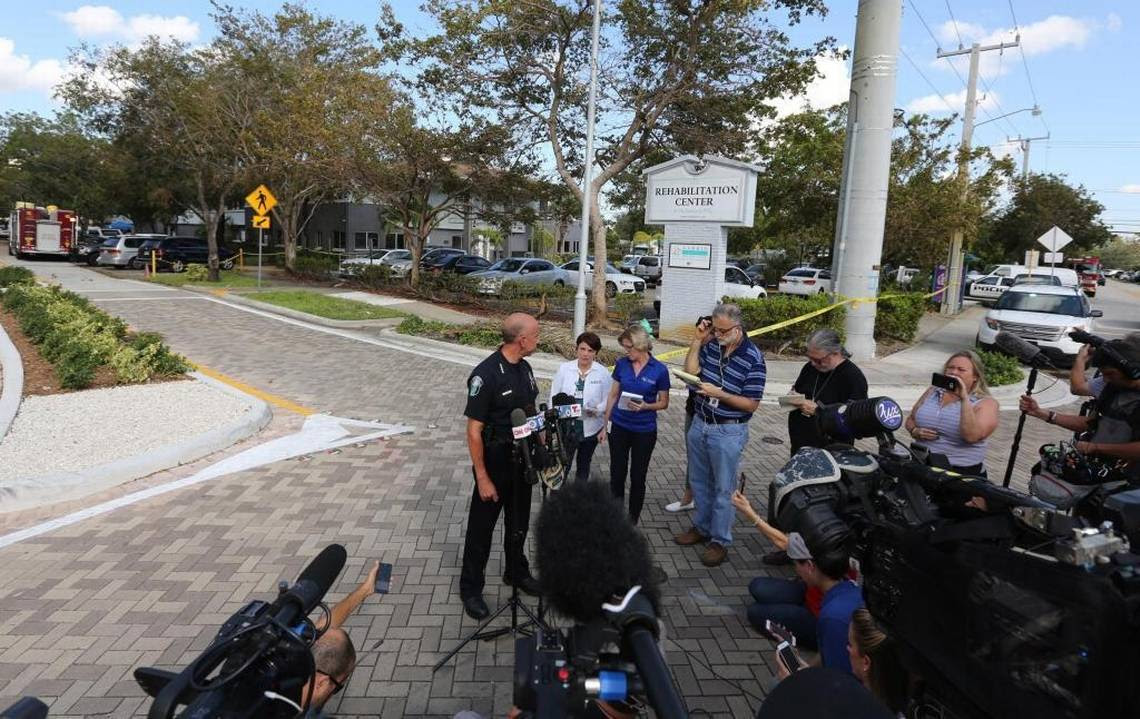

 "Eight Hollywood nursing home residents died Wednesday morning after falling ill in a building left without air conditioning after Irma blasted South Florida.")