CONFIRMED BY ILL. SUPREME COURT– YOU ARE VIEWING THE MOST DANGEROUS BLOG IN ILLINOIS. This blog warranted a 3 year suspension by the ARDC/Jerome Larkin! Mottos: "Sunlight is the best disinfectant". Justice Louis Brandeis ; "If the truth can destroy something, then it deserves to be destroyed" Carl Sagan; "Justice is Truth in Action" Benjamin Disraeli. Illinois uses the ARDC to quash dissenting attorney activist blogs ; "The freedom of the press is one of the greatest bulwarks of liberty, and can never be restrained but by despotic Governments" — (1776-First Amendment preamble adopted by 8 US colonies)
Former Patent and Trademark Attorney practicing in Chicago, Illinois accepting clients nationwide. We also did trademarks, general intellectual property and business litigation. See our website at www.DenisonLaw.com. Now suspended for 3 years by the Illinois Atty Regn and Disciplinary Commission for blogging about corruption and telling truths that the ARDC wants to cover up. And while I am doing that, I will continue on my blogging work. Now I work full time on court corruption and corruption at the ARDC and JIB (Illinois attorney and judge discipline boards)
Las Vegas, NV (KTNV) – Thanks in part to a Contact 13 Investigation, the state is stepping up to help protect our most vulnerable residents.
Contact 13 Chief Investigator Darcy Spears has new information in her ongoing expose of a system that many say fails to protect those who need help the most.
Our series of reports prompted the Nevada Supreme Court to take a serious look at how the guardianship system was failing. One of the key recommendations – create a permanent Guardianship Compliance Office to support and protect the rights of people under guardianship.
Today the Nevada Supreme Court announced Kathleen McCloskey will run the new office. McCloskey previously worked for Nevada Aging and Disability Services.
Her first task will be hiring an investigator and forensic financial specialist to help courts overseeing guardianship cases.
Our investigation revealed heart-wrenching stories where loved ones were isolated from family. Houses were sold without court approval and entire life savings were drained away.
The Guardianship Compliance Office will also set up a toll-free hotline where anyone who suspects abuse or exploitation in a guardianship case can report those concerns.
Excellent new documentary on Guardianship has been released by award-winning filmmaker Billie Mintz (Jesus Town USA, National Geographic) Coming soon to a theater near you, and in real-life, guardianship is coming to you too, if you don’t protect yourself and your loved ones.
Exactly the same scheme found in Orange County CA. between hospitals in the area. Hoag Hospital, the newly privatized acute care facility, Shlomo Rechnitz’s Mesa Verde (that prescribed pain meds right before he was creatively transferred to Hoag that mysteriously disappeared, but that Medicare paid for without question), transferred to Kindred Hospital Westminster with an unnecessary tracheotomy which was purposely left in over 21 days to jack up remuneration and hold him captive, and finally the facility (Pacific Haven)whose Kindred employed doctor finally killed my Dad by reducing his blood pressure using black boxed, unnecessary antibiotic in the fluroquinalone group (not to be given to those with prolonged QT interval or naturally low blood pressure-both of which my Dad has), “he might be getting pneumonia” with unneeded tylenol to dehydrate. After he died, he was discovered after nearly a 2 week delay of his autopsy by Pacific Haven cooperative Omega Society to still have alcohol and Ritalin in his blood in “nontherapeutic” amounts. Of course that means they were once in therapeutic amounts. This was not reported to authorities by the new Regional Autopsy group because it was in nonthereutic amounts, even though he was flushed with enormous amounts of fluids at Pacific Haven after his kidneys failed, to wash him out. So much so, that while he was still alive, he was oozing fluids from every pore on his body, leaving him in a puddle at death. From A to Z this was a homicide coverup. And it was a RICO organised crime. Now we are being sued by Kindred Hospital for nonpayment of Dad’s illegal bill while he was in “captivity” at that hospital. They are now trying to assign the CEO of Kindred, Julie Meyer, to be the new trustee to handle my Dad’s probate (conflict of interest much?). They are also deposing my elderly 93 year old Mom in an attempt to assign a guardian to her and to remove her from the family. We can find no lawyer to go up against Kindred, and now we know why…it is a huge case of organised crime involving the most powerful people in Orange County. We finally filed murder charges after being told we couldn’t…since everyone is getting kickbacks it seems. My Dad left Hoag with a moderate amount of DRGs and the number exploded at Kindred. We can only assume his case was hung in the doctors’ lounge/office at Kindred, because he ended up having over 30 doctors seeing him (literally seeing him…leaning in the doorway and just looking at him followed by $180 to 250.00 bills for every doctor for every day he was there). Hundreds of thousands in doctor’s bills and millions in hospital bills. My Dad got Medi-Cal approved the day before he was murdered by Pacific Haven and we are still trying to get the cash back from them that my Mom paid back for months while awaiting approval. Even our lawyer seems to be part of the problem. This is not the way I had planned on spending my retirement, to be sure! My poor Mom is totally beaten up! We babyboomer kids are also elders in or 60s and 70s, so it is elder abuse on every level. I am hoping we can break up this evil bunch of scoundrels as well.
From Joanne:
I have sent this person a corruption horror story form to fill out. I will let everyone know when I learn more about this case. I have asked him or her to fill out my guardianship/elder abuse corruption horror story form. You can find that here:
We will continue to send a synopsis of these forms out to the authorities, congress and the white house. Still no word from any of them. over 30 murders and persons at risk, but not a peep from the white house, the FBI, states attorneys, anyone. It’s sad.
Also, please pray for Barbara Stone and that she be immediately released. I will be contacting her friends for more information on her case.
while probate court is stealing lives and money and destroying families in many unresolved cases already published on this blog, some stories are on the other end==hope and love and life even into their 90’s.
now I want you to note it did take them 8 years to marry, and she did have to propose, but then again, for true love time stands still
Gertrude Mokotoff and Alvin Mann were introduced eight years ago at a gym in Middletown, N.Y., where they still work out twice a week.
“A mutual friend said to me, ‘I’d like you to meet a very nice young lady,’” Mr. Mann recalled after chopping wood one recent morning at his mountaintop home in nearby Cuddebackville, N.Y.
On their first date, he drove her to a restaurant in Middletown called Something Sweet. “He was a perfect gentleman,” she said, and he added, “There was something about her that made me want to keep on talking.”
In a heartbeat, they became an item, talking about dreams and goals and sharing a life together.
Mr. Mann, who had seen the world through the eyes of a young United States merchant seaman, returned from troubled seas and found enough peace and quiet in Cuddebackville to focus on getting a college degree. Ms. Mokotoff, five years his senior, had designed a home on a high ridge in Middletown and was eager to fill it with good company.
“I kept getting teased about dating a cougar,” Mr. Mann said, laughing. “But the age difference never really bothered me because we just hit it off, and I wasn’t about to let her go.”
He held on tighter with each passing season, and then in June, after one of their many late-night drives home from the Metropolitan Opera House in Manhattan, she decided to buck tradition.
Photo
The bride showing off her garter at the reception. After one late-night drive home, she decided to buck tradition. “I asked him to marry me,” the bride said. “I was tired of chasing after him.”CreditJustin Gilliland/The New York Times
“I asked him to marry me,” she said with a chuckle. “I was tired of chasing after him.”
He obliged her on Aug. 5 at Middletown City Hall, where they exchanged vows before Mayor Joseph DeStefano and 50 family members and close friends. (Fred Fox, the bride’s older brother, who lives in Los Angeles, could not attend but sent along best wishes to his little sister.)
When their guitarist began strumming “Somewhere Over the Rainbow,” Ms. Mokotoff, clutching a small bouquet of white roses, emerged from a side room and began walking slowly toward her future husband, his eyes welling with tears.
Everyone in the old courtroom was smiling, especially Father Time.
“This is like an early birthday gift,” Ms. Mokotoff said before joining hands with Mr. Mann.
She was looking ahead to Aug. 20, a day when the newlyweds will most likely have to work together to blow out the candles on Ms. Mokotoff’s birthday cake — all 99 of them.
“So I’m 99, 98, it’s just a number,” Ms. Mokotoff said. “But today, I’m still 98, right? So let’s not rush things.”
Mr. Mann, who is 94 and received a bachelor’s degree in history last year from Mount St. Mary College in Newburgh, N.Y., agreed that when it comes to being old as opposed to feeling old, the numbers don’t always add up the same.
Photo
“Age doesn’t mean a damn thing to me or to Gert,” the groom said. “We don’t see it as a barrier. We still do what we want to do in life.”CreditJustin Gilliland/The New York Times
“Age doesn’t mean a damn thing to me or to Gert,” he said. “We don’t see it as a barrier. We still do what we want to do in life.”
Long before they were introduced in the gym, the lives of Ms. Mokotoff, a former mayor of Middletown, and Mr. Mann, a retired businessman, had fully taken shape.
Both are widowed from previous marriages, and they have seven children, 12 grandchildren and seven great-grandchildren between them.
“People always ask what it is that keeps us young,” Mr. Mann said. “Of course, one part of it is medical science, but the bigger part is that we live worry-free lives; we do not let anything we cannot control bother us in the least.”
Ms. Mokotoff, who was born in Brooklyn in 1918 to Anna Fox and Abraham Fox, a tailor, graduated from Brooklyn College and received a master’s degree in biology from Columbia.
As a 23-year-old in 1941, she married Reuben Mokotoff, a cardiologist from Manhattan, where they lived until 1952. She then persuaded him to relocate his practice to Middletown, where Ms. Mokotoff would become a wildly popular and well-regarded figure.
Of the Moment
The lifestyle newsletter from the Styles, Travel and Food sections, offering the latest trends to news you can use.
For more than three decades, she was a biology professor, teaching medical technology and microbiology, at Orange County Community College, in Middletown, where she is now a trustee. She also started the first training program for electron microscopy technicians, all while raising four children.
Instead of simply retiring in her late 60s, Ms. Mokotoff decided to give politics a try and was twice elected an alderwoman in Middletown, winning her second election by a single vote.
She went on to become City Council president, and in 1989, at age 71, she became Middletown’s first female mayor, serving back-to-back two-year terms. (She later ran unsuccessfully for New York state senator.)
As mayor, she was credited with spearheading the creation of a modern library in town, and for refurbishing and revitalizing the old Paramount Theater, which was built in the 1930s.
She had been married for 61 years at the time of her husband’s death in 2002.
“My mother has always been a very bold woman,” said the bride’s oldest child and maid of honor, Susan Mokotoff Reverby, 71, herself retired after a 34-year career in women’s and gender studies at Wellesley.
“She always had an interest in helping other people,” Ms. Reverby said. “Despite being a Democrat in a largely Republican town, she was still elected mayor, which gives you a pretty good idea as to how people around here felt about her.”
Photo
After the ceremony, the couple and their guests met at the John’s Harvest Inn, a nearby restaurant where the reception was held.CreditJustin Gilliland/The New York Times
Mr. Mann was born in Manchester, N.H., on May 24, 1923. The son of Mae Mann and Hyman Mann, an insurance executive, he joined the war effort in 1943 as a 19-year-old, eventually serving as a second engineer aboard cargo ships, tankers and troop ships during World War II.
“It was a scary time,” he said. “There were other ships sinking all around us. I was one of the lucky ones who was able to come home.”
Already married by the time he was honorably discharged in 1947, he opened a business in Manhattan, Temporary Office Services Inc., that provided short-term secretarial and clerical help to other businesses.
In 1960, Mr. Mann, who said he “could never stand living in the city,” purchased his country home in Cuddebackville, in the foothills of the Catskill Mountains, which he calls “a little piece of heaven.”
Mr. Mann’s first marriage, which lasted 20 years before ending in divorce, produced his only biological child, Mark Mann, now 71, who served as best man.
His second marriage, to Maybelle Kart, an art historian and artist from Great Neck, N.Y., who had two daughters, lasted 45 years until her death in 2007.
Photo
“From here on out it’s just the two of us, together, for the remaining days of our lives,” the groom said when asked about their plans after marriage.CreditJustin Gilliland/The New York Times
Last year, Mr. Mann became the oldest person to graduate from Mount St.Mary College. The college also awarded him an honorary doctorate this past May. At 93, he drove 80 miles round trip twice a week for nearly two and a half years to accrue the 30 credits needed to obtain a degree he had started working on in his 70s, while he owned another home in Tequesta, Fla. He racked up 60 credits at nearby Palm Beach State College, and 30 more at Florida Atlantic University, before finishing up at Mount St. Mary.
“We studied many historical events like World War II and the Vietnam and Korean Wars, but this was stuff I had actually lived through,” Mr. Mann said. “No wonder I aced most of my exams.”
Keith Schuler, who has been Mr. Mann’s neighbor for the past 20 years, called him “an inspiration, and an incredible human being.”
“This man is 94 years old, and I see him outside chopping down trees, dragging logs out of the woods with his old Ford tractor, stacking firewood and cutting the grass,” Mr. Schuler said. “Then I see him and Gert running around like two high school sweethearts, holding hands and kissing, and driving to New York City on weekends. If I didn’t see it with my own eyes, I wouldn’t believe it.”
Mr. Schuler was on hand at City Hall for the ceremony, which he called “a once-in-a-lifetime event,” along with other guests who ranged in age from Ms. Mokotoff’s 7-month-old great-grandson, Jack Handman, to the bride herself. (Ms. Mokotoff would have been the second-oldest person at her wedding if her older brother, Fred, 103, had been able to attend.)
During the ceremony, the groom entertained his guests with several stories about his new bride, including her first-ever sleepover at his home.
Photo
“People always ask what it is that keeps us young,” Mr. Mann said. “We live worry-free lives; we do not let anything we cannot control bother us in the least.”CreditJustin Gilliland/The New York Times
“We had spent the whole day together, and at night, I set up the bedroom for her, and I was going to be in the next room,” Mr. Mann said. “She gets into the bed, and I say good night and start walking out, and she says, ‘Where are you going?’”
After exchanging vows and wedding rings, the couple were showered with applause, well wishes and hugs, as several of the guests began to cry.
“Their enthusiasm is contagious and their certainty of a destiny together is inspiring,” said Mayor DeStefano, who is Ms. Mokotoff’s political protégé. “We ask that the vision they have for one another always reflects the attraction that first brought them together,” he said before pronouncing them husband and wife.
After the ceremony, Mr. Mann managed to slip out a back door and, moments later, reappeared in front of City Hall, behind the wheel of his red Toyota Corolla. As the guests began spilling onto the sidewalk, he stepped on the gas pedal and zipped past them down the street, noisily dragging soda cans tied to the back bumper below a sign that read “Just Married.” He took it for a spin around the block before returning to pick up his new wife.
“This is fabulous,” said Charles Mokotoff, the bride’s son, an internationally known classical guitarist who lent his musical talents to the ceremony.
Shortly thereafter, the couple and their guests resurfaced at John’s Harvest Inn, a nearby restaurant where the reception was held.
Just before dinner, the bride raised the roof, and the groom’s eyebrows, when she sat in a chair and hiked up her wedding dress just above her knee to reveal that she was wearing a garter.
“Very nice,” Mr. Mann said, his cheeks turning as red as his Corolla. “I must admit I like it.”
The groom was then asked how his life might change now that he’s a married man, again.
“Nothing is going to change,” said Mr. Mann, taking his wife’s hand as he spoke. “We’ve already done so much together, and let’s face it, we both know that neither of us are likely to find anyone else,” he said with a grin. “So from here on out, it’s just the two of us, together, for the remaining days of our lives.”
SNF owner led record $1 billion Medicare fraud ring, authorities say
The owner of more than 30 Miami-area nursing homes and assisted living facilities has been charged with leading a national record $1 billion-plus Medicare fraud scheme. Also accused in the alleged sprawling conspiracy that involved fraudulent placement and billing for thousands of beneficiaries were a hospital administrator and a physician’s assistant.Philip Esformes
At the center of the storm is Philip Esformes, who is accused of illegally shuffling residents in and out of his facilities, even enticing drug addicts with illicit opioids to go where directed. Esformes, Odette Barcha and Arnaldo Carmouze were each indicted for conspiracy, obstruction, money laundering and healthcare fraud, federal prosecutors announced Fridaymorning.
“This is the largest single criminal healthcare fraud case ever brought against individuals by the Department of Justice, and this is further evidence of how successful data-driven law enforcement has been as a tool in the ongoing fight against healthcare fraud,” said Assistant Attorney General Leslie R. Caldwell (left) of the Justice Department’s Criminal Division.
The conspirators allegedly admitted unqualified individuals into Esformes’ skilled nursing and assisted living facilities and billed Medicare and Medicaid inappropriately for services, dating back to at least 2002. The trio also allegedly received kickbacks to send beneficiaries to mental health and home health care providers, who also allegedly performed medically unnecessary treatments. Kickbacks were hidden as charitable donations and sham lease payments, officials say.
Esformes, 47, is no stranger to authorities. He paid $15.4 million in 2006 to resolve civil federal healthcare fraud claims for “essentially identical conduct,” officials noted at a press conference Friday. The conspirators continued with more sophisticated means to launder money and at least temporarily hide Esformes’ identity from investigators, they added. Ultimately, advanced data analysis and forensic accounting techniques by the FBI and Office of Inspector General led to the unraveling of the alleged scheme, officials said.
Esformes defense attorneys Marissel Descalzo and Michael Pasano issued a statement Fridaydeclaring his innocence.
“Mr. Esformes is a respected and well-regarded businessman. He is devoted to his family and his religion,” the statement said. “The government allegations appear to come from people who were caught breaking the law and are now hoping to gain reduced sentences. Mr. Esformes adamantly denies these allegations and will fight hard to clear his name.”
Prosecutors filed papersFriday in an effort to detain Esformes before trial. His detention hearing is set for Aug. 1, according to the Miami Herald.
“The conspirators were ruthlessly efficient,” the Justice Department’s Caldwell said. They allegedly paid bribes and kickbacks to keep patients nearing Medicare stay limits rotating to other corrupt providers, she added (see government graphic at right).
“Among the thousands of people cycled through the fraudulent network were, for example, drug addicts who were allegedly prescribed opioids – including OxyContin and Fentanyl – and other narcotics in order to entice them to stay in facilities where they didn’t belong,” Caldwell said.
Esformes is charged with obstruction of justice for allegedly trying to fund another co-conspirator’s flight out of the United States so that he could avoid trial in Miami, authorities said. They claim he wrote numerous checks to help fly the individual to Israel.
In a separate case, Esformes and his father, Morris Esformes, agreed to pay $5 million to settle a federal whistleblower lawsuit just six days before it was to go to trial in 2013. They were charged with accepting a multi-million dollar kickback from pharmacy giant Omnicare in 2004. The kickback allegedly came as part of a $32 million payment for Total Pharmacy, which was partially owned by Philip Esformes. In exchange for the money, Omnicare secured pharmacy contracts with two dozen nursing homes affiliated with the Esformeses, the suit charged.
Barbara is a true heroine and should be reinstated with honors as an attorney in both New York and Florida.
She showed what the system was–money grubbing, despicable and onerous.
From Ken Ditkowsky:
The Barbara Stone case is representative of the ELDER CLEANSING/HUMAN TRAFFICKING SCANDAL and illustrative of the corruption and total disregard for America’s core values that has become an epidemic amongst our ‘ruling class! The elite are so used to ignoring us – the great unwashed – that the South Florida POLITICAL ELITE fresh from victories over the public in the condominium scandal feel empowered to run roughshot over any who oppose their dictates.
Like all scandals the ‘power players’ all have ‘warts’ and some of the good guys do and say things that are bad strategy, bad form, and downright stupid. The Political elite HAVING THE UNDYING LOYALTY of their knee jerk supporters and the media thus frame the aggreived in the worst possible light. So obnoxious and amoral are the elites that they and their supporters have no compunction and no conscience – they can even rationalize the killing for profit of 12 elderly residents of the Hollywood Hills nursing home and blame Governor Scott for the carnage. The fact that that so as to rob Medicare of a few dollars these miscreants nursing home operators could not transport (or call 911 for the town of Hollywood Florida to transport) the helpless elderly a few yards across the street to safety. The fact was that transporting the victims across the street to a safe environment would have cost the operators of the nursing home a few dollars and THEY HAD TO WEIGH the safety of their human commodities over the dollar loss – the dollar loss won! 12 people died.
We have the very same situation in the guardianship of Helen Stone and the persecution of Barbara Stone. We just do not approve of overt discourtesy toward our revered institutions, its servants, or law enforcement. We believe we are a NATION OF LAWS and even though every one else is a ******, we have to uphold a STANDARD. Dissenting – does not mean descending into immaturity and they very type of conduct that is exhibited by the corrupt Political elite. We, the great unwashed are better than that!
Now let’s look at the facts. Helen Stone, an elderly human commodity, became an object of profit for a corrupt guardian and jurist who were actively pursing ELDERLY HUMAN TRAFFICKING. She (Barbara Stone) interrupted the isolation and dehumanization process of her mother and did so openly and notoriously. As has been disclosed on numerous blogs once a human trafficking victim falls under the control of the ELDER CLEANSERS that individual has to be stabilized. To obtain maximum HEALTH CARE DOLLARS and the greatest Medicare payment the most efficient warehousing technique is the goal. Opioids are routinely employed to induce a ‘zombie’ effect, but while these chemicals are performing their function i is necessary to address nutrition and delivery of services.
Routinely therefore the opioid serviced individual is fitted with a feeding tube and a Cather so that bodily functions do not require too much human attention. Thus, nutrition and excretion require minimum costs are substantially reduced and other services also reduced to their lowest common denominator. For instance, physical therapy does not require a technician – wheeling the elderly person into the hallway meets the criteria and a hours PT can be billed to Medicare at full rates. The cost to the facility is nominal.
Barbara Stone, interrupted the orientation of her mother. She without warning and permission removed her mother from the feeding tube routine and demonstrated the falsity of the medical authorizations for the same. She took her mother out to a restaurant and enjoyed a meal with her. The entire orientation process approved by the Court was demonstrated to be FRAUDULENT and by her action Barbara Stone jeopardized the economic prospects of the Judge, the guardian and other members of the Political elite. The entire guardianship for profit scenario was placed in jeopardy!
This aforesaid act by Barbara Stone was so reprehensible that the Judge was duty bound to extract the most harsh penalties against Stone and make an example of her so that such travesties would not occur in the future. Ms. Stone resisted and worse yet formed alliances with the some of the most radical individuals – these individuals lost all sense of proportion – some demanded HONEST INVESTIGATIONS and one of said individuals exposed on her blog (MaryGSykes) judicial corruption.
As I personally am one of the miscreants who objects to the HUMAN TRAFFICKING in the Elderly by those who prosecute Barbara Stone and other who object, Governor Scott, President Trump I as a member of the great unwashed demand an HONEST INVESTIGATION and the restoration of the Equal Protect of the Law to all citizens including the elderly and the disabled.
From Joanne:
It turns out there is absolutely no evidence, no clinical study that a feeding tube and catheter is better than feeding a patient who so desires, any food they want. (see prior blog post on this). But it is routine in nursing homes to plunk down a tray and pick it up 15 minutes later. Joy Ketelhut, in observing the feeding of her mother at Warren Barr Nursing Facility in downtown Chicago, noted one day she was late to feed her mother. So she asked one of the nurses there about her mother’s meal and why wasn’t she being fed? The answer, a huge lie, “oh she ate earlier”–but then she found her meal on the cart, untouched with her name on it.
Every years thousands of elders in nursing homes are admitted to hospitals due to malnourishment and dehydration, my nursing friends tell me. Sometimes it’s on purpose because the hospital needs to fill beds. If a nurse complains or files a complaint, they are fired on the spot and blackballed. No one ever investigates the malnourishment and dehydration of an elder in a nursing home.
Similarly, I am told they often die. Funeral directors must fill out a “condition of the body” report. These reports are filed and no one does anything with them, I am told by funeral directors.
No one cares about the elderly and disabled, if it weren’t for the blogs.
The sad part is, the ARDC is fighting this blog. See my prior post where they claim this blog is a lie, I make judges and attorneys cry when I call them on the carpet for perfidy and mendacity in the probate courtroom.
This is not my job. I’d love to return to engineering and patents and all that fun stuff, but I will not and cannot when there are seniors and disableds at risk and attorneys at the ARDC like Larkin, Opryszek and Smart patently allow our elders and the disableds to be abused.
Barbara Stone is a heroine. She showed how her mother did not need a feeding tube.
She took her mom out for shopping and a meal and the two were happy.
But this interfered with the state’s plan to medicate, isolate and then terminate her for her money. Go look at the Stone dockets I recently posted. It’s all about the money. All the money items are sealed. Reported the brother stole some $600k from Mom, and I see that’s not resolved either, tho it was years ago.
Barbara Stone must be immediately released and Roy Lustig and the crooked judges who put her there should be disbarred and removed from office.
I just found this on the internet. I had heard about it, but didn’t find anyone publishing it yet–I know I would. To the ARDC, you can run, but you cannot hide. Someone will rat your out. When the ship is sinking, the rats sing.
I gotta tell you I am proud that they did so many many pages on me. A nobody blogger, no money, mother of 4, I live on donations, up against a $17 million enterprise and they are CLEARLY AFRAID OF THIS BLOG.
Recently Lawyer and Activist Barbara Stone was told she could avoid 30 months in prison by giving up her “blogging co conspirators”. Too funny. I am told she said “shove it” and “bring it on”.
Me too ARDC. the Sykes Case has not been investigated. Judge in probate have not been disbarred or even investigated. $3 MILLION IS MISSING AND UNACCOUNTED FOR IN THE MARY G SYKES ESTATE and you publish this nonsense and waste tax payer/attorney money on this crap you call CLE. I note you don’t mention the fact you have not investigated the Sykes case, you quashed all discovery and so did the Judges in the Sykes case and you don’t mention $3 million in assets MINIMUM are missing from all inventories filed.
Not so Smart, isn’t that?
Shame on you.
Go get some ethics yourself.
I am not giving into your lack of moral compass and neither is Barbara Stone, Kenneth Ditkowsky or Lanre Amu.
You want to make us martyrs and put our heads on poles in front of your offices, go right ahead. Us bloggers of truth and justice are here and we are NOT going away.
You can jail us, take away our licenses, malign us in your fake CLE on (lack of) ethics and we don’t care.
You can’t buy us off or bury us, so why not take the safe harbor and relicense us and admit you were wrong. I am demanding your apology for the 100th time. And then go investigate the Sykes case. I will be glad to help you and draft those subpoenas. In fact, I’ll do it again on this blog for you. Just file them, please.
Sooo many people are begging you and imploring to investigate corrupt probate cases where people are MURDERED and their estates looted by judges, attorneys and court room vendors and you do NOTHING but send out form letters telling the bereaved widows and orphans to get f’ing lost.
Go look here to see what the ARDC is so afraid of: (pages 47+)
And btw, you DONT’ have my permission to use my image, my blog or anything for you alleged “training session.” All of that is copyrighted. And you have now absconded with my image rights. (As for my home address, which you pretended to censor, I don’t care, it’s 5700 N Natoma Ave in Chicago. Everyone loves me there).
And here’s a rule for you: you’re all a bunch of shameless liars, thugs and goons. Go FORGET yourselves. And you can quote me on this ENTIRE POST with a date in your CLE. Why do I have to require a date? because I don’t know if you have changed my text, you have no morals or shame about what you do to MURDER and KILL and COVER UP.
I have absolutely no need to get a license or get back a license from a bunch of shameless psychopathic goons and thugs. I’d rater slit my own throat.
15 elders died in an abusive nursing home in Hollywood Fla. I bet plenty of those patients at that nursing home were in guardianships and forced to live in that slum and ghetto for the elderly. That’s the type of housing the ARDC protects for senior citizens. They allow judges and attorneys to force disabled persons into nursing homes, loot their etates and then narcotize them in the end. They write horrid letters to victims’ families that they don’t care. (Sykes, Gore, Drabik, Brouckmeersch, Frake, and many others–all abused in nursing homes and murdered there, ARDC complaints all dismissed–complaints on this blog never investigated)
From another website, here is the complaint (probably one of many) that got a bunch of judge/lawyer whitie tighties in a bunch and got her jailed and disbarred with a great big rubber stamp
Please help and report – my mother is being murdered by a judge
Barbara Stone
244 Fifth Avenue # B 296 New York, NY 10001
Tel: 212.994.5482 Fax: 212.994.5481
bstone575@gmai l.com
Chief Justice Jorge Labarga; Justice Barbara J. Pariente; Justice R. Fred Lewis; Justice Peggy A. Quince; Justice Charles T. Canady; Justice Ricky Polston; Justice James E.C. Perry
Florida Supreme Court 500 South Duval Street
Tallahassee, Florida 32399-1925
Re: Attorney Whistleblower of Corrupt and Criminal Activity of Judges, Prosecutors and Attorneys that are all Members of the Florida Bar, Retaliation by The Florida Bar against Whistleblower Member of the Florida Bar and the need for whistleblower protection
Dear Chief Justice Labarga and Judge Pariente, Judge Lewis, Judge Quince, Judge Canady, Judge Polston and Judge Perry:
As a Florida Bar member, I am mandated under Rule 4-8.3 to report misconduct by attorneys and judges. Under the Jud icial Canons 3, Judges have the same duty and obligation.
With this letter, upon information and bel ief, I am summarizing the vicious retal iation to which 1, as a Member of the Florida Bar have been subjected as a resu lt of my acting as a whistleblower and exposing the rampant corruption in the probate I guardianship enterprise in the court of Michael Genden and the horrific abuse, terror and torture to which he and the highly corrupt “guard ian” enterprise he has installed to humanly owned my mother.
The attached letter documents the crimes perpetrated against my mother by Michael Genden, ajudge in the probate comt in the 1 1•h Circuit and member of the Florida Bar and Roy Lustig, an apparent criminal disguised as an attorney and other Judges and attorneys who are Members of the Florida Bar who hold my mother hostage and subject her to unimaginable cruelty and crimes against humanity to stop me and retaliate against my mother and against me, a mandated reporter of wrongdoing as an attorney and a member of the Florida Bar from reporting and exposing the heinous criminal activities and racketeering ring engaged in human trafficking, money laundering, wire and mail fraud, extorting the assets and personal property of elderly adults who are being preyed upon by this criminal enterprise that operates out of the courthouse under the guise of “guardianship.”
Media from all over the country are exposing this criminal guardian racket including Susannah Frame, Chief Investigative Reporter at King TV and Janet Christensen Obrien who flew in from Seattle to make a prominent film that received a prestigious IMDb ranking documenting my mother’s story and others.
I am a whistleblower to the criminal and racketeer activity by Michael Genden, Roy Lustig and other judges and attorneys who are members of the Florida Bar. Michael Genden is an accomplice to repeated attempts to premeditatively murder my mother by drugging her into a stupor with chemical restraints that carry black box warnings, isolating her by illegal court “edicts” denying me my right to the court and covering u p the fraud, perjury, extortion and felony crimes of Roy Lustig, Jacqueline Hertz, Blaire Lapides and Alan Stone, each who are guilty of felony crimes as set forth in the attached letter.
This will seek whistleblower protection for me and on behalf of my mother and her emergency admission to the hospital as she is in grave danger. I fear for my safety and the safety and life of my mother.
And if you think that Illinois is any better, all of lawyers Kenneth Ditkowsky and Lanre and myself were suspended for long periods (3 to 4 years) for reporting corruption to the Judicial Inquiry Board of Illinois and the Illinois ARDC wherein they shot the messenger! That’s right, in Illinois, a lawyer cannot complain about corruption, run a corruption blog or they risk facing a trial where (no kidding) and ARDC lawyer named Melissa Smart will claim that a corruption blog is like yelling “fire” in a crowded theater.
I am not making this stuff up.
I submit it is only possible if the theater is filled with crooked cops, judges and lawyers, but apparently Melissa Smart is saying that’s what we have a plethora of in Illinois.
I have many times said the U.S. prisons are packed with innocents. Here’s proof.
○ When a real estate attorney discovered her mom was rapidly deteriorating due to neglect at a nursing home, she took her mom out for a meal at Denny’s (where she was arrested) because a prior court order stated her mom HAD TO stay in the nursing home.
Barbara’s saga began in 2013, when, alarmed at the condition of her mother in a facility into which she had been remanded by her court-appointed guardian, Jacqueline Hertz, Barbara took Helen out of the facility and to lunch at a nearby Denny’s. Barbara was then arrested and charged with a multitude of crimes, including custody interference, elder abuse and kidnapping.
Barbara, who was a real estate attorney in New York, had no prior criminal history before she took her Mom to lunch and has accumulated over 500 in-jail days since the “Denny’s debacle.”
SO GET THIS: They let crack heads, car thieves and murdering illegals run amok, and jail a real estate attorney for taking her mom to Denny’s just because a court said she had to stay in a particular nursing home and never leave.
I have said numerous times here that a majority of the people in America’s prisons are highly productive law abiding people that are in there for the sole purpose of feeding work into the prison labor system. They don’t want anyone who is actually worthy of jail in jail because that dilutes down the quality of the prison labor force. So the cities are cesspools and illegals run amok, getting acquitted after they shoot and kill people on a pier or wherever else.
HERE IS
THE PUNCH LINE
THAT PROVES
WHAT I SAID ABOVE IS TRUE:
This woman has gone on to blog against nursing home abuses, and is part of a group of bloggers that are trying to change the corrupt situation of abuse in nursing homes, AND SHE WAS TOLD SHE’D WALK COMPLETELY FREE RATHER THAN FACE THREE ADDITIONAL YEARS IN PRISON IF SHE GAVE UP THE NAMES OF THE OTHER BLOGGERS, SO THEY COULD BE JAILED FOR ONLY TRYING TO STOP THE CORRUPTION IN THE NURSING HOMES BY POSTING ABOUT IT TO THE INTERNET
Speaking from Florida, Dr. Sam Sugar, who is the head of Americans Against Abusive Probate Guardianships, a grassroots advocacy group, had this to say about the recent actions in Barbara’s case:
○ The reports that a defendant in a criminal pleading was offered a reduction in sentence in return for unmasking the identities of Americans exercising their First Amendment Rights online with comments about abusive guardianship courts are a chilling reminder that the Gestapo tactics of Nazi Germany have found a new home in Miami Dade courts – the real secret society!
HERE IS SPECIFICALLY WHAT THIS WOMAN WAS BLOGGING AGAINST:
The nursing homes have become an industry which seizes the assets of the people who are put in them, (houses and whatever else). They then liquidate those assets, and price their care at astronomically high levels, until the total value of the assets is used up. Once they are used up, they then cause the death of the people they are supposed to care for.
Her mom’s assets ran out, and they were trying to kill her with neglect. So she took her mom to eat elsewhere, and because the court ordered that the nursing home now owned her mom, the police went to Denny’s and threw her in prison. She has now lost everything, including her career as a real estate attorney.
And that, dear folks, is precisely why America has the world’s highest prison population, all the while the real thugs continue to rape rob and murder unabated. They’ll throw a real estate attorney in jail for protecting her mom, and let an illegal who shot and killed a woman on a San Francisco pier be totally acquitted and walk free. There is no question that the real motiviation for this is to feed high quality people into a prison labor system, which happens to be the largest prison labor system in the world. THAT IS EXACTLY HOW THEY GET THE PRECISION GUIDED BOMBS, DRONES, AND CRUISE MISSILES MADE BY QUALIFIED PEOPLE. Those are mostly made by a prison work force. That’s f^**ed UP.
Raytheon, Lockheed Martin, General Dynamics, Boeing, and BAE Systems all use prison labor to manufacture military equipment. Prisoners are often forced to labor under sweatshop style conditions, and when they are paid they often receive meager wages like 23 cents an hour.
They are jailing high quality people on the most spurious of charges and using them to manufacture high tech weapons. Maybe that’s why all the software companies had to hire people from India – too many of America’s white male engineers were stuffing the prison labor system on horse shit charges usually related to the family court system. That way, the people who are seeking to destroy the United States can wipe out families and the best of people in ONE WHACK – at the same time they get the weapons built which they intend to destroy much of the rest of the world with. And they get that done via virtually free skilled labor. A WIN WIN WIN for disgusting low life tyranny.
Just about every other docket entry (other than Barbara Stone complaining about how her mother is being abused in probate) is about Atty Roy Lustig and his cash cow firm getting paid. AND MANY OF THE ENTRIES ARE SEALED.
Now you all know from this blog, the courts are supposed to be open and democratic, nothing is supposed to be sealed unless it is of the utmost dire urgency. Not even state secrets can be sealed more than a few days after being declared a state secret well, because, that’s just old news someone’s got someplace on the internet.
More important, where is the constitutional requirement that every document be examined and there be a hearing and findings of fact and conclusions of law placed on record as to why the document was sealed and that must be public information on file with the clerk of court. WHERE THE F IS THAT?
So the real question is, why are attorney fee petitions and fees granted illegally and unconstitutionally sealed in Miami Dade?
Because the judge is corrupt, the attorney is corrupt and both need to be disbarred, that’s why.
Both put Helen Stone in an abusive situation where she ended up with malnutrition, dehydradation, lacerations, contusions and broken bones and multiple infections in ICU for THREE WEEKS. NONE OF THEM WENT TO JAIL FOR THAT–JUDGE GENDEN, ATTY LUSTIG GUARDIAN BLAIR LAPIDES OR THE 2 HATIAN CAREGIVERS–BUT THEY SHOULD HAVE.
Meanwhile, Barbara Stone is rotting in jail for crimes she did not commit.
please cut and paste the below and write all these authorities
To the above Miami Dade Officials:
It is my understanding that a trial was recently held in Miami Dade wherein a Ms. Barbara Stone, attorney activist for the poor, elderly and disabled, was held in contempt of court for a wide variety of non cirminal activites.
This is to advise you that any criminal prosecution of her is wrongful and detrimental to the health, welfare and safety of the disabled persons and senior citizens of Miami Dade and across the nation. Barbara is a tireless advocate for all of them, many of whom have been targeted for abusive guardianships, much like Helen Stone, where seniors and the disabled are targeted, isolated, chemically and physically restrained for months on end, forced to have abusive, dangerous caretakers or forced in to dangerous abuse nursing homes (nursing homes are nothing but slums and ghettos for the elderly/disabled and must be abolished).
Helen Stone’s case is typical. While Barbara initiated a guardianship proceeding, little did she know how hopelessly abusive they are. Barbara frequently visited her mother in Miami for weeks at a time every month or so. She had Mother Helen set up in condo where she could work out at a nearby health club, grocery shop and socialize. At the beginning, Mother Helen was in relatively good health and ambulatory and rarely sick. Then the court appointed an abusive guardian who hired 2 Hatian caregivers who barely spoke English. By court order, Barbara was moved out of the home and the 2 abusive caretakers moved in where they ate all the food, drank everything, and in 2 or 3 months Mother Helen was admitted to the ICU with the following: severe dehydration, malnutrition, contusions, lacerations, broken bones and infections. The States attorneys offices and FBI were immediately alerted by Helen and they did nothing. Immediately upon release, Mother Helen was returned to the same abusive situation with the same abusive caregivers and guardian by Judge Michael Gender and Attorney Roy Lustig (who should be imprisoned and disbarred for crimes against humanity and the violations of both Helen and Barbara’s civil and human rights). The probate court then proceeded to put Mother Helen in a string of nursing homes where she did not want to be, she wanted to be back at her condo with her daughter Barbara.
In the end, these seniors are typically murdered by narcotizing them to death and then quickly cremating them to destory all evidence.
Barbara is innocent of all crimes. She needs to be immediately released and treated as the heroine she truly is.
Please advise me of anyone else I can contact to quickly get this matter resolved. I would like all the emails and fax numbers for all judges and attorneys involved.
They need to be disbarred and indicted.
So far I have: Judge Tim Baily, Judge Jorge Labarga, Michael Genden, and attorneys Roy Lustig
Please advise me of whatever contact information you have and I will post. They all need to be removed IMMEDIATELY
Send her this email or a similar email demanding the immediate release of Barbara Stone under the First Amendment.
She has done nothing wrong.
I am writing to you to demand the immediate release of Lawyer Barbara Stone. Her mother was taken from her in an abusive guardianship. During this proceeding, where Judge Michael Genden and Attorney Roy Lustig tried to murder both Helen Stone and Barbara Stone, Mother Helen Stone actually spent 3 weeks in the ICU for malnutrition, dehydration, numerous infections, lacerations and contusions. After she was released she we returned to her abusers by both Lustig and Genden. I and the readers of my blog are demanding the immediate release of Barbara Stone and that Genden be removed as Judge and Roy Lustig be disbarred for his crimes against Helen Stone, violations of her civil and human rights and those of Lawyer Barbara Stone. Lawyer Barbara Stone is an attorney activist and heroine of every probate victim across the nation. Thank you. You can see how there are numerous blogs about corruption in guardianship These are very popular blogs: http://www.marygsykes.com, probatesharks.com, http://www.aaapg.com, and the nasga blog.
Families and friends, who wish to start a new account with GTL, should contact GTL’s AdvancePay Customer Service Department for more information about the Inmate Family Prepaid Program.
You can also contact GTL to block inmate telephone calls.
AdvancePay Service Dept. Department 1722,
Denver, Colorado 80291-1722
Phone 1-877-650-4249 or 1-866-230-7761
Customer Service Hours (Central Time):
Monday – Friday 6 a.m. to 10 p.m.
Saturday & Sunday 8 a.m. to 7 p.m.
“Chicago FBI Civil Rights” <civilrights.cv@ic.fbi.gov>, “Fax to Director Wifredo Ferrer US DOJ Miami FBI” <3055307679@faxorama.com>, “George Piro Miami FBI” <george.piro@ic.fbi.gov>, “Wilfredo Ferrer US DOJ Miami FBI” <wifredo.ferrer@usdoj.gov>, “ADA complaints USDOJ.gov FBI” <ada.complaintadmin@usdoj.gov>,
I believe the White House has shut down the human rights and civil rights emails to the FBI, so if you know of others, please email me and I will post.
Another evil judge to remove is Jorge LeBarga, I don’t have contact info for him yet
Judge Tim Baily was brought in from Broward County and is the Presiding Judge there. He was brought in because Barbara apparently (and rightfully) has ticked off far too many of the Dade County Judges due to her vigorous advocacy of the abused elderly they just wanted to sweep under the carpet (poor babies–go buy a spine and do your jobs!)
I am waiting to hear from Barb’s Rabbi, Ed Farber as to getting his congregation and the local synagogues to write letters of support for this brave heroine of the elderly.
Pray for her and her Mother.
Now that her mother has passed, I pray she starts up all her blogs again. What these people do is only worthy of a prized child of Satan.
Today I talked with RS and EB and they informed me that guardianship activist Barbara Stone has been taken into custody and is at the Miami Date Metro Lock up for a probation violation. This is BS, she is an innocent woman.
this woman is a saint and has spent countless hours on the phone helping gship and disabled persons and their families when faced with the highly corrupt Miami Dade court system–a system where prosecutors openly run to the judge’s chambers and twitter ex parte over a criminal defendant. You can’t possibly get more corrupt than that.
As you may recall, Barbara Stone was an attorney (her licensed was ripped away for blogging honestly and revealing massive corruption in Miami Dade, Fla.). She worked tirelessly and had to endure the heartbreak as a guardianship was filed (she requested it, little did she know how abusive these were in Fla), then she was told she could not stay any longer at her mom’s house and visit with her (Barbara had arranged a condo for her mom to live in where she could easily grocery shop, go to the health club, socialize). It was a 3 bedroom condo. What the abusive guardian and Judge Michael Genden did was move Barbara out, move in 2 Haitian caregivers who barely spoke English into the 2 other bedrooms, they ate all the food, and after 2 or 3 months, Mother Helen Stone was found malnourished, dehydrated, with massive infections, lacerations, contusions and even broken bones. Mother Helen then spent 3 weeks in ICU. What did Judge Genden do about this? Return Mother Helen to the abusive caregivers and guardian until she was again hospitalized for the same (malnutrition and dehydration) then she was put into a series of nursing homes, places where she never wanted to be.
Next, at the first nursing home, Barbara is granted visitation. But Mother Helen is on a feeding tube and diaper. No matter, Barbara puts her in a wheel chair and they proceed to Dennys to get a burger and forget about the feeding tube. Mother Helen is estatic because she is always hungry. No one has fed her enough in months. She has no problem eating and chewing up happily a burger and she loves the shake.
Then they go shopping and check into a hotel for a nap. Next thing you know, police are at the door charging Barbara with kidnapping and interfering with the care and custody of an elder. WTF is that?
Barbara then creates numerous blogs and petitions online to expose the perfidy of Judge Michael Genden and Atty Roy Lustig (who is in on the gship scams) and next thing you know, Barbara is hung out to dry.
This was a couple of years ago. I understand Helen has now passed, bless her soul, she loved Barbara very much, and Brabara was and is devoted to justice for her mom.
I am told at the trial, her PD did not put on any favorable character witnesses. But Judge Genden and Roy Lustig showed up with blood on their fangs, ready to protect their precious cash cow–abusive guardianships where people are forced into nursing homes, psychotropic drugs and restraints, a feeding tube at one end and a diaper at the other and when the money runs out, the elder is narcotized to death while food and water is with held. Then a quick cremation.
Barbara did nothing wrong, nothing criminal. Soon as I can, I will get the emails of people to write to and demand justice for Barbara.
Judge Michael Genden needs to be removed.
Attorney Roy Lustig needs to be disbarred for his role in all of this.
Please pray for Barbara as she languishes in jail for crimes she did not commit.
Are legislators really concerned about the (lack of) ethics of Family Law lawyers? Maybe. Are legislators concerned about the ARDC’s (Attorney Registration and Disciplinary Commission) failure to investigate? Probably not.
Attached is a letter from the then House Judiciary Committee to the ARDC regarding their concerns. It is signed by EVERY member of the Judiciary Committee.
Yet, what has the ARDC done? Nothing. They just ignored it. Why? Because Family Law is the biggest revenue generator for attorneys: so no one wants to touch it, even if there is a “call” to look into it.
I know, some can argue that this letter is concerning GALs and Child Reps. True, but what are GALs and Child Reps? They are lawyers selected from Family Law Attorneys. (I have a lot to say about GALs and the GAL program, but that would take another several weeks of emails to get out that I will save that for the time we reintroduce legislation regarding these low-lifes.)
During the time of this letter, what else happened? Nothing, except the members of the Judiciary Committee feigned concern before the Advocates while they give a wink and nudge to fellow attorneys knowing that nothing would happen. At least we have this letter to waive around when we are challenged as disgruntled people who are attacking those hard-working attorneys.
So, if you are in a position where you have to speak negatively of attorneys, waive the letter and let them know that EVERY member of the Judiciary Committee signed this letter, and yet, nothing has changed regarding investigation of the practice of Family Law.
Hopefully, with 50/50, we will see a drop in GALs. When/if we reintroducing legislation regarding GALs, you’ll be hearing a lot more on the subject.
From: An Illinois Lawyer. Name withheld upon request.
The DT administration — reversing guidelines put in place under President Barack Obama — is scaling back the use of fines against nursing homes that harm residents or place them in grave risk of injury.
The shift in the Medicare program’s penalty protocols was requested by the nursing home industry. The American Health Care Association, the industry’s main trade group, has complained that under Obama inspectors focused excessively on catching wrongdoing rather than helping nursing homes improve.
“It is critical that we have relief,” Mark Parkinson, the group’s president, wrote in a letter to then-President-elect Donald Trump in December 2016.
Since 2013, nearly 6,500 nursing homes — 4 of every 10 — have been cited at least once for a serious violation, federal records show. Medicare has fined two-thirds of those homes. Common citations include failing to protect residents from avoidable accidents, neglect, mistreatment and bedsores.
The new guidelines discourage regulators from levying fines in some situations, even when they have resulted in a resident’s death. The guidelines will also probably result in lower fines for many facilities.
The change in policy aligns with DT’s promise to reduce bureaucracy, regulation and government intervention in business.
Dr. Kate Goodrich, director of clinical standards and quality at the Centers for Medicare & Medicaid Services (CMS), said in a statement that unnecessary regulation was the main concern that health care providers raised with officials.
“Rather than spending quality time with their patients, the providers are spending time complying with regulations that get in the way of caring for their patients and doesn’t increase the quality of care they provide,” Goodrich said.
But advocates for nursing-home residents say the revised penalties are weakening a valuable patient-safety tool.
“They’ve pretty much emasculated enforcement, which was already weak,” said Toby Edelman, a senior attorney at the Center for Medicare Advocacy.
Medicare has different ways of applying penalties. It can impose a specific fine for a particular violation. It can assess a fine for each day that a nursing home was in violation. Or it can deny payments for new admissions.
The average fine in recent years has been $33,453, but 531 nursing homes amassed combined federal fines above $100,000, records show. In 2016, Congress increased the fines to factor in several years of inflation that had not been accounted for previously.
The new rules have been instituted gradually throughout the year.
In October, CMS discouraged its regional offices from levying fines, even in the most serious health violations, if the error was a “one-time mistake.” The centers said that intentional disregard for residents’ health and safety or systemic errors should still merit fines.
A July memo from CMS discouraged the directors of state agencies that survey nursing homes from issuing daily fines for violations that began before an inspection, favoring one-time fines instead. Daily fines remain the recommended approach for major violations discovered during an inspection.
Dr. David Gifford, the American Health Care Association’s senior vice president for quality, said daily fines were intended to prompt quick remedies but were pointless when applied to past errors that had already been fixed by the time inspectors discovered them.
“What was happening is you were seeing massive fines accumulating because they were applying them on a per-day basis retrospectively,” Gifford said.
But the change means that some nursing homes could be sheltered from fines above the maximum per-instance fine of $20,965, even for egregious mistakes.
In September 2016, for instance, health inspectors faulted Lincoln Manor, a nursing home in Decatur, Ill., for failing to monitor and treat the wound of a patient whose implanted pain-medication pump gradually slipped over eight days through a ruptured suture and protruded from her abdomen. The patient died.
CMS fined Lincoln Manor $282,954, including $10,091 a day for 28 days, from the time the nursing home noticed the problem with the wound until supervisors had retrained nurses to avoid similar errors. An administrative law judge called the penalties “quite modest” given the “appalling” care.
The fines were issued before the new guidelines took effect; if the agency had issued a one-time fine, the maximum would have been less than $21,000.
Lincoln Manor closed in September. Its owner could not be reached for comment, and his lawyer did not respond to an interview request.
Advocates for nursing home residents say that relaxing penalties threatens to undo progress at deterring wrongdoing. Janet Wells, a consultant for California Advocates for Nursing Home Reform, said the changes come as “some egregious violations and injuries to residents are being penalized — finally — at a level that gets the industry’s attention and isn’t just the cost of doing business.”
In November, the DT administration exempted nursing homes that violate eight new safety rules from penalties for 18 months. Homes must still follow the rules, which are intended, among other things, to reduce the overuse of psychotropic drugs and to ensure that every home has adequate resources to assist residents with major psychological problems.
Rodney Whitlock, a health policy consultant and former Republican Senate staffer, said health inspectors “are out there looking for opportunities to show that the nursing homes are not living up to some extremely tight standards.” He said while the motivation for tough regulation was understandable, “the fines don’t make it easier to hire people and doesn’t make it easier to stay in business.”
In June, CMS rescinded another Obama administration action that banned nursing homes from pre-emptively requiring residents to submit to arbitration to settle disputes rather than going to court.
“We publish nearly 11,000 pages of regulation every year,” the agency’s administrator, Seema Verma, said in a speech in October. That paperwork is “taking doctors away from what matters most: patients.”
Janine Finck-Boyle, director of health regulations and policy at LeadingAge, a group of nonprofit nursing homes and other entities that care for older people, said the group’s members had been struggling to cope with regulations.
“If you’re a 50-bed rural facility out West or in the Dakotas,” she said, “you don’t have the resources to get everything done from A to Z.”
The Hollywood Police Department said 12 patients at the Rehabilitation Center at Hollywood Hills were killed by “environmental heat exposure.” Video provided by Newsy Newslook
Kaiser Health News is a non-profit news service covering health issues. It is an editorially independent program of the Kaiser Family Foundation that is not affiliated with Kaiser Permanente.
KHN’s coverage of these topics is supported by Gordon and Betty Moore Foundation, John A. Hartford Foundation and The SCAN Foundation
I think we all know the answer to that is a resounding “no”. The use of chemical and physical restraints, the smell, bed and chair alarms, never seeing the light of day again, bad unhealthy food, no exercise or fresh air, all the residents are done for.
Part 3: California falls short in disclosing nursing-home ownership
BY MARJIE LUNDSTROM AND PHILLIP REESE
mlundstrom@sacbee.com
NOVEMBER 10, 2014 10:00 AM
UPDATED NOVEMBER 12, 2014 01:15 PM
Last of three parts.
Ten years ago, Pat McGinnis took the state of California to court.
As head of California Advocates for Nursing Home Reform, McGinnis was peeved that state officials failed to follow the law and collect complete and accurate nursing-home ownership information. What the state did collect, her group charged, was “often outdated and so poorly organized” it was virtually inaccessible to the public.
The advocacy group won its lawsuit, but the fight was not remotely over.
Today, McGinnis’ group is back in court with a new complaint about how the Department of Public Health is overseeing the complex, multilayered nursing-home industry in California. And she is spitting mad over what she calls the department’s “contempt” in keeping its promises to ferret out and fully disclose the identities of California’s nursing-home owners.
“The state doesn’t know who the hell owns nursing homes,” said McGinnis, CANHR’s executive director.
“They haven’t done diddly-squat.”
The lawsuits, along with tense legislative hearings this year and harsh reports, reflect a growing discontent with how the state regulates nursing homes.
California has more nursing homes than any other state, and one of the country’s highest percentages of facilities owned by for-profit interests. Yet, as more private investment groups acquire skilled-nursing facilities, and ownership structures grow ever more layered and complex, the department has not kept pace with industry changes to help consumers evaluate chains – or even to identify the principals behind them.
The state says it does assemble ownership information turned over by companies, and that the law requires owners to report any changes. A spokesman for the Department of Public Health acknowledged that this detailed ownership information is not included on the public website, but said it is available upon request.
The convoluted nature of nursing-home ownership – often a tangle of interrelated limited liability companies and partnerships – has confounded other state agencies charged with oversight.
The Department of Health Care Services, for instance, which audits all nursing homes that receive Medi-Cal money, recently stated in court documents that auditors had never seen a complete list of facilities owned by the state’s largest nursing-home owner, Shlomo Rechnitz of Los Angeles, until March of this year.
The federal government also has stumbled in its efforts to increase nursing-home transparency, though officials recently announced changes to help consumers find quality care.
At the heart of the issue is a problem Charlene Harrington, an academic researcher and registered nurse, has been hammering on for years: getting regulators to monitor the performance of nursing-home chains – not just individual homes.
“They need to be focusing at the chain level,” said Harrington, professor emerita of sociology and nursing at the University of California, San Francisco, who has researched the nursing-home industry for more than three decades.
“These (facilities) are micromanaged at the chain level,” she said. “The problems usually exist throughout the chain.”
Data still incomplete
In California, the complex ownership structures of many nursing-home companies – and the resulting lack of transparency for consumers – is a matter state lawmakers resolved years ago.
Or so they thought.
In 1997, the Legislature began requiring the Department of Health Services (now the Department of Public Health) to collect “accurate and up-to-date” ownership information on nursing homes, and to make it readily available to the public.
Fed up by a lack of progress, McGinnis’ San Francisco-based advocacy group took the state to court in 2004 and forced officials to sign an agreement two years later saying they would follow the law. Among many things, the department agreed to list the names and addresses of each person having a beneficial ownership interest of 5 percent or more. And, the state agreed to provide the names and addresses of parent organizations, if the nursing home was a subsidiary.
A decade later, the department’s online “Health Facilities Consumer Information System,” which allows viewers to look up individual nursing homes, falls short of these requirements. The listed data remain incomplete and frequently misleading.
In entry after entry, the confusing nature of many nursing-home organizations plays out on the state’s website. The names of many well-known parent companies are missing from the site, and there is no attempt to catalog identities of owners with more than a 5 percent stake. Some of the state’s largest nursing-home chains – including Plum Healthcare and Mariner Health Care Management Co. – are nowhere to be found in the public database.
For instance, a consumer trying to research the Sea Cliff Healthcare Center in Huntington Beach would see on the state’s website that the licensee is HB Healthcare Associates LLC.
What the consumer wouldn’t learn is that the facility’s parent company is The Ensign Group Inc., a publicly traded national chain based in Mission Viejo. In a highly publicized case, the corporation agreed last year to pay $48 million to the federal government to resolve allegations that six of its Southern California facilities had knowingly submitted inflated Medicare bills for therapy services that were medically unnecessary or never provided. The company denied wrongdoing in the case.
Want to know more about Saylor Lane Healthcare Center in Sacramento? According to the state’s website, the licensee of that Folsom Boulevard nursing home is S.L.H.C.C. Inc., a for-profit corporation. What the site doesn’t tell you is that Saylor Lane and five other nursing homes in the Sacramento region are owned by John Lund, a Montecito businessman charged in 2008 with 18 felony counts of defrauding Medi-Cal, filing false cost reports and perjury.
According to the state attorney general’s office, Lund tried to get Medi-Cal to pay for family vacations in Hawaii and Colorado, season tickets to the Sacramento Kings, tennis lessons for his children and construction and remodeling costs at homes in Granite Bay, Santa Barbara and Montecito. In 2011, Lund agreed to plead guilty to one misdemeanor count of failing to file tax returns in exchange for the state dropping all felony counts. Court records dated January 2012 show he completed his community service requirement.
In some cases, there are outright omissions in the state’s database. McGinnis recently typed in Kindred Nursing and Rehabilitation on 19th Street in San Francisco, then scrolled down to the section titled “ownership information.” The entry read: “None found.”
The Bee determined that the “ownership information” section often names a facility’s property owner, who may not have any ownership interest in the actual nursing-home operation.
“Every single step the department has made in terms of disclosure of ownership information has not only been against the law – but also against the settlement agreement,” McGinnis said. “We’re discussing our next steps to get the department to comply with the law.”
In Los Angeles, Molly Davies, the head of a countywide nonprofit ombudsman program, said that she and her staff had to resort to basic Google searches and Corporation Wiki charts to track a large owner in her region whose homes had been the target of complaints.
Davies is vice president of the WISE and Healthy Aging program, which attempts to resolve consumer complaints involving long-term care facilities. It was not until fairly recently that the Department of Public Health supplied her office with a detailed list of that owner’s facilities and his maze of interrelated companies, Davies said.
“It’s very difficult to hold someone accountable when you don’t know who to hold accountable,” Davies said.
‘An enormous loophole’
In its new lawsuit against the state, McGinnis’ group alleges that the Department of Public Health fails to dig deeply enough into the ownership structures and “permits and even encourages large skilled-nursing chains to create multiple levels of ownership and control.”
The suit, filed in San Francisco Superior Court, contends that the department is not adequately investigating ownership groups before proposed sales and acquisitions, as required by law. The lawsuit says the state is investigating ownership structures only at the nursing-home facility level or one ownership level above, thus “creating an enormous loophole for all multilayer nursing-home organizations.”
By limiting the scope of their review, state officials are not fully vetting the individuals “entrusted the care of elderly and disabled individuals,” the suit states.
The case is pending.
The Department of Public Health said it could not comment on pending litigation.
The department responded to The Bee in writing about how it collects nursing-home ownership data. According to an email from spokesman Corey Egel, the department routinely verifies ownership information during surveys and complaint investigations but “must rely on facilities to self-report (ownership) changes.”
Egel acknowledged in the email that the department displays only the licensee and facility information on its public website, omitting specific ownership information.
The department keeps the ownership data in an in-house “licensing database,” he said, and will make it available to citizens who file a California Public Records Act request. “… (A)nd under some circumstances the information may be subject to redaction based on mandated confidentiality requirements,” he wrote.
An individual also may visit a district office to view ownership data in the facility’s public file, he said.
McGinnis said she is outraged that the department requires a Public Records Act request before releasing ownership information from its database.
“That’s public information,” she said. “It’s under the law that it has to be available to the public. They are completely wrong.”
Assemblywoman Mariko Yamada, D-Davis, outgoing chair of the Aging and Long-Term Care Committee, said that lawmakers must continue to press for transparency and accountability within the nursing-home industry. Yamada helped lead a joint oversight hearing in January to examine allegations that complaints of abuse and misconduct were piling up at the department, and that investigations were being opened and closed haphazardly.
“This is a multibillion-dollar private industry that is drawing down public dollars,” said Yamada, who is completing her final term in the Assembly. “There shouldn’t be anything proprietary.”
Feds cite progress
While statewide ownership information is not available “at this time” through the state’s public website, Egel stated, he did note that California consumers can obtain detailed ownership data for individual facilities from the U.S. Centers for Medicare and Medicaid Services.
But the federal government’s database of nursing homes and their owners is not a one-stop, full-service solution for consumers, either.
Federal lawmakers passed the Nursing Home Transparency and Improvement Act of 2009, which increased demands on nursing-home operators to report detailed information about their ownership, management and financing structures. The reform package, which became part of the Affordable Care Act, followed congressional hearings in 2007 and 2008 that examined transparency issues and care problems within the industry.
But challenges remain.
The Bee found that ownership data in the updated database were “unavailable” for about 8 percent of the nation’s nursing homes. That number was higher for California, with 12 percent of the ownership data missing.
The cumbersome federal database includes more than 12,000 entries for California alone. Some homes list multiple directors and officers but no owners. Others list more than 20 separate people or organizations as having at least a 5 percent ownership stake in a single home, a mathematically dubious proposition.
Additionally, hundreds of ownership records in the federal database show individual names or a quirky mishmash of licensing companies – not the parent chain that owns each facility. Sometimes Jacob Wintner, who along with business partner Ira Smedra owns one of the state’s largest nursing-home networks, is listed as an owner along with others with the Wintner family name, usually through a licensing company called Win Win Enterprises; sometimes he is listed as an owner along with licensing companies with names such as KF Ontario Healthcare; sometimes he is listed as a “managing employee” or “director” of a home that is licensed to a company in which he is a partner.
Jack Cheevers, spokesman for the Centers for Medicare and Medicaid Services, said his department has made progress on implementing reforms and bolstering its website.
“CMS continues to evaluate the most appropriate way to require reporting of nursing-home ownership information,” Cheevers said.
Last month, the agency tackled a controversial problem with its consumer website.
A hallmark of the federal government’s website is its five-star rating system, created by the Centers for Medicare and Medicaid Services to help consumers assess the quality of individual facilities and link homes to their owners.
But the rating system has been widely criticized for relying on facilities to self-report some crucial data, such as staffing levels, leaving it vulnerable to skewed or even falsified reporting.
“Garbage in, garbage out,” complained veteran elder-abuse attorney Lesley Ann Clement of Sacramento.
CMS announced in October that it will overhaul the system, including a provision that facilities’ staffing levels be verified through payroll data. The agency also plans to revise its scoring methodology used in determining a facility’s rating.
Harrington, the UCSF nurse who has researched the industry, said she’s pleased the federal government is finally going to collect verifiable staffing information.
But a glaring gap remains, she said.
“They’re still not looking at anything at the chain level,” she said. “Each survey is done at the individual facility level.
“As long as they don’t think that’s important – either the state or the feds – then I don’t think it’s ever going to get taken care of.”
Part I: The care behind the promises. A data-driven examination of how California’s largest nursing-home chains are performing.
Part II: Unmasking the owners. A close-up look at the complex corporate networks that permeate the nursing-home industry, and the diverse owners at the top.
Part III: An eye on the government. Are state and federal regulators doing enough to help families find the right long-term care?
Marti Oakley does a great job in working on proper care for our elderly and disabled–not what they are relegated to now–abusive court proceedings, forced placement in dangerous nursing homes, removal from their own home, sale of all assets which go to nursing homes, lawyers and court room vendors and “evaluators”.
This must end.
Getting the word out can shut down the nursing home racket and keep people in their homes or the homes of loved ones until they are ready to transition.
Open Mic Night
Join Marti Oakley, Luanne Fleming, Robin Austin……and whoever else wants to join in!!
Join us this evening as we discuss the growing genocide of the elderly and the disabled. We will also be discussing the use of electric shock not only on the elderly, but also on children and young adults with autism.
Hospitals now employ on-staff guardians to prevent second opinions or to discharge patients when the medicare/medicaid time clock is exhausted. doctors now employed directly by the hospital (hospitalists). These hospitalists are not concerned with patient safety or care. Their primary job is to increase hospital profits.
Children are particularly vulnerable to this system. Valuable for genetic research, they are also the guinea pigs for medical research and experimentation. The elderly are simply viewed as disposable and something that needs to be gotten out of the way.
PAUL KITAGAKI JR. / THE SACRAMENTO BEEBonnie Nidiver of Paradise holds a photo of her late husband, Eugene, 88, a World War II Navy veteran who was active in his community. He died in June 2011, 10 weeks after he sought rehabilitation at Cypress Healthcare Center for injuries from a fall.
First of three parts
One nursing home chain operating in California racked up abuse complaints last year at a pace seven times the statewide rate.
A large competitor placed one in every 15 of its long-term residents in restraints.
Still another corporate giant whose nursing homes dominate the Sacramento region experienced high nursing staff turnover at 90 percent of its facilities.
If you’re a consumer anguishing over the placement of a loved one needing full-time nursing, how would you know this?
The short answer: You wouldn’t.
As the population ages, and more families face the daunting task of choosing long-term care, consumers remain largely in the dark about the ownership of many California nursing homes – and their track records.
While industry officials contend they are intensely regulated by both the state and federal government, no single agency routinely evaluates nursing-home chains to gauge the overall care provided by their facilities.
Data are available for individual nursing homes, as federal, state and nonprofit groups keep records that chronicle staffing levels, bedsore rates and use of antipsychotic drugs, among many issues. But in California, the agency charged with overseeing these skilled-nursing facilities, the Department of Public Health, makes no effort to measure quality of care throughout a chain, or determine whether corporate policies and practices are contributing to any patterns.
Some companies doing business in California go to great lengths to create complex business structures, building layers of limited liability companies and partnerships with curious relationships to one another. The tangled corporate webs make it difficult for consumers and government regulators to identify who’s running the operations – and who should be held responsible when things go wrong.
“It’s a huge maze to try and figure out who owns what. And that’s deliberately done.”
– Charlene Harrington, professor emerita of sociology and nursing at the University of California, San Francisco
“It’s a huge maze to try and figure out who owns what,” said Charlene Harrington, professor emerita of sociology and nursing at the University of California, San Francisco, who has spent 35 years researching the nursing-home industry.
“And that’s deliberately done.”
Yet knowing who owns what can be critical for fragile patients seeking long-term care, according to a Sacramento Bee investigation, which analyzed thousands of federal and state records detailing the ownership of the state’s 1,260 nursing homes.
In addition to identifying owners with at least a 5 percent stake in any California-based facility, The Bee also examined government and industry data to determine how the largest owners and their facilities performed on 46 measures, including quality-of-care indicators, staffing, complaints and deficiencies found during inspections. The analysis took into account the federal government’s star-rating system, as well as rankings determined by the nonprofit California HealthCare Foundation. State and federal inspectors logged most of the measures, although nursing homes self-reported patient care and staffing data.
Clear differences emerged among the state’s biggest operators. In the same way that restaurant franchises or department-store chains deliver similar experiences to consumers – for better or worse – The Bee found that some large nursing-home companies also produce systemic results.
Among the findings:
▪ In California, 25 for-profit nursing-home chains control about half of the state’s 120,000 licensed beds. The Bee found 10 of those chains – including the two largest, Plum Healthcare Group and a network owned by Shlomo Rechnitz of Los Angeles – performed below statewide averages last year in more than half of the examined quality-of-care categories, which gauge the incidence of problems such as pressure sores, infections and falls. Twenty of the top 25 chains fell below state averages in at least three out of five staffing measures.
▪ Some large chains have facilities suffering from the same care issues, despite being located hundreds of miles apart. For instance, within Plum Healthcare Group, which operates more nursing homes in the Sacramento region than any other company, 90 percent of the company’s 42 homes statewide last year had higher than average nursing-staff turnover. About 65 percent of the facilities owned by Longwood Management Corp. have higher than average rates of patients in restraints.
▪ Among the 25 largest chains doing business in California, the lowest performing in The Bee’s analysis are EmpRes Healthcare Management LLC and LifeHouse Health Services.Facilities owned by these chains consistently fell below state averages on most measures, and both owners were more likely to log complaints and federal deficiencies than most of their large competitors.
▪ Below-average staffing or high turnover were issues in nine out of 10 of the state’s largest nursing-home chains in 2012, the most recent year staffing data are available. The state’s largest chain, headed by Rechnitz, earned poor or below-average staffing ratings from the nonprofit California HealthCare Foundation in about 80 percent of its 54 homes. Even so, Rechnitz recently was given a federal judge’s blessing to purchase 19 more facilities.
Oversight of California nursing homes, and their owners, has waxed and waned over the years. In 2001 and 2002, under then-Attorney General Bill Lockyer, the state aggressively pursued chains by prosecuting two of the largest nursing home owners: Sun Healthcare Group of Irvine, and the California subsidiary of Beverly Enterprises Inc. In both cases, the state got permanent injunctions requiring that they improve care.
By contrast, the Department of Public Health was hauled before legislative leaders earlier this year amid charges it was dismissing hundreds of nursing-home complaints without adequate investigations. Assemblywoman Mariko Yamada, D-Davis, grilled health officials at the hearing and requested an audit of how the department regulates long-term care facilities.
“The state is not doing its job in protecting its most vulnerable residents,” said Carole Herman of the Sacramento-based Foundation Aiding the Elderly, who filed a lawsuit last year against the Department of Public Health charging it failed to promptly investigate nursing-home complaints.
PAUL KITAGAKI JR. / THE SACRAMENTO BEEAttorney Mark Reagan, legal adviser for the California Association of Health Facilities, said government oversight of nursing homes is intense on both the state and federal levels. “You have a very robust range of investigative entities that look at every element,” he said.
Mark Reagan, legal adviser for the California Association of Health Facilities, the industry’s trade group, disagrees that there is any shortage of government oversight – or that chainwide performance is overlooked.
Reagan’s organization can recite at least 17 local, state and federal entities that oversee some aspect of nursing homes in California, from licensing to funding to food safety to criminal investigation.
“Government regulators do look broadly,” Reagan said, describing how government oversight of the industry has mushroomed over the past 10 to 15 years.
“You have a very robust range of investigative entities that look at every element,” he said.
Government oversight, though, does not necessarily help consumers connect the nursing-home dots. A family wanting to examine chainwide quality patterns faces a herculean task.
The Bee, for instance, spent months untangling federal Medicare and state records to identify owners and assess their facilities’ performance as of the end of 2013. Even then, the findings continued to shift as chains consolidated and transferred ownership of individual homes, and glaring gaps in government data collection became evident.
The reality is, most average consumers – in the midst of a family crisis – are unlikely to slog through voluminous public records and cumbersome statistics when hunting for a nursing home, said several elder-care advocates.
“People make relatively uninformed decisions in a lot of cases,” said Eric Carlson of the National Senior Citizens Law Center.
“That’s not to blame them,” he said. “It’s just the situation in which they find themselves.”
The bottom two
In California, more than 100,000 people live in skilled-nursing facilities, often transitioning from the hospital. Most of them are women, and most are older than 75. They come for a variety of reasons: a broken hip that requires care and rehabilitation; recuperation from serious surgery that needs daily monitoring and pain management; a chronic heart condition that leaves an individual too frail to dress or use the bathroom; the helplessness that comes with the final stages of Alzheimer’s.
From the outside, the facilities look similar: typically beige, low-slung buildings tucked into quiet neighborhoods or perched alongside busy urban thoroughfares, American flags flapping from tall poles.
What happens inside varies dramatically.
Among the top 25 players, two nursing-home chains stand out as the lowest performing in The Bee’s analysis: EmpRes Healthcare Management LLC, based in Vancouver, Wash.; and LifeHouse Health Services, headquartered in Culver City.
Together, the two companies operated 20 homes statewide last year, including 11 in Northern California, and consistently fell below the state average in numerous measures The Bee considered. Over the last 31/2 years, LifeHouse lagged state averages in 40 out of 46 measures, which gauge such critical aspects of care as staffing levels, patient welfare, complaints and deficiencies. EmpRes fell below in 39 of those measures.
Formerly known as Evergreen Healthcare, EmpRes was sold to its employees in 2008 and became one of the country’s first long-term care companies to be 100 percent employee-owned, according to its website. The chain had 11 nursing homes in California last year, the majority in Northern California, including Tracy, Vallejo and Chico.
No one from EmpRes responded to phone calls, a letter and emails from The Bee, directed to the Vancouver home office.
The company faced negative publicity this year following allegations that a 93-year-old woman was sexually assaulted by a certified nurse assistant at Evergreen Arvin Healthcare, a skilled-nursing facility southeast of Bakersfield.
In May, two of the woman’s grandchildren filed a lawsuit against the facility, three associated limited liability companies and 11 company officials, alleging that the elderly woman “died an agonizing and horrible death” last year as a result of her injuries, according to court documents. The lawsuit claims the facility administrator and others knew of accusations that the nurse assistant had sexually assaulted another resident days earlier, but that he was not suspended or disciplined.
“Defendants, and each of them, failed to staff the facility appropriately and allowed a situation to develop where a known sexual predator was on premise(s) in the guise of caring for the residents,” the lawsuit states.
The California Department of Public Health investigated the Arvin facility and issued a $20,000 fine, determining the facility had failed to protect its residents from sexual assault. The facility also was given a Class A citation, a penalty reserved for violations that pose imminent danger to residents.
Within the EmpRes group, The Bee found, the rate of complaints from patients and family members was above the statewide average. The rate of federal deficiencies cited by inspectors related to patient medication also ranked high: Nine of the company’s 11 homes had more deficiencies related to drug administration for each patient bed than the statewide average over the last 31/2 years.
The impact of medication errors on fragile patients can be devastating, as evidenced in records kept by the Department of Public Health.
Earlier this year, an EmpRes nursing home in Oroville was fined $50,000 by the state after failing to give a resident daily antibiotic injections in March 2012, as ordered by her doctor. The patient’s infection worsened and she developed septic shock, dying two days later. “We might have been able to prevent it if she had gotten the first shot,” the physician was quoted as saying in a state report.
The facility, Olive Ridge Post Acute Care, was cited for failing to protect residents from serious medication errors and was issued an “AA citation,” the most serious penalty the state can level against a nursing home.
Another medication error resulted in an AA citation at a different EmpRes facility in Lake County. Last year, Evergreen Lakeport Healthcare was fined $100,000 after a nurse mistakenly gave methadone to a patient in August 2011. The nurse, who had confused one patient with another, realized her mistake 15 minutes later, but the staff did not call 911 for another eight hours, state inspectors found. The patient died shortly thereafter.
In issuing the AA citation, the state determined that the mistakes were a direct cause of the woman’s death. It was the third time the Lakeport facility had been cited for medication errors since 2009. The Oroville facility also had been cited previously for making a medication mistake.
The Bee found that, for each patient bed, EmpRes’ ratio of registered nurses was about 13 percent lower than the statewide average.
Harrington, the UCSF scholar and registered nurse who has studied nursing-home chains, said repeated medication errors within an ownership group suggest the chain doesn’t have enough nurses. They also may lack the right mix of nurses, she said.
PAUL KITAGAKI JR. / THE SACRAMENTO BEECharlene Harrington, a UCSF professor emerita of sociology and nursing, has researched the nursing-home industry for more than three decades. “It’s a huge maze to try and figure out who owns what,” Harrington said.
Many companies slash costs by reducing the number of RNs, relying instead on lower-paid licensed vocational nurses with considerably less training to handle medications, Harrington said.
“They do it to save money,” she said. “… LVNs don’t have the expertise to be taking care of these complex residents.”
Two ends of the spectrum
The home page for LifeHouse Health Services, headquartered in Culver City, features a smiling celebrity spokeswoman – actress-singer Shirley Jones – pictured alongside a bubble of text: “Warmth. Comfort. Experience. Professionalism. That’s so rare these days, but that’s LifeHOUSE!”
There’s another side to the LifeHouse story.
Nursing turnover at LifeHouse’s nine California nursing homes was nearly double the statewide average in 2012. About 1 in 8 of its long-term patients was reported to be in moderate to severe pain last year, also double the statewide average. And the chain had persistently high rates of complaints and deficiencies compared to state averages.
The company’s San Jose Healthcare Center was fined $30,000 last year by the state for failing to meet minimum levels of nursing staff care.
Its sister facility in Paradise, the Cypress Healthcare Center, also was fined $15,000 last year for missing state-ordered staffing minimums. The Paradise facility was fined another $10,000 last year and picked up a Class A citation after an unsteady 76-year-old resident was brain-injured in a fall while going to the bathroom unassisted.
Joseph M. Earley III, a Paradise attorney who has filed lawsuits against both EmpRes and LifeHouse, said in an interview that LifeHouse is “woefully inadequate,” especially in the area of staffing. Between January 2012 and December 2013, Earley filed four lawsuits against Cypress Healthcare, all alleging problems with staffing or quality of nursing care. In each case, the patient had died.
“Their focus is far too much on profit,” Earley said. “They’re taking money out of the facilities that could be used to add staffing or increase pay rates.”
Bruce Ward, chief administrative officer at LifeHouse, said such criticism “is unfair and ill-informed.” He said LifeHouse “uses an organization structure highly similar to the organization structures used by virtually all middle- to large-size organizations with multiple health care facilities” and that it “delivers consistent, high quality of care.”
“It is far easier for plaintiffs’ attorneys to criticize health care, and secure hundreds of thousands of dollars in fees to do so, than it is to deal on an ongoing basis with the actual demands of skilled nursing care,” he said.
Ward said the company specializes in taking over and improving bankrupt or near-bankrupt homes. Those homes tend to have “high turnover, deferred maintenance and a range of other challenges,” he said.
“LifeHouse has worked hard and spent millions of dollars to improve those facilities,” he added.
Ward said the state’s method of measuring nursing turnover captures a large number of temporary and occasional employees who are hired to meet short-term needs. LifeHouse performs better on maintaining permanent employees, he said, pointing to a separate state measure that tracks long-term employee retention.
The high average rate of residents who report being in pain at LifeHouse facilities, he said, reflects the company’s practice of accepting more patients with debilitating conditions. He said the company has appealed the state’s findings at its Paradise and San Jose homes, and that subsequent state audits of the homes have found no similar problems.
Homes owned by Shlomo Rechnitz, the state’s largest operator, fell below state averages on 35 of the 46 measures The Bee considered. Rechnitz did not respond to interview requests. However, in written responses, his legal and public-relations advisers emphasized that Rechnitz and his principal company, Brius Healthcare Services, have taken over numerous troubled facilities suffering significant patient-care issues.
“This should be taken into account when looking globally at the performance of all Brius facilities,” the advisers wrote.
They also noted that the federal government gave Brius high marks, on average, for meeting several quality-of-care measures.
At the top of The Bee’s analysis, three large nursing-home chains – the Ensign Group, North American Health Care Inc. and Generations Healthcare – consistently performed at or above the state average in numerous categories over the last 31/2 years. All three are based in California.
Generations Healthcare, for example, had one of the lowest rates of nursing turnover among the large chains. And it had fewer complaints and deficiencies than most of its large competitors.
Headquartered in Newport Beach, the company was started in 1998 by Thomas Olds Jr., who was a founding partner of another chain, Covenant Care Inc. Generations began with one 89-bed nursing home and has expanded to own 19 facilities in Northern and Southern California, 17 of them nursing homes. Nine of its 17 skilled-nursing facilities earned five-star ratings from the federal government for excellence in 2013, the highest stamp of approval, while another six facilities received four stars.
Olds attributes low nursing turnover and other successes to his intimate involvement in operations, treating employees well and a clearly stated operating philosophy that “expects extraordinary results.”
“Once your employees see you doing the right thing, then they’re committed to being a part of that,” he said.
Did Plum deliver?
In February 2011, as Sacramento continued its slow climb out of the recession, an announcement rippled through the state’s nursing-home world.
After 50 years in business, Rocklin-based Horizon West Healthcare Inc. was being acquired by a relative newcomer, Plum Healthcare Group LLC. The San Marcos company, founded in 1999, was about to become the Sacramento area’s predominant nursing-home operator – assuming control of 12 Horizon West facilities in the four-county region, and another 15 elsewhere.
At the time, Horizon West was in trouble: hefty regulatory fines. Accusations of Medicare fraud. A stunning $29 million jury award in the death of a 79-year-old resident of an Auburn facility.
A 2011 news release stated that Horizon West had “hand-picked” Plum because of the company’s “excellent track record of mobilizing facility staff to achieve quality patient care and regulatory compliance …”
Plum co-chief executive Mark Ballif told The Bee in February 2011 that his company would bring “a really strong compliance record … We’re eager to bring that to the table.”
Did Plum deliver?
Yes and no, according to The Bee’s investigation.
While Ballif recently stated that Plum facilities provide quality care, a deeper dive into the company’s performance record reveals an uneven pattern. A few of the homes ranked among the region’s best, but the chain also was hit last year with higher-than-average rates of complaints for alleged abuse, quality-of-care and patient-rights issues.
Last year, Plum operated 12 of the 62 homes in the four-county region, more than any other provider. But the shadow of Horizon West looms. Eight of those homes ranked in the bottom 24 regionally in 2013 in terms of performance measures analyzed by The Bee – and all but one of those are former Horizon West properties. At the opposite end of the spectrum, three Plum homes ranked in the top 25.
A theme emerged among the poor performers: high staff turnover. All but one of the eight lowest-performing Plum homes saw nursing staff turnover above 80 percent in 2012. Plum’s Lincoln Meadows Care Center in Placer County reported nursing staff turnover of 144 percent that year, the highest rate in the region, with multiple positions turning over more than once.
Concerns over patient safety also emerged as an issue. Plum’s Westview Healthcare Center in Auburn logged 11 abuse complaints last year, more than any other home in the region. Its Auburn Oaks facility saw 41 federal deficiencies related to the life and safety of patients during the last 31/2 years, also more than any other facility in the region.
In an email response to The Bee, Ballif pointed to the federal government’s rating system as evidence that his company overall provides quality care to patients. The federal government uses a five-star system to rank nursing homes based on inspection reports and data self-reported by facilities.
The system, Ballif said, “helps residents and families see a single measure for total quality to inform their choice of facility … The average score across all Plum-affiliated facilities is four stars.” The company has 50 facilities in California, Utah and Arizona.
Locally, two Plum facilities that once were owned by Horizon West – Lincoln Meadows and Westview – each received only one star at the end of 2013 from the U.S. Centers for Medicare and Medicaid Services, a designation that means the federal government considers performance “much below average” based on staffing, deficiencies and quality-of-care measures.
But several Horizon West homes have improved since Plum took them over, Ballif noted. Some of those changes are evidenced by improved federal ratings, while other improvements will take longer to become evident because the federal government uses roughly three years of data when compiling its rankings, he said.
Six of the 11 local homes Plum purchased from Horizon West in early 2011 improved their federal rating between 2010 and 2013, according to government data. The newest federal ratings for 2014 show that Lincoln Meadows upped its status to three stars this year; Westview remains a one-star facility.
And, the latest ratings show, seven Plum facilities in the Sacramento region earned the coveted five stars.
A notorious distinction
In addition to Plum, eight more of the 25 largest chains in California have homes in the four-county region.
One Carmichael home owned by Genesis HealthCare Corp. has been singled out by federal regulators with a stern message: Improve or else.
Carmichael Care & Rehabilitation Center on Fair Oaks Boulevard, recently renamed Eagle Crest, was added this year to a government watchdog list as one of the nation’s most troubled facilities. Only five other homes in California appear on this “Special Focus Facility List” maintained by the U.S. Centers for Medicare and Medicaid Services.
Special Focus Facilities are surveyed more frequently and, if problems persist, are subject to possible fines and other penalties, including termination from the Medicare and Medicaid programs.
The Bee found that Carmichael Care/Eagle Crest ranked near the bottom in performance measures among the Sacramento region’s 62 nursing homes, falling below state averages in 31 out of 46 indicators. Its owner, Genesis HealthCare, has its own badge of notoriety: Last year, it was slammed with complaints of abuse at seven times the statewide average.
The chain, privately held and based in Kennett Square, Pa., recently was ranked by Provider Magazine as the nation’s largest nursing facility company. Genesis acquired Sun Healthcare Group Inc. and its subsidiary, SunBridge Healthcare LLC, in December 2012, picking up Carmichael Care/Eagle Crest in the deal, among many others.
Genesis spokeswoman Jeanne Moore did not respond to specific questions about Carmichael Care/Eagle Crest. She noted that the majority of abuse complaints in the company’s other California facilities came at two of its behavioral-health centers, which house mentally ill patients. She said it is unfair to include those centers when comparing Genesis with other companies.
“Behavioral-health centers are licensed as skilled-nursing centers but cannot be compared to a traditional skilled-nursing center,” Moore said. In behavioral-health centers, she explained, “combative behaviors and resident-to-resident altercations may be more common than in a traditional skilled-nursing center.”
Genesis has “a zero-tolerance abuse policy at all of its centers,” she said.
While for-profit facilities dominated the ranks of bottom performers in the region in 2013, the top-25 list looks remarkably different: Ten are operated by nonprofits or hospitals.
Eskaton, a Sacramento-based nonprofit, has two of the top-performing facilities in the region, and none of its four facilities had any serious citations over the last three years.
All four are well-staffed compared to most nursing homes in the state. Eskaton’s turnover rate in its skilled-nursing facilities, for instance, was about 21 percent in 2012, compared with more than 70 percent for LifeHouse and Plum.
Todd Murch, Eskaton’s president and chief executive officer, said the company’s ability to retain high-quality staff is “really at the core of excellence.” At Eskaton’s nursing home in Fair Oaks, which recently received the highest five-star rating from the federal government, three of the top administrators have collectively worked at that facility for 22 years, he said.
PAUL KITAGAKI JR. / THE SACRAMENTO BEETodd Murch, president and CEO of Eskaton, said nonprofit nursing home organizations like Eskaton typically staff facilities better, retain employees longer and offer better pay and benefits. Eskaton has two of the top-performing facilities in the Sacramento region, according to The Bee’s analysis.
“Even in today’s world, there’s still a value of nonprofit ownership in nursing homes,” Murch said. “Statistically, history will show that nonprofits typically staff higher, typically have longer-tenured staff and typically offer better pay and benefits than for-profit nursing homes.
“The tendency of nonprofits to have longer stability and continuity in a community is a big thing.”
Lost in a fog
Up and down the state, consumers who are unhappy with nursing-home care often lay the blame on overworked, undertrained and poorly supervised staff. In civil actions and in complaints filed with the state, patients and family members describe the sometimes-chaotic conditions inside California’s nursing homes.
Unnecessary falls. Soiled diapers that go unchanged. Unanswered call lights. False entries scribbled into charts. Pressure sores that turn deadly when patients are not repositioned.
PAUL KITAGAKI JR. / THE SACRAMENTO BEEAttorney Joseph M. Earley III, left, represents Bonnie Nidiver, a longtime Butte County resident. After her husband died in 2011 following a stay at a Paradise nursing home, the widow was reluctant to file a lawsuit, but said she proceeded in the hope of helping others.
“Staffing – that’s the thing it almost always comes down to,” said Earley, the Paradise attorney who specializes in elder abuse and neglect.
“If they’d just increase staffing, a lot of these problems wouldn’t happen,” he said. “It always, always comes down to staff.”
The Bee’s analysis found that among California’s 10 largest chains, nine fell below state averages in three out of five key staffing measures in 2012, the latest data available.
The five measures examined by The Bee were nursing turnover and four staff-to-patient ratios, which look at the facilities’ levels of registered nurses, licensed vocational nurses, physical therapists and aides. Overall, the state requires a minimum of 3.2 nursing hours per resident day, but the statewide average in 2012 was actually higher, at 4.1 hours. To earn a superior rating from CalQualityCare.org, the nonprofit industry watchdog, facilities must have somewhere between 4.1 and 6.5 nursing hours per patient day, depending on case mix.
Among the 25 largest operators, three ranked lowest in terms of staffing performance: Rechnitz and his principal company, Brius Healthcare; EmpRes; and LifeHouse. The Bee found that these three chains fell below statewide averages on all five staffing measures.
Ward cited numbers from the first six months of 2014 that showed nursing staffing at LifeHouse’s homes on average exceeded government requirements. Rechnitz’s legal team made a similar argument: “Every single facility has met or exceeded state staffing requirements on a monthly or even weekly basis since acquisition,” they said in a written statement.
EmpRes did not return calls for comment.
In California, elder-abuse attorneys have successfully argued that bad corporate practices – especially in the area of staffing – can spread like an infectious disease throughout a nursing-home chain.
In Humboldt County, a jury in a class-action lawsuit ordered Skilled Healthcare Group Inc. to pay a jaw-dropping $677 million in damages in 2010 after finding the national chain had violated state staffing regulations in all 22 of its California facilities. The amount later was negotiated down to $50 million.
Emails introduced at trial in Humboldt County illustrated pressure from corporate administrators to keep staffing costs down. After one staff person reported that four out of five facilities fell below state staffing minimums for a week, the president of Skilled replied: “Thanks again for sending this. Nice hour controls. Keep on that overtime.”
In another case, a federal judge in Oakland issued an injunction in 2012 against Evergreen Healthcare, now EmpRes, for chronic understaffing. The judge overseeing the class-action lawsuit ordered that the chain be monitored for 21/2 years to ensure that the homes comply with state staffing requirements.
Earley, the Butte County elder-abuse attorney, argued in court that a management decision about staffing in a LifeHouse facility ultimately contributed to the death of an 88-year-old Paradise man, a fixture in his small community north of Sacramento.
LifeHouse did not respond to questions about the case.
The story begins, as these matters often do, with a calamity.
In early 2011, Eugene and Bonnie Nidiver – married for 60 years – had just returned from a 17-day cruise to Hawaii, and were planning their next cruise to Alaska.
The couple’s plans were upended when Eugene missed a step on a friend’s new deck and fell, breaking his pelvis and left wrist.
PAUL KITAGAKI JR./ THE SACRAMENTO BEEWidow Bonnie Nidiver, 86, sits in her late husband’s favorite room in their Paradise home, cradling a family photo. Her husband, Eugene, a fit and active man before his fall on a friend’s deck, enjoyed the light and brightness of this room, she said.
Bonnie Nidiver, now 86, describes her husband as a fit and active man who could be seen walking daily, working out three times a week at the Elks Lodge and sharing lunch on Tuesdays with his buddies. A retired Navy veteran who served on the aircraft carrier USS Cowpens in World War II, he was a 50-year member of the Masons and active in the Shrine Club, American Legion and Moose Lodge.
Eugene’s broken bones were treated at the hospital, and on April 6, 2011, he was admitted to a nursing home for rehabilitation. What he got, according to family members and court documents, was an unrelenting series of powerful drugs for sleeplessness and pain that left him confused and disoriented.
Bonnie, who visited the Cypress Healthcare Center daily, said she alerted staff – constantly – to the deteriorating condition of her husband.
“They changed his whole personality,” she said. “He was a non-pill-taker. He wouldn’t even take an aspirin unless he was desperate.”
On May 3, 2011, Eugene fell from his wheelchair but was not immediately reassessed for fall risk, nor was he given any preventive devices or alarms, the complaint states.
Three weeks later, on the night of May 23, 2011, Bonnie recalled how she gave her husband a “good old mushy kiss,” and he told her how much he loved her. It would be their last coherent conversation.
The next day, Eugene fell again, toppling from his wheelchair in the main lobby and breaking his right hip. He was hospitalized and rapidly declined, lost in a fog of pain and medication, attorney Earley said.
Eugene Nidiver died in hospice care on June 16, 2011, 10 weeks after being admitted to Cypress Healthcare Center.
The widow and her son, Scott Nidiver, filed suit in Butte County Superior Court in a case their attorney says revealed the facility’s lack of sufficient, qualified registered nurses “who had the time to actually do the nursing.” Instead of analyzing why Eugene Nidiver was having trouble sleeping, or was agitated and experiencing pain, they simply medicated him with a lineup of sedatives, antidepressants and narcotics, Earley said.
The nursing home agreed to a $400,000 judgment in the case. Earley also had sued the parent company, LifeHouse Health Services LLC, but a judge threw out that case last month. LifeHouse argued it had no liability because it doesn’t hold a health care license and does not provide day-to-day care for individual patients.
The case highlights an issue playing out in courtrooms up and down the state: Who’s really in charge of these facilities? Who calls the shots? And who should be held responsible when things go wrong?
A name partner who was reportedly fired from his law firm shot two other name partners during a holiday office party on Dec. 29 before fatally shooting himself.
Police said Mendoza shot and killed 75-year-old Major Langer, and shot and wounded 64-year-old Ronald Beck, during the holiday party at Perona, Langer, Beck, Serbin, Mendoza and Harrison in Long Beach.
In a statement on its website, the firm wrote: “We are shocked and saddened by the tragedy that occurred at the Law Offices of Perona, Langer, Beck, Serbin and Harrison yesterday, leaving one of our partners dead and another injured in a senseless act of workplace violence. On behalf of our entire firm, we wish to extend our deepest condolences to the family of Major Langer, who was killed in this tragic incident. Major was a big part of the Law Offices of Perona, Langer, Beck, Serbin and Harrison’s success. Major leaves his wife, children, and grandchildren a legacy that was truly as special as he was. Our thoughts and prayers are with Major’s family, as well as with the family of Ronald Beck, who was injured and remains hospitalized at this time.”
Langer helped build the firm, according to Michael Waks, a lawyer who spoke with the Orange County Register. Waks has offices in the same building as Perona Langer Beck. According to the law firm website, Langer joined the firm in 1966 and was instrumental in developing its commercial business and in expanding its civil litigation department.
Beck is a managing partner at Perona Langer Beck and an affiliated law firm, the Larry H. Parker firm. Beck and Langer represented the group Motley Crue, Tommy Lee and his then-wife Pamela Anderson in several cases, according to the firm website.
Waks told the Press-Telegram that Mendoza had worked at the law firm for about 10 years, and he didn’t have details of why he was asked to leave the firm. Mendoza handled workers compensation cases, according to CBS.
Perona Langer Beck has 11 offices, nine of them in California and two in Arizona. The firm handles serious injury claims, wrongful death cases, employment disputes, workplace injuries, business litigation, construction defect claims, landlord/tenant issues and appellate work.
PAUL KITAGAKI JR. / THE SACRAMENTO BEEMarisa Conover and her husband, Dane Conover, still mourn Marisa’s 82-year-old mother, Genine Zizzo. Conover spent months gathering documents and researching the ownership of the Roseville facility where her mother stayed for 10 days before her death in December 2012. “Who are these people?” Marisa Conover asked.
Second of three parts.
Marisa Conover of Fair Oaks built her career dealing with complicated people and problems. As a former executive with CBS Records International, she handled worldwide distribution of video and merchandising for such artists as Michael Jackson, Barbra Streisand and The Rolling Stones.
Then she encountered a challenge closer to home.
Conover believes that questionable care at a Roseville nursing home – and the injection of a powerful antipsychotic drug – contributed to the death of her mother in December 2012. Genine Zizzo, a 5-foot-1 widow who had lived in the same Orangevale home for 50 years, died at age 82 following a 10-day stay at Roseville Point Health & Wellness Center.
Conover filed a complaint with the state through a Sacramento-based advocacy group. She researched the controversial use of “chemical restraints” in nursing homes to subdue and control patients. She gathered her mother’s medical records and coroner’s reports, highlighting in yellow the apparent inconsistencies and contradictions.
But when Conover began poking around the Internet to research the ownership history of Roseville Point, she hit a wall.
Despite her business acumen, she gleaned surprisingly little about the individuals behind the 98-bed nursing home on Sunrise Avenue.
“Who are these people?” asked Conover, 56, nearly two years after her mother’s death.
Conover had bumped up against one of the most complicated ownership groups in the state.
DAVID LIVINGSTON / GETTY IMAGES FILEShlomo Rechnitz, a Los Angeles entrepreneur, has rapidly become the state’s largest nursing-home owner with about 75 facilities from San Diego to Los Angeles to Roseville to Eureka. But consumers would be hard-pressed to know that – or even to link Rechnitz to any particular nursing home using the state’s website.
As it turns out, Roseville Point is part of Shlomo Rechnitz’s expanding universe of homes across California.
Rechnitz, a 43-year-old Los Angeles entrepreneur, has rapidly become the state’s largest nursing-home owner with about 75 facilities from San Diego to Los Angeles to Roseville to Eureka. His homes have been the target of more complaints and federal deficiencies per bed than most other large chains in California, according to a Sacramento Bee investigation.
Consumers would be hard-pressed to know that – or even to link Rechnitz to any particular nursing home using the state’s website. Some of the state’s leading elder-care advocates said they had never heard of Rechnitz or his principal company, Brius Healthcare Services.
Rechnitz’s history in California is a case study in the evolving nature of nursing-home ownership, and the complexity of the industry’s corporate structures. As private investment groups scoop up an ever-larger share of the nation’s skilled-nursing care market, it has become increasingly difficult to decipher who owns the nation’s largest chains.
Elder-care advocates will tell you this is no accident: A convoluted ownership structure, they say, is a way for owners to hide assets and shield themselves from civil and criminal liability when patients are abused or neglected in their care. Confusing lines of ownership also make it harder for regulators to detect worrisome patterns of care among facilities within a chain.
Congress felt so strongly about improving nursing-home transparency that the Affordable Care Act now includes strict new reporting requirements for owners. But the government’s ability to untangle the ownership web has been slow and inconsistent.
A 1997 California law requires state officials to make detailed ownership information publicly available, but the state’s health facilities website continues to provide scant and often misleading information.
In the absence of complete government databases, The Bee spent several months sifting through federal and state records to piece together ownership structures for California’s 25 largest skilled-nursing-home chains. Among the findings:
▪ Company structures can be extraordinarily elaborate. Rechnitz has crafted a network of nearly 80 separate entities that oversee 54 nursing homes up and down the state; he recently acquired 19 more facilities in a bankruptcy case. Another large player, Longwood Management Corp., has built a different corporation for each of its 32 homes. The corporations have names like Tzippy Care Inc. and SGV Healthcare Inc. that are difficult for consumers to link without poring through public records.
▪ Many nursing-home chains create management companies to provide administrative services to their homes. Owners say the model creates efficiencies. Critics, including a Glendale lawyer who has filed suit over the practice, contend it’s a ploy to skim off nursing-home revenues to line investors’ pockets.
▪ Ten of the 25 largest chains in the state make it hard for consumers to see what facilities they own. In addition to their complicated business structures, the large chains of Brius, Plum Healthcare Group, Country Villa Health Services and Sun Mar Health Care have no websites. Other large ownership groups, including Longwood Management and North American Health Care Inc., offer bare-bones websites with no specific facility information.
▪ California nursing-home owners and executives have widely diverse backgrounds, with many lacking health care experience. One Los Angeles-based owner, Sol Majer, spent 20 years in the cosmetics industry, manufacturing a line of nail polish, hair removal wax and false eyelashes. Another large ownership group is led by two high-powered Los Angeles developers, Jacob Wintner and Ira Smedra, officers in the ARBA Group whose ventures have included upscale shopping centers.
Mark Reagan, legal adviser for the California Association of Health Facilities, said complex business structures are a necessity for nursing-home owners – and the health care industry in general.
PAUL KITAGAKI JR. / THE SACRAMENTO BEEAttorney Mark Reagan, legal adviser for the California Association of Health Facilities, said government oversight of nursing homes is intense on both the state and federal levels. “You have a very robust range of investigative entities that look at every element,” he said.
Nursing homes rely on Medicare reimbursements, along with Medi-Cal money on the state level, he said. If all the facilities and assets are held by only one corporation – and just one of its facilities gets into serious trouble, such as a criminal elder-abuse conviction – the entire group of sister facilities also is at risk of losing government funding, Reagan said.
“No responsible health care company will hold all of its assets in a single corporation. ”
– Mark Reagan, legal adviser for the California Association of Health Facilities
“No responsible health care company will hold all of its assets in a single corporation,” said Reagan, describing the multilayered structures as a “sound business practice.”
Reagan said he does not believe consumers are harmed by the approach, and that elder-abuse attorneys are savvy enough to sort out the pieces in a civil lawsuit.
Not every nursing-home chain in California that blurs its ownership delivers bad care. Not every chain that puts it all out there, on websites or in marketing materials, has a stellar record.
Still, elder-care advocates contend that some nursing-home operators strive to keep things murky, at the expense of consumers. And, they point out, unwitting consumers could wind up transferring their loved ones from one troubled facility to the next, without ever realizing they’re part of the same chain – and the same set of problems.
“People don’t really know who owns nursing homes,” said San Francisco elder-abuse attorney Kathryn A. Stebner, who has filed class-action lawsuits against several large chains.
“If I’m buying a product,” she said, “I want to know who makes it.”
‘A crazy web’
If Rechnitz is a mystery figure in some corners of the nursing-home world, he is certainly well-known in select Los Angeles social circles.
Rechnitz is described as a businessman and philanthropist who has donated millions to Jewish institutions and charitable causes, according to articles in the Jewish press in Los Angeles. Details of his oldest daughter’s lavish wedding in February at the Beverly Hilton Hotel are scattered across the Internet.
He appears to have entered the nursing-home business through a side door. He and his twin brother, Steve, co-founded a medical-supply company in 1998 called TwinMed, which services nursing homes with such items as exam gloves, glove box holders and incontinence briefs.
Rechnitz founded Brius in 2004, and soon was buying up facilities at a rapid pace. By early last year, his homes across the state were grossing $600 million a year, he said in a Jan. 24, 2013, deposition in Orange County.
Elder-abuse attorney Michael Moran quizzed Rechnitz that afternoon about his complex corporate network, contending Rechnitz had given away a nursing home to escape a $4.5 million judgment. At one point, Moran asked Rechnitz why he was associated with more than 100 different businesses.
“… (T)hat has to be the stupidest question I’ve ever heard,” Rechnitz replied, according to a transcript from the ongoing case. “… It’s possible there are dumber questions, but it ranks high up.”
The question never was answered. The contentious back-and-forth between Rechnitz and Moran – whom Rechnitz suggested was “an ambulance chaser” – reflects the persistent tension between nursing-home owners and the attorneys who sue them, unraveling their structures in the process.
Using several state and federal databases, The Bee identified 130 business entities tied to Rechnitz’s nursing-home chain – and that was before he added 19 facilities in a bankruptcy proceeding this year, as well as three others. The data show that he shares ownership in some facilities with 26 individuals.
A corporate pattern soon emerges, one shared by other nursing-home chains operating in California: a nursing home owned by a limited liability company, which is owned by another limited liability company, which is owned by another one after that, with the primary owner at the top of the pile. Some chains structure the various entities as general partnerships, others as corporations.
Picture a giant, elaborate wheel, with the owners at the center, then dozens of spokes splaying out toward subsidiaries that in turn connect to other wheels, with more spokes connecting to individual homes.
One of the state’s most complex chains was dissected recently in federal bankruptcy court in Santa Ana. Country Villa Health Services filed for Chapter 11 protection in March, blaming a bevy of class-action lawsuits. The case involved 18 nursing homes and one assisted-living facility, though the company had “concurrently managed 50 nursing facilities within the state,” according to court papers.
For consumers, the real confusion lay in the name: Country Villa owned only some of the more than 30 nursing homes in California that carried its name. Others were owned by someone else, but Country Villa exercised “operational/managerial” control, federal records show.
Other homes were owned or managed by Country Villa but did not carry the Country Villa brand. And still other homes carried the Country Villa name but, at least according to federal ownership records, no longer had a relationship to the company.
In 2012, 27 nursing-home licensees that had contracted with Country Villa for administrative services sued the company, alleging mismanagement. Two of those licensees carried the Country Villa name, giving the strange but false impression that Country Villa was suing itself.
Stephen Reissman, CEO of Country Villa Health Services, did not return phone calls for comment.
Following Country Villa’s bankruptcy declaration, Rechnitz this year won approval from a federal judge to buy the company’s 19 facilities for $62 million cash.
Even before the deal, Rechnitz’s business setup was elaborate. Each of his 54 homes was licensed under a separate limited liability company or general partnership. All the names are different, though some are similar sounding.
Rechnitz did not respond to interview requests for this series. But in a lengthy written response to Bee questions, his legal team said he structures his company in a way common in the health care industry. By establishing smaller groups of facilities under local management and oversight, they wrote, the system actually “provides for more individualized monitoring of the facilities.”
As the organization has grown, they added, “it has often acquired facilities in groups with different sets of investors. … This necessitates establishing different companies.”
PAUL KITAGAKI JR. / THE SACRAMENTO BEEMarisa Conover believes that questionable care at a Roseville nursing home contributed to the death of her 82-year-old mother, Genine Zizzo, in December 2012. Her mother had lived in the same Orangevale home for 50 years.
The philosophy proved to be a challenge for Conover. When she began researching the Roseville facility that housed her mother, she found that the “licensee” was identified by the California Department of Public Health as Solnus Three LLC. That branding is shared by seven other nursing homes owned by Rechnitz and his various business associates in California, beginning with Solnus One (a facility in Alameda) on up to Solnus Eight (a nursing home in Oakland).
But nothing on the state’s website links the 54 homes to any common ownership. Neither Rechnitz nor Brius Healthcare appears anywhere in the department’s public “licensed facility listing report,” which allows viewers to see all nursing homes in the state.
The same is true for Plum Healthcare, the chain with the biggest presence in the Sacramento region. All 42 homes owned by Plum last year, including 12 in the Sacramento region, were licensed to separate limited liability companies.
And like Brius, Plum has its own inventive branding for its licensees, generally invoking flowers and trees. In Sacramento, Plum nursing homes are licensed to Crocus Holdings, Gladiolus Holdings, Jonquil Holdings and Oleander Holdings, among others. Elsewhere in California, Plum licensees include Douglas Fir Holdings, Norway Maple Holdings and Golden Oak Holdings.
Unnecessary risks
Nursing-home owners make no apologies for the business structures. In fact, they have been explicitly advised to do it this way.
In 2003, the Journal of Health Law published an article directing nursing-home operators to create elaborate, multilayered structures to help immunize themselves from costly lawsuits and loss of government funding.
“More than a few judgments against nursing homes have been based on specious allegations,” the authors wrote. “Nonetheless, the reality is that nursing homes are unsympathetic defendants.”
The authors detailed how “restructuring can reduce the unnecessary risks,” specifically by creating a web of separate entities.
Nursing-home operators have long complained that their work with elderly and medically fragile patients makes them easy prey for personal-injury lawyers looking for swift settlements and big payouts. In California, experienced elder-abuse attorneys routinely take a contingency fee of 25 percent to 40 percent.
A 2013 study by a risk-consulting firm found that the frequency of claims against nursing homes is rising nationally. In California, claims cost facilities an estimated $2,790 per occupied bed last year, the study showed.
Elder-abuse attorneys counter that lawsuits – and the financial awards that result – help uphold standards for care in an industry that is woefully underpoliced by government agencies.
“Good cases with good verdicts are a significant tool to help fix bad nursing homes and to educate the public,” said Moran, the Santa Ana attorney.
Lesley Ann Clement, a Sacramento attorney specializing in elder-abuse cases, said that lawyers who sue nursing homes have had to develop expertise in following the paper trails and piecing together the ownership puzzles to identify potential assets.
PAUL KITAGAKI JR. / THE SACRAMENTO BEESacramento attorney Lesley Ann Clement specializes in elder abuse. Attorneys who sue nursing homes have had to become experts in dissecting the complex business structures. “The more facilities they have, the more layers they typically have,” Clement said.
Clement teamed up with Sacramento attorney Ed Dudensing in 2010 on an elder-abuse case in which Dudensing devoted 11/2 years to deciphering the labyrinthine corporate structure of former nursing-home giant Horizon West Healthcare of Rocklin. The company, which had a history of licensing violations and run-ins with regulators, sold its nursing homes to Plum Healthcare Group in 2011.
The case revolved around the treatment of Rebecca Bush, who was 79 and suffering from mild dementia when she entered a Davis nursing home in 2007. During her stay, Bush became severely dehydrated, developed pressure sores that required hospitalization and was left for long periods of time in wet or soiled briefs, the lawsuit states. She died in January 2013 at age 85.
The legal team eventually identified 27 defendants in the case, including 13 inter-related business entities and 13 key individuals associated with the nursing home, Sierra Health Care Center of Davis. Twelve of the 13 individual defendants, Clement said, were family members.
“It was a crazy web,” Clement said of Horizon West, which resisted disclosing to the plaintiffs the intricacies of its corporate structure and finances.
The company’s legal team vigorously pushed back against giving up that information, citing privacy concerns for the family of owners. The real issue, the lawyers argued, was the care that Rebecca Bush received, not the “highly personal financial information of individual defendants,” court filings state.
The civil lawsuit dragged on for more than three years until it was dismissed in February of this year, after a confidential settlement was reached. A family member declined to discuss the case because “the wounds are so fresh.”
In the case of Roseville Point, and the death of Genine Zizzo, Conover said she chose not to pursue civil action over what she considers to be a “medical assault.”
The California Department of Public Health found no evidence of wrongdoing at the facility in connection with Zizzo’s death, according to an August 2013 letter to Carole Herman of Foundation Aiding the Elderly, which filed the complaint on Conover’s behalf.
In that letter, the department wrote that the allegations of elder abuse, improper drugging and other violations had not been substantiated by an unannounced visit to the facility. Asked about Conover’s accusations, Rechnitz’s legal team referred to the state’s decision to close the books on the case and declined to comment further due to privacy laws protecting patients.
Herman promptly requested an “informal conference” to protest the finding, as allowed by law, but has heard nothing more than a year later, she said. The state’s Health and Safety Code does not spell out a time frame for the state to respond to conference requests.
Conover also received a letter last year from a Tustin law firm representing Roseville Point. The attorney expressed “sincere condolences” for Zizzo’s death – then cautioned Conover that she was to “cease and desist” all contact with nursing-home employees or “a restraining order will be sought.”
Follow the money
Glendale attorney Russell Balisok has spent nearly 40 years suing nursing homes, chronicling an array of grievances and human tragedies. Now he’s taking on the business model itself.
In 2012, he filed a lawsuit on behalf of California Advocates for Nursing Home Reform, accusing Country Villa of charging its facilities exorbitant management fees, then pocketing the profits. The suit contends the chain is not investing in adequate care – and that the state is letting them get away with it.
At issue is the chain’s use of a “management company,” Country Villa Service Corp., to oversee its facilities, a practice that is common in California and elsewhere. Under this business model, a separate entity – often created by the owners – extracts a percentage of the facilities’ gross revenues in exchange for a variety of management services.
Nursing-home operators say there is nothing wrong with the practice. Reagan, the industry legal adviser, said the arrangement actually positions chains to provide better care, as it is cost-effective and lightens each facility’s administrative load.
Besides Country Villa, some of the biggest chains in California rely on management companies, among them EmpRes, North American Health Care and Genesis.
“It makes more sense to centralize services,” Reagan said.
Balisok, on the other hand, derides the practice as the “scheme du jour” in California. His lawsuit, filed in Alameda County, contends Country Villa’s nursing homes are “enslaved by the management agreements and will never make any money.” The management company effectively strips away the authority of the on-site nursing-home administrator, Balisok said, violating state requirements that the licensed administrator retain operational control.
The arrangement leaves each nursing home with little money, or any real ability to funnel resources into patient needs, he said.
Clement, the Sacramento elder-abuse attorney, said some chains take the model further, creating all kinds of spinoff companies that service a nursing home. These in-house entities – known as “related parties” – may be set up to supply pharmaceuticals, underwrite insurance, handle bookkeeping, provide therapy or oversee worker’s compensation.
“They’re charging above-market rates for everything,” said Clement. “And it’s all the same people.”
Whether the entity is a management company or a pharmacy, she said, the idea is the same: extracting money from the nursing home for investors and keeping the facility underfunded.
“When you look at the facility itself, it’s losing money every month,” said Clement. “So that’s telling you the building is underfunded. Every penny that comes in the door from the patients … gets swept up to corporate headquarters. And they have control.”
Sacramento elder-abuse attorney Chris Buckley said there is great incentive for operators to “siphon it all up to the mother ship,” leaving the cash-strapped facility essentially judgment-proof.
The unusual nature of such arrangements has tumbled out in court.
“When you look at the facility itself, it’s losing money every month. So that’s telling you the building is underfunded. Every penny that comes in the door from the patients … gets swept up to corporate headquarters.”
– Lesley Ann Clement, a Sacramento attorney specializing in elder-abuse cases
In one elder-abuse lawsuit, filed in 2006 against a former Horizon West facility, attorney Dudensing demonstrated that the nursing home – Colonial Healthcare in Auburn – had paid its in-house insurance company annually for a liability policy. The catch? The $1 million policy came with a $1 million deductible, according to court documents obtained by The Bee.
In court, the former director of financial management at Horizon West Healthcare Inc., Dennis Roccaforte, explained that the liability insurance company was wholly owned by Horizon West and, he believed, was based in the Cayman Islands, according to a transcript of the first trial in March 2010, which examined Horizon West’s complex corporate network.
Yet even Roccaforte said he was “surprised” by the policy limit and deductible when Dudensing presented him with the policy on the witness stand.
The jury in the case ultimately slammed Horizon West with a $29 million verdict in connection with the death of 79-year-old Frances Tanner, a retired public servant.
These “related party” transactions are common in California, as evidenced by nursing-home cost reports filed annually with the state. Are they overcharging? Or just efficient?
Charlene Harrington, a professor emerita of sociology and nursing at UC San Francisco, said it is difficult to know because California does not require related parties to file cost reports, or to say exactly what services are provided in exchange for payment.
Roseville Point Health & Wellness Center, for instance, reported $812,000 in profits last year to the Office of Statewide Health Planning and Development. It also paid out nearly $1 million to companies that service the home that also are owned by Rechnitz.
Roseville Point paid Rechnitz’s company Twin Med LLC about $130,000 last year for medical and other supplies, according to reports submitted by the facility. It paid Eretz Roseville Properties LLC about $800,000 in lease payments. The registered partner for Eretz is SYTR Real Estate Holdings. The registered partner for SYTR is Shlomo Rechnitz.
Lincoln Meadows, owned by Plum Healthcare, reported $821,000 in profits last year to the state. The facility also paid out $523,000 in administrative services fees to Plum Healthcare LLC.
Carmichael Care & Rehabilitation, owned by Genesis and recently renamed Eagle Crest, reported a net loss of $1.35 million last year. The cash-strapped facility paid $400,000 to Genesis Healthcare for “home office services”; $500,000 to Genesis Eldercare Rehabilitation Services for physical, occupational and speech therapy; and $40,000 to Genesis Eldercare Staffing Services for “contract nursing.”
The problem with the state’s reporting system, said Harrington, is that “all you see is the amount that was spent.”
“They don’t have to show how they spent the money,” she said. “Unless there’s a lawsuit, you’re not going to see it.”
Because they are effectively paying themselves, she said, there is a built-in conflict of interest. “They have every incentive to pay as much as possible to their related companies, rather than to keep the costs low.”
Connecticut took on the issue this year with a new law being watched closely by other states. The legislation requires for-profit nursing homes to disclose the financial status of any related-party businesses that contract with the facilities. The law followed the bankruptcy of a Connecticut-based nursing-home chain in which the CEO diverted money from his facilities for personal use, including the purchase of a yacht, apartment buildings, a lakefront home and a Nashville, Tenn., music company.
Rechnitz’s legal team defended the use of related parties to provide services, saying that the practice is “highly regulated by the Medi-Cal program and typically results in significantly lower costs to the state.” They cited government regulations that prohibit owners from skimming profits by transferring money to related parties.
Reagan, legal counsel for the industry trade group, said that concerns over related parties have been whipped up by trial lawyers. “The whole profit-over-people argument is a well-worn trial tactic,” he said.
Reagan said that management costs and payments to related parties are neither excessive nor inflated. The Department of Health Care Services conducts yearly audits of nursing homes that receive Medi-Cal money to ensure that expenditures are reasonable.
“There’s a lot of scrutiny,” he said, noting that state auditors are “very diligent about their work.”
The state is aggressively fighting Balisok’s Country Villa lawsuit, which specifically names Dr. Ron Chapman, director of California’s Department of Public Health. In a series of letters to Balisok before he filed the suit, department officials rejected the lawyer’s contention that management agreements are improper or contrary to state or federal law.
Balisok is pressing on. He has asked the Department of Public Health to disclose all such agreements. A victory with Country Villa, he said, could lead to legal challenges up and down the state against other companies using this business model – with the potential that money could be returned to facilities.
“This could be felt throughout the industry,” Balisok said.
Man wrongly taken into custody, forced to take antipsychotic drugs, attorney says
Updated:
A Meadville man is suing over a case of mistaken identity.
Eugene Wright, 63, says he still has nightmares after what happened to him just six months ago.
Wright, now retired, said he was outside his home in June of last year when Meadville police and a representative with Stairways Behavioral Health confronted him.
“They explained to me earlier that day at 10 a.m. I was at an orthopedic office threatening people. I was at work,” Wright said.
He said they never checked his identity, but instead police took him to Meadville Medical Center.
Wright kept insisting they had the wrong person.
According to a federal civil lawsuit filed Wednesday, doctors injected Wright with Haldol, an antipsychotic medication and Ativan, which is used to treat anxiety disorders.
“I was powerless. I had no control of what was going on down there,” Wright said.
Doctors later realized they had the wrong Eugene Wright, apologized and gave him a $50 gift card to a steakhouse.
Now he suing the police department, the medical center and Stairways Behavioral Health to send a message.
Would you pay this man $7,500 to decide whether you are a fit parent? New film exposes the dark underbelly of the $50bn a year divorce industry in the US
PUBLISHED: 13:51 EST, 12 January 2014 | UPDATED: 13:51 EST, 12 January 2014
41
View comments
‘Joe Kegan’s’ Facebook page featured pictures of himself strutting his stuff in bondage clothing — wearing chains across his chest and black leather chaps, but no pants.
Another photo of a sign hanging from a balcony during one of his parties read, ‘It’s snowing!’ — generally a reference to cocaine or meth in use.
And a flyer for his birthday party was entitled ‘The Dysfunctional Family.’ It promised, ‘BB (bareback) anal sex with strangers following the event!’
+13
Day job: Dr. Joseph Kenan, a Beverly Hills psychiatrist and child custody evaluator
For his day job, Kegan was actually Dr. Joseph Kenan, a Beverly Hills psychiatrist and child custody evaluator. He charged thousands of dollars to determine whether parents were fit to care for their children.
This sordid story is among the multitude of shocking revelations in the new documentary ‘Divorce Corp,’ now playing in selected theaters. The film is scheduled to run through January 16.
Kenan’s double life was discovered by Deborah Singer, a mother whom the psychiatrist evaluated, and her attorney, Dennis Braun.
In ‘Divorce Corp,’ Singer and Braun relate how Kenan showed up at Singer’s home in an Aston Martin sports car to interview her.
‘He was dressed very well,’ Singer says. ‘But he didn’t know my name, and didn’t know my husband’s name.’
+13
By night: His Facebook page featured pictures of himself strutting his stuff in bondage clothing ¿ wearing chains across his chest and black leather chaps, but no pants
+13
His birthday flier: It promised, ‘BB (bareback) anal sex with strangers following the event!’
Singer says Kenan seemed anxious and was sweating.
‘I sat down with him; he put a microphone in front of me and said, tell me about birth to 10 years old,’ Singer says.
‘My instinct was that something was wrong.’
Afterwards, Kenan took Singer’s check for $7,500 and went directly to her bank to cash it.
Shortly after that, Braun says in the film, he had lunch with a friend. They happened to run into Kenan.
The friend knew Kenan — and knew that he had a Facebook page full of lewd images.
+13
Shocked: Deborah singer was evaluated by Dr Kenan and couldn’t believe what she discovered when she dug a little deeper than the surface
+13
Undone by Facebook: Dr Kenan’s Facebook page led to his being removed from Singer’s case
‘There was one after another of shocking photos of sex, porn stars and cocaine,’ Singer says in the film. ‘If I had one image like that on my Facebook page they would take my child away from me.’
Singer and Braun filed a petition with the court to have Kenan, who at the time was also president of the American Society for Adolescent Psychiatry, removed from her case.
In court documents quoted by the Los Angeles Times, Kenan said his Facebook page was not meant for public viewing and was shut down.
‘Ms. Singer misunderstands the bawdy humor I occasionally present to my friends, as evidenced by some of those pictures,’ Kenan wrote, according to the Times.
‘I do NOT promote what she is concerned I promote. My comments are entirely in jest. In fact, my comments serve to educate the community’s problems through satire.’
Kenan’s lawyer said his private life did not affect his professional performance.
In a hearing on August 3, 2010, Kenan was removed from Singer’s case, according to the Times. However, another mother who wanted Kenan removed was not successful.
‘You’re saying Dr. Kenan should be disqualified because of a goofy Facebook page,’ said Commissioner Mary Lou Katz. ‘What on earth does it have anything to do with this court?’
+13
Bound: There was a seeemingly endless stream of shocking images
+13
No limits: The pictures showed a man who appeared to have very few boundaries in his personal life
The Los Angeles Times reported in 2011 that Kenan had been involved in at least 250 custody cases over the previous 10 years, and court officials said they had received no complaints about him.
‘I found it somewhat disingenuous that the court would say they had not heard that Dr. Kenan was one of the questionable evaluators,’ attorney Braun says in the film.
When the story went public, attorney Braun says in the film, he received calls from 100 or more other women who felt they’d been mistreated by Kenan.
‘They were crying on the phone,’ Braun says.
Singer also filed a complaint against Kenan with the Medical Board of California.
But on Sept. 2, 2011, the Los Angeles Times reported that the state medical board had found insufficient evidence to bring disciplinary evidence against Kenan.
Singer received a letter from the board that stated, ‘A complete investigation was performed, including a subject interview. We then retained an expert witness to review the case, which resulted in a conclusive finding that there was no evidence of professional misconduct.’
Kenan’s attorney, Joel Douglas, said the photos did not reflect fairly on Kenan’s work.
+13
Not fit: He was removed from at least one case, but another woman who tried to remove him from her case failed
+13
Also profiled: Mark Byron detailed the horrors of his divorce in the film
‘Everybody is entitled to their private life, and the medical board, to its credit, was able to get away from the hue and cry and look at it objectively,’ Douglas said, according to the Los Angeles.
Kenan himself was interviewed in the Divorce Corp movie. He admitted that he was ‘able to hide things.’
He also said that becoming a child custody evaluator was easy. ‘It took my attending a two-day seminar that one could basically sleep through,’ he says.
Why did Kenan agree to participate in the documentary?
‘I think there are wrong things going on in the family court,’ Kenan said in an interview with the Daily Mail. ‘And my perspective … I thought would be helpful to people to help create change.’
Kenan says he is not free to discuss his involvement in Singer’s divorce or any particular case.
But he says, ‘I’ve done 350 cases. And I’ve learned that if you dig into anyone’s life far enough you find things that you don’t like.’
‘When you find out people have a sexual side, or have a life outside of what people are in court … what do you do with this information? You throw out all the custody evaluators?’
‘If you don’t know this side of humans, you may get shocked when you find stuff.’
In the film, Singer, the mother who booted Kenan from her case, says, ‘Do whatever you want in your private life, but you do not get to determine what is best for my child.’
+13
The case of Dan Brewington: His child custody background check came up normal, but an unusual series of events landed him in jail
The ‘Divorce Corp’ documentary exposes the dirty secrets of the $50 billion per year American divorce industry.
‘Our objective was to do an expose on the family court system in the United States,’ Joseph Storge, the film’s director, says.
The film is narrated by Dr. Drew Pinsky, host of the TV show ‘Dr. Drew’ on HLN. It includes interviews with divorce lawyers, mediators, judges, psychologists, journalists and people who have gone to court for divorce.
‘Divorce Corp’ takes direct aim at unscrupulous judges, lawyers and family court professionals, and the incestuous system that enables them to feed each other business and get rich.
‘Follow the money,’ says celebrity attorney Gloria Allred.
Every year, according to Storge, the director, two million Americans go through divorce. The average uncontested divorce costs $15,000 to $25,000.
RELATED ARTICLESSHARE THIS ARTICLE
Share
Contested divorces can easily cost more than $50,000, and custody battles are even more expensive.
The documentary is ‘about the money and what drives the business,’ Storge says.
‘How do these lawyers and custody evaluators and forensic accountants make money? Why is there so much money? Where is money made in the system?’
David Hoffman, a lecturer at Harvard Law School, says, ‘You have lawyers who are in it for the money, who are greedy and who milk a case.’
For example, Ulf Carlsson, of California, spent hundreds of thousands of dollars on his divorce. ‘The attorneys don’t want to settle the cases,’ he says, ‘because once they do, their income stream has been cut off.’
‘Basically what the court does is it creates a battleground in which each side hurls the harshest accusations they can come up with because they’re desperate to win,’ Hoffman says.
The film explains that basic American rights enshrined in the Constitution do not exist in family court. There is no right to an attorney if a litigant can’t afford one, no right to a speedy trial and no right to a trial by jury.
+13
Also divorced: Ulf Carlsson claims basic rights granted by the constitution are thrown out the window in divorce courts
Judges alone make decisions. And they do whatever they want.
Boston attorney Gerald Nissenbaum explains, ‘All judges have the same middle name — God.’
Ulf Carlsson found this out the hard way. During testimony in his divorce trial in Sacramento County, the judge, Peter J. McBrien, abruptly stood up and walked out of the courtroom. He did not return.
A few days later, Carlsson explains, his attorney was notified that the trial was over. The judge ruled against Carlsson on every single issue.
Carlsson appealed the judge’s decision. He says McBrien retaliated by having him fired from his state job.
The California Commission on Judicial Performance issued a scathing order imposing public censure on McBrien.
The commission said McBrien engaged in serious misconduct so that Carlsson’s trial was fundamentally unfair, denied Carlsson his due process rights and investigated Carlsson without disclosing his actions.
However, citing McBrien’s long tenure in family law, the commission did not remove him from the bench.
+13
Jailed for obstruction: Dan Brewington criticized the judge in his custody case on his blog and ended up in jail for more than two years
For the director, Storge, the most shocking thing he learned about divorce was that people do not have the right of free speech. ‘A judge can put a gag order on you,’ he says.
‘Divorce Corp’ profiles the case of Dan Brewington, a father of two girls in Dearborn County, Indiana.
After being separated from his wife for two and a half years with no complaints or allegations of abuse, Brewington went through a custody evaluation. His evaluation was overwhelmingly normal, but the custody evaluator said he was only looking for ‘the bad stuff.’
Brewington felt he was being railroaded, and started a blog called ‘Dan’s Adventures In Taking On the Family Court.’ The judge, James D. Humphrey of the Dearborn Circuit Court, didn’t like it, and ordered him to take it down.
Brewington, believing he had a First Amendment right to criticize a public official, refused. So two and a half months later, the judge took away Brewington’s visitation with his daughters.
A year after that, according to the film, Brewington wrote on his blog, ‘One of the biggest child abusers is wearing a black robe and holding a gavel.’
The judge had him arrested. Brewington was convicted of intimidating a judge and attempted obstruction of justice, and sentenced to five years in prison. The Indiana Court of Appeals upheld the verdict. He served two and a half years.
+13
Welcome home!: The picture that welcomed Dan Brewington home after his prison sentence
Brewington was released for good behavior on September 5, 2013. A week later, the case was argued before Indiana Supreme Court, with many civic and news organizations supporting Brewington’s case because of its First Amendment implications. A decision has not yet been announced.
‘Divorce Corp’ uncovers conflicts of interests among judges and attorneys, how the system creates incentives for parents to fight over child custody, and how frustration over court rulings sometimes leads to violence.
The film contrasts American adversarial divorces with what happens in Scandinavia.
‘What we found there was pleasantly surprising,’ Storge, the director, says. ‘They don’t use lawyers. They don’t get the court involved. They don’t fight over child support.’
‘I hope our film can at least raise awareness and expose a system that so many people are injured by,’ Storge says. ‘I hope it gets people interested in reforming it.’
From SK today: She went to court, a custody/divorce case where a good mother lost custody/visitation because her former (bad) attorney made a deal and threatened her that unless she acceded to supervised visitation (where a bad therapist was making money off a wrongful court order), the police were going to arrest her. Of course, she did nothing wrong, and that turned out to be a lie, but the damage was done and she could not see her kids for months.
But wait, it gets better. Last court date when our savvy smart pro se mom used the words constitution, due process, bar complaint, she ended up quickly with 5 deputy sheriffs in the court room. Bit of gang banging there. This time, she had several of them show up when her case was called and one followed her out, asking her questions about who contacted a certain state agency alleging corruption in the court. She was smart enough to tell him nothing, but the tone of the statements made by the bailiff was clearly intimidation. The bailiff said the sheriff’s department was “trying to figure out” who was alleging corruption in the court and they had narrowed it down to certain cases and litigants. It didn’t seem to her they were concerned about cleaning up the corruption in this cases, rather than how to figure out how to cover it up and harass and intimidate anyone who happens to mention the “C” word. Way to go crooked bailiffs.
From AP tdoay: Last month his case was (get this one) DWP’d because he filed his courtesy copies early. That DWP was ruled without prejudice. This month he files a motion to reinstate and this time it is DWP’d again with prejudice (meaning the order is final and appealable). The reason? According to opposing counsel, he received a notice from the US courts efile system something was filed, but there was no attachment. So the computer glitched. The judge should have set a short date of 7 to 10 days to return to give him 10 days to study the motion. She didn’t. She just dismissed the motion with prejudice. AP is suing certain judges and attorneys for civil rights/due process violations. Do you think that has anything to do with the dismissal of his case? For sure. Good going Judge Moira Johnson, our special needs judge of the day.
Mary Mims has 32 years of experience working as a registered nurse, including time spent managing nursing home staffs. None of that could save the life of her mentally ill daughter, Letasha, who at the age of 36 died after an almost two-year stay at the Chicago nursing home Alden Wentworth.
Mims felt she could trust Alden Wentworth. After all, she once worked for its parent company, Alden Management Services, as an administrator overseeing various facilities, including the home where she placed her daughter.
“The mistake I made was gambling on the fact that these people knew me, and I trusted them to take care of my daughter,” Mims says.
Letasha Mims had been diagnosed with schizophrenia after she started showing symptoms in her 20s. Around that same time, Letasha stopped speaking. “I always felt that was a psychological thing, and whatever the trauma was, the health care system never got to the bottom of it.”
When assigned to outpatient care, Letasha frequently wandered away from home. Mims would have preferred to care for her there, but the need to work to support them both made that a practical impossibility. Finally, Mims decided that Letasha needed to be in a nursing home, where her condition could be monitored and Letasha would be safe. That proved problematic.
In the 11 years before her death in August 2014, Letasha Mims lived at six different nursing homes. Each move had been made necessary by Mims’ fear that her daughter’s safety was in jeopardy. As a registered nurse, Mims believed that at times her daughter was being overmedicated with sedatives and antipsychotic drugs; at others, Letasha had bouts with a highly contagious skin disease known as scabies. But Mims says she worried most about the potential for sexual assault because Letasha was placed in locked units, often with men diagnosed with mental illness and side effects of drug abuse. Many nursing homes often refuse to admit young women precisely because of the high risk of sexual assault. And in places that do, supervision is often scant.
In February 2014, Mims was visiting Letasha after work when she realized that her daughter was running a seriously high fever. “I bent down to kiss her, and the heat was just coming off her,” says Mims. When Mims asked that Letasha be properly hospitalized for what appeared to be a life-threatening fever, the staff balked. “I had to insist that Letasha be sent to the hospital for evaluation because her fever was 104, in spite of having had a couple of rounds of antibiotics,” Mims says.
Letasha never returned to Alden Wentworth and died six months later in hospice care. Her fever had subsided, but never left. Mims believes that her elevated temperatures were the result of a pressure sore that developed into osteomyelitis. “She had a sacrum wound. It got infected down to the bone. She never recovered from that wound. She finally broke down, and that was the end of it.”
It was not the end of it for Mims. She has filed a wrongful death lawsuit against Alden Wentworth. As a nurse and a former colleague, Mims says she had hoped for better treatment for her daughter. But Letasha’s last days at Alden Wentworth were spent in what Mims remembers as a cesspool of systemic negligence: days marked by urine-soaked linens, feces-laden toileting pads, aggravated bedsores, malnourishment and gangrene.
A FINE SYSTEM
The lack of regulatory response was even more galling to Mims. Illinois state regulators investigated the circumstances of Letasha’s death and found no wrongdoing at Alden Wentworth. As in many states, nursing home regulation in Illinois has become what some describe as toothless and sporadic. And a brief history of state intervention at Alden Wentworth before and after Letasha’s death suggests a curiously comfortable relationship between regulators and the regulated.
In 2010, the facility had been cited by the state for negligence involving the sexual assault of a female resident. Surveyors noted that the male accused in the incident had been allowed access to particularly vulnerable female residents—those with Alzheimer’s and dementia—before he had been evaluated for such a potential risk. Likewise, in 2010, a 41-year-old patient with a history of substance abuse had died of an overdose from a Fentanyl patch. Three weeks before his death the Alden Wentworth staff had dispensed to him both the Fentanyl patch and Vicodin, despite a hospital discharge instructing that he not receive narcotics. And in 2008, the home was cited for ignoring foot blisters on a 58-year-old paraplegic with Type 2 diabetes. By going untreated, the blisters became wounds deep enough to make visible the muscles in her feet.
Even had there been a finding in Letasha’s case, the actual outcome of the penalties associated with those earlier violations at Alden Wentworth suggests that any regulatory response would have been minimal. For the overdose death the facility was assessed $5,000. For failure to treat the diabetic, a $10,000 fine was reduced to $2,000. And for the negligence that led to the sexual assault, Alden Wentworth was assessed no fine at all.
This kind of significant fine reduction is a standard practice within the tangle of interdependent state and federal agencies that oversee nursing home regulation. In fact, it’s a regulatory system structured around administrative fines—fines that are reduced so routinely that they have become widely considered a cost of doing business rather than an incentive to provide quality care.
From 2014 through March 2016, the nation’s nursing homes had been fined $121 million for deficiencies, according to federal regulators. In addition, nursing homes that fail to correct deficiencies are at risk of losing Medicare or Medicaid payments for new residents until the corrections occur.
But on closer look, the fines are discounted, often automatically, as a matter of policy. Under federal law, nursing homes can waive their right to appeal fines and get an automatic 35 percent reduction. Between 2008 and 2012, Alden Wentworth was fined a total of $75,000, fines later reduced to $27,500. Between 2005 and 2014, the 27 homes in its parent company, Alden Management Services, were fined $976,675, later reduced by 65 percent to $342,245.
A similar pattern exists statewide. TheABA JournalanalyzedIllinois deficiency reports, which show that the state assessed $7.17 million in fines for 934 deficiency findings from 2010 to 2014—the most recent full year for which data was available. Those fines were ultimately reduced by an average of 42 percent to $4.17 million.
In Illinois, nursing homes can challenge deficiency findings through informal dispute resolution or administrative evidence hearings. Most deficiency disputes settle before reaching an administrative hearing, according to the Illinois Department of Public Health, and it seems that the nursing home operators take full advantage.
For instance, 43 percent of the fines were reduced automatically when the homes cited waived their right to appeal the findings. Another 39 percent of the homes had fines reduced after administrative hearings. In other words, 82 percent of fines levied by Illinois regulators were reduced as a matter of policy.
Even when residents die in nursing homes, fines related to those cases are frequently and significantly reduced. Between 2004 and 2013, the Illinois Department of Public Health examined complaints related to 114 nursing home deaths. The state assessed a total of $3.6 million in fines from those cases. Yet that number was reduced to $1.6 million for final assessed fines. The average final fine amount for a death was just over $14,000.
To complicate matters, nursing homes also can appeal findings in federal administrative evidence hearings. Those rulings can be appealed, as well, to the departmental appeals board. And if a party disputes a DAB finding, it can be appealed to the federal court system. Thus, there is every incentive to delay, appeal or even ignore regulatory action.
“It can take five years or more to exhaust all of these steps, and at each step the fine might be reduced by settlement or an administrative law judge court decision,” says Joseph Bianculli, an Arlington, Virginia, lawyer who defends nursing homes in federal hearings.
Brian Lee, executive director of the advocacy group Families for Better Care, puts it more bluntly: “It’s more profitable for nursing homes to roll the dice with the potential for enforcement, or litigation, than to hire more staff, especially with some penalties being little more than slaps on the wrist.”
Taking care of people who need skilled nursing is a difficult job. Patients arrive with ailments such as dementia, immobility, blindness and respiratory problems, and are often in advanced stages of other diseases. Under these conditions, faltering health could give a false impression of substandard care.
“If you have problems like diabetes—and you’re wheelchair-bound or bed-bound and you’re incontinent—it’s not a surprise to see that pressure sores develop,” says James E. Phelan, a Chicago lawyer who has defended various nursing homes, including Alden, in personal injury lawsuits.
RISK AND REWARD
In Illinois, nursing homes receive $148.92 per day on average for each Medicaid resident. Home operators argue that amount makes it difficult to provide quality care and make enough money to stay in business. A plethora of laws at the state and federal levels make compliance a complicated and expensive process, and excessive fines would be counterproductive.
“If you look at its legislative history, the sole purpose of [fines] imposed by the government was to provide an incentive for providers to come into compliance. It’s remedial, not punitive,” says Alan C. Horowitz, a former federal regulator who now represents skilled care facilities on regulatory issues for Atlanta’s Arnall Golden Gregory.
“This isn’t about the nursing home; it’s about the residents. And if the nursing home is driven out of business or if funds used to pay civil money penalties are diverted from being used for … staff and/or equipment, the fines are not productive,” he says.
But nursing homes are profitable—a significant segment of the senior housing market. Welltower, a real estate investment trust specializing in health care real estate, reported $884 million in net income last year and holds $29 billion in assets. Alden Management Services, a far more modest system owned by Floyd Schlossberg, reported $18.6 million net income in 2014.
Michael Grice believes the sources of profit are personnel-driven. A quadriplegic with cerebral palsy, Grice spent two years in a Chicago nursing home he describes as chronically understaffed. Personnel often worked double shifts and call lights routinely went unanswered. Grice says he had to assert himself. “I was not going to tolerate not being changed and not being fed.” Grice, who now lives on his own, had to insist upon being turned every two hours to avoid pressure sores. But when he was lifted, he says, he was sometimes dropped—once resulting in a broken hip.
The home he was in is Southpoint Nursing and Rehabilitation Center on the Far Southwest Side, whose owners of record are Michael Blisko and Moishe Gubin. Between 2007 and 2014, nursing homes owned by the pair were assessed$169,500in fines on 15 separate deficiency reports. Those fines were reduced more than half, to$75,565.Blisko and Gubin’s homes reported net income of $5.2 million in the 2014 fiscal year.
Fines, even in such a profitable environment, do not need to be punitive to be effective, says David Hoffman, a former federal prosecutor who handled health care fraud and abuse cases. Based in Philadelphia, he now does reg-ulatory compliance consulting with nursing homes. He says that if a client doesn’t want to comply with regulation, he will fire them.
“It doesn’t have to be about banging providers over the head with fines, but there are some providers who need to be clubbed over the head.”
REGULATION MATTERS
The enforcement of nursing home regulations is managed by the Centers for Medicare & Medicaid Services, an agency within the U.S. Department of Health and Human Services. But the CMS relies on state health departments to investigate facility complaints and conduct annual surveys, and then share their findings with the federal government. When inspectors find problems, they list them as “statements of deficiencies,” which come with fines for serious infractions.
Deficiencies can include mistreatment of residents; failure to assist residents who need help with eating, drinking, grooming and personal hygiene; and failure to provide proper care to treat or prevent bedsores. Nursing homes must submit written plans of correction to the state for deficiencies cited, but these are not considered admissions of guilt.
Nursing homes can challenge findings through state administrative evidence hearings or informal dispute resolution. Challenging a fine may be a strategic decision, says Bianculli, the former regulator. He once had a client who appealed a $400 fine, believing that a successful appeal would stop future civil litigation.
“You have to decide in advance what part appealing the fine is going to play in terms of compliance, regulation and your business plan,” Bianculli says. “If you’re going to use the regulatory process to keep the surveyors from running amok or raise issues that need to be addressed, it’s good.”
The CMS makes the final determination for fines related to patients over 65 whose short-term stays are paid by Medicare. But states are responsible for determining fines related to patients whose stays are paid by Medicaid, the joint federal and state program that covers low-income individuals and pays for indefinite nursing home stays.
Of the numerous changes to nursing home regulation set out under the Affordable Care Act of 2010, only a few involved actual enforcement. For instance, proposed new rules would allow binding pre-dispute arbitration agreements between facilities and residents, limiting litigation as an option for residents, a change opposed by the American Bar Association.
In the ACA, nursing home regulation is focused on transparency issues—mainlyownership and management records—hoping to help consumers make informed decisions about their nursing home choices. A pre-existing ratings system, for instance,assigns ratingsbased on qualitative issues such as health inspections and staff, as well as overall quality of care. But some are skeptical.
“I think that policymakers and politicians love the idea of public reporting of health care quality, because it’s intuitively appealing,” says Tamara Konetzka, an economist and University of Chicago professor who sits on a CMS advisory board. “If you tell consumers which nursing homes are high-quality, they will make their own decisions. Of course it’s much more complicated than that.”
Staff, and issues with staff, are key to a wide range of complaints and deficiency reports. If nursing homes used some of their net earnings to hire more staff, goes the logic, they’d have fewer regulatory deficiencies.
“Illinois is not unlike any other state that has problems, and the reason they have the problems is because they continue to have low staffing at nursing homes,” says Lee of Families for Better Care. “It always comes back to staffing. Whatever the issue is, the underlying problem always goes back to turning people and answering call lights.”
COST VS. CARE
Viewed bluntly, as some do, a regulatory system based almost solely on fines becomes more negotiation than administration, a system that pits cost against patient care. Even the optics of an investigation suggest as much, says Grice, who complained to no avail when his hip was broken after nursing home staff dropped him.
“When the Department of Public Health inspector comes to the nursing home, they may talk to the resident, and they may talk to some staff. Then they talk to the administrator and owner behind closed doors, and a resident never really sees what the end result is.”
Like Grice, Mims has little confidence in the system. “Sadly, the fines are not a deterrent to providing substandard care,” she says. “I absolutely believe that the large [nursing home] chain companies have attorneys that do nothing but fight these types of cases from leading to significant penalties or consequences.”
During the time Letasha was at Alden Wentworth, her mother spent most evenings with her. After a time Mims found herself feeding Letasha, who could no longer feed herself. Before leaving she’d give Letasha a sponge bath and dry her off. These were things the staff should have been doing, but did not.
On weekends Mims brought home Letasha’s clothes to wash. On occasion, she says, her daughter’s clothes would disappear, and she might see other residents wearing the items. But she noticed that the clothing was frequently soaked with urine and feces. And when she complained about it, Alden Wentworth’s director of nursing ignored her concerns.
“Then I did a show and tell,” says Mims, who emptied a bag of Letasha’s dirty clothes in the director’s office. “A pee smell went all over her room, and I said ‘This is what I have to deal with every single week.’ ”
The woman told Mims that she’d handle the problem. She did, Mims says, and for a few weeks her daughter had clean clothes. “Then it went back to what it was.”
One day while picking Letasha’s dirty clothes out of the hamper, Mims noticed rodent feces at the bottom of it mixed up with the bed linens. She again went to the director of nursing and began lining the clothes hamper with garbage bags, thinking that would keep the rodents at bay. Then came the bedsores. Mims was usually the first person to notice them; because of her nursing experience, she knew that wounds would develop if her daughter was repositioned too infrequently.
Under Illinois law, residents who need skilled care are required to get 3.8 hours of nursing and personal care daily. Mims saw no evidence that Letasha was getting even the minimum. She thought a show of generosity might influence the staff to give her daughter better care. She brought them dinner on Thanksgiving, bought lotions and gels for them at Christmas and handed out boxes of candy on Valentine’s Day.
“That didn’t change a thing,” Mims says.
Calling attention to Letasha’s care problems didn’t help either. She frequently complained about Letasha being overmedicated, her bedsores and weight, which according to Mims dropped from 160 pounds to 107 during the Alden Wentworth stay. And as Letasha withered, Mims says, the staff seemed almost defiant.
“They knew I knew what to expect. They knew I knew the system, and they knew I knew the regulation like the back of my hand,” Mims says. “Here’s the problem that I have: That did not bother them. How do you neglect the resident whose mother knows all the regulation? Either you’re cocky, or you just don’t give a hoot.”
Mims began taking pictures of the wound that developed from Letasha’s unattended bedsore. The photos begin with what looks like a scrape, then progress to a gaping wound that exposes her sacrum. When she developed an infection, the staff tried unsuccessfully to treat it with intravenous antibiotics.
When the staff balked at removing Letasha to a hospital with a 104-degree fever, Mims decided it was a matter of money. “It’s an unwritten rule that you don’t send out residents. If the staff doctor gives the residents antibiotics and fluids, then the nursing home still gets to keep the Medicaid payments.” Mims insisted Letasha be moved. She died six months later in hospice care.
After Letasha’s death, Mims sent her photos to Illinois regulators along with her complaints. She was disappointed, but not surprised, when the department found no violations. “I think they had no intention of having any findings. There’s no way you could look at those pictures and not see that there was a problem.”
In 2014, Mims filed a wrongful death suit in Cook County against Alden Wentworth, one of 11 lawsuits filed against the facility in the past two years (see “Lawsuits Fail to Bring Improvements to Nursing Homes”). Omar J. Fayez, a Chicago lawyer who represents Alden Wentworth in the Mims suit, says his client has a policy of not discussing specifics in ongoing litigation. He told theJournalthat his client “vehemently denies” any allegations of wrongdoing by Mims and her attorneys.
Mims has since left the nursing home industry, where she worked for 10 years. She now manages quality control for a program that provides health services to Medicaid recipients.
“I have no confidence with the regulatory system whatsoever. That’s the reason I’m not working in long-term care anymore. I knew I was fighting a losing battle,” Mims says. “I will never forget my daughter’s suffering and what she experienced at the end of her life. It is what keeps me driven to change this horrible system called long-term care.”
Jeff Kelly Lowenstein contributed research and editing to this story. He’s an investigative journalist who has worked on stories about nursing homes since 2004, and his previous coverage helped spark state and federal reform; in 2015 his work earned recognition from the National Press Club.
This article originally appeared in the August 2016 issue of the ABA Journal with this headline: “The Human Cost of Doing Business: Fines against nursing homes are routinely reduced and considered a slap on the wrist rather than incentives to provide better care.”
Sidebar
METHODOLOGY
TheABA Journalfiled a Freedom of Information Act request with the Illinois Department of Public Health to receive data on nursing home fines from 2010 to 2014, the most recent full year for which data was available. The request asked for, and the agency provided, information about the amounts and dates of the initial and final fines, as well as whether the facility decided to appeal the fine. TheJournalused that information to calculate the percentage of fines that were appealed, the average time the IDPH took to arrive at a final fine and the amount by which the original fines were reduced. For the analysis involving fines and deaths, theJournallooked at quarterly reports posted between 2004 and 2013 on the IDPH website for all incidents where any facility in the state was fined at least $20,000. TheJournalused the docket or incident number from the FOIA request and the website to confirm that they were the same.
One of the problems with fraud is that it is a cancer and all too often the adage – “you cannot defraud an honest man” comes into play. Health care’s 700% fraud surcharge could not happen if the various governments were themselves HONEST. The Illinois political elite whose criminal activities are such an embarrassment have a great deal of company. Decent people everywhere are appalled when a major political figure goes on television and has the temerity to tell multiple whoopers that he knows are absolutely untrue. These same members of the great unwashed get even more upset when the media repeats the prevarication as the truth over and over again and when someone speaks out in frustration: “stop lying!” the protester is labeled *****.
Usually the lying by the POLITICAL ELITE is not obvious, and sometimes it is inventive. Official money laundering by States with health care funds is disclosed in the current WALL STREET JOURNAL article reproduced infra. It reveals your dollars at work DEFRAUDING you, to wit:
Why Tax Hospitals? It’s a Medicaid Shell Game
Providers pay the state. The state pays providers, then collects matching funds from Uncle Sam.
When Connecticut faced a budget shortfall of $2.2 billion, or 11%, this year, it helped close the gap by almost doubling its tax on hospitals, to $900 million. Taxing hospitals sounds strange, especially since most are nonprofits. It also would seem to increase their costs and, thus, the cost of care—much of which, thanks to Medicaid, is borne by the state that levies the tax.
Yet 42 states tax hospitals. Why? One answer is the perverse incentives built into the Medicaid law. When a state returns tax money to hospitals through Medicaid “supplemental payments,” it qualifies for matching funds from Washington.
Connecticut hospitals will pay $900 million in taxes, but the state will offset that with $600 million in supplemental Medicaid payments—matched with $450 million of federal funds. The state keeps those matching funds, plus the $300 million from the hospital tax, meaning Hartford comes out ahead in the whole scheme by $750 million. Nice work if you can get it.
Medicaid supplemental payments, as the term implies, are separate and distinct from the reimbursements that cover the actual cost of services rendered to beneficiaries. But the federal government turns a blind eye to the circular nature of the arrangement: Hospitals and other providers are both the source and the recipient of most of the funds. The Centers for Medicare and Medicaid Services simply sees the supplemental payments to providers and matches them roughly in line with each state’s federal medical assistance percentage, or FMAP—the same rate used to reimburse actual medical costs.
The University of Connecticut Health Center in Farmington, 2013.PHOTO: GETTY IMAGES
Each state’s FMAP is calculated based on how its personal income compares with the national average. Apart from the expansion of Medicaid under ObamaCare, FMAPs range from 50% in wealthy states to about 67% in the poorest states.
Medicaid’s model of shared federal-state responsibility is supposed to be based broadly upon FMAPs. But supplemental-payment schemes undermine that and “have the effect of shifting costs to the federal government,” according to a 2014 study by the Governmental Accountability Office. The more a state taxes its hospitals and then gives them money back, the more federal funds it can obtain.
No wonder taxes on medical providers have both risen and widened as the Medicaid program has grown costlier. The hospital tax is the biggest revenue-raiser, but 44 states also tax nursing homes, and 34 tax at least one other type of health-care provider. The GAO study found that these taxes had almost doubled nationally, from about $9.5 billion in 2008 to $18.5 billion in 2012, as new states like Connecticut jumped into the game, while others, such as Missouri, played more intensely. The Show Me State increased its provider taxes by one-third between 2008 and 2012, from about $1.5 billion to $2 billion. In the past five years even more states have jumped in and FMAPs have risen under the ObamaCare expansion of Medicaid.
The only real federal limit on this gaming of the system is a rule setting maximum health-care provider taxation at 6% of the tax base—in the case of hospitals, “net patient revenue.” But that limit isn’t really a limit; it’s a threshold below which states enjoy a safe harbor from federal action. States can submit, and CMS can approve, plans that exceed the threshold. And according to Connecticut officials, the state is blasting through the threshold with a tax of about 12% on hospital outpatient revenue while simultaneously maxing out at 6% on the inpatient side.
The GAO study is the most recent comprehensive look at taxes on medical providers, so we simply do not know how much they have grown since 2012. CMS itself may not know. The GAO study noted that “CMS does not collect accurate and complete data from all states on the various sources of funds to finance the nonfederal share. . . . According to federal internal control standards, federal agencies should collect accurate and complete data to monitor programs they oversee.”
Given the executive branch’s laxity, Congress should increase its oversight. The hospital-tax scheme increases the federal share in the Medicaid partnership in a convoluted, opaque, bureaucratically time-consuming and arguably unintended manner. It is inherently inefficient and costly. It distorts the operation and the perception of the health-care system. This is bad governance that legislators shouldn’t countenance.
Some proposals in Congress would reduce the 6% limit. Lawmakers should adopt the lowest proposal, 3%, and instruct CMS to enforce it strictly, not treat it as safe harbor. Otherwise, if Congress wants to raise the federal share of Medicaid funding, it should do so with a straightforward across-the-board increase in FMAPs.
If Congress determines that some states need financial assistance, it should devise a separate program expressly for that purpose. But state schemes that take advantage of Medicaid to gain general financial assistance are a perversion of government that ought to stop.
Mr. Jahncke is president of the Townsend Group International
NASHVILLE, Tenn. (WZTV) — It is pretty hard to believe that serial killers have more rights than parents in Tennessee, but once you enter the Juvenile Justice System, anything can happen.
And even if you do absolutely nothing wrong, your children can be taken from you. It may sound like a ridiculous question but not when you consider what happened to a Williamson County, Tennessee, mom.
It all started when Tori’s 3-year-old son told her something inappropriate happened to him when he was with their father. The couple is divorced.
Tori followed the law and reported it to DCS.
“I was interrogated for two to three hours with no videotape, no attorney present,” Harper said. “I was a little intimidated, but at that time I still didn’t think I had done anything wrong when I realized they were investigating me.”
Remember, there is no allegation against Tori Harper, yet DCS asked her to surrender her kids on the spot and relinquish custody during the investigation.
“There was no way I was going to give strangers custody of my children even for a day or two especially with that going on,” Harper said. “I wanted my children.”
The next day she said DCS secretly went to Williamson County Juvenile Judge Sharon Guffee and asked for an ex-parte order to get custody of the kids. The judge signed the order even though Tori wasn’t present to defend herself.
DCS claimed Tori Harper was mentally unstable…
“I’ve never had a speeding ticket,” Harper said. “I have no mental health history. I’m a good mom. I love my kids. I was a room mom that year for my oldest son.”
Her lawyer, family law specialist Connie Reguli, said this is standard practice, and it is nasty stuff.
“For people who don’t know what e x-parte means it is behind the back,” Reguli said. “They knew Tori. They certainly had an opportunity to get it before the court. Instead they get an ex-parte order to get her children in custody of DCS. DCS can do whatever they want to them. They obviously didn’t want Tori or her lawyer there.”
The only consolation was that Tori’s parents would be the foster parents during the investigation. When they all went back to court, Judge Guffee ordered Harper and her parents be drug tested eventhough none of them had any drug history.
Her father couldn’t get to the drug test because he was keeping the kids and didn’t have car seats. Harper said DCS locked herself and her mom in a room after their drug tests and told them they would send a squad car out with the boys’ car seats so Harper’s dad could go take the drug test.
Once police finally arrived at the home, they brought a new court order signed by Judge Guffee giving DCS custody of the kids, who were going into foster care that night.
“The things that these people did to our family was so against our fourth amendment rights,” said Tori’s dad Tom Naïve. “I said boys you got to go with the policeman and so I watched them walk to that police car and get in the back of the police car. All I could do is go inside and blow up and blow up. I was helpless.”
The oldest boy Ethan still remembers that night.
“I was scared,” Ethan said. “When I got in the car, I started crying. They told me my grandpa didn’t want me. He had never told me that. It hurt my heart.”
This family without a single allegation of abuse or neglect or even a failed drug test lost their two boys to DCS.
“There is nobody that knows me that would say there is anything I love more than being a mom,” Harper said. “But one thing I know is I am a good mom, a good mom and I love my kids so much.”
So what was DCS and the court hinging this removal on? That Tori Harper was mentally unstable. She got an independent psychological evaluaton and passed flying colors; doctors, dentists, records, report cards, high test scores formed a lazer-focused rebuttal to DCS and Williamson County Juvenile court.
DCS dismissed the case and Judge Guffee returned the children to Harper. The children were in state custody for two months.
Family law attorney Connie Reguli said this story may sound shocking, but it is common.
“Criminals have more rights and protections than parents,” Reguli said. “Once they have your children in the system they are in total control…and while this may have a happy ending. There are scars and trauma, real trauma.”
“So when i got my son back, keep in mind he always held my hair when I would sing him to bed every night,” Harper said. “Well when he was in foster care he was so upset that he would pull his own hair in bed, and he ended up with a big bald spot.”
Her son Andrew now believes in monsters and holds his mom’s hair, praying they will never come back.
DCS said the law prohibits it from commenting on specific juvenile case but pointed out that all of its actions were approved by a judge. Tennessee judges are also prohibited from discussing cases.
My mother gave permission to post her involuntary stealth euthanasia at Houston Hospice room 315, Houston, Texas, 77030 by starvation and opiates and other sedative toxic drugs. Christmas week 2017.
My only question is why is there no public outrage over these stories? People donate to save animals all the time, but this is how grantma ends up? Disgusting. We must do more for elder rights and justice. So far all we have is lipservice
because their loved ones are involved in abuse probate proceedings
From Ken
The human trafficking in the elderly continues virtually unabated as the year 2017 ends, and 2018 beings. The only distinction is that America can no longer afford to cater to the criminals who prey on elderly, isolate them from their prior lives, deprive them of their humanity, human rights, and civil rights as they redistribute their wealth to the corrupt Political elite. The 700% fraud surcharge has become intolerable and too heavy a burden for America to absorb. We must have HONEST INVESTIGATIONS of the health care industry along with vigorous prosecutions of the criminals engaging in this human trafficking. It is not enough to legislature, pontificate, or complain that x, y, and z is not doing enough.
The reach of this criminal enterprise (whether called human trafficking, elder cleansing, or guardian for profit – or all of the above) is a terrorist assault on the core values of America. It pollutes every aspect of our lives. Even in death we are not free of these bastards.
A while back Probate Sharks and MaryGSykes carried the following on their respective blogs. The media was not interested, law enforcement gave it a shrug, the lawyer disciplinary commissions turned a deaf ear – especially Jerome Larkin the IARDC, however, a few recognized that such could happen to “yours truly.”
Most of us rationalized – “I have a loving family and they would be there to protect me and thee!” Jerome Larkin summed up the attitude of the POLITICAL &JUDICIAL ELITE, when he equated the disclosure of corruption in the judiciary on the blog MaryGSykes to “yelling fire in a crowded theater.” Indeed, Larkin viewed the exposure of corruption to be so dastardly and pernicious he openly and notorious not only stretched the truth, misrepresented SCOTUS rulings, but successfully demanded from the Illinois Supreme Court interim suspensions of the license of Attorney JoAnne Denison who was infamously reporting criminal activity of Judges in Cook County, Illinois and elsewhere.
Indeed, even the official criminal intimidation, perjury, and breach of the public trust did not deter Attorney Denison and on her blog appeared a post from PROBATE SHARKS (written by yours truly), to wit:
From Probate Sharks Blog: Hijacking a Fla. Estate for millions from Chicago
On the pages of the Probate Sharks blog is the following: Irving Faskowitz probate court case. Irving’s 2 million dollar estate was high jacked by Chicago and New York non-relatives who were also named Faskowitz. The real Faskowitz heirs never were informed of Irving’s death and never saw a penny.
One of the biggest problem that exists today is the unequal enforcement of the law, or the enforcement of the law to protect particular interests. There is no question that when a person is placed in a police vehicle while in custody, and emerges dead there is a problem that the community should be concerned with. The prosecutor knew that the individual was not murdered and no intent crime could be proven; however, in the true spirit of an opportunist unethical member of the political elite five police officers were ‘over charged’ with crimes that could not sustained.
The issue of whether or not criminal charges of some kind should have been brought is not relevant as the establishment was looked for a scapegoat. It is this tactic that is destroying the basic institutions of America. Special interests can routine ‘fix’ the process or the case and a large segment of the population screams to deaf ears the words: “foul!”
A burr under the skin has been the Florida Irving Faskowitz case. Briefly the facts are allegedly as follows:
Irving Faskowitz died. It just so happened that an infamous Chicago Lawyer had a maiden name that was very strongly similar; however, she was not related. Exhibiting the criterion of on its face and so obscene that the Florida Attorney General rose out of her slumber and filed an objection.conduct advocated by the Illinois Attorney Registration and Disciplinary Commission and the Illinois Supreme Court and the conduct that they wish to foster, this lawyer filed documents claiming that she and a specific group of her relatations were heirs to the estate. The claim was bogus
As Lawyers live by the proposition that a bad settlement is better than the best litigation, the case settled and the spurious claimants got 1/2 of the Estate. Victims of the infamous Chicago lawyer heard about the Florida expedition and screamed to everyone who would listen ‘foul’
The protector of the virtue of Illinois lawyers the IARDC apparently have a special relationship with this lawyer could not be bothered to investigate, but gave its stamp of approval on the fraud. Further action by the Florida Attorney General was unthinkable to Florida officials. I guess they were too absorbed in annulling the Smith marriage and silencing the heirs of Helen Stone.
As the lawyer who filed the claim is an Illinois lawyer and was also believed to be culpable for the horrendous torture that Alice Gore was subjected to and to the quest for gold in her teeth the IARDC and the Illinois Supreme Court ratified their approval of the alleged theft and the complaining citizens were told to ‘stuff it!’
This is our current state of affairs in the cottage industry of elder cleansing. Mr. Larkin is not a card carrying Nazi. Indeed, he most probably has not even accidentally rubbed elbows with one. Indeed, I would suspect that he is even loved by some children, but, he accepted a job to do – i.e. police the legal profession and rid it of the dishonest lawyers who prey on Illinois citizens – including the elderly. Someone along the way Mr. Larkin got mixed up and decided to rid the legal profession of the lawyers who would pursuant to Rule 8.3 and 18 USCA 4 speak up against corruption in the Court system. Indeed, he felt it his duty to defend and coverup 18 UsCA 371 the confession of Judge Connors (at page 91 of her evidence deposition) that she was ‘wired.’ The confession of perjury in the JoAnne Denison hearing by Judge Stuart. The Faskowitz theft and the hunt for gold in the mouth of Alice by lawyer *****. ******.
Elderly people are being elder cleansed, and then euthanized and corrupt courts, corrupt judges, corrupt lawyers, corrupt judicial officials and corrupt political figures are all actively engaged in the activity. Our cause is just, but ignored. Linking the cause to a great ***** Conspiracy is counter productive. Judge **** sitting in Emmett County, Michigan is not involved in the Mary Sykes case directly, indirectly or in his dreams. The WW2 Nazis who escaped from Germany in 1944/45 are all dead or nearly dead at this point in time.
Ladies – all we have in these elder cleansing cases is garden variety avarice and local conspiracies by a group of like thinking miscreants to enrich themselves by stealing from grandma. Judge **** in Florida has no role in whatever Judge **** in Illinois is doing or not doing. The attempt to link their actions just destroys our credibility.
Ken Ditkowsky
The miscreant lawyer, who is reported to teach Legal Ethics is no co-operating in any Federal investigation of the Illinois corruption and therefore has the official approval of the Judicial Elite. Guardianships continued to flow and members of the public continued to be fair game. JoAnne Denison, who pursuant to Rule 8.3, 18 USCA 4, and her duty as a citizen of the United STates of America was rewarded with an INTERIM SUSPENSION or her law license, and a 3 year suspension of her Law License in every forum available. (Every good deed is properly punished).
2018 is a new beginning! Please accept my families best wishes for a happy, healthy, and prosperous NEW YEAR.
And Hannukuh blessings and all the other winter time holidays too!
My heart goes out to those of you who cannot see their loved ones this Christmas season because there is a court order, or a GAL order or some sort of other nonsense.
The holidays are for families, but for the families of Mary Sykes, Alice Gore, Rose Drabik, Lydia Tyler, Alan Frake and so many, many more, they were a horror show. For years, many in probate are not even allowed to know where their loved ones are. Helen Stone in Florida most assuredly will not see her daughter for Hannukah. Please pray for them. Please pray that the psychopaths in charge, the judges, the lawyers and court room vendors lose their hearts of stone for a heart of flesh and blood.
Too many to mention are suffering through the holidays. Give them your kind thoughts and blessings.
Nursing homes are nothing but slums and ghettos for the elderly. We have to do better by them. Many younger disabled persons suffer greatly in these place too. And they have done nothing wrong, but the conditions are far worse than a jail or prison, because for many of them, death is the only way out.
Please pray for a world of peace and love, joy and understanding, and most of all, compassion.
excellent video on all the reasons to never talk to a police officer. there are plenty of reasons why your statements can be twisted and turned even if you are innocent. just politely say no. Blame your lawyer. Blame youtube lawyers. Blame this blog. But never talk to police. It’s never a good idea. I can’t tell you how many times I have seen police reports where the police got just about everything wrong. I wonder if they go back and write up reports after they have had a drink or two or a toke or two or three or more. It’s always a bad idea. And if you are talking to police for any reason, record, record, record.
Rowan removed wards Wanda Worley (above) and Gayle Robinson from their long-time homes with no court orders, using police, took incomes, Robinson’s home, got son jailed
Rowan did not remove ward Raymond Davis, a veteran from dangerous location before his death in fire on Whittier March 8 (VOD previously reported inaccurately that Rowan had moved Davis INTO the Whittier location)
New hearings scheduled for Gayle Robinson April 24, 2017 Judge Keith, Wayne Co. Probate Court; Sharmian May 4, 2017 Judge Hesson, 33rd DC
By Diane Bukowski
April 3, 2017
WANDA WORLEY
DETROIT – After country music singer Sharmian’s 33rd District Court hearing March 29 was postponed without notice, she and her mother Wanda Worley told VOD in the interview above why Sharmian tried to stop notorious guardian/conservator Mary Rowan from seizing Worley illegally. Sharmian is facing misdemeanor charges of “hindering and obstructing” Rowan.
A new court date has been set for May 4, 2017 at 11 a.m. in front of Judge Jennifer Coleman Hesson at 33rd District Court in Woodhaven.
Meanwhile, Sharmain is dealing with an alleged order from Judge Hesson that she undergo “forensic psychiatric” testing before June 20.
“I think they are trying to set me up by claiming I am incompetent and cannot take care of my mother, and possibly seize me the way they did her,” Sharmian said.
However, according to MDHHS Administrative Rule 330.7003, a recipient of any state-provided mental health service must give “informed consent” to it voluntarily.
“Voluntariness means the free power of choice without the intervention of an element of force, fraud, deceit, duress, overreaching, or other ulterior form of constraint or coercion, including promises or assurances of privilege or freedom,” the rule says. SeeS complete document at http://voiceofdetroit.net/wp-content/uploads/Michigan-Informed-Consent-administrative-rule.pdf.
Sharmain said that early last September, she admitted her mother to a Wyandotte hospital for treatment of her drug habit, as her mother’s FULL guardian, showing hospital personnel her guardianship papers. But after a few days, she was not allowed to see her after she became concerned because the hospital was prescribing more addictive medication. (See video above.) She said she had to retain an attorney to get her mother out.
In a letter which likely triggered an Adult Protective Services request for change of guardianship to Mary Rowan, a doctor at the hospital characterized Sharmain as unstable. Rowan was appointed as TEMPORARY guardian September 21, 2016. Her acceptance of appointment is shown below, written in her handwriting as were other orders, and not personally signed by Judge David Braxton.
Later, however, other doctors discovered her mother’s sciatic nerve was painfully wrapped around her spinal column and other internal parts of her body, causing the real pain she had been complaining of for years. After surgery on the nerve, Sharmian said, the pain ceased and Worley was able to complete her conquest of her addiction.
Sharmian had a blossoming career in Nashville for decades as a singer of country, R&B, and gospel music. The walls of her trailer home in Brownstown Township, where her mother lived with her, are decorated with dozens of photos of her with music industry greats. She says she moved back to the Detroit area due to music industry double-dealing, and to take care of her mother, who was suffering from prescription drug addiction.
GAYLE ROBINSON, U.S. VETERAN
Debbie Fox came out to support Sharmian and her mother. She described how Rowan took her own mother, Gayle Robinson, now 86, from the charming family home in Westland where her parents had lived for 60 years, raising their 10 children.
Instead, she placed her at Maple Manor in Wayne on her own despite Wayne County Probate Court Judge Terrence Keith’s promise that he would not allow such a placement without a court order.
Rowan was also appointed conservator, seizing Rowan’s veterans’ pension and other income.
“One young lady whose dad was at Maple Manor for physical therapy when he got Mary Rowan said he had $4,000 a month income,” Debbie Fox told VOD. “Now John [Cavataio, Rowan’s husband] brings him $250 every two weeks to buy his food, his daughter, and her son’s. He has Parkinson’s and made an agreement with his daughter he would pay for her care if she lived with him and took care of him.”
Gayle Robinsons’ son Randy Robinson and granddaughter Lynette Robinson were evicted from the home. Randy was jailed for 93 days at Rowan’s request, after his mother fled to Oregon to stay with her brother to avoid placement in a nursing home.
Keith held Randy and her brother responsible for her flight. Gayle Robinson eventually returned to get her son freed, but then was locked up herself in Maple Manor without a court order.
Fox said the only resident of the family’s Westland home now is her mother’s beloved pet dog Fluffy, and that all her mother’s furnishings, family records and photos, and other belongings have been removed, many of them trashed.
Some of them can be seen below in a video taken by Randy when Rowan assistant Katie McDonald and a Westland cop came to the home to remove his mother the first time, to take her to a psychiatric hospital. In the video, Robinson unsuccessfully demands a court order allowing her removal from the cop, and says she does not know or trust Mary Rowan. The video is touched up at the beginning to emphasize the cop’s comments repeating “I don’t know” where the paperwork is.
Fox added that Maple Manor, which bills itself as an “assisted living” facility, keeps her mother on anti-depressants now. She said she, Randy and Lynette have been barred from seeing their mother.
Previously, Robinson, now 86, was a happy, healthy, active and independent Marine Corps veteran who told her previous court-appointed attorney Ella Bully Cummings at one hearing VOD attended that she did not want a guardian and that she wanted her son and granddaughter to remain with her.
Rowan now also controls Robinson’s military pension and other income as conservator of the estate.
A new court date in front of Judge Keith in Robinson’s case has been set for Monday, April 24, at 9 a.m. on a motion to change or modify the “guardianship/conservatorship order.”
Meanwhile, new information has come to light on another Rowan ward, Raymond John Davis, 60, from a review of probate court documents in the case. Davis was also a U.S. military veteran who was legally blind and suffered from diabetes.
He was one of five men who perished in a horrific blaze at 10521 Whittier in Detroit, allegedly set by another tenant and whipped into a firestorm by 60 mph winds. Rowan’s husband John Cavataio was filmed at the scene checking on Davis (see video above).
Detroit’s Channel Four reported in the video that the apartment building had not been certified for occupancy.
Court records show Rowan was appointed as Davis’ guardian Jan. 19, 2017, by Wayne County Probate Court Judge Lawrence J. Paolucci, with the express purpose of moving Davis out of the building for his safety. Channel Four reported that Cavataio told them his wife had “just” been appointed Davis’ guardian.
Rowan finally got around to drafting an order in her writing to have police help her remove him from the premises. The order is dated March 7, and signed by Paolucci, but not time-stamped. It seems ironic that the fire happened the next day, taking Davis’ life in a most terrible fashion, particularly for a blind man.
This is the ONLY Rowan case VOD has reviewed where an actual REMOVAL order is included in the file. None were drafted for Wanda Worley or Gayle Robinson.
Davis’ doctor, Benjamin Nguyen, M.D. of the John Dingell Medical Center on John R, a Department of Veterans Affairs Hospital, reported in a Jan. 10, 2017 letter that Davis told him his glucometer, which measures blood sugar levels, and cash had been stolen from him at the Whittier location on several occasions.
“Mr. Davis is in need of guardianship to secure appropriate placement with the sustainable assistance and support required to meet his basic needs,” Dr. Nguyen continued. “Mr. Davis would benefit from [a] guardian to assist with management of his life affairs and medical decisions to ensure his basic needs are being met and he has the quality of life deserving to him as an aging veteran.”
According to Wanda Worley, Rowan is similarly unavailable to meet the needs of the eight residents at the group home on Monica in Detroit, where she has been staying for the last five months, against her will.
All the residents are allegedly Rowan’s wards and appear to act as if they cannot leave without the permission of Rowan’s aide.
“No one there has ever even seen Rowan,” Worley told VOD. “She doesn’t give us enough food. We only get a $44 a month allowance, so some of the staff help us out by going into their own pockets to take care of us.”
She said the place has been infected with bedbugs, and showed VOD the scars from the insects that remain on her legs.
RIGHTS UNDER MICHIGAN LAW RE: GUARDIANSHIP APPOINTMENTS:



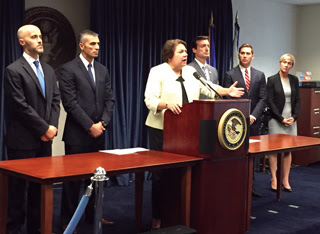
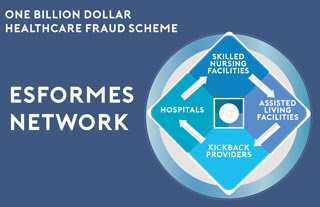


 PAUL KITAGAKI JR. / THE SACRAMENTO BEE
 PAUL KITAGAKI JR. / THE SACRAMENTO BEE
 PAUL KITAGAKI JR. / THE SACRAMENTO BEE
 PAUL KITAGAKI JR. / THE SACRAMENTO BEE
 PAUL KITAGAKI JR. / THE SACRAMENTO BEE
 PAUL KITAGAKI JR./ THE SACRAMENTO BEE

 PAUL KITAGAKI JR. / THE SACRAMENTO BEE
 DAVID LIVINGSTON / GETTY IMAGES FILE
 PAUL KITAGAKI JR. / THE SACRAMENTO BEE
 PAUL KITAGAKI JR. / THE SACRAMENTO BEE
 PAUL KITAGAKI JR. / THE SACRAMENTO BEE




 print
print email
email





 MaryGSykes.com