MaryGSykes.com

CONFIRMED BY ILL. SUPREME COURT– YOU ARE VIEWING THE MOST DANGEROUS BLOG IN ILLINOIS. This blog warranted a 3 year suspension by the ARDC/Jerome Larkin! Mottos: "Sunlight is the best disinfectant". Justice Louis Brandeis ; "If the truth can destroy something, then it deserves to be destroyed" Carl Sagan; "Justice is Truth in Action" Benjamin Disraeli. Illinois uses the ARDC to quash dissenting attorney activist blogs ; "The freedom of the press is one of the greatest bulwarks of liberty, and can never be restrained but by despotic Governments" — (1776-First Amendment preamble adopted by 8 US colonies)

MaryGSykes.com

From EB: Tramadol is widely used in nursing homes, but is it the most dangerous drug in the world?

This article says yes.

https://blog.iodine.com/tramadol-the-most-dangerous-drug-in-the-world-5500450d6cc6

Tramadol: The most dangerous drug in the world

image (cropped) courtesy of Frankie Leon (Flickr)

Imagine a prescription medication that relieves pain just as well as narcotics like Oxycontin, but isn’t addictive. Too good to be true?

Turns out, yes.

For years, that was the case with Tramadol, a synthetic opioid drug that was released in 1995 under the brand name Ultram to great expectations. This new drug seemed to offer all the benefits of more powerful, more addictive drugs, but with fewer of the downsides of dependency — at least in clinical trials. This was apparently in part because trials examined tramadol use by injection, but it is manufactured — and far more potent — in pill form.

And if the drug was unlikely to make people dependent, it was not likely to be abused, unlike other opioid alternatives like Vicodin (also known as Norco), Percocet — let alone be as dangerous as high potency opioid medications like morphineDilaudid, or Fentanyl.

So for many years, Tramadol was widely prescribed by doctors as a “safer” alternative to narcotics for pain. The difference between narcotics and opioids is subtle, but opioids are natural or synthetically made drugs that function metabolically in the body like opium derivatives derived from poppy plant, while narcotics is more often used as a legal term, classifying drugs that blur the senses and produce euphoria, including cocaine and other non-opiates.

Indeed, unlike other opioid drugs, the Drug Enforcement Agency didn’t classify Tramadol as a controlled substance, because the FDA believed it had a low potential for abuse.

Though there were concerns about tramadol abuse in the years after release, the FDA repeatedly determined that the drug was not being widely abused, and so left it as an unscheduled drug.

This made Tramadol a particularly dangerous drug — because it was, in fact, highly addictive and prone to abuse. But because it was easier to obtain and had less concerns from physicians, it was more widely prescribed. Over the years, as often happens, a difference between clinical trials and the real world started to emerge. Emergency rooms began to report a growing number of overdoses related to Tramadol, even as the number of prescriptions soared, especially after the drug went off patent and cheaper generic versions became available in 2009. In 2013, nearly 45 million prescriptions for tramadol were written for patients in the U.S., nearly doubling in just five years.

In fact, one of the reason people like taking Tramadol is because for some people it works as an antidepressant, producing euphoria or energy, unlike other opioids which tend to make people drowsy. This has led it being used recreationally, while people still go to work or live their daily lives.

The problem didn’t just emerge in the U.S. Tramadol has become a widely available and widely abused drug across the world, as a recent report in the Wall Street Journal spelled out, pointing out horrible abuse in African nations of Cameroon and Nigeria. Ireland has seen overdoses from Tramadol soar. Egypt has been another victim of the misleading perceptions of the drug, as cheap pills have spread as daily-helpers among the poor and working class.

Finally, in 2014, the DEA finally changed Tramadol to a Schedule IV designation as a controlled substance. But the World Health Organization continues to classify the drug without restriction, under the belief that it would become much more difficult to obtain by people who need legitimate pain relief, according to the Wall Street Journal report.

When you actually consider the real world experience of people taking the drug, however, it quickly becomes evident that Tramadol, like other opioids prescribed for pain relief, also carries the trade off of dependency and withdrawal. Among the 50 or so first-person reports on Iodine.com, many Tramadol users cite these effects.

“I wish I knew this was an addictive narcotic. My doc told me it was non narcotic,” offered one user, who identified herself as a 36 year old woman.

This is exactly what makes Tramadol so dangerous. Despite it’s reputation as being a “safe” opioid, it is still an opioid. These drugs have been massively over-prescribed over the past 20 years, causing an opioid crisis in the U.S. with thousands of people suffering the consequences of addiction, ruined lives, and death. In 2014 alone, more than 28,000 people died from opioid overdose — at least half of them prescription drugs, compared to street drugs like heroin (which are often the cheaper drug of choice among people who started with a prescription opioid).

On every page for an opioid drug at Iodine.com, we have placed a clear and emphatic warning about the risks of these drugs in a big orange box. For many people, these drugs serve a purpose, and are a necessary part of coping with pain. But people need to be careful before they begin using them, and they need to be aware that the drugs carry a significant risk of dependency that can squander lives. These are dangerous drugs that must be taken seriously.

From Joanne:

If your loved one needs pain relief, stop turning to aspirin, acetaminophen (Tylenol)  and Ibuprofen. Those are also very dangerous drugs and hard on your liver which has to process that poison.

Safe, highly effective all natural pain relief is as follows:

  1. tumeric and cayenne.  eat a lot of curries.  make a lot of curry. no more pain and both of these foods are highly nutritive and build up body tissues.  Most effective when heated and cooked. Don’t like hot stuff?  You can get both tumeric and cayenne tabs, but these are much more expensive, but no where near as expensive as the prescription meds a traditional MD is falsely taught to promote. Tumeric and cayenne is totally safe, effective, known to cause zero deaths and promote health and longevity. Google it. Check it our yourself.
  2. Many oils such as rosemary, clove and oregano. Zero side effects and they contain tons of phytonutrients.
  3. Lyposomal or lypospheric Vit C and D3 (get tested) and sulfur (about 2 gr per day). These build muscle tissue.
  4.  A low carb/low sugar diet.  Much pain is caused by inflammation. Inflammation is caused by the over growth of bad bacteria. Take probiotics and stop eating carbs and sugars. This includes:  oatmeal, beans, pastas, rice, — anything over 15 gr of carbs per meal. Start reading those food labels.

good luck and namaste.  You know the ALs and nursing homes feed a crap diet.  Ever see one advertise yoga, meditation, all organic diets, all vegetarian diets?  Ever see one advertise no psych drugs, all natural healing?  Sprituality, yoga and meditation? Heck no.  If they did that all their residents would be gone in 2 to 6 months. And, more important, nearly zero people in guardianship.  You want to stop guardianship, get educated on living to 100 to 120 and walking out of your body.  Get a clue. We need to make these opiate drugs illegal, take down the false and fraudulent drug companies that prescribe poison and their minion MD’s that get massive bennies from being their patrons and stop all this nonsense.

There is a new energy. And it is unstoppable.  The shutters have been taken down. We have peace and light and love.

joanne

From AG: It’s women’s herstory month. How much do you really know about women’s legal herstory. How much do your kids know?

From Alan Greyson, Congressional Rep:

When do women face attacks on equal access to health care? Now.

When have women been denied equal pay? Now.

When have conservatives organized nationally to block the Equal Rights Amendment? Now. Here and now.

And if you’re looking for history (or herstory), look how slowly change has come: The 19th Amendment, giving women the vote, was ratified “only” 129 years after the Bill of Rights, and “only” 50 years after the 15th Amendment gave male ex-slaves the vote. Contraceptives weren’t covered under the Public Health Service Act until 1970, 26 years after the PHSA itself became law. “Female hysteria” was a recognized (albeit fictive) mental illness until 1952. (One of the baneful symptoms of female hysteria was “sexual desire.”) The states have passed more than a thousand anti-abortion laws to try to counter Roe v. Wade since 1973. And, of course, women are paid only 80 cents for every dollar paid to men.

Last question in today’s quiz. Who said this:

“I’m willing to fight for Social Security, Medicare, student loans, U.S. jobs, equal pay, progressive taxation and full employment.”


 From Joanne;
And don’t forget the EEOC was passed in 1964 with the Civil Rights Act, but had absolutely no teeth until much later in 1982.  Until then, women were not allowed to be lawyers, judges, doctors, engineers, architects etc. They were supposed to only be teachers and nurses.   If a woman graduated college in one of these fields (assuming she could get in), she was told she could only be a secretary or assistant to a man in those fields.
It is well known in patent history, women were told not to file patents or to file them in the name of a male relative.  I actually met patent attorneys who told women this years ago because they felt the examiners would not grant patents to a female name unless was for female clothing or personal products.
I actually sweated out getting my first job with General Motors Corp. because no car division was hiring female mechanical engineers, until the EEOC in 1982 finally told the Fortune 500 they had to start hiring women professionals and had to set quotas.  So I got a job.  I had great grades and references, etc. but otherwise I, like the other bright female engineers who loved math and science would have had to go back to get a masters degree and wait for jobs to appear.  Many of my friends in the Masters and PhD programs were just women waiting patiently for the EEOC.  Now a former judge from the EEOC, Mary Elizabeth Bullock has stories of how major corporations have corrupted even out own beloved EEOC.  You can friend this famous honest woman lawyer on Facebook.  She is still fighting for women and minorities to take back the EEOC to Truth and Justice.
Women fought long and hard for equal rights.  I remember being as young as 10, paying a quarter and going down to the Daley center by myself to attend the numerous women’s marches and ralleys for equal rights and it was mostly the hippies that pushed for this and pushed for peace during the war era years.  I believe they were the first wave of special entities sent for peace and love and truth and justice and they made a big splash.
Now we have the crystals, indigoes and rainbow kids and they are making their own wave with even more energy of the light; and no, they’re not going away, and there is no going back.
One of the signs I am told of ascension for the plant is equal rights between men and women and no gender wars and we just appreciate one another.  When we get the ERA, it will be another sign. Remember communism fell in a day and not due to any forces on earth. Same for the Berlin wall.  It is through prayer we make those changes here on earth.
It’s coming.   I’m praying for it.
JoAnne

From EB/NW: Sealed Guardinship cases? How are those even Constitutional?

Sealed guardianship cases

SPECIAL INVESTIGATION

Sealed guardianship cases

An ailing mom, a family feud and a hidden court file

In June 2013, Nassau County Judge Angela Iannacci sealed a legal action brought by Dean Hart, now a candidate for State Assembly, to have a guardian appointed for his 79-year-old mother, whose mental faculties were in decline.

Iannacci’s order failed to provide any substantive justification for sealing the records, as required by the state mental health law. In such cases, concern for the privacy of the vulnerable party typically serves as the basis for sealing.

An examination of partial case records obtained by Newsday, however, raises the question of who actually benefited from the sealing order. It appears to have done little for the welfare of Beatrice Hart, who suffers from dementia, while shielding attorneys, the courts and a current candidate for public office from outside scrutiny.

The disturbing accusations leveled in the case include elder abuse, cronyism in the court system, and Dean Hart fleecing his mother of $4.5 million with help from the firm of attorney Steven Schlesinger, a powerful Democrat whose court-appointed stewardship of a wealthy charity is now under state and federal investigation.

The Hart case is one of 207 guardianship proceedings identified by Newsday that Long Island judges hid from the public during a roughly 10-year period.

These cases involve the appointment of legal caretakers for people who require help managing their personal affairs. They comprise two-thirds of the court actions Newsday found in its investigation of case sealing by Long Island judges.

After obtaining confidential records, Newsday two weeks ago reported state Sen. Tom Croci’s involvement in one of those cases. In 2013, Newsday reported, a court-appointed evaluator found that Croci had “taken advantage” of his elderly aunt, philanthropist Adele Smithers, for his own financial benefit and recommended that a judge reject his request to control her assets as guardian. Croci told Newsday that he always acted in his aunt’s interest and that he could not answer questions about the case because of the sealing order.

Read Part 1The order in the Smithers case, as in the Hart proceeding, fell short of the state mental health law’s requirements for sealing guardianships.

Documents in the Hart case, which is marked by an intense family schism, reveal the severity of the alleged misconduct that can be hidden when judges seal guardianship files. The records show that in 2012, Dean Hart’s wife pleaded guilty to disorderly conduct after a violent physical altercation with her mother-in-law.

And early in the case, Beatrice Hart’s lawyer, David A. Smith, wrote an impassioned letter to Iannacci, saying that he had witnessed Dean Hart confront his mother days earlier in a manner so disturbing that he’d summoned the police.

“In Beatrice Hart’s home,” Smith wrote, “Dean Hart repeatedly screamed at his mother, while positioning himself within inches of her face, that ‘I will get even with you for turning on me’; repeatedly cursed at her; told her that he did not consider her to be his mother anymore; and got so close to her while screaming at her that the independent agency nurse had to keep moving Beatrice from room to room of her home in order to seek, unsuccessfully, to get Dean to stop.”

In a recent interview, Hart — a Democrat vying to represent parts of Hempstead, North Hempstead and Oyster Bay through a self-financed campaign — said Smith’s letter is rife with “false accusations” and that the attorney had worked in concert with his estranged sister, Penny Hart, to smear him. Hart and his sister have disagreed vehemently over Beatrice Hart’s care, and while defending their own actions have accused each other of impairing their mother’s health and attempting to control her $5 million estate.

Schlesinger declined to be interviewed. In email responses, he disputed any suggestion of impropriety in his representation of Dean Hart or the $4.5 million trust transaction.

Privacy vs. transparency

Privacy concerns serve as the ostensible basis for sealing guardianship cases, which can be lurid and messy. Clashes over what’s in the best interest of an enfeebled relative are often what leads a judge to appoint a family member or outside attorney guardian. When money is at stake and there is entrenched family conflict, proceedings can turn especially vitriolic.

All this may seem to argue for confidentiality. However, elder advocate Jack Halpern, an observer of the state guardianship system for over 40 years, said the privacy concerns that judges and family members cite as justification to seal cases are often overblown and even disingenuous.

“In too many instances,” said Halpern, who is CEO of My Elder Advocate, a private senior advisory firm, “the sealing is not serving the interests of the elderly person, but those individuals or entities that are supposed to be caring for them.”

Dean Hart, who has gained notice with political stunts such as giving out plastic handcuffs while on the campaign trail to highlight public corruption, supported Iannacci’s sealing order in 2013. He said he did so, in part, out of a desire to protect his mother’s privacy.

Contacted for this story in August, however, Hart said that he’d like the case files made public, even if some voters took their contents “out of context” and turned against him. He said the sealing had allowed the court system to get “away with murder” in its treatment of his mother.

In one of the few areas of agreement between Hart and his sister, Penny Hart said she too would like to see the guardianship case involving her mother unsealed, saying the secrecy had masked her brother’s outrageous conduct.

“I have nothing that I need to hide in this,” said Penny Hart. “The only person who has something to hide is Dean. Let the world see.”

A month ago, Newsday asked state court leaders to vacate the sealing order in the Hart case and scores of others that were improperly concealed from the public. They have not responded to the request.

Balancing act required

The guardianship law is sensitive to privacy concerns. Judges must inform those who may be assigned a guardian of their right to request a sealing order. Issuing a sealing order simply when asked, however, is forbidden. Judges are supposed to balance any claim of the need for confidentiality against other factors, including the benefit of open court proceedings to the health of the justice system.

That balancing is required for good reason.

When outsiders have gotten a look inside this area of the courts, appalling conduct has sometimes been revealed. Government agencies and media reports have repeatedly identified abuses such as court-appointed lawyers or family members draining the estates of their vulnerable wards. In part, the sealing law is meant to encourage a degree of transparency and act as a check on abuses.

Newsday found that when applying the law, Long Island judges repeatedly relied on generic, stock phrases to overcome the presumptively public nature of the proceedings. This was most often true in Suffolk County, where 174 sealed guardianship cases were identified compared with 33 in Nassau.

In nearly all the Suffolk sealing orders, judges simply quoted verbatim a passage from the state mental health law that lists elements that must be weighed when deciding whether “good cause” exists to conceal a case. Suffolk Judge Sandra Sgroi, who now sits on a state appellate court, signed 108 orders of this kind in a five-year period. Sgroi declined to be interviewed for this story.

In Nassau, judges employed a blanket statement about case files containing privileged and confidential information to achieve the same end.

In the Hart case and four others, the orders lacked even this boilerplate language.

Dozens of sealed guardianship files Newsday identified involved efforts by hospitals and nursing homes to have residents declared incapacitated and in need of a guardian. That can happen when a hospital wants to discharge a patient who’s unwilling to leave or when a resident can’t pay nursing home bills.

One sealed guardianship proceeding was brought by the controversial Judge Rotenberg Center. The Canton, Massachusetts-based home for disabled youth has drawn criticism for its use of restraints and electroshocks to control residents.

The case appears to have stemmed from a dispute between the center and public agencies in New York State over the care of a resident from Long Island who’d been born addicted to cocaine and whose mother had killed another of her children. In one available record, the center alleged that the state had failed in its obligation to find a placement for the resident when she turned 21 and that it was owed nearly $180,000 in taxpayer dollars for providing the woman nine months of care.

Judge H. Patrick Leis, who sealed the case in 2009, declined to be interviewed.

Rotenberg attorney Jocelyne Kristal said the center brought the case in the hope that a guardian could provide the young woman appropriate care, which she contended public agencies had failed to arrange. She said the guardianship matter was secondary to related federal litigation that was of legitimate public interest, but that sealing the guardianship was appropriate to protect the woman’s privacy.

Inside the case

Significant documents in the Hart case obtained by Newsday provide an unusual look at one guardianship battle that was placed behind a wall of official secrecy.

In November 2012, as Beatrice Hart’s faculties began to diminish, she signed over $4.5 million from her personal trust to her son, Dean. The stated reason for the move was to minimize the tax obligation of Beatrice Hart’s estate. Penny Hart said her mother was gravely ill and being spoon-fed by a caretaker when she signed over the money. Lawyers in the firm led by Schlesinger, Dean Hart’s attorney, served as witnesses and prepared the paperwork.

Records show that during this time, Beatrice Hart expressed fear of Dean Hart and his wife, going so far as to obtain orders of protection against them based on allegations of physical abuse. Dean Hart was never criminally charged with being violent toward his mother, but in December 2012, Hart’s wife pleaded guilty to disorderly conduct following a violent episode with Beatrice Hart.

In an email to a reporter, Dean Hart wrote, “Every family has squabbles and in this case an isolated incident took place that my wife still deeply regrets. My wife still respects and cares deeply for my mother, as do I.”

In early 2013, Beatrice telephoned her daughter Penny Hart, who had long been estranged from the family. The women started to re-establish a relationship, something Penny Hart had been reluctant to do. Around this period, Beatrice began to voice suspicions about the trust transaction. Ultimately, her lawyer asserted, she came to believe that her son had “stolen” the money from her.

Dean Hart denies ever having swindled or abused his mother, saying his sister manipulated a senile Beatrice Hart into making the ugly charges.

“I’ve never done a thing that I am embarrassed about,” Dean Hart said.

It was during this period of high tension, in May 2013, that Hart petitioned the court to have his mother declared in need of a guardian. Schlesinger and multiple attorneys from his firm handled the legal action.

The case landed in Judge Iannacci’s court. Both sides would ultimately question the propriety of her having presided.

Eight years before, when Iannacci sought the Nassau Democratic Party’s support for what would become a successful Supreme Court bid, Schlesinger was the party’s law chairman, giving him a prominent role in deciding who would get on the ballot in judicial races.

A then-party official who wished to remain anonymous so as not to offend a sitting judge said that Schlesinger had been critical to securing party support for Iannacci.

In a recent interview, Dean Hart said that Schlesinger had “made Iannacci,” but that far from granting him any advantage in the guardianship case, the judge repeatedly sided against him to demonstrate that she owed Schlesinger nothing.

Schlesinger wrote in an email to a reporter that he was a member of a committee that chose Iannacci, but he had “never asked or sought any consideration on account of my participation on that committee.”

Though Penny Hart believes that the judge acted independently and protected Beatrice Hart from her brother, she said Iannacci should have recused herself due to her history with Schlesinger.

On June 13, 2013, Iannacci sealed the Hart case.

A hearing transcript shows that Schlesinger was present in the courtroom that day but left early for a dinner engagement. An attorney in Schlesinger’s firm requested the sealing, and Iannacci asked Beatrice Hart’s attorney, Smith, whether he would join the application. Smith said yes, and an attorney for Penny Hart, who was present as an interested party, consented to the sealing.

In her order, Iannacci noted that she was acting on the “request of all parties.” That’s an improper basis for sealing because the law is meant to prohibit judges from hiding guardianship cases merely because parties seek confidentiality.

Ten days later, Smith wrote the letter to Iannacci that included his account of the confrontation between Dean Hart and his mother. He also told the judge that the day before, Beatrice Hart had stripped Dean and his wife of any authority to make health care decisions on her behalf and visited the Nassau district attorney’s office to allege that her son had conned her out of the $4.5 million from her trust.

In September 2013, Iannacci appointed Nassau attorney Emily Franchina temporary guardian of Beatrice Hart’s property. The following month, Franchina was named Hart’s temporary personal-needs guardian, giving her the power to make decisions about Beatrice Hart’s health care and day-to-day affairs.

Franchina was given specific authority to investigate the $4.5 million transaction, which had become a flashpoint. Billing records indicate that Schlesinger’s firm, Jaspan Schlesinger, represented Beatrice Hart in the trust transaction, but Penny Hart said her mother never hired firm attorneys to handle her estate matters.

“How does he represent my mother and Dean at the same time?” Penny Hart asked, referring to Schlesinger. “It just drives me nuts. It’s just wrong.”

Smith, Beatrice Hart’s attorney, said he was unable to discuss a sealed case, but that when it comes to such sizable trust transactions generally, “it is to my mind critically important that the person making the transfer have their own counsel.”

In a ruling included in the partial case file Newsday obtained, Iannacci stated that Dean Hart had tried to establish that a Florida attorney, Diane Bell, had represented his mother in the trust transaction. However, Bell testified via Skype to the contrary, saying she believed that attorneys in Schlesinger’s firm had represented Beatrice Hart, Iannacci wrote.

Contrary to what Iannacci wrote and Bell testified, Schlesinger said in an email that the Florida attorney had in fact represented Beatrice Hart. Schlesinger also said the transaction was a minor matter. Beatrice Hart always planned to bequeath Dean Hart the money, he said, so the transaction was not a “substantive” change to the disposition of the funds. Bell did not respond to telephone calls.

Nassau district attorney’s office spokesman Brendan Brosh said that his agency ended its investigation of Beatrice Hart’s complaint after Iannacci appointed Franchina guardian and the office was assured “that any suspected criminal conduct would be reported for investigation.”

In May 2014, Iannacci made Franchina’s guardianship appointment permanent in a ruling that was blisteringly critical of Dean Hart, who’d wanted to be named his mother’s personal-needs guardian. Hart had not cooperated with Franchina, Iannacci wrote, and was ill-suited to serve as a court-approved caretaker.

“Petitioner has demonstrated through his actions and by his testimony that he is unable to comply with the orders of this court,” Iannacci wrote. “Petitioner is not the appropriate person to serve as personal needs guardian.”

Hart continued to use his mother’s checking account after Franchina’s appointment, testifying, according to Iannacci’s ruling, that he’d used the money to pay for “lunch with his attorney, taxis, children’s clothing and parking in New York City.” Iannacci said Hart had testified that “God had given [him] the right” to use his mother’s assets as he pleased in Beatrice Hart’s best interests, despite Franchina having been made guardian of her money.

Hart said Iannacci’s ruling was selective and distorts events. There was a gap between Franchina’s appointment and when the attorney took control of Beatrice Hart’s account, Dean Hart said, and during this period he continued to access his mother’s money, often to buy her necessities such as meals.

He contends that it has been the conduct of Iannacci, Franchina and the court system, not his own, that has been nefarious. The court, he said, has limited his involvement in his mother’s affairs to facilitate the exploitation of her assets.

Penny Hart said Franchina — who has collected $166,000 in fees from the case, according to state records — has done “a wonderful job of managing my mother’s personal needs, especially in light of the conflicting interests involved.”

Dean Hart has asked an appeals court to undo Iannacci’s appointments and decisions, but so far has lost at least twice. He said he is determined to fight on.

“The fact is I did nothing wrong,” Hart said. “I was a loving son. I am a caring person, I am a sensitive person. And I am pissed.”

In November 2015, as the case played out in secret, Hart narrowly lost a Nassau legislative race, taking 48 percent of the vote.

Iannacci did finally step aside in December 2015, after having presided over the case for more than 2 1⁄2 years. With the case sealed, it’s unknown whether she gave a reason for her recusal. Iannacci declined to be interviewed.

A court evaluator, Frank Perrone, was assigned to investigate claims in the case and protect Beatrice Hart’s interests. The findings of his written report are unknown due to the sealing order, and he declined to be interviewed.

As for Beatrice Hart, who lives in a Manhattan nursing home, both her children agreed that she is too diminished to be interviewed.


Review of guardians finds financial reports lag


Tracking 207 cases

For this story, Newsday identified 207 sealed guardianship cases that originated in Nassau state Supreme Court from 2003 to 2014 and Suffolk state Supreme Court from 2005 through early 2015. The 207 cases were identified using a code for sealing orders in Nassau’s electronic case management system and notes that clerks made to case minutes in Suffolk’s system. Neither Nassau nor Suffolk formally track sealed guardianship cases and there’s no way to be sure all were found.

Newsday found portions of some sealed guardianships attached as exhibits in other lawsuits. In some instances, partial case files were shared with a reporter.

The state mental health law bars judges from sealing a guardianship case “except upon a written finding of good cause, which shall specify the grounds thereof.”

In determining whether “good cause” exists, judges must “consider the interest of the public, the orderly and sound administration of justice, the nature of the proceedings, and the privacy of the person alleged to be incapacitated.”

Most of the sealed guardianships Newsday found were in Suffolk County. In nearly all instances, Suffolk judges copied the language above verbatim in their sealing orders, which made no reference to the specifics of the cases at hand.

From NYP/EB: Why NY pols never end up in prison for bribery

YOu can see the same twisted psychopathic logic flowing through the minds of dozens of pols in chicago and their cronies on the bench, at the FBI and states attorneys offices:

Why New York pols get away with corruption

Restauranteur and preferred de Blasio fund-raiser Harendra Singh continues his remarkable testimony in the federal corruption trial of Nassau County Executive Ed Mangano, giving us a unique window on the operations of the mayor’s money and influence machine.

Singh — who has already pleaded guilty to bribing the mayor in exchange for favorable conditions in his negotiations over the renewal of a lease for his restaurant — explained that de Blasio asked him to arrange donations for a number of sitting politicians and candidates for office.

Told that Singh would have to solicit money from other people — what are known as “straw donors” — and then illegally pay them back under the table, de Blasio reportedly responded, “Do whatever you gotta do, but I don’t want to know.”

The mayor denies all of this, and claims that “nothing that he describes as having happened, happened — period.”

Of course, that’s not really true — it is stipulated and accepted that de Blasio and Singh met several times, that Singh gave ample money to de Blasio and his assorted campaigns and that Singh received special treatment from City Hall.

The mayor is able to perpetuate his see-no-evil narrative of innocence because prosecutors decided not to indict him, based largely on the high standards of evidence for public corruption cases set by the Supreme Court in the McDonnell case.

It remains deeply curious that one man can be facing prison time for admitting to bribing an official, while the official in question can be re-elected to office and take trips to Florida to watch the Red Sox prepare for Opening Day — almost like there were different sets of laws that apply to politicians versus the rest of us. The one-sided tango is reminiscent of an old saying about a plate of ham and eggs: the chicken is involved, but the pig is committed.

–– ADVERTISEMENT ––

thanks for watching!

Meanwhile, for all the sniping between City Hall and Albany, Gov. Cuomo has his own issues, too. His close aide, friend and “brother” Joseph Percoco was found guilty of federal charges of bribery and fraud for steering state business to companies that gave him $300,000 in the form of cash and a sinecure for his wife.

The Percoco conviction is just an amuse-bouche, though, for the main course that is coming up in June — the trial of Alain Kaloyeros for allegedly “fixing” major state building contracts associated with SUNY Polytechnic and the “Buffalo Billion” economic development project. Hundreds of millions of public dollars, central to Cuomo’s master plan to revive upstate, were funneled through Kaloyeros’ offices.

New Yorkers have relied so far on the Department of Justice to take on these high-profile corruption cases.

But why should we have to count on the federal government to swoop in and clean up our soiled nest? New York has strict laws covering public corruption and campaign finance, and we have plenty of prosecutorial agents who are more than amply equipped to investigate malfeasance.

What we lack is the will to enforce the law. County district attorneys like Manhattan’s Cy Vance are uniquely empowered to prosecute violations of election law. But when Vance had de Blasio in his sights over the mayor’s seemingly blatantly illegal 2014 efforts to circumvent campaign-finance restrictions in state senate races, the DA dropped the charges as soon as he was able to hide in acting US Attorney Joon Kim’s shadow.

Attorney General Eric Schneiderman could act, too. Though state law supposedly limits his ambit regarding political crimes, he’s the one who set up a “Public Integrity Bureau” to “restore public trust in government.” So why doesn’t he use it?

Schneiderman would rather make headlines by suing Big Oil over climate change, while Vance receives kudos from the turn-’em-loose crowd for refusing to prosecute farebeaters.

The problem with New York is that the mayor, the governor, the AG, the DA — and almost everyone else who holds elective office — rely on the same voters, donors, consultants and party insiders. They’re all pals and allies.

There can’t be a game of musical chairs if the music never stops.

Seth Barron is assistant editor o

From EF: Pay to play well alive in Cook County Court System but this is not disclosed to voters or litigants

chicago summer

4:10 AM (1 hour ago)

to reportcorrupti.Elizabeth_Warr.correspondenceChicago.a
*can be published on all anti-corruption blogs and websites.
 
Dear All,
 
I continue to report rampant corruption and violations of ethics in Illinois Court system, where majority of judges obtained their judicial seats through connections with certain politicians and powerful judges.
 
Alison Conlon, a  relative to a well-connected lawyer William F. Conlon,  (daughter?), was  appointed on  February 2, 2015, as a Circuit Court Judge by the Illinois Supreme Court, at the recommendation of Justice Mary Jane Theis.
 
Alison Conlon has all mandatory merits to be a judge in Cook County Court. Surprisingly, she just got a Municipal Division seat, but I am confident that with her credentials she will be moved to the higher Division promptly.
 
Alison is an insider who knows many secrets in our Court system but will never disclose them  because  her family is a part of the business. 
 
Alison Conlon paid very substantial amounts of money to Cook County Democrats (aka Madigan and Berrios $40,200).  Her relative (my guess- father)  William F. Conlon  gave $3,500 to Justice Theis; and $1,500 to Ed Burke. His Firm, Sidley Austin gave Justice Theis $9,500.00; Ed  Burke $27,000 and Justice Anne Burke over $14,000, which is  also a substantial merit for selection of judges by Justices Theis and Burke.   
 
Alison Conlon’s connections with Senior Federal Judge Suzanne Conlon (my guess- either mother or aunt) is a huge merit.  Sidley Austin (where Obamas worked) represent many shady corporations, like Johnson & Johnson (and I actually didn’t know about these cases) and usually very successful.
 
Alison Conlon’s relationship with Julia Bauer, niece to  Judge William J. Bauer, Senior Judge in Federal Court of Appeals, is a  merit, too. 
 
Another huge merit is a relative (my guess-uncle) James J. Conlon who works for Chief Timothy Evans. This connection cannot be underestimated by any lawyer who needs a particular judge to be assigned on their cases. In 2014 Hinshaw & Culbertson’s lawyers (VIP insiders, with at least 5 personal judges in our Court) somehow replaced judge Flannery, whom I submitted my Motion,  with judge Hogan who denied it in the eye blink;  and ruled for H&C from whom he received  $4,550 (without disclosures to me, of course).  Now I know exactly how it happened. 
 
William Conlon is a Chair in Chicago Board of Ethics, which is another merit. Most recently he was presiding over  an “illegal lobbying” scandal with  Emmanuel which involved ..,  well, lets call by its real name – bribes to the mayor, where Conlon was criticized for covering violations.  Of course William F. Conlon  will never find any violations of ethics among those  who helps his family to rack $$$ legal fees and get taxpayers-funded paychecks. 
 
Attorney Kevin Fee – Sidley Austin LLP – is a trial lawyer for IL Judicial Inquiry Board. So, if a judge is caught for drunk driving – he/she could be suspended (if its not a clout-heavy  judge). If a judge obstructs justice, criminally conceals material  evidence and commits fraud upon the Court, like Senechalle; or pay $25,100 for her judicial seat to convicted in bribes Isaak Carothers for his aunt’s judicial seat, like Patricia Spratt  – it all  will be  covered. JIB never even bothered to respond my complaint against Spratt – even with a runaround. Its normal to detain people in her Courtroom without any cause; and any explanations – because her family connections with Judge Bauer and his cronies will prevail. 
 
Basically this is the main reason why non-clout lawyers and ProSe litigants will never find neither fair election or fair hearings – this Court is built by insiders to serve insiders. Insiders cover for insiders, and so on. 
 
Worth to mention, neither Alison Conlon, Clare Quish, Patricia Spratt, John C. Griffin, Daniel J. Pierce, Thomas Hoffman, and other insiders, never disclosed how well connected are their families and friends in our legal system.
 
Conlon only said that her parents raised her in Glencoe…without mentioning any  connections in the Court.
 
Quish was presented to voters as a “former clerk for an Appeal Court Justice (without justice’s name (Theis, of course)) and a girl who was raised mostly by IRISH mother (never mentioned her well-connected uncle-judge in Law Division, and her father); 
 
Spratt said that she worked many years  for an Attorney General; a Federal Judge and an Appeal Court Judge – collectively William J. Bauer, which was not mentioned; cited a quote from a “dear friend” aka William Bauer, and so on. 
 
So, they know that their raise to power was corrupt – and tried  to deceive  IL voters.
 
 And for those of you that don’t know this, Illinois Supreme Court Judge Anne Burke is married to Ed (Fast Eddie) Burke, who often receives substantial donations to the DNC in cash, it is said.  He has admitted publicly that he has “the list” of lawyers who will get judgeships–for the right price, of course, paid in cash.
 

From Newsweek: The Foster Care System Tied into Child Sex rings

http://www.newsweek.com/we-have-set-system-sex-traffic-american-children-779541

From Joanne;

The below article is exactly correct.   I have heard of scores of cases where a trumped up case was filed against parents, social workers lied, police lied, the kids were placed in Foster Care only to be sold to pimps and into the Sex Trade.  Illinois typically has thousands of kids missing from Foster Care.  This article explains the real problem right now with Foster Care and how it is a dirty big secret of the system.

From Newsweek

Senator Rob Portman (R-Ohio) introduced legislation in 2017 to amend an antiquated 1996 law that was ostensibly enacted to protect freedom of expression on the Internet, but, as Sen. Portman’s bill describes, allowed website operators (most prominently, Backpage ) to facilitate the sale of sex with victims of sex trafficking. In many of these cases, the victims are children.

The frequency of child sex abuse is a true epidemic. Since at least 2000, the U.S. Department of Justice has reported that some 67 percent of all sexual assaults are committed against victims under 18 years old.

The U.S. Department of Health and Human Services reports confirmed child sexual abuse cases number approximately 58,000 per year in recent years.

Unreported child sexual assaults are estimated at 80 percent and supported by multiple studies and experts.

Sex predators are misusing the Internet daily to access their prey, and by taking their shield away website operators who ignore such misuse—or profit from it—will have to monitor and prevent illegal user content.

Sen. Portman’s legislation is landmark and a key step in helping sex trade victims, but the reality is that predators will find other venues. We must ask the question that gets to the root of the problem: where are these victims coming from?

Here’s the ugly truth: most Americans who are victims of sex trafficking come from our nation’s own foster care system. It’s a deeply broken system that leaves thousands vulnerable to pimps as children and grooms them for the illegal sex trade as young adults.

We have failed our children by not fixing the systemic failures that have allowed this to happen for decades.

Most people don’t know about our nation’s foster care to sex trafficking pipeline, but the facts are sobering. The National Center for Missing and Exploited Children (NCMEC) found that “of the more than 18,500 endangered runaways reported to NCMEC in 2016, one in six were likely victims of child sex trafficking. Of those, 86 percent were in the care of social services when they went missing.”

Lolita_Trailer_(Sceenshot)Sue Lyon in a screenshot from the trailer of Stanley Kubrick’s film “Lolita” (1962). PUBLIC DOMAIN

The outcomes of law enforcement efforts against sex traffickers repeatedly support the NCMEC estimate. In a 2013 FBI 70-city nationwide raid, 60 percent of the victims came from foster care or group homes. In 2014, New York authorities estimated that 85 percent of sex trafficking victims were previously in the child welfare system.

In 2012, Connecticut police rescued 88 children from sex trafficking; 86 were from the child welfare system. And even more alarming: the FBI discovered in a 2014 nationwide raid that many foster children rescued from sex traffickers, including children as young as 11, were never reported missing by child welfare authorities.

The essential failure is how we care for these children. As NCMEC’s CEO told Congress in 2013, “Children in foster care are easy targets for pimps … [they] are the most susceptible to the manipulation and false promises that traffickers use to secure their trust and dependency. These children have fractured safety nets and few alternatives.”

Child welfare systems can, but often do not, prevent that reality for children. Pimps rely on that.

I have seen all of this up close as an attorney who represents children abused in foster and group home care—including those who ended up in the clutches of pimps. Much more needs to be done to stop abuse in care, and those who allow it to happen must be held accountable.

Children are learning all the time, and in abusive foster or group homes they learn that their worth as humans is not intrinsic. Their worth is what the abusive caregiver gets from them, whether simply a paycheck from the state or their bodies for sex, as happened to some of my clients.

This conditions them to be subservient to pimps—giving all they have in exchange for essential needs, like food and shelter. As one of my clients put it, after extensive physical and sexual abuse in state care, the day she turned 18 and left the system with no community support, job or money, she saw herself in one way: “There was a gold mine between my legs.”

The rates of runaways from state care remains essentially unchanged since 2003, so the volume of potential trafficking victims has not changed.

To protect our nation’s most vulnerable children, we need the federal government to compel states that accept hundreds of millions of dollars for child welfare systems to answer, in every case that a child goes missing, why it happened and why it continues to happen.

We need law enforcement consistently prosecuting those who fail to report child abuse and runaways in a timely manner so we can find them before the pimps do. From cases of child abuse victims I have represented, I can name dozens of adults who knew of abuse in institutional care, but failed to report it.

Not one of them was arrested, even when I asked law enforcement to do it. And we must fire child welfare officials accountable for their role. I have never seen an official be fired in any case; in fact, I’ve seen one responsible official get a job promotion.

With or without the Internet, predators will continue to find vulnerable children to build the sex trade. Until we address the source of the victims, this will continue to be the truth we create for our nation’s youth.

Michael Dolce is Of Counsel at Cohen Milstein, and a member of the firm’s Catastrophic Injury practice group.

From KD: who is managing health care payments in Illinois? Apparently no one and thievery is rampant.

Subject: Re: The elder cleansing HUMAN TRAFFICKING cover up is not over —
Date: Mar 25, 2018 5:27 PM
 
It is not a coincidence that the call for an Honest investigation creates such a violent reaction .    Indeed, it is also not a slip of the tongue for Jerome Larkin to equate the exposure of corruptness with “yelling fire in a crowded theater.”      The exposure of corruption could mean an end to the criminal enterprise that has long ruled Illinois. 
 
If the great unwashed does not wake up, we will have  no more America!    As it is, it is no longer safe to grow old in Illinois, Florida *****.  take a gander at the Philip Esformes indictment.    He was able to bribe State officials at will.    His March 2018 trial date seems to have disappeared.  Do you for a minute believe that such is not occuring in Illinois!           

Ken Ditkowsky

www.ditkowskylawoffice.com

From Joanne:

And I have repeatedly asked, when is Phillip Esformes going to be tried?  It was supposed to happen in March. March is almost gone. And why wasn’t his father Morris Esformes indicted?  He was part of it all and likely taught his son how to steal medicare/medicaid funds.

Well, I looked it up and in Jan. 2018, Defts apparently asked for and obtained a new trial date of 10.1.18. Bummer.

Here is order #707 in the 16 20549 indictment of Phillip Esformes.  Apparently a lot of nursing homes have filed intervenor motions.  Not sure what that is all about,.

https://drive.google.com/open?id=16NBO6XZ6QkLkn5-oUpF981s1ZI4HS0qc

On Sunday, March 25, 2018, 4:40:08 PM CDT, jdit@aol.com <jdit@aol.com> wrote:

Audit stings Illinois Gov. Rauner’s Medicaid program

new state audit raises questions about the Rauner administration’s ability to keep tabs on private insurers in a Medicaid program that is estimated to cost Illinois $60 billion over the next four years.

The Illinois Department of Healthcare and Family Services failed to adequately monitor $7.11 billion that flowed to and from private insurers in Medicaid managed care, a state program that aims to save the government money, according to a report released today by the Illinois auditor general.

HFS, which runs Medicaid, could not account for all claims that private insurers paid to medical providers in the 2016 fiscal year. Nor could the department account for claims that insurers denied or how much they spent on administration and coordinating patients’ care, the audit found.

Because the state hasn’t been keeping tabs on administrative costs, the department hasn’t reconciled $14.2 billion in payments to the insurers, also known as managed care organizations, since 2012. “Thus, HFS has not determined whether the MCOs were overpaid by the state,” the audit said.

The last time Illinois did square payments with insurers was six years ago, and Illinois recovered nearly $22 million.

The stinging report outlines the pitfalls of Gov. Bruce Rauner’s Medicaid managed care program before his new version began on Jan. 1. State lawmakers had called for an audit of managed care last year as Rauner pushed to further privatize the program—largely by steering a bulk of the state’s 3.1 million Medicaid recipients to insurers.

The new contracts Rauner forged a few months ago with six insurers are worth an estimated $60 billion over four years in what’s believed to be the state’s largest procurement ever. The bid process attracted a slew of criticism from lawmakers and other public officials who wanted more transparency, especially around how insurers spend the state’s money.

The auditor general analyzed the Medicaid managed care program in fiscal year 2016, when 12 insurers participated. They were largely for-profit carriers. The state spent $7.11 billion on managed care that year, about half of all Medicaid spending.

If Rauner’s goal is to lower costs by outsourcing Medicaid to insurers, understanding how they spend money is key. The goal is to spend less than the state’s traditional fee-for-service Medicaid program, in which Illinois pays doctors for each service they provide. That can easily rack up unnecessary bills.

In managed care, insurers not only administer medical benefits to Medicaid recipients on behalf of the state, but also focus on prevention. The idea is that if they improve people’s health, that will lower medical costs and ultimately save the state money. This hope has spurred the growth of managed care nationwide, even though research is mixed about whether the effort actually saves states money.

Among the audit’s other findings:

• HFS paid twice for 302 people, resulting in $590,237 in duplicate payments to private insurers.

• The state did not use data that captured how often Medicaid recipients received medical care. When setting rates for how much the department pays insurers, that’s a preferred, though not required, method.

• The state doesn’t know how often Medicaid recipients received medical care because HFS didn’t have complete data from insurers.

• The state did not track medical services that insurers paid doctors, hospitals and other providers for, so there was no way to calculate their average payout ratio. That’s key to understanding their costs.

• Insurers are required to provide the state data on claims submitted by medical providers that they deny, to ensure they’re appropriate denials. But HFS couldn’t provide auditors with any data. “Currently, the denial data is simply not valid nor reliable,” HFS told auditors.

• The state paid insurers nearly $138 million that the carriers, in turn, used to cover federal taxes and fees.

A spokesman for the department said HFS is “monitoring actual administrative costs, have put processes in place to remove duplicate clients and recoup overpayments from previous years, will provide clear instructions to managed care plans regarding reporting of denied claims and will monitor contracts to ensure compliance.”

Among the report’s recommendations:

• Determine if HFS overpaid private insurers dating back to 2013 so the department may recoup those costs if necessary.

• Require insurers to submit all data related to Medicaid payments they make to providers.

• Perform on-site reviews of the insurers’ financial data systems, and test the accuracy and completeness of their data.

In the audit, HFS agreed with most of the recommendations. But the department had this exception: It doesn’t need to conduct onsite reviews.

“Audit stings Rauners Medicaid program” originally appeared in Crain’sChicago Business.

From EB: Missing gship reports plague NM guardianship court system

Missing reports plague guardianship system

Copyright © 2018 Albuquerque Journal

What’s become of Elizabeth Hamel?

Hamel is among dozens of people placed under a legal guardianship or conservator in southern New Mexico over the past 20 years whose welfare is unknown – at least according to state district court records.

The scant court records available to the public show that Hamel was found to be a person “in need of protection” by state District Judge James T. Martin, of Las Cruces, who assigned a private company as her guardian/conservator in 2010.

Nothing in the online court docket sheet indicates that Hamel’s case has been closed. But since being appointed, Advocate Services of Las Cruces hasn’t filed any annual reports about Hamel’s well-being or finances, the docket sheet shows.

There’s no indication as to whether she is dead or alive, or if the guardianship/conservatorship has been revoked.

State law requires reports to be filed annually with the court in guardianship cases.

“We did get behind, and we’re catching up,” Sandy Meyer, the owner of Advocate Services, told the Journal last week.

Meyer declined to discuss any specific case, citing confidentiality rules.

But she said no one from the 3rd Judicial District Court in Las Cruces had contacted her agency to notify her of missing reports. She also told the Journal that annual reports were filed in some cases but weren’t recorded by the court clerk’s office.

A court official in Las Cruces said he had no knowledge of that happening.

David Borunda, the court executive officer for the 3rd Judicial District, also said he was “surprised” and “disturbed” that the firm’s annual reports would be missing. “I will definitely be looking into it,” Borunda told the Journal.

Meyer’s firm has also been appointed in several cases outside the Las Cruces area in which records don’t show any annual reports having been filed.

Conservators and guardians are paid from an incapacitated person’s assets, or the state foots the bill if the person is indigent. It is a highly secretive system. The fees guardians and conservators receive are confidential and aren’t noted in the public docket sheet.

As New Mexico prepares for a new law, effective July 1, to help its ailing guardianship system, the state’s district courts still don’t have a uniform way to ensure guardian compliance with reporting laws that have been on the books at least since 1989.

State Sen. Jerry Ortiz y Pino, D-Albuquerque, said last week that he was disappointed that annual reports haven’t been filed in some cases.

“And I’m not surprised the courts wouldn’t know,” said Ortiz y Pino, a longtime advocate for reform. “That’s what we ran into over and over again, the lack of any kind of system to make it possible to log them (annual reports) in, let alone read them, let alone send somebody out to verify whether or not what they’re reporting is the truth. Those are the kind of things we shouldn’t be missing. Somebody should be at least saying, ‘Hey, you never did file a report.’ ”

Outside lifelines

For those whose lives are controlled by a guardian or conservator, the annual report to the court is a lifeline to the outside world.

For judges who are supposed to oversee guardianships, the annual report is supposed to provide key information about the welfare of the protected person and the performance of those appointed to manage their lives and finances.

Many of those placed under guardianship or conservatorship have dementia, Alzheimer’s or other physical or mental difficulties.

The annual report asks for information about the status of the person, major decisions the guardian made in the past year affecting the person, what changes in living arrangements have occurred, and, in the case of conservators, what financial decisions, including the sale of the person’s assets, have occurred in the prior 12 months.

“Annual reports are important, because it’s the only way we know anything about the protected person,” said state District Judge Shannon Bacon of Albuquerque. “We don’t have the resources, whether it’s people resources or physical resources and the law doesn’t allow us to go out and visit people.”

There’s no statewide electronic tracking or any other alert system in place to notify judges of overdue reports.

But Bacon said the new law passed by the Legislature earlier this year gives judges discretion to allow family members or other interested parties to receive copies of annual reports. The wider circulation could provide eyes and ears to alert judges when reports are missing.

For now, Bacon uses a spreadsheet to manually track the due dates for annual reports in the guardianship cases assigned to her.

It’s not clear if other judges around the state have the same practice. But Borunda in Las Cruces told the Journal, “Normally, any missed obligations, we’ll send out a reminder.”

Typically, such cases can remain open for years, until the incapacitated person dies, or the guardianship ends.

Borunda said last September that the Las Cruces court administration hired a retired court clerk to begin updating the southern New Mexico district’s estimated 1,300 guardianship or conservatorship cases. So far, the review, which began with the cases filed in 1998, has progressed to the year 2008.

He said the district’s chief administrative judge, James T. Martin, the judge in Hamel’s case, will serve on a steering committee to help judges around the state prepare for changes of the new guardianship law.

The law allows public hearings in guardianship cases, provides for more notification to family members of such proceedings, requires conservators to post bonds and enables family members more visitation rights to their loved ones under guardianships or conservatorship.

Annual reports: Who’s in charge

The problem of missing annual reports is hardly new.

Back in 2008, a guardianship task force appointed by the Legislature reported that the “vast majority of guardians are not filing the required report, often because the guardian is unaware of the requirement to do so.”

Online court records as of last Monday showed no overdue annual reporting in at least 50 cases filed since 1990 in which Meyer or her company have been appointed as guardian or conservator or both.

Of more recently filed cases, at least eight are missing the required 90-day reports.

By comparison, a Journal review of another guardian company operating in Las Cruces, CNRAG Inc., shows better reporting compliance over the past five years.

Meyer, of Advocate Services, told the Journal last week that she has hired staff to catch up with the backlog, but disputed the number of cases involved.

She attributed the delay to the “quantity of emergent cases we have been receiving in the past six months.”

She said some protected people have died and some cases have been transferred.

State law requires the guardian to file a report with the court when a protected person has died.

Moreover, Meyer in an email told the Journal, “Some reports were not docketed at the time they were filed, which I have confirmed with the Courts.”

Borunda, of the 3rd Judicial District, said late last week that he couldn’t verify that. He said he checked with court staff and Judge Martin after the Journal inquired and hadn’t found the court clerk’s office at fault.

Meyer’s email said her company also wasn’t involved in some of the cases.

Asked to identify those cases, Meyer told the Journal, “I am certain you can look up cases on New Mexico Court Lookup.”

She added, “Again, we will be diligently looking at all our cases to see what is in arrears and will be addressing. Cannot answer as to why Courts have not docketed all reports.”

Since the Journal raised questions last week, Advocate Services filed annual reports for at least one protected person, Kay Guffey, who has been under guardianship and conservatorship since 2011. Since the company was appointed, no annual reports had been showing up in the online record. On Thursday, annual reports were filed for years 2017 and 2018, court records show.

The law allows judges to assess $5 a day in fines for an overdue report.

But Bacon said she isn’t aware of any judge who has ever imposed fines.

That remedy “doesn’t accomplish a whole lot,” Bacon said. “If the goal for us is to get the information, that’s more important than fining somebody.” She said most cases involve lay people as guardians.

What has worked in her court is the reminder letter Bacon sends to a guardian with a deadline by which the report must be filed.

Several judges in the Albuquerque area have sent such letters, online court records show. But, at times, there is still no response.

For instance, the docket sheet shows District Judge Beatrice Brickhouse of Albuquerque in 2015 sent a letter to Guiding Star, a New Mexico guardianship company, to remind the firm to file the required reports.

At that point, the guardianship case assigned to Guiding Star was six years old, the docket sheet shows, and not a single annual report had been filed.

Despite the judge’s letter, there’s no indication on the docket sheet that an annual report was filed. The last filing in the case was the judge’s letter on July 23, 2015. A Journal call to Guiding Star for comment wasn’t returned last week.

“Those are the kind of things we shouldn’t be missing. Somebody should be at least saying, ‘Hey, you never did file a report. ‘ ”

NOW! Sign up and become a Patreon and rally for Truth and Justice in the courtrooms

As you all know, every month I struggle to make rent, copy paper, and help those with transcripts in corrupt cases which really need to be investigated and the transcripts published so everyone can see what is really going on in court.

Here is our new Patreon website:

http://www.patreon.com/joannedenison

and you can pledge starting at just $1 per month and that will entitle you to exclusive content and the latest on my corrupt cases for the month by the end of the month.

The next video I will post will be on March 30, 2018 and watch as I review the latest reports of corruption from Cook County and even around the world.

I promise to review my journal and give you exclusive insight into probate court and what is going on there.

Remember, we speak for the elderly and disabled and children in corrupt custody that have no voice.  We are their voice.  We are the voice of parents heartbroken over games played in the courtroom where they lost their children for no reason (VR, SK, LN and others).  We have posted scores of corrupt probate cases and there are more coming in every day.  Please support our work. I hope to hire law clerks to write pleadings and get some better office space to serve everyone better.  I currently am overworked and the waiting time for effective assistance is very long.

Your donations are much appreciated, and remember we are a 501 (c) 3 corporation.

Thanks

JoAnne Denison, Executive Director

From AJP–New forms from Illinois Supreme Court for Paupers Petition/Fee Waiver/298 Petition

These forms used to be on the Cook County Clerk of Court’s website, but now the Illinois Supreme Court has approved a number of forms which may be used in all counties in Illinois.  That website is here:

Approved Statewide Court Forms:

http://www.illinoiscourts.gov/Forms/approved/default.asp

Here is a direct link to Paupers Petition/Fee Waiver/298 Petition

https://drive.google.com/open?id=1hT1EBQnXSo0syaCR0_oF3jGPI8kH3uDp

and the order form

https://drive.google.com/open?id=1AfNvmcjDreiAKmCdW73mnogk43HHzEEm

good luck on your court cases.

joanne

From KKD: The investigation continues: the nursing homes in Hollywood Fla “made it worse”

http://www.miamiherald.com/news/weather/hurricane/article206495659.html

Play Video

0:51
Listen to the 911 call for help from a Hollywood nursing home
Hear the moment when a nurse at Hollywood Hills calls 911 and states that an 84-year-old woman is having difficulty breathing. Emily Michot and Getty Images / Produced by Matias J. Ocner Miami Herald Staff

Hollywood nursing home where a dozen elders died ‘made it worse,’ state expert testifies

March 22, 2018 10:02 PM

Updated 8 hours 30 minutes ago

Volunteers and donations needed!

If you want to help fight corruption in Cook County and the US, here is what we need:

  1.  Volunteer attorneys, paralegals and court corruption victims.  Help other pro se people.  As long as you don’t charge and just help people, you don’t run afoul of the licensed bar rules.  Try to take cases from the poor and indigent, like I do.  Start a charity or use mine, no problem.  If you have access to Westlaw and Lexis or even Fastcase, all the better.
  2.   Copy paper.  I go through a lot of copy paper. So drop off any packs you have or any left overs from packs.  We run thru paper like bankshees.
  3.   Patreon.com.  I just signed up at Patreon.com/joannedenison.  Donate monthly.  You can do this anonymously.
  4.   Moving assistance.  I am looking at moving to a better, nicer office space that is brand new with state of the art facilities.  Let me know if you are strong and can lift a box or two or can provide a moving van. We are moving up and out.
  5.   Prayers. If you have no money, just pray for us. We need to oust all the corruption in Cook County, the State of Illinois and the US, next will be world wide. I see corruption in guardianship creeping into London and Sydney Austrailia. Let’s do something better to protect the elderly and disabled who often cannot speak for themselves.

Bless you all

Joanne

From FB: New film exposes civil rights violations in Guardianship

https://www.broadwayworld.com/bwwtv/article/New-Film-Exposes-Nationwide-Abuses-of-Seniors-and-People-With-Disabilities-Calls-for-Reforms-in-Guardianships-20180301

New Film Exposes Nationwide Abuses of Seniors and People With Disabilities, Calls for Reforms in Guardianships

“Pursuit of Justice” is a film (36 minutes) by Greg Byers which tracks the advocacy of civil rights attorney Thomas F. Coleman, clinical psychologist Nora J. Baladerian, and a growing network of activists as they travel the country promoting reforms in adult guardianship proceedings involving seniors and adults with various disabilities. The documentary is sponsoredby Spectrum Institute.

Like the recent Oscar-nominated film “Edith+Eddie”, “Pursuit of Justice”shows how guardianships can be manipulated to abuse the rights of vulnerable adults. While “Edith+Eddie” involves an interracial couple in their nineties, “Pursuit of Justice” focuses on adults of various ages who have different types of disabilities.

Stephen and Greg are autistic men in their twenties. Mickey, in his thirties, had an intellectual disability. Kay, in her forties, has Down syndrome. Michael, an articulate young adult in his late teens, has cerebral palsy. David, a former NPR news editor was 59 when the onset of an illness devastated his mobility and impaired his ability to communicate.

There are currently more than 1.5 million adults in the United States who are in court-ordered guardianships or conservatorships. Tens of thousands of new cases are filed each year. In these proceedings, judges take away the rights of adults to make basic life decisions where to live or work, control over finances, medical choices, whether to marry or have sex, who to socialize with, etc.

Each state uses its own rules in guardianship cases rules which often deny meaningful access to justice to the adults whose fundamental rights are placed at risk in these proceedings.

“Pursuit of Justice” offers a path for significant reform by promoting federal oversight of these state-operated judicial proceedings. Without voluntary changes by the states, it will require effective enforcement of the Americans with Disabilities Act by the U.S. Dept. of Justice to transform the status quo of unjust assembly-line practices into ADA-compliant proceedings that provide true access to justice.

“Pursuit of Justice” was released on March 1, 2018 just days before the film “Edith+Eddie” was considered for an Oscar at the Academy Awards. “Edith+Eddie” tells the story of an elderly couple who fell in love in their final years only to be torn apart through an abusive guardianship proceeding initiated by an intruding relative.

“Edith+Eddie” touches the hearts of viewers, leaving them wondering how such an injustice could occur. Although this masterfully produced and artfully directed film forcefully introduces viewers to a specific instance of oppression, the film’s audiences are left unaware that similar injustices are occurring every day in America and are ruining the lives of scores of adults of all ages, incomes, and political affiliations.

In addition to giving examples of injustices perpetrated on adults all along the age spectrum, “Pursuit of Justice” offers hope that sustained and creative advocacy will eventually cause systemic reforms to the judicial systems in all 50 states.

The combined impact of the films “Edith+Eddie” and “Pursuit of Justice” could make 2018 a watershed year for guardianship reform. These documentaries have just the right ingredients to become the impetus for significant and lasting political and legal reforms.

Watch the film online at: http://www.pursuitofjusticefilm.com

Spectrum Institute is a nonprofit organization promotingequal rights and justice for people with disabilities especially for people with intellectual and developmental disabilities.In addition to its Disability and Guardianship Project, the organization also operates a Disability and Abuse Project.

From KKD–What is testi-lying? Apparently the police know all about this term–you take the truth and stretch it out and out and out, until the truth is lightyears away.

From  Joanne:
Now you would think that with all the surveillance cameras, cell phones, dash board cams, body dams, the incidence of anyone lying would be practically nil.
Apparently not for the police.  Now studies show that psychopaths are drawn to jobs like police, judge, lawyer and we should be testing all those individuals first with a PET brain scan, but apparently no one cares that our professions are packed with lying, cheating scum the tax payers support.
For a new great video and series on psychopathy, see this lady.  She explains in detail how these people infiltrate, take control and then eventually ruin an entire organization.
We see that with judges at the Daley center, with the ARDC.  Apparently I am told that the JIB contains the names of a number of individuals that have the same last names as many judges on the bench and that seems to explain the fact that while hundreds of valid complaints against judges are submitted per year, only a handful result in any discipline, let alone removal.
From Dr. Karen Horton on psychopaths, how to identify them:
From Ken Ditkowsky:
Perjury is not a crime anymore – it is routine.   adjustments in the truth to meet a scenario is commonplace.   The electoral advertisements are replete with outright lies!    The half truths published in the media along with the distortions are now legend.    Why should the Police and law enforcement get into the act!
Here in Chicago just before the last mayoral election a young man with a deep hue to his skin was shot 16 times by the a policeman.   An election was being held and the Mayor might lose the election if word of the shooting were to get out!   What happened:    The City council met and voted 5 million dollars of hush money to be paid to keep the atrocity secret until after the election.   All 50 Alderman voted to pay the bribe!   The mayor was elected and the Police Department was charged with a COVER UP!    Details of the ‘cover up’ by the MAYOR’S POLITICAL MACHINE were and are still being kept secret.    Mention this and Stromy something or other becomes the center of the conversation.
—– Forwarded Message —–
To: Kenneth Ditkowsky <kenditkowsky@yahoo.com>
Sent: Sunday, March 18, 2018, 10:33:55 PM CDT
Subject: False testimony by the police in routine cases is so prevalent it’s known as “testilying.” Even when exposed, it rarely hurts careers.
Kimberly Thomas was arrested on gun charges in the Bronx that were later dropped. “For 396 days I have been fighting for my life, my freedom and my sanity,” she said. CreditHilary Swift for The New York Times

Officer Nector Martinez took the witness stand in a Bronx courtroom on Oct. 10, 2017, and swore to tell the truth, the whole truth, and nothing but the truth, so help him God.

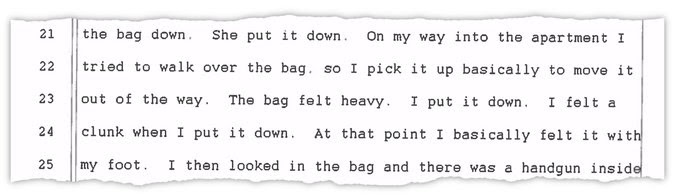
There had been a shooting, Officer Martinez testified, and he wanted to search a nearby apartment for evidence. A woman stood in the doorway, carrying a laundry bag. Officer Martinez said she set the bag down “in the middle of the doorway” — directly in his path. “I picked it up to move it out of the way so we could get in.”

The laundry bag felt heavy. When he put it down, he said, he heard a “clunk, a thud.”

What might be inside?

Officer Martinez tapped the bag with his foot and felt something hard, he testified. He opened the bag, leading to the discovery of a Ruger 9-millimeter handgun and the arrest of the woman.

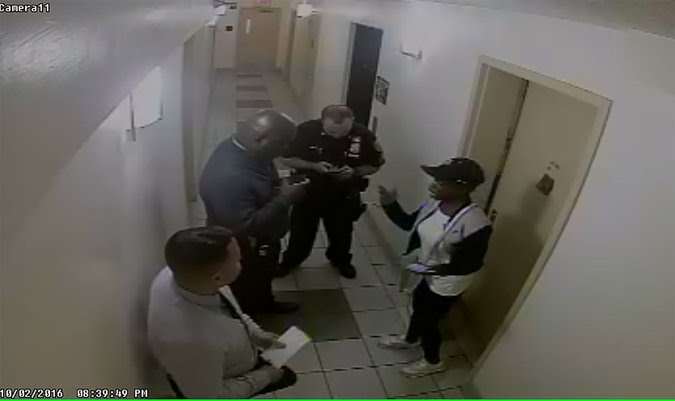
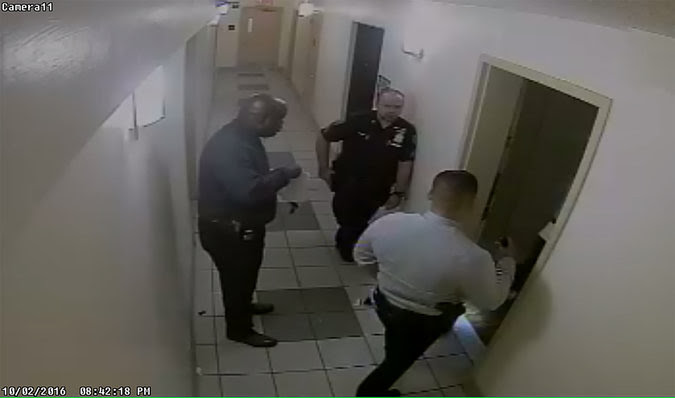
But a hallway surveillance camera captured the true story: There’s no laundry bag or gun in sight as Officer Martinez and other investigators question the woman in the doorway and then stride into the apartment. Inside, they did find a gun, but little to link it to the woman, Kimberly Thomas. Still, had the camera not captured the hallway scene, Officer Martinez’s testimony might well have sent her to prison.

Photo

Photo

Photo

Photo

Photo

When Ms. Thomas’s lawyer sought to play the video in court, prosecutors in the Bronx dropped the case. Then the court sealed the case file, hiding from view a problem so old and persistent that the criminal justice system sometimes responds with little more than a shrug: false testimony by the police.

Continue reading the main story

RELATED COVERAGE

  • New York Detective Charged with Faking Lineup Results FEB. 27, 2018

  • He Excelled as a Detective, Until Prosecutors Stopped Believing Him  OCT. 10, 2017

“Behind closed doors, we call it testilying,” a New York City police officer, Pedro Serrano, said in a recent interview, echoing a word that officers coined at least 25 years ago. “You take the truth and stretch it out a little bit.”

An investigation by The New York Times has found that on more than 25 occasions since January 2015, judges or prosecutors determined that a key aspect of a New York City police officer’s testimony was probably untrue. The Times identified these cases — many of which are sealed — through interviews with lawyers, police officers and current and former judges.

In these cases, officers have lied about the whereabouts of guns, putting them in suspects’ hands or waistbands when they were actually hidden out of sight. They have barged into apartments and conducted searches, only to testify otherwise later. Under oath, they have given firsthand accounts of crimes or arrests that they did not in fact witness. They have falsely claimed to have watched drug deals happen, only to later recant or be shown to have lied.

No detail, seemingly, is too minor to embellish. “Clenched fists” is how one Brooklyn officer described the hands of a man he claimed had angrily approached him and started screaming and yelling — an encounter that prosecutors later determined never occurred. Another officer, during a Bronx trial, accused a driver of recklessly crossing the double-yellow line — on a stretch of road that had no double-yellow line.

In many instances, the motive for lying was readily apparent: to skirt constitutional restrictions against unreasonable searches and stops. In other cases, the falsehoods appear aimed at convicting people — who may or may not have committed a crime — with trumped-up evidence.

In still others, the motive is not easy to discern. In October 2016, for example, a plainclothes Brooklyn officer gave a grand jury a first-person account of a gun arrest. Putting herself in the center of the action, the officer, Dornezia Agard, testified that as she approached a man to confront him for littering, he suddenly crouched behind a van, pulled from his waistband a dark object — later identified as a gun — and threw it on the ground.

“P.O. Agard testified that she heard a hard metal object hit the ground,” according to a letter the Brooklyn district attorney’s office wrote summarizing her testimony.

But prosecutors lost faith in her account in July 2017, after learning from other officers that she was not among the first officers on the scene. Officer Agard had arrived later as backup, according to the letter, which noted that the gun charges against the man were later dismissed. The prosecutors did not address why Officer Agard claimed to be a witness, or why the other officers present seem to have allowed her to process the arrest.

Police lying raises the likelihood that the innocent end up in jail — and that as juries and judges come to regard the police as less credible, or as cases are dismissed when the lies are discovered, the guilty will go free. Police falsehoods also impede judges’ efforts to enforce constitutional limits on police searches and seizures.

“We have 36,000 officers with law enforcement power, and there are a small handful of these cases every year,” said J. Peter Donald, a spokesman for the Police Department, the nation’s largest municipal force. “That doesn’t make any of these cases any less troubling. Our goal is always, always zero. One is too many, but we have taken significant steps to combat this issue.”

Shrouded, but Persistent

The 25 cases identified by The Times are almost certainly only a fraction of those in which officers have come under suspicion for lying in the past three years. That’s because a vast majority of cases end in plea deals before an officer is ever required to take the witness stand in open court, meaning the possibility that an officer lied is seldom aired in public. And in the rare cases when an officer does testify in court — and a judge finds the testimony suspicious, leading to the dismissal of the case — the proceedings are often sealed afterward.

Still, the cases identified by The Times reveal an entrenched perjury problem several decades in the making that shows little sign of fading.

So far in 2018, a Queens detective has been convicted of lying in a drug case and a Brooklyn detective has been arrested amid accusations that he fabricated the results of a photo lineup. These cases returned the phenomenon of police lying to the public eye, leaving police officials to defend the integrity of honest officers.

Kevin Richardson, the Police Department’s top internal prosecutor, said he believed so-called testilying was nearing its end. “I think it’s a problem that’s very much largely on its way out,” he said.

Indeed, it’s tempting to think about police lying as a bygone of past eras: a form of misconduct that ran unchecked as soaring street violence left the police overwhelmed during the 1980s and early 1990s and that re-emerged as police embraced stop-and-frisk tactics and covered up constitutional violations with lies.

But false testimony by the police persists even as crime has drastically receded across the city and as the Police Department has renounced the excesses of the stop-and-frisk years.

Some policing experts anticipate that the ubiquity of cameras — whether on cellphones, affixed to buildings or worn by officers — will greatly reduce police lying. For the moment, however, video seems more capable of exposing lies than vanquishing them.

Memory and Manipulation

In two recent cases, The Times found, officers appear to have given false accounts about witness identifications. These cases are particularly troubling because erroneous identifications by witnesses have been a leading cause of wrongful convictions.

After a 2016 mugging near a Brooklyn subway station, the police arrested a group of four people, one of whom was found to be in possession of the victim’s wallet. In preparing the case, prosecutors sought to pin down a few basic facts. Had the police brought the victim, who was punched and had his wallet taken, to positively identify the four suspects after they were taken into custody? If so, what had the victim said?

Getting a straight answer from the arresting officer, Chedanan Naurang, proved nearly impossible. It had been Officer Naurang’s quick thinking that had made the arrest possible: Having lost the suspects at one subway station, he followed a hunch and drove one stop down the line, where he caught up with the four men after they got off the train.

But certain details Officer Naurang gave prosecutors kept shifting over the next year, according to a February 2017 letter that prosecutors wrote in which they summarized his fluid story.

Officer Naurang said at one point that the identification had occurred inside a police station when the victim passed by the holding cells, saw the men and confirmed their involvement in the crime.

A few weeks later, he backtracked. No, the victim had actually never gotten to see the suspects at the police station, Officer Naurang explained. Instead, the victim had gotten a chance to view them on the street, shortly after their arrest. That’s when the victim got out of the police vehicle in which he had been waiting, Officer Naurang said, and pointed to one of the four men, identifying him as an attacker.

This version of events, however, was at odds with the recollection of the police officer who had driven the victim to the scene of the arrest. That officer, Christopher McDonald, told prosecutors that the victim had remained in the back seat while viewing the four suspects. And Officer McDonald said that the victim couldn’t say whether they were his assailants. He thought he recognized their clothing, but wasn’t sure.

Because of Officer Naurang’s changing story, prosecutors dropped the case against the men as part of a deal in which all four pleaded guilty to charges stemming from a second mugging they were accused of the same night.

Continue reading the main story

Photo

Detective Michael Foder, right, walked out of Federal District Court in Brooklyn accompanied by his lawyer, James Moschella, after his February arraignment on perjury charges. CreditVictor J. Blue for The New York Times

Another case in which the police gave false information about a witness identification came after a carjacking in Brooklyn in 2015. In that case, the police began to focus on two suspects based on an anonymous tip and a fingerprint. A detective, Michael Foder, testified that he had then prepared two photo lineups — one for each suspect.

Each consisted of the suspect’s photograph printed on a sheet of paper, alongside the photos of “fillers” — people of vaguely similar appearance with no connection to the crime. The hope was that the victim, a livery cabdriver, might recognize the suspect’s photo and pick him out — an outcome that prosecutors regard as a strong indicator of a suspect’s guilt.

That’s what happened, Detective Foder testified, when the victim came to the precinct to view the photo lineup for one suspect in November 2015 and returned in February 2016 to view one for the second suspect.

But the photo lineups that Detective Foder had prepared — and were submitted as evidence in federal court — were fabrications. It was a federal prosecutor who first realized that many of the photos used in the lineups were not yet available at the time Detective Foder claimed to have shown them to the victim. The reason? The photos of some of the fillers had yet to be taken.

The lineup that was said to be from November 2015 included filler photographs that were not taken until December. And the one he claimed to have administered in February featured photos that were taken in March.

Last month, Detective Foder was indicted on federal perjury charges. The indictment accuses him of lying to “conceal the fact that he had falsified documentation” related to the photo lineups. Detective Foder’s lawyer entered a plea of not guilty on the detective’s behalf.

Photo

A prosecutor discovered that many of the photos in the array Detective Foder said he had shown the victim Feb. 14, 2016, were not even taken until after that date.

Justifying a Search

Detective Foder’s actions appear to be aimed at tilting the scales toward guilt.

But more often, The Times found, false statements by the police seem intended to hide illegal searches and seizures, such as questionable car stops or entries into apartments that result in officers finding guns or drugs. If the truth were to emerge that the case began with an illegal police search, the evidence would quite likely be thrown out and the case dismissed.

Blue Lies

A series of stories examining the entrenched culture of ‘testilying’ in the New York Police Department.

    The story that Christopher Thomas, a plainclothes police officer, told a grand jury in December 2014 sounded plausible enough. As he approached a parked car with a flashlight in hand, he said, he saw a man in the driver’s seat pull a firearm out of his waistband and stick it between the car’s center console and the front seat. The driver was indicted on gun-possession charges.

    But by July 2015, as video of the encounter was about to emerge, Officer Thomas started backtracking. In conversations with the assistant district attorney on the case, Officer Thomas acknowledged that he had not seen the driver pull the gun from his waistband. In fact, he said, he had never seen the driver with his hand on the gun.

    “He stated to the A.D.A. that he did not know why he had testified to those facts before the grand jury,” according to an email prosecutors later sent to a defense lawyer. This email, as well as several similar letters that prosecutors sent in other cases, were provided to The Times by Cynthia Conti-Cook, a Legal Aid Society lawyer who has been compiling a database of police misconduct allegations.

    The video undermined Officer Thomas’s original claim of having seen the gun at the outset. It shows Officer Thomas and his partner approach the car and shine their flashlights inside. Their demeanor on the video suggests that they had seen nothing so far to cause alarm. One of the two officers — either Officer Thomas or his partner — is so unconcerned that he bends down for about seven seconds, and appears to tie his shoe.

    Continue reading the main story

    Continue reading the main story

    Brooklyn prosecutors dismissed the gun case and, according to the prosecutors’ email, informed the Police Department’s Internal Affairs Bureau about the problems with Officer Thomas’s account. An internal police disciplinary process led to Officer Thomas losing 30 vacation days and being placed on dismissal probation for a year, according to a person familiar with the case.

    He is now a sergeant in a narcotics unit.

    Officer Thomas is not the only officer to have tried to withdraw earlier testimony as soon as video of an encounter emerged, or was about to.

    “I misspoke when I was in grand jury,” Sean Kinane, an officer with the 52nd Precinct in the Bronx, testified in federal court in 2016. That was all the explanation he gave, or was asked to give, for why he was recanting his earlier testimony about witnessing what appeared to be narcotics transactions in the moments before he stopped a heroin dealer in the street.

    That claim, if true, would have given the police justification to stop the man, who was discovered to be carrying 153 glassine envelopes of heroin and eight bags of crack cocaine. But after the drug dealer managed to get a video recording of the encounter, Officer Kinane’s story changed. He had misspoken.

    Reached by telephone for comment, Detective Kinane — he was promoted in 2017 — hung up.

    ‘No Fear of Being Caught’

    Many police officials and experts express optimism that the prevalence of cameras will reduce police lying. As officers begin to accept that digital evidence of an encounter will emerge, lying will be perceived as too risky — or so the thinking goes.

    “Basically it’s harder for a cop to lie today,” the Police Department’s top legal official, Lawrence Byrne, said last year at a New York City Bar Association event, noting that there were millions of cellphones on the streets of New York, each with a camera. “There is virtually no enforcement encounter where there isn’t immediate video of what the officers are doing.”

    As more police encounters are recorded — whether on the cellphones of bystanders or the body-worn cameras of officers — false police testimony is being exposed in cases where the officer’s word might once have carried the day. That is true for run-of-the-mill drug cases as well as for police shootings so notorious that they are seared into the national consciousness.

    Yet interviews with officers suggest the prevalence of cameras alone won’t end police lying. That’s because even with cameras present, some officers still figure — with good reason — that a lie is unlikely to be exposed. Because plea deals are a typical outcome, it’s rare for a case to develop to the point where the defendant can question an officer’s version of events at a hearing.

    “There’s no fear of being caught,” said one Brooklyn officer who has been on the force for roughly a decade. “You’re not going to go to trial and nobody is going to be cross-examined.”

    The percentage of cases that progress to the point where an officer is cross-examined is tiny. In 2016, for instance, there were slightly more than 185 guilty pleas, dismissals or other non-trial outcomes for each criminal case in New York City that went to trial and reached a verdict. There were 1,460 trial verdicts in criminal cases that year, while 270,304 criminal cases were resolved without a trial.

    To be sure, officers are sometimes called to testify before trial at so-called suppression hearings in which the legality of police conduct is evaluated. But those are rare. In Manhattan, about 2.4 percent of felony criminal cases have a suppression hearing, according to data from the Manhattan district attorney’s office. The rate for non-felony cases is slightly more than one-tenth of 1 percent.

    Continue reading the main story

    Photo

    Officer Pedro Serrano said he doesn’t engage in “testilying,” but he said it remains a problem in the New York City Police Department. “You take the truth and stretch it out a little bit.” CreditKarsten Moran for The New York Times

    A Crucial Court Decision

    Several officers, all working in the Bronx and Brooklyn, candidly described in interviews how the practice of lying runs like a fault line through precincts. “You’re either a ‘lie guy’ or you’re not,” said the Brooklyn officer. Speaking on condition of anonymity, he described how he avoided certain officers and units in his precinct based on his discomfort with the arrests they made.

    Earlier in his career, he said, a supervisor and a detective had each encouraged him to lie about the circumstances of drug arrests. Another time, he said, he had worked with an officer who, after discovering drugs while searching a suspect without cause, turned to the other officers present with a question — “How did we find this?” — and sought their help devising a false story.

    Countless police officers have struggled with that question — “How did we find this?” — ever since 1961, when the Supreme Court ruled, in Mapp v. Ohio, that state judges must throw out evidence from illegal searches and seizures. Before this ruling, New York City officers could stop someone they thought might be dealing or using drugs, search their pockets and clothing, describe the encounter truthfully, and not worry that a court would throw out the drugs that they had discovered, even though the stop and search had been, strictly speaking, illegal. That changed with the Mapp decision, which greatly expanded the reach of the Fourth Amendment.

    Immediately after the Mapp case, police officers saw many narcotics cases be dismissed. Then they made what one judge called “the great discovery.” If they testified that the suspect had dropped a bag of drugs on the ground as the police approached, courts would generally deem those arrests legal.

    Within a year of the Mapp decision, courts in New York City were seeing a marked increase in what became known as “dropsy” testimony — in some units “dropsy” cases increased more than 70 percent, according to one 1968 study.

    There was little reason to think drug users had grown more skittish. Rather, the influx of these cases was understood to be a sign that police officers were lying in a substantial number of cases. Ever since, courts in New York have been plagued with officers lying about how they came to discover that a suspect was carrying drugs or guns.

    By 1994, a commission appointed to investigate police corruption noted that lying to make cases stick was common enough for “testilying” to become a well-known portmanteau.

    The report by the Mollen Commission noted a few established patterns of falsehoods. Officers who illegally searched a car might later say they discovered contraband in “plain view.” Or an officer who found a gun or drugs in someone’s clothing during an illegal search might falsely claim to have seen “a bulge in the person’s pocket.”

    Just like the dropsy testimony a few decades earlier, these stories of “plain view” and “suspicious bulges” became scripts that many police officers stuck to. They were rarely challenged, not even as officers in New York City began repeating them tens and then hundreds of thousands of times as police stops of mainly black and Latino men skyrocketed during the years Michael R. Bloomberg was mayor.

    Embellished Narratives

    In recent years, the number of times police stopped and frisked pedestrians has declined precipitously. But certain plainclothes units, such as the so-called anti-crime teams, still engage in an aggressive style of policing that relies heavily on stop-and-frisk tactics. These teams make a disproportionate number of gun arrests, but they are also responsible for a substantial number of dubious stops of pedestrians and drivers, police officers and legal experts said in interviews.

    Several uniformed patrol officers said they have long suspected that the track record of plainclothes anti-crime teams for making weapons and drug arrests was bolstered by illegal searches and a tolerance for lying about them.

    These officers described a familiar scene: a group of black men ordered out of a vehicle for little reason and made to sit on the curb or lean against the bumper, as officers search the vehicle for guns and drugs.

    “Certain car stops, certain cops will say there is odor of marijuana. And when I get to the scene, I immediately don’t smell anything,” said Officer Serrano, one of the few officers interviewed who was willing to speak on the record. “I can’t tell you what you smelled, but it’s obvious to me there is no smell of marijuana.”

    Mr. Serrano’s testimony about a secret station-house recording he made was crucial evidence in a landmark stop-and-frisk trial in 2013. He and nearly a dozen other current and former officers are suing the Police Department over what they describe as arrest quotas.

    Photo

    Edwin Raymond, a New York City police sergeant, said plainclothes officers working with so-called anti-crime teams bend the truth “to fit the narrative.” CreditChristopher Anderson/Magnum Photos

    “It’s the anti-crime teams, the plainclothes officers, everyone knows they will violate the law, get what they want and then write it to fit the narrative,” said Edwin Raymond, a police sergeant who is also a plaintiff in the arrest-quota case. “The narratives will be embellished to fit the parameters of probable cause, if need be.”

    ‘A Surreal Journey’

    To be sure, there are other motives for lying, other than to cover up illegal searches.

    Some police officers have said they faced pressure from commanders to write more tickets or make more arrests. A decade ago, narcotics detectives were found to have falsely accused people of dealing drugs in order to meet arrest quotas.

    And there is pressure to solve — or at least close — cases. That may have motivated Officer Martinez’s gun-in-the-laundry-bag-in-the-doorway story.

    What appears to have actually happened is that Officer Martinez and other officers searched inside the apartment for evidence from a nearby shooting. They had good reason to focus on that apartment. The victim, after being shot, had rushed there, along with others. Crime-scene photos taken by the department’s Evidence Collection Team suggest that a gun was found inside the apartment, in or near a laundry bag on the floor.

    But whose gun was it? That was not clear. A number of people had been in the apartment in the preceding hours. And Ms. Thomas, who lived more than a mile away and arrived about an hour after the shooting, was one of the few people there when Officer Martinez showed up.

    There is little, if any, evidence tying Ms. Thomas to the gun other than Officer Martinez’s false testimony that placed her in the doorway with the laundry bag in her arms. Prosecutors acknowledged that DNA testing indicates that Ms. Thomas did not handle the gun. Moreover, court papers that prosecutors filed after the case fell apart noted that the police appear to have focused on Ms. Thomas while ignoring other potential suspects. Several other people had entered the apartment shortly before Ms. Thomas — “none of whom are questioned by the police,” the prosecutors’ papers noted.

    As for Officer Martinez’s false story of the laundry bag in the doorway, the prosecution’s legal papers noted only that “there are clear inconsistencies” between Officer Martinez’s “recollection of events and the video.”

    “At no time in this video is there a laundry bag in the defendant’s hands,” the prosecution’s legal papers noted. “Neither is there a bag in the doorway of the apartment, and at no time is the arresting officer observed moving a bag before entering the apartment.”

    By the time prosecutors officially dropped the case in November 2017, Ms. Thomas had already appeared in court 16 times, according to a tally of appearances kept by one of her lawyers, Alexandra Conlon, of the Bronx Defenders. On the last appearance, Ms. Thomas, 39, asked to address the court. “For 396 days I have been fighting for my life, my freedom and my sanity,” she said. “This has been such a surreal journey that I don’t wish on anyone.”

    Officer Martinez remains in good standing at the 41st Precinct. Shortly after the case was dismissed, he was promoted to detective and given his gold shield. When a reporter tried to interview him in January about his testimony in the case, he declined to comment, saying, “That’s not something I can speak about directly with you.”

    Continue reading the main story

    Photo

    Ms. Thomas outside the Bronx apartment building where she was arrested on gun charges that were dismissed after a video contradicted the police officer’s account.CreditHilary Swift for The New York Times

    Continue reading the main story

    RELATED COVERAGE

    1. New York Detective Charged with Faking Lineup Results  FEB. 27, 2018

    [Message clipped]  View entire message

    From KKD: Void Judgments, Larkin perfidy, etc.

    I received an e-mail that I responded to with my comments in red.    I am forwarding the words and phrases as the problem is brought forward in a very straight forward manner, to wit:
    On Thursday, March 8, 2018, 11:21:28 AM CST, MARK TOMEY SR. <mstomey@hotmail.com> wrote:
    Mr. Ditkowsky: some legal passages concerning “void judgements”
              a.) “Any judge who does not comply with his oath of office to the Constitution 

    of the United States, wars against the Constitution and engages in violation of the 

    Supreme Law of the Land. If a judge does not fully comply with the Constitution, then

    his orders are void. In re Sawyer, 124 U.S. 200 (1888), he is without jurisdiction, and 

    he/ she has engaged in an act or acts of treason. U.S. v. Will 449 U.S. 200, 216, 101 

    S. Ct. 471, 66 EEd. 2d 392, 406 (1980); Cohens v. Virginia, 19 U.S. (6 Wheat) 264, 404, 

    5 L. Ed. 257 (1821).    I have no problem with the statement – but note a judge who acts ultra vires creats a voidable judgment at best – not a void judgment.
                   b.) Judgement is a “void judgement” if court has rendered judgement lacked 

    jurisdiction of the subject matter, or of the parties, or acted in a manner inconsistent 

    with due process. Klugh v. U.S., D.C.S.C., 610 F. Supp. 892, 901.  absolutely correct.

                   c.) A court lacks jurisdiction anytime it denies a citizen the Bill of Rights 

    or amendments, particularly Due Process 1308, (C.A. 10 (Colo.). 1994); VC.A. 10   Now we are getting into the area of distinctions.    If a judge acts badly, or exceeds his authority an Appellate Court usually reverses the action.    Here the action of the judge is subject to reversal and we can consider the judgment rendered voidable.    A voidable judgment is fully enforceable until reversed.      

    (Colo.), 1994).  “Spitzberg v Notaro – Judge Gerald Rosenberg void – There is a miscon-

    ception by some attorneys and judges that only a judge may declare an order void, but 

    this is not the law: (1) there is no statute nor case law that supports this position, and 

    (2) should there be any case law that allegedly supported this argument, it would be 

    directly contrary to the law established by the U.S. Supreme Court in Vallely v. Northern This is true but, self help is prohibited.   Thus if a judge enters an order that it is illegal to wear a red shirt, indeed that order is void.    If Law Enforcement desires to enforce the order, it is protected UNTIL the order is ruled by a Court having jurisdiction as void.     Ordinary citizens like you and me do not get to determine which orders are void, voidable, valid, or not applicable.   This is the function of the judicial system.      This is also the reason that CORRUPTION in the Courts is such a devastating crime. 

    Fire & Marine Ins. Co. 254 U.S. 348, 41 S. Ctr. 116 (1920) as well as other state courts, e.g.

    by the Illinois Supreme Court in People v Miller. Supra. 

                  d.) Per Black’s Law Dictionary, Sixth Edition, p. 1574, void 

    judgement is defined as “one which has no legal effect, invalidity of which may be 

    asserted by any person whose rights are affected at any time and at any place directly 

    or collaterally.”

                  e.) Violation of due process results in “void judgements”: “A court lacks jurisdic-

    tion anytime it denies you the Bill of Rights or amendments, particularly Due Process” 

    1308 (C.A. 10 (Colo.), 1994); V.T.A., Inc. v. Airco, Inc., 597 F. 2d 220, 221 (1979).  A judge-

    ment reached without due process of the law is without jurisdiction and thus void. See above:     I have no quarrel with these definitions – my quarrel is with the ‘lay’ interpretation  by some that by their determination that a judgment is void – it is.     In fact it is NOT.    You may feel that your CONSTITUTIONAL RIGHTS have been violated, but only a Court having jurisdiction to make that determination has the authority to determine that facts.

    Bass v. Hoagland, 172 F. 2d 205, 209 (1949). Any motion for relief from a void judgement 

    is timely reguardless of when it is filed. V.T.A., Inc., supra@ 224 (footnote no. 9). If a 

    judgement is  void, it is a nullity from the outset and any Civ. R60 (B) motion is there-

    fore filed within a reasonable time. Omer v. Shala, supra@1308 The Words that you should focus upon MOTION FOR RELIEF.    A motion that refers to a voidable judgment has to be brought during term time or the statutory time (2 years) and must meet the criterion of GOOD FAITH and due diligence.     This is a very important distinction.

                   f.) In my cases there was bias against a pro se litigant, which has become an

    epidemic in American courts, where lawyers become judges who then protect the 

    business of lawyers (purportedly illegal in the court system). Justice is not needed to

    be purchased according to the law and was written to be”of the people, by the people

    and for the people; “we the people”. Yet it has been reported by Dr. Richard Cordero, Esq,

    Phd University of Cambridge England, MBA University of Michigan Business School and 

    D.E.A. La Sorbonne Paris, who has taken up the cause of pro se litigants, through his 

    investigation that over 97% of pro se litigant cases are being illegally dismissed by courts;

    and as such said rulings are “void judgments”.   Bias does not create either a void or voidable judgment.   Neither does a judgment entered by a judge who has been ‘wired!’       Such is indeed a violation of civil rights, but if you do not speak up and follow the procedure for addressing the problem (or cannot prove the bias) a valid judgment can be rendered against you.     You also can waive the bias.     (Merely proceeding in the case and allowing the judge to rule on issues can be deemed a waiver.

    Let me give you an example.     Lanre Amu, is a lawyer, a graduate engineer, etc.     He emigrated to America from Africa, became a citizen and a lawyer.    His skin color is very dark.     His clients also share his racial characteristics.
    It is no secret that Chicago politics is dirty as can be and the “fix” is not uncommon.    Amu ran into an obvious fix representing a client.    The Judge was on the Board of Directors of the defendant and her brother was one of the attorneys for the defendant.  Amu complained and the Judge ignored him.    He then complained to the Bar (IARDC) etc.   His clout was zero and as is quite common the JUDICIAL ELITE were in ‘cover-up’ mode.    
    As a believer in the Justice system he would not back down.    The IARDC commenced proceedings against him to induce him to ‘shut up!’     He refused and they sought and obtained an interim order suspending his law license.   He continued on and was awarded a 3 year suspension of his law license.    (During the interim a respected publication (Crain’s Chicago Business) independently investigated and found the exact facts that Amu complained of, to wit:  the Judge was on the Board of the defendant and her brother was an attorney for the defendant.     The JUDICIAL ELITE were unmoved and not only did Amu’s suspension stand, but, as a condition for reinstatement Mr. Larkin and the Illinois Supreme Court want Amu to admit that he lied and Judge and her brother were acting entirely proper.   He has refused.
    The judge, her brother, Mr. Larkin, the Justices of the Supreme Court of Illinois have all acted in the most reprehensible and unconstitutional manner possible –  however, this corrupt judges’ orders are NOT VOID – they are voidable and until our government acts this outrage will be the RULE OF CASE.
    Mr. Amu, yours truly, you et al are not given the authority OR the power to unilaterally  impose PROPRIETY on even the most obvious of miscreants.    
    Jerome Larkin exceeded his authority when under oath he filed FALSE PLEADINGS intended to deny both Amu and his clients EQUAL PROTECTION UNDER THE LAW.     Indeed, Larkin should be disbarred and sent to jail for his perfidy – BUT ALL OF THAT IS A SEPARATE ISSUE.    We live in a Nation of Laws and from time to time we will find in authority people who should not be – and should be in jail, but, to accomplish the demands of DEMOCRACY we in particular have to be like Caesar’s wife and follow the letter of the law even if it is grossly a bitter pill to absorb.
    NB.  Amu’s remedy was Appeal and Petition LAW ENFORCEMENT to do their sworn duty.   Indeed, the remedy is inconvenient, uncertain, and time consuming – but it is the price we pay.       I also would like a more efficacious remedy. 
    No matter where you turn, the carnage continues.    The government and the great unwashed pay a 700% fraud surcharge for health care.   Hardly a day goes by and the scenario is repeated, to wit:  an elder incarcerated and removed from his/her family.  The elder’s estate is decimated = if there is any money in it, if not MEDICARE and government programs are used to extract every possible dollar.    
     
    As the time goes by and the theft of Medicare money (and the patient’s assets become more difficult the patient falls out of bed, has hit surgery, follow through illness and dies).   Fast cremation occurs and the elderly person being trafficking is swept under the web.    Anyone who complains has LEGAL PROBLEMS!
     
    The beat continues, to wit:
    On Thursday, March 8, 2018, 10:38:07 AM CST,  MTS wroge

    I have yet to decide what actions and against whom I will take in the

    debacle of a 76 year old I had been caring for recently. Baltimore City

    Social Services case worker Jorge Mitchell forced him into a Manor Care

    facility. When I questioned why none of the family or I as his them power

    of attorney had been contacted. said case worker stated that the facility

    was good and “if you screw this up for me you will never see Alejandro again”.


    It was his intent to see the elder apartment lease and be kept at Manor Care.

    My wife, two of the elder’s brother and I went to see the situation for

    ourselves. We found him not provided a simple tooth brush he had been

    requesting. He was having problems swallowing and thus eating, but if he

    did not finish his food in the allotted 1/2 hour, it was taken away and nothing else provided until the next meal


    The unit attempted to set up the elder’s girlfriend as power of attorney, but she contacted an attorney, who sent a legal letter stating she would not accept this. Next, I found case workers told the elder if he signed paperwork for them, he would immediately go home. He signed and then got ready to leave. After waiting hours, he was

    told he would never go home. I discovered the paperwork to be hospice
    care
     and told all involved it was null and void as the elder never understood

    what he was tricked into signing.

     Then, I got a call that he had fallen out of
    bed and was sent to Union Memorial Hospital ER. There he stated to me he 
    had been walking to the bathroom, when he fell and hit his head. He claimed 
    he pressed the emergency call button for an hour but no one came to help
    him. I told the ER doctor about his swallowing problem and that he was losing
    weight. Said doctor stated they found nothing wrong from his fall and would
    give him medication for thrush, as that was most likely his swallowing prob-
    lem.
     I stated that I wanted the elder transported to York Hospital for further
    care. Instead we were forced to drive him in our private car. At the York ER,
    the elder was found to have a broken hip. But after his hip surgery he began continued issues with infections and blood pressure drops. The hospital never worked to have him transported to see a liver specialist, though the doctors stated his main issue was liver problems. I questioned his bad gallbladder
    as possibly causing systemic poisoning of the elder as had occurred with his
    older brother, but this was not taken seriously until the day before his death.
    Doctors continually attempted to have me “pull the plug on him” in clear
    violation of his written medical directives and without the benefit of a liver
    specialist seeing him. The night before his death, a doctor stated he would
    be stopping any attempts at resuscitation, would not send him to the ICU
    and would withhold blood pressure medications.
     I stated that would be tantamount to murder, and told him not to take such actions. I call the hospital administration and was forced to leave a message for the head of
    the hospital. next, I requested who ever was currently in charge of the
    hospital that evening, but was forced to leave a message. So, I called the
    nurse handling his care, and stated for the record, to be placed also into
    his record, that all care must continue for him to maintain his life, or legal
    action would be taken against all those involved. Also, I asked her to relay
    this to his doctor. Yet about 15 hours later he was dead.
    Was a withholding of care involved? I contacted the coroner’s office to let them know about all the improper actions that precluded his death and requested a forensic
    autopsy. But the coroner’s office balked. I contacted the governor’s office,
    head of the health department, inspector general’s office, etc. I followed

    up with the district attorney and filed police reports as requested. In the

    end the coroner stated ‘no one would bully her into doing an autopsy”.

    The corner’s office had the body sent to a funeral home and cremated,

    destroying evidence. My question was why the coroner’s office was not

    doing random autopsy’s to check on death of elderly in the hospital, let

    alone checking on questionable deaths? their response was a ruling

    that this elder had died of “complications from hip surgery”, even though

    the treating doctor’s constantly stated that his main health issue was

    a bad liver – though no liver specialist ever saw, diagnosed, or treated

    him. The attitude when you are old, especially if found to have some
    chronic or terminal condition, you should just die – does not matter

    how much longer you might live if treated properly. But my response

    is no one has an expiration date stamped upon them. And if you think
    about it, we are all terminal from the time we are born. The elderly,
    and people in general, have become like everything else in our society
    today, throwaway; you do not fix it, there are too may more around,
    just throw it away, as it has no true value anymore.  Sorry, but I am a
    senior citizen, as are many friends, and I take umbrage to this attitude,
    as should everyone, as all will become old someday if they live long
    enough. I challenge everyone to speak out to protect the elderly!
    Mark Tomey Sr.
    COINCIDENTS ARE INTERESTING  – I DO NOT BELIEVE IN THEM, BUT THEY MAY EXIST.    If all these elderly people falling out of bed is a coincident maybe the miscreants would not resist so vigorously an HONEST INVESTIGATION!    Maybe the exposure of judicial corruption would not be akin to “yelling fire in a crowded theater!”       May be all the corruption would not be so obvious and maybe the elderly victims would not be cremated as soon as their eyes close!!!!
     
    The breach of trust is a TAXABLE EVENT!    If the establishment is so shocked by the concept of an HONEST INVESTIGATION maybe saving the State from bankruptcy would be a reasonable alternative.    As Medicare fraud is clearly present in every one of these cases and all the miscreants work together for a common purpose 18 USCA 371 is applicable.   Ergo, conspirators are JOINTLY AND SEVERALLY liable for damages and Federal and State Income Taxes.     Civil Tax collection carries no stigma!    Thus let me recommend that the State/Federal Bureaucrats intent  on engaging in the activites of ELDER CLEANSING (HUMAN TRAFFICKING IN THE ELDERLY) pay Federal and State Income taxes due  (plus interest and penalties).
    Using the Mary Sykes case 09 P 4585 as an example.    3 million dollars was stolen from the Estate and tens of thousands of dollars stolen from HEALTH CARE PROGRAMS including Medicare.     Every miscreant who participated has joint and several liability, including Mr. Jerome Larkin and each of the attorneys at the IARDC who participated in attempting to silence the Rule 8.3 reporting of myself and Ms. Denison.
    Ken Ditkowsky
    Those of us who disregard history are doomed to relive it.    The Elder Cleansing/human trafficking in the elderly is a subject that everyone desires to avoid and ignore.    It does not matter who you are or what you are – when you get old you are a target.    Your children may protest, you may protest, friends may protest, but the protest usually falls on deaf ears.   Occasionally an anomaly occurs and there is a write up in a mainstream publication.  (you of course remember the New Yorker Magazine article published last year!)   The sad commentary is that the amount of money that the ‘swamp’ obtains from the felonies of elder cleansing is so huge that even a call for an HONEST INVESTIGATION meets with extreme resistance.
     
    It is difficult to bring home to the ‘great unwashed’ that each of us is a potential target.     Not one of us is immune.     Unprincipled public officials who profit on the weakness of the potential targets today have the upper hand and are literally protected in every way as they prey on the elderly and the disabled.
     
    I’ve sent everyone in sight the information as to the MARY SYKES and ALICE GORE cases.   I referred every one to the blogs PROBATE SHARKS, MARYGSYKES, NASGA, AAAPG, ****.   The five GAO REPORTS to Congress that have been virtually ignored by our elected representatives have been referred to numerous times.    No one is interested UNTIL THEY ARE THE TARGET or ONE OF THEIR LOVED ONES is a target!   At that point in time it is too late!    A corrupt judge has authorized your (or your loved one’s) estate to be ravaged and a Jerome Larkin clone – if not Larkin himself- has made certain that no lawyer who wants to keep his law license is going to complain.    The corrupt judge and corrupt judicial officials will use the power of the courts to intimidate you or to deny you justice, and you will be labelled a NUT and ignored.
     
    Rest assured – the miscreants who ravage your estate ( or that of your loved one) will escape and enjoy the aforesaid estate fully – without even having to pay a dollar tax on the booty!    Your elected representatives when you write them will express extreme sympathy.     I wrote Senator Durbin (Illinois’ senior senator) and received his response – a copy of one of his stupid speeches on how he was saving social security  – so it too could be stolen.
    (Philip Esformes over a year ago was indicted for stealing a billion (nine zeros) dollars in Medicare Funds! – his trial has not been had as of today.   Seth Gillman in a medicare hospice scheme stole many many millions of dollars – when he was rumored to be co-operating with the FBI, it was quite obvious that the POLITICAL ELITE and the JUDICIAL ELITE in Illinois were troubled – -Jerome Larkin and the IARDC filed a petition before the Supreme Court of Illinois for an interim suspension of Gillman’s license.    (There was no danger to public created by his stealing of trust funds or medicare funds etc – Larkin the IARDC only acted when they feared he might expose them to an HONEST INVESTIGATION by Federal Authorities!)
     
    SHAME ON US!    WE GOT THE GOVERNMENT THAT WE DESERVE!

    The problem that we face is corruption and hypocrisy.       The local media here in Chicago must think that we – the great unwashed – are stupid.     They accept millions – maybe billions of dollars – from political organizations that are totally irresponsible and promise in election years the world and deliver only corruption and hypocrisy.     The news is slanted in most cases to glorify the POLITICAL ELITE and to reward favorites and punish those who are not liked.


    We see multiple examples of the bias daily.   Today, the Chicago Tribune was lauding one of the candidates for Assessor and crying over the fact that she had been removed from the ballot by the election commission only to be reinstated when the political elite candidate appeared to be having trouble in the primary election.    The addition of the previously removed candidate splits the opposition vote and thus almost guarantees that the political elite candidate will be re-slated.      This is an old ploy but an effective one.      It is also being used in the Attorney General’s race for the nomination.     These two offices are essential to maintaining power.      


    The parallels are numerous.     The Human Trafficking (elder cleansing) scandal is an obvious metaphor.    The Circuit Court of Cook County, Probate Division can only be described as a cesspool.     Unfortunately, the problem is universal.    The Elderly, and elderly widows are too lucrative and easy target to be neglected.    Five Government Accounting Office reports to Congress have been virtually ignored and government sponsored, and funded organizations have used ever device possible to attempt to silence blogs such as MaryGSykes, Probate Sharks, NASGA, AAAPG, ******.      No ‘dirty trick’ is too ethically challenged or despicable not to be used in the quest to ‘cover up’ the criminal activity of the publicly funded organizations.


    In particular, here in Illinois the JoAnne Denison disciplinary proceeding stands out for its infamy and its reach for the nadir of ethical conduct.     The case started out as part of the cover-up of the Mary Sykes case 09 P 4585.     One of the Guardian ad litem who was allegedly preying on the elderly matron/widow felt aggrieved that the blog Probate Sharks published a demand made by yours truly and Ms. Denison for an HONEST INVESTIGATION.        The demand for an HONEST INVESTIGATION was prompted by the fact that all the protections of the Act 755 ILCS 5/11a – 3 and 755 ILCS 5/11a – 10 were ignored, including but not limited to service of a proper summons, prior notice to next of kin,  the holding a hearing as to the extent and nature of any disability (755 ILCS 5/11a – 3), application of the proper standards etc.      Heretofore, a public official – such as a guardian or conservator was considered a fiduciary and owed the ‘ward’ the highest standard of conduct.    Heretofore, forfeiture of property and liberty was strictly prohibited by both the Illinois Constitution and the United States Constitution.     


    The demand for an HONEST INVESTIGATION, even though ignored, was a call to LAW ENFORCEMENT to protect the Constitution of the United States of America, the Illinois Constitution of 1970, and the Rule of Law.     As there was three million dollars to be stolen sans Federal and State Tax enforcement, and millions in Federal Health Care money to steal the call for an HONEST INVESTIGATION was totally repugnant to the Establishment.      Attorney Denison not only refused to ‘back off’ from her demand for the political organization to comply with the demand that its members respect the rule of law and the Constitution, but, she published in her blog –www.marygSykes.com – instances of criminal corruption by sitting Judges.    Many of these Judges were acting in criminal concert promulgating the felonies of ELDER CLEANSING and HUMAN TRAFFICKING.       Ms. Denison’s exposure of the continued criminal conduct and ‘OPERATION GREYLORD’ activities was not appreciated and connoted by the Administrator of the Attorney Registration and Disciplinary Commission as being akin to “yelling fire in a crowded theater.”   


    Mr. Larkin (the administrator) was not content with filing false pleadings under oath.     He made certain that he punished Attorney Denison and sullied her reputation and ability to practice law.     In so doing he himself violated the Law!     He engaged as an example an unlicensed ‘court reporter!’      One of the transcripts of proceedings was indeed interesting.    A judge (who presided over the Sykes case) admitted to telling a falsehood under oath during her direct examination according to Court watchers.     The official transcript was filed with the admission (elicited under cross examination) deleted.     The required standard of proof was modified from ‘clear and convincing’ to Jerome Larkin says it is true – to hell with the truth.


    Unfortunately, the Denison perfidy is not an anomaly, but, is common place and as the investigation continues – S.O.P.      Rule 8.3 compliance in HUMAN TRAFFICKING by people favored by the political elite is not tolerated and a lawyer who complies with Rule 8.3 is almost guaranteed an interruption of his/her law license.     ELDER CLEANSING is a major fund-raising strategy for the POLITICAL ELITE.      

    We – the great unwashed – will have no Democracy, no Republic, and no Freedom UNLESS we react and rebel.        The strategy of splitting our vote so that the machine candidate can be nominated or elected will be difficult to address – but, we must do so.     The outright campaign lies, and demonization of the opposition may be more difficult.      For instance, racism has become a catch word.    What is racism?     It certainly was not racism for Lanre Amu to have his license suspended for practicing law while black!    Indeed, Mr. Larkin’s perjury goes unpunished even though we (and Larkin) all know that CRAINS CHICAGO BUSINESS   make the very averment against Judge Egan that Amu did.    Larkin’s prevarication was rubber-stamped in the face of unequivocal evidence of Egan’s perfidy and ethically challenged behavior on the bench.    Hell – Egan did not even deny the misconduct!       Today, to obtain the reinstatement of his law license, the Illinois Supreme Court is demanding that Amu admit that he lied – even though everyone knows that he told the truth and Larkin was very frugal with the truth under oath.

     Of course, it was not racism in Illinois when Larkin’s legions denied admission to an icon of the Civil Rights movement.       This esteemed lady = who marched with DR. KING and who was recognized as one of the planners of the Selma March (Diane Nash) was denied entry to one of the kangaroo hearings in which Attorney Denison was being denied her civil rights.    (I personally was at the hearing and there was a vacant seat adjacent to me – I requested an apology for Ms. Nash from Mr. Larkin – no apology was ever given).

           It does not guaranty that I can kidnap Mary Sykes, drag her before a corrupt judge lacking jurisdiction and ethics and deprive Mary of her liberty, her property, and the fruits of her American citizenship.     (Amazing – but the Courts are protecting my whim (if I have sufficient political and judicial clout) to deprive others of due process, liberty and property)


    The government supports health care fraud and its 700% surcharge.     Philip Esformes was indicted in the US Court for the Southern District of Florida for stealing a billion dollars in Medicare Money.    Seth Gillam was convicted of a serious Medicare Fraud involving Hospice, stealing from trust funds etc.    These are not isolated cases – they are the norm and unfortunately both Gillman and Esformes are not the biggest players in this trillion dollar criminal enterprise.     Florida elderly are not the only targets.    Why then are prosecutions so rare?  It is respectfully suggested that the POLITICAL ELITE are so invested in the Elder Cleansing frauds and the money that they can steal from both the government and the victim, that they have created a protected cottage industry.


    It does not take a Philadelphia Lawyer to answer the query!      Prosecutions are rare because the criminals are heavily tied in with the ESTABLISHMENT.       In my Brewer case the canvass of the 50th Ward in Chicago revealed that my extremely qualified client received virtually NO VOTES from any of the nursing homes in the area.     It appeared that every resident voted for the incumbent alderman.     It appears that this was not an anomaly=  it appears representative of nursing home voting.      Let’s make this very clear – – a candidate running for public office can obtain enough votes from his/her relationship with the nursing home operator to swing the election either for him or against him.     Even lifetime voters for the candidate not favored by the nursing home operator will be seen to have voted for the candidate favored by the operator of the facility.   (Indeed – I am suggesting blatant vote fraud!)


    ELDER CLEANSING (HUMAN TRAFFICKING) is not a minor event – it is a cancer that could destroy the America they we know.        The persons engaged in the criminal conspiracy are well connected public servants.   In Germany during the 1930s, and in Soviet Russia during the Gulags human cleansing/trafficking was a NATIONAL POLICY.      Today in Southern Florida and in Cook County, Illinois it is so commonplace that it can be deemed public policy.     The fact that so many of the practitioners and their political co-conspirators get away with it (and the life savings of the elderly) with such impunity suggests that America is in deep trouble!        At the very least – it would be nice if the DEPARTMENT OF THE TREASURY had an agent or two wander into Mr. Jerome Larkin’s office and collect the FEDERAL INCOME TAXES due on the booty that Mr. Larkin protected for his 18 USCA 371 co-conspirators!   

    In the HUMAN TRAFFICKING (ELDER CLEANSING ) SCANDAL we do not have a half dozen Congressional committees ferreting out the facts, but we do have scores of public officials who are engaged in the cover-up.
    The words – HONEST INVESTIGATION are deemed to be ETHICALLY CHALLENGED!   No wonder the ‘swamp’ is so upset by even the thought of such an event!   Honesty in government and enforcement of the Law might totally revolutionize both Federal and State government!     Imagine a politico who actually did the job that he/she was elected to fulfill.  Imagine a JUDGE who took his owe seriously!    (It could result in a serious drop in revenue for the Political parties and might ******)

    ..

    From Probate Sharks:

    From Probate Sharks Blog: Hijacking a Fla. Estate for millions from Chicago

    Posted on July 28, 2016

    On the pages of the Probate Sharks blog is the following: Irving Faskowitz probate court case. Irving’s 2 million dollar estate was high jacked by Chicago and New York non-relatives who were also named Faskowitz. The real Faskowitz heirs never were informed of Irving’s death and never saw a penny.

    One of the biggest problem that exists today is the unequal enforcement of the law, or the enforcement of the law to protect particular interests.    There is no question that when a person is placed in a police vehicle while in custody, and emerges dead there is a problem that the community should be concerned with.   The prosecutor knew that the individual was not murdered and no intent crime could be proven; however, in the true spirit of an opportunist unethical member of the political elite five police officers were ‘over charged’ with crimes that could not sustained.
    The issue of whether or not criminal charges of some kind should have been brought is not relevant as the establishment was looking for a scapegoat.   It is this tactic that is destroying the basic institutions of America.   Special interests can routine ‘fix’ the process or the case and a large segment of the population screams to deaf ears the words: “foul!”
    A burr under the skin has been the Florida Irving Faskowitz case.    Briefly the facts are allegedly as follows:
    Irving Faskowitz died.   It just so happened that an infamous Chicago Lawyer had a maiden name that was very strongly similar; however, she was not related.   Exhibiting the criterion of conduct advocated by the Illinois Attorney Registration and Disciplinary Commission and the Illinois Supreme Court and the conduct that they wish to foster, this lawyer filed documents claiming that she and a specific group of her relatations were heirs to the estate.    The claim was bogus on its face and so obscene that the Florida Attorney General rose out of her slumber and filed an objection.
    As Lawyers live by the proposition that a bad settlement is better than the best litigation, the case settled and the spurious claimants got 1/2 of the Estate.   Victims of the infamous Chicago lawyer heard about the Florida expedition and screams to everyone who would listen ‘foul’    The protector of the virtue of Illinois lawyers the IARDC apparently have a special relationship with this lawyer could not be bothered to investigate, but gave its stamp of approval on the fraud.   Further action by the Florida Attorney General was unthinkable to Florida officials.   I guess they were too absorbed in annulling the Smith marriage and silencing the heirs of Helen Stone.
    As the lawyer who filed the claim is an Illinois lawyer and was also believed to be culpable for the horrendous torture that Alice Gore was subjected to and to the quest for gold in her teeth the IARDC and the Illinois Supreme Court ratified their approval of the alleged theft and the complaining citizens were told to ‘stuff it!’
    This is our current state of affairs in the cottage industry of elder cleansing.    Mr. Larkin is not a card carrying Nazi.   Indeed, he most probably has not even accidentally rubbed elbows with one.   Indeed, I would suspect that he is even loved by some children and dogs, but, he accepted a job to do – i.e. police the legal profession and rid it of the dishonest lawyers who prey on Illinois citizens – including the elderly.    Someone along the way Mr. Larkin got mixed up and decided to rid the legal profession of the lawyers who would pursuant to Rule 8.3 and 18 USCA 4 speak up against corruption in the Court system.   Indeed, he felt it his duty to defend and coverup 18 UsCA 371 the confession of Judge Connors (at page 91 of her evidence deposition) that she was ‘wired.’   The confession of perjury in the JoAnne Denison hearing by Judge Stuart.   The Faskowitz theft and the hunt for gold in the mouth of Alice by lawyer *****.    ******.
    Elderly people are being elder cleansed, and then euthanized and corrupt courts, corrupt judges, corrupt lawyers, corrupt judicial officials and corrupt political figures are all actively engaged in the activity.   Our cause is just, but ignored.   Linking the cause to a great ***** Conspiracy is counter productive.   Judge **** sitting in Emmett County, Michigan is not involved in the Mary Sykes case directly, indirectly or in his dreams.   The WW2 Nazis who escaped from Germany in 1944/45 are all dead or nearly dead at this point in time.
    Ladies – all we have in these elder cleansing cases is garden variety avarice and local conspiracies by a group of like thinking miscreants to enrich themselves by stealing from grandma.    Judge **** in Florida has no role in whatever Judge **** in Illinois is doing or not doing.   The attempt to link their actions just destroys our credibility.

    The health care fraud surcharge of 700% is alive and well.  Corruption is alive and well in Illinois, Florida, *******.    It would effect you personally unless you do something to address it effectively.     In the F Estate even though the AG smelled a rat and tried to thwart the Fraud, the AG compromised the case and the miscreant lawyer escaped with a large sum of money totally free to taxes!     Of course the IDR ignored the Illinois taxes – the lawyer engaged in this criminal enterprise was a member of the POLITICAL ELITE and therefore was entitled to a ‘blind eye’ enforcement procedure.  Ditto for the UNITED STATES DEPARTMENT OF THE TREASURY!

     
    Only the great unwashed are concerned that Illinois is on the verge of Bankruptcy.  Indeed, the 21 trillion dollar deficit is chump change of the Swamp – we, the great unwashed and our children and grandchildren will figure it out.
     
    I had a horse a few years ago.   Every day I fed that horse a little less food — I was teaching the horse to not eat.     Just when I came close to success my horse died!      I still remember that when I wrote Senator Durbin for help in relation to the Elder Cleansing of Mary Sykes, he responded – he sent me a copy of a speech he gave detailing how her was saving social security.   (NB. the fact that Mary’s social security was also being stolen by the miscreants ******).  
     
    The time might be NOW or NEVER!     Any day you or I could wind up in an ESFORMES nursing home!    Philip Esformes was charged by the USA of stealing a billion dollars from MEDICARE.    How much was stolen from patients and their insurance companies?    How many Mary Sykes and Alice Gores are there out there?   
     
    NB. Concealed carry is NOT the answer or the solution – when they get you in a room, opioids are very effective!    A corrupt judge will appoint a conservator/guardian for you and enjoy being a zombie!   You will vote in every election as long as you are believed to be alive, but you will vote for people who are engaged in the 18 USCA371 conspiracy to deprive you of your liberty.   

    [Message clipped]  View entire message

    As a start the government has to start firing some of the corrupt members of the swamp!   In Illinois, Florida and in General (including the Federal Government)  members of the POLITICAL ELITE AND JUDICIAL ELITE who breach their public duty should be terminated.    We cannot afford them!    Jerome Larkin as an example should be first made to pay the FEDERAL INCOME AND STATE INCOME TAXES due as the result of his open and notorious conspiracy with criminals who robbed and deprived ELDERLY PEOPLE of their liberty, property and human rights, and then be terminated.     The penalty for breach of the public trust should be strict application of the RULE OF LAW and very strict enforcement of the tax law.    We have to take the profit out of human trafficking.
     

    From KD: Nursing home in N. Fla. shut down for bed bugs, rats and filth.

    Barbara Stone who is doing prison time for merely telling the truth and defending her elderly mother said it best:  nursing homes are nothing but slums and ghettos for the elderly.

    I still have the same challenge for all of you out there who say, “well some are good.” F no, they are not.  Go take a survey at any nursing home.  If the residents are not comatose and drooling in front of a TV droning or or in the hallways slumped over, they will 99% tell you they want to go home or live with a beloved child or relative or friend.  Their beds are crap, the food is crap and you wouldn’t let a dog or cat live like the elderly do in nursing homes.  Even a dog at the shelter has  a chance for adoption. These people do not. They will assuredly die in the end without ever seeing the light of day again.

    Again, who is looking into this?  Answer:  no one. Not the Chicago Police, not the FBI, the states attorneys, no one.  Who give a flying you know what about the elderly? Targeted, drugged forced into nursing homes, why not bring back the cattle cars and human incinerators of World War II?

    Are we really doing any better?  Nope. I’m still waiting for ONE PERSON to answer my challenge about how 99% of nursing home patients want to go home, and no one investigates, no one helps them and no one cares about their human and civil rights violations. Why?  the money is far too good, really great in fact. For $70k per month would YOU let a one of them go home?

    read on.  I am disgusted for sure.

    This morning I wondered when the trial of Philip Esformes was going to occur —-

    Bed bugs, rodents shut down North Miami assisted living facility

    State seeks to permanently revoke license of Eden Gardens because of infestation

    By Jeff Weinsier – Investigative Reporter

    Posted: 8:08 AM, November 02, 2017

    NORTH MIAMI, Fla. – A total of 104 residents and patients were recently evacuated from a North Miami assisted living facility after state inspectors said the conditions were unsafe and unsanitary.

    Inspectors with the Florida Department of Health and the Agency for Health Care Administrationshowed up at Eden Gardens, 12221 W. Dixie Highway, in August after a complaint about a bed bug infestation.

    Eden Gardens signEden Gardens Assisted Living Facility was ordered closed by the state.

    Conditions were so bad that the Agency for Health Care Administration is looking to permanently revoke the facility’s license to operate and fine the owners $20,000.

    A man who identified himself only as Bobby said he saw bed bugs and rodents when he was a resident at Eden Gardens. He was among the residents who were moved to another facility in North Miami.

    Eden Gardens bed bugs

    “How long did they give you to pack up?” Local 10 News investigative reporter Jeff Weinsier asked.

    “Twenty minutes,” Bobby said.

    “Is that enough time?” Weinsier asked.

    “No,” Bobby answered.

    Photographs taken by investigators and obtained by Local 10 News show dead rodents, bed bugs on sheets and rodent droppings.

    According to state records, live and dead bugs were found in 20 rooms. Dead rodents and fresh rodent droppings were found in seven rooms.

    Eden Gardens dead rodents

    Furniture and fixtures were accumulated with dust, food residue and dead insects. Eden Gardens was also cited for worn mattresses, broken beds and soiled sheets.

    Records show the facility was ordered to stop serving lunch because wastewater was coming up through the drains and there was a bad smell.

    Eden Gardens wastewater drain

    Bobby said there were bed bugs in his room.

    “They were everywhere,” he said.

    The emergency order to shut down the facility said the bed bug issue was well known to those in charge, and efforts to eradicate the problem didn’t work.

    “I don’t think it was right, you know, us living in conditions like that,” he said.

    “Did you ever complain to them?” Weinsier asked.

    “Who you going to complaint to?” Bobby said.

    State records show Philip Esformes was listed as the owner/manager of Eden Gardens for 11 years.

    Esformes is now in federal prison and is said to be the mastermind of a billion-dollar Medicare scheme. He is awaiting trial.

    Eden Gardens Philip EsformesPhilip Esformes was listed as the owner/manager of Eden Gardens for 11 years. He is now in federal prison.

    According the federal indictment, Eden Gardens was one of the facilities used in the scheme. Morris Esformes is now listed as the owner/manager. The father of Philip Esformes is a Chicago rabbi who was in business with his son for years.

    A spokesman for Florida’s Long-Term Care Ombudsman Program said the agency received 83 complaints and opened 44 investigations on Eden Gardens since 2004.

    The Agency for Health Care Administration cited deficiencies 14 times since 2010.

    Eden Gardens is fighting the revocation of its license to operate. A December hearing has been set.

    For now, Eden Gardens remains closed.

    Below is a statement sent on behalf of Eden Gardens:

    “Eden Gardens has been under the current ownership since 2004. For the past 13 years, it has never had a bed bug problem until recently. Eden Gardens spent significant resources trying to remedy the problem and thought that the problem had been resolved. In fact, six weeks prior to the incident which you are reviewing, the Department of Health inspected all rooms in the facility and found no bed bugs or rodent problems. When the Department of Health received the complaint, it came out and found bed bugs in some rooms and a rodent in a trap. This was photographed by the Department of Health. The facility immediately responded by indicating to the Department of Health that it would evacuate the Facility and tent it to assure that all insect or rodent problems would be permanently eliminated. It did that at great cost but without any incident of resident complaint. The Facility has been recently reviewed by the Department of Health and found to be free of the prior problem. The prior residents of the facility are anxious to return and the owners are hopeful that the Facility can be reopened to allow that to occur. For these residents, Eden Gardens has been their home for many years and the fine staff of the facility has been their family. The incident that occurred was an aberrant situation that was not reflective of the facility’s past history or quality of care and certainly not what it expects to provide in the future.” — Attorney Harvey M. Tettlebaum

    On Wednesday, March 14, 2018, 5:19:21 PM CDT, Janet Pipes <j.pipes@comcast.net> wrote:

    Ken – what a great ending to a fictional professional guardianship fraud story.  Many of us have enacted out this scenario in our mind I believe – only it wasn’t just the guardian left tied to a chair by thugs!  I’ve talked to a couple of ladies who do target practice so that they can pretend the target is a judge.

    This is what we’ve come to – the shoot-out at the OK Corral!   Anyone who travels to Tombstone, Arizona hears the controversy that still rages on – was Wyatt Earp a good guy or someone wearing a sheriff’s badge to kill his enemies?

    From: kenneth ditkowsky [mailto:kenditkowsky@yahoo.com]
    Sent: Wednesday, March 14, 2018 2:51 PM
    To: White House; The Wall Street Journal; Probate Sharks; Chicago FBI; Nasga Us; JoAnne M. Denison; Jay Goldman; Robert Grundstein; J. Ditkowsky; Bev Cooper; ABAJournal.com; Andy Ostrowski; Harry Heckert; ABA Commission On Racial and Ethnic Diversity In the Profession
    Cc: Better Government Association; Scott Evans; Janet Phelan; Dow Jones; ISBA Main Discussion Group; The State of Illinois; Cynthia Stephens; Candice Schwager; Angela Woodhull; ACLU; The Disability Discussion Docket – Official E-mail List of the Commission On Disability Right; Diane Nash; KRISTI HOOD; Aging Contact (Aging); Fiduciary Watch; 60m Cbs News; John Howard Wyman; Cook County States Attorney; Rabbi Moshe Soloveitchik; Lisa Madigan Ill Atty Gen Office; Eric Blair; Ginny Johnson; Dr. Rich Swier; Alyece Russell; The Wall Street Journal; Edward Carter; Douglas Kinan; ACLU of Illinois; Beverly Newman; The New York Times; Newseditors; Endxploitation; AARP Inc; Summer Chicago; Governor Rick Scott; Doug Franks; Kenneth Ditkowsky’ via Lawsters; Kevin Pizzarello; Marti Oakley; Elaine Renoire; Glenda Martinez; DOEA INFO; FBI-; Mary Richards; ABA Commission On Racial and Ethnic Diversity; FOX News Network LLC; Candy Schwager; Len Holland; Paul K. Ogden; Mr. Lanre Amu — Honest Atty Unfairly Persecuted By ARDC; SUNTIMES; Marty Prehn; Teresa Lyles; Illinois ARDC; Tribune Alert; Cook Sheriff; Garr Sanders; Chicago Lawyer Magazine; Sylvia Rudek NASGA; Janet Pipes; Doug Franks; The Huffington Post; American Bar Association; Legal Abuse Syndrome; Eliot Ivan Bernstein; PA Governor’s Office; Attorneygeneral Info; Brenda & Norm Krit; Rosanna Miller
    Subject: Re: WE NEED AN HONEST INVESTIGATION (equivalent to yelling fire in a crowded theater)

    It is always interesting to get an accurate view of the past.    Channel 274 (Direct TV) is replaying the episodes of BOSTON LAW.     This afternoon I accidentally tuned in on a program that featured the hero addressing the situation in which a conservator (guardian) was appointed to handle the Estate of 80 year old woman who was placed in a nursing home.

    As the woman was elderly the Boston Court appointed a Conservator for her.   When the woman recovered her senses she discovered that she was a prisoner and the Court appointed conservator was spending all her money.    She tried to escape, but she and her helper were apprehended.   The high powered law firm heroes of BOSTON LAW were engaged.    To my surprise they went to Court and a judge appeared who was a double for one of our Cook County judges was depicted as presiding.    She did exactly what a Cook County, Illinois judge would have done leaving the conservator/guardian with full power to continue the ELDER CLEANSING/HUMAN TRAFFICKING.

    I was glued to the Television — I waited for the fictional solution.    I personally in the Sykes case 09 P 4585 and several other cases I tried everything I could think of.    Maybe the creative fiction writers could create a solution!

    The solution was so simple – it was one that I thought of myself, but rejected as I just did not practice law or conduct business that way.    The lawyer hero, Alan Shore, hired a bunch of thugs who went to the conservators’ home, beat him up, and left his tied like a steer at roundup time.    To add to the decor the thugs duct taped the mouth of the lawyer conservator.    Alan Shore made it a condition precedent to releasing the guardian/conservator his (the conservator) victim from hostage.    Simple, direct, economical, however, unlawful and unethical — HOWEVER human trafficking,  theft, tax evasion, kidnapping,  fraud ******* in most jurisdictions (apparently not in Illinois, Florida, Massachusetts *******)is also a bit anti=social and illegal even when applied to the elderly and the infirm.

    I know about Illinois — In the Sykes case when Ms. Denison and I were quoted by PROBATE SHARKS blog crying out for an honest investigation the Supreme Court of Illinois,  Mr. Jerome Larkin, and the Illinois Attorney Disciplinary Commission (IARDC) went bonkers and Larkin authored one false pleading after another.  Ken Ditkowsky!

    On Tuesday, March 13, 2018, 12:20:58 PM CDT, kenneth ditkowsky <kenditkowsky@yahoo.com> wrote:

    I keep mentioning Attorney JoAnne Denison’s blog however I wonder if anyone other that me actually looks at it.     Certainty, assuming that the Supreme Court Justices are honorable people, one or two should have looked at it and was more than a rubber stamp of Jerome Larkins perjury and perfidy.

    Just for the record I went to the blog and copied a portion for your edification, to wit:

    (see recent posts)

    From GG: One hour podcast discussing standing in foreclosure

    Special Guest: Illinois Foreclosure Defense Attorney Douglas Matton

    March 4, 2018 – Gary Dubin

    Co-Host: John Waihee

    Identification of the 21 Major “Standing” Issues in Foreclosure Litigation Today —

    With Returning Special Guest: Illinois Foreclosure Defense Attorney Douglas Matton

    (click here to listen)

    ldentification of the 21 Major “Standing” lssues in Foreclosure Litigation Today

    From FB: Right to appear pro se, while not unconstitutional, is an important right in the US

    In a criminal case, the 8th and 14th amendment confer the right of a defendant to appear pro se.  However, Sec. 35 of the Judiciary Act of 1789 confirms the right of a civil litigant to appear pro se.

    From O’Reilly v. NY Times  692 F.2d 863 (C.A.2 (N.Y.), 1982):

    We start with the proposition that the right to self-representation in civil cases conferred by Sec. 35 of the Judiciary Act of 1789, although not enjoying the constitutional protection subsequently afforded to the right of self-representation in criminal cases, Faretta v. California, 422 U.S. 80695 S.Ct. 252545 L.Ed.2d 562 (1975), is a right of high standing, not simply a practice to be honored or dishonored by a court depending on its assessment of the desiderata of a particular case. As the Court said in Faretta, supra, 422 U.S. at 830 n. 39, 95 S.Ct. at 2538 n. 39: “The Founders believed that self-representation was a basic right of a free people.” 5 Section 1654 comes to us freighted with history; it calls back visions of days when much litigation, especially on the “law side”, was carried on by strong self-reliant citizens who preferred to appeal to the sense of justice of “the country” rather than entrust their causes to lawyers trained in the intricacies of the law. In light of all this and with a citation to Faretta, we recognized in Phillips v. Tobin, 548 F.2d 408, 411 (2 Cir.1976), the “long established principle that in the federal courts the parties have the right to plead and conduct their own cases ….”, although holding the principle inapplicable when a layman sought to represent a corporation of which he was a stockholder in a derivative suit.

            The few qualifications which this court has put on the clear language of the self-representation clause of Sec. 1654 are consistent with its high purpose. One such qualification, enunciated in criminal cases, see United States v. Bentvena, 319 F.2d 916, 938 (2 Cir.1963); United States ex rel. Maldonado v. Denno, 348 F.2d 12, 15 (2 Cir.1965), cert. denied, 384 U.S. 100786 S.Ct. 195016 L.Ed.2d 1020 (1966), but equally applicable in civil cases, is that the right to self-representation must be timely asserted. The right is “unqualified” if invoked prior to trial but is “sharply curtailed” if first asserted after the trial has begun. Denno, supra, 348 F.2d at 15. An untimely request is committed to the discretion of the trial court, which may consider, among other factors, the reason for the

    Page 868

    request, the quality of the counsel representing the moving party, the party’s prior proclivity to substitute counsel, and the potential disruption to the proceedings. See Sapienza v. Vincent, 534 F.2d 1007, 1010 (2 Cir.1976). Rev. O’Reilly asserted his right in timely fashion, well before trial. The fact that his request came swiftly on the heels of defendant’s notice of motion for summary judgment does not make it untimely under Denno or confer discretion on the judge to treat it as such.

            A second qualification recognized in our cases is that the rights of self-representation and representation by counsel “cannot be both exercised at the same time.”United States v. Mitchell, 137 F.2d 1006, 1010 (2 Cir.1943), cert. denied, 321 U.S. 79464 S.Ct. 78588 L.Ed. 1083 (1944). Although a trial judge may in his discretion permit a party to enjoy both halves of the statutory right, see United States v. Swinton, 400 F.Supp. 805, 806 (S.D.N.Y.1975) and cases cited therein, Section 1654 does not itself confer any right to “hybrid representation”. United States v. Wolfish, 525 F.2d 457, 462-63 (2 Cir.1975), cert. denied, 423 U.S. 105996 S.Ct. 79446 L.Ed.2d 649 (1976)Accord, United States v. Hill, 526 F.2d 1019 (10 Cir.1975), cert. denied, 425 U.S. 94096 S.Ct. 167648 L.Ed.2d 182 (1976)United States v. Daniels, 572 F.2d 535 (5 Cir.1978). Thus, a party seeking to assert his statutory right of self-representation must clearly and unequivocally discharge any lawyer previously retained. See Wolfish, supra, 525 F.2d at 462. Rev. O’Reilly has done just that. In his initial letter to Judge Broderick of April 29, 1982, he stated that “I have discharged my attorney, William O’Reilly, [and] … shall henceforth plead and conduct my own case on a pro se basis.” He repeated this in his letters to the court of May 3 and May 7, 1982, as well as in the oral argument on his formal motion.

            Notwithstanding this, the Times contends here, as it did before Judge Broderick, that what Rev. O’Reilly really seeks, despite his avowals, is “hybrid representation”. In support of this contention it cites our decision in United States v. Private Brands, Inc., 250 F.2d 554 (2 Cir.1957), cert. denied, 355 U.S. 95778 S.Ct. 5422 L.Ed.2d 532 (1958). In that case a corporation and Carey, its President and controlling stockholder, had been jointly prosecuted for fraudulently misrepresenting the quality of chloroform sold to Government agencies. On the day trial was to begin, but before a jury was empanelled, Carey sought permission to proceed pro se and to have Driscoll, the attorney who had up to that point represented both him and the corporation, continue to represent the latter. The trial court denied Carey’s request and we affirmed. In a passage on which appellee seizes, we stated:

    In the case at bar Mr. Carey in effect wished to be represented by the attorney for the corporation, whose interests were identical with his own, and also act as his own attorney. The trial judge may well have thought this would cause delay and confusion in the trial. We cannot see any abuse of discretion in the way he handled the matter …. (emphasis supplied) 6

    You can find the entire case here:

    https://openjurist.org/692/f2d/863/oreilly-v-new-york-times-company

    From FB: Texas Judge indicted by FBI over $6,000 in bribes for favorable rulings

    https://www.law.com/texaslawyer/sites/texaslawyer/2018/02/06/south-texas-judge-charged-with-accepting-bribes-for-favorable-rulings/

    Photo: Shutterstock

    The FBI has charged a South Texas judge with accepting bribes after a lawyer working as a confidential informant helped agents record the jurist allegedly accepting $6,000 in cash in exchange for favorable rulings.

    Federal agents arrested 93rd State District Judge Rodolfo “Rudy” Delgado of Edinburg on Feb. 2. Delgado was charged with “bribery concerning programs receiving federal funds,” and released on $100,000 bond. The criminal complaint filed against Delgado alleges the FBI worked with an unnamed lawyer, who confessed he had a history dating back to 2008 of bribing Delgado.

    The lawyer-turned-informant, listed in the complaint under the initials CHS, worked with the FBI for over a year and participated in numerous recorded phone calls and meetings with Delgado.

    The attorney provided Delgado with pre-recorded government funds on two occasions, according to the complaint. In each instance, Delgado allegedly accepted a bribe to place the attorney’s clients on bond.

    The attorney wore a recording device as he met with Delgado at a restaurant to hand off an envelope containing the bribery money on Jan. 17, according to the complaint. Delgado allegedly accepted the bribe and then asked for the client and case number. Delgado placed the attorney’s client on bond the next day.

    However, on Jan. 29, Delgado sent a text message to the attorney, which stated, “Good evening, please call me. The campaign contribution needs to be by check. I need to return that to you so you can write a check. Sorry about the confusion, I though you knew and I did not open the envelope till today.”

    The complaint alleges the text message was an attempt by Delgado to cover up the bribe.

    “Delgado had solicited contributions from CHS in the past, but when CHS offered Delgado the bribe, he did not say that it was a campaign donation. Furthermore, CHS offered and Delgado accepted a thick white envelope full of prerecorded government funds,” the complaint alleges. Delgado did not return a call for comment. Neither did his attorney, Adolfo “Al” Alvarez.

    Eric Vinson, executive director of the State Commission on Judicial Conduct, said Delgado will automatically be suspended from the bench upon indictment.

    The commission normally suspends judges without pay automatically if they are indicted for a felony or a misdemeanor involving official misconduct. Judges are allowed to petition the commission to resume their pay or to return to the bench after an indictment, Vinson said, but the commission has historically not allowed indicted judges to sit in Texas.

    “The Feds have 30 days to indict and we’re going to kind of watch and see what happens and go from there,” Vinson said.

    Delgado has a history with the commission. He was suspended from the bench in 2005 after a grand jury indicted him in connection with a driving while intoxicated incident. That suspension was later lifted by the commission in 2007 after the criminal charges against Delgado were dismissed by a visiting judge—a decision that was later upheld by Corpus Christi’s 13th Court of Appeals.

    From EB: A complaint filed by an attorney working the Disciplinary Board in NY admits that certain attorney grievances are routinely discarded without action

    At just about every juncture, everyone I talk to now who complaints about corruption in their casein Illinois, and in particular, Cook County, says you file a complaint with the Illinois ARDC and the JIB and in the end it is either lost or denied.

    Folks, these are valid grievances.

    How does this happen?  we can get a clue from the lawsuit filed in New York wherein a whistleblower at their offices make the following admission in a complaint (Anderson v. New York, find the complaint at this link:

    https://drive.google.com/open?id=1fB30h_PVdnh6xKBVwuZhRD6xjwfVXMmq

    19. For more than six years, Plaintiff was employed as a Principal Attorney at the DDC, which is responsible for investigating and disciplining attorneys found guilty of misconduct in representing the public.
    20. Upon learning of the DDC’s pattern and practice of whitewashing and routinely dismissing complaints leveled against certain select attorneys – to the detriment of the very members  of the public the DDC is duty-bound to serve – Plaintiff reported these wrongdoings. In response, rather than attempting to address and rectify the problem, the DDC embarked upon a campaign of abuse and harassment of Plaintiff – including a physical assault upon Plaintiff – purposefully impeding and obstructing her ability to fulfill and serve in her legitimate job functions, and ultimately culminating in her retaliatory dismissal. That retaliatory dismissal also came in the middle of Plaintiffs pending grievance and violated the Union procedural rules for due process.

    ***

    29. For example, when Plaintiff learned of a complaint of misconduct against an attorney who was “favored” by her superiors, she witnessed that her fair and even-handed approach was not welcome in light of defendants desire to whitewash the pending complaint and contrive a quick dismissal of all charges.
    A. Plaintiff Discovers Corruption At The DDC
    30. From early 200 1 through in or about early 2003, as a Principal Attorney, Plaintiff worked independently, investigating complaints of misconduct from the public and adjudicating the merits of those complaints, as standard procedure. Plaintiff set forth her conclusions in memoranda, in the form a recommendation, which either argued in favor of bringing charges against the respondent or dismissing the complaint. Plaintiff’s work was then reviewed by her “case load supervisor,” Judith Stein. Ms. Stein would review Plaintiffs recommendations, and once approved, the recommendation would be sent to Defendant CAHILL. Once Defendant CAHILL reviewed and signed off on the recommendation, it would be sent to the Policy Committee, a body commissioned with the final recommendations for discipline. After reviewing the entire file, the Policy Committee would decide the ultimate level of discipline to be imposed. Defendant CAHILL’s First Deputy at the time was Sarah Jo Hamilton, who, while in that position, had not been involved in this review and approval process.
    31. In or about the Spring of 2003, Hamilton stepped down from her position of First Deputy to Cahill. She then assumed the position of Secretary of the Committee on Character and Fitness. She was replaced in the position of First Deputy by defendant Cohen.
    32. At first, Plaintiff’s job remained unaffected, as the First Deputy had never played a role in the direct supervision or the review of her work, as a Principal Attorney. Plaintiff thus continued to report to Stein, her caseload supervisor, who in tum reported to Chief Counsel Cahill, who would sign off on the matter. Suddenly, Cohen inserted herself into Plaintiff s work product, to advance her own agenda.
    33. In 2005 Plaintiff began to discovered that Cahill and Cohen were apparently engaged in a “numbers game” and practice of selectively disposing of complaints – dismissing complaints that involved certain parties. These actions were taken for their own personal or political reasons, and lor if they believed that a complaint would be burdensome or otherwise “unworthy” of prosecution for them.
    34. In addressing these dismissals to Cahill, Plaintiff stated that any such dismissal would constitute a fraud upon the public – as well as a grave injustice to the complainant to whom the DDC was duty-bound to serve. Plaintiff discovered that such complaints were being dismissed regardless of their merits – much to the detriment of the complainants.
    35. Plaintiff was highly disturbed, as she knew that any such pattern or practice of
    whitewashing certain complaints – in complete disregard oftheir merits – would plainly violate the rules and served to be completely inconsistent with the law, the mission of the DDC and constituted a grave and devastating fraud on the public.
    36. Plaintiff, was extremely concerned at this situation, and Plaintiff began to become increasingly uncomfortable in her job, as she observed the actions of Defendants. Plaintiff also acknowledged and reminded CahiIl that she had a duty, pursuant to DR l-103(A), to report acts of misconduct.
    37. In or about 2003, Plaintiff observed one such instance of corruption. Following a highly sensitive investigation which uncovered overwhelming concrete evidence of misconduct on the part of the respondent, Plaintiff concluded her investigation with a recommendation that the respondent be brought up on charges. Plaintiff received the approval of her case load supervisor, who in turn referred Plaintiff’s recommendations on to Defendant CAHILL.
    38. At some subsequent point, however, Plaintiff was informed that the complaint had been dismissed. Plaintiff was stunned. In light of the copious evidence of misconduct uncovered during her investigation, both she and her supervisor had readily and reasonably recommended charges. Plaintiff queried the final result. Upon information an belief, it was soon discovered that the Policy Committee had never received the recommendation that she authored and that Stein had approved.
    39. More shockingly, Plaintiff later discovered that the large file of evidence she had amassed during the course of her investigation had been gutted; the overstuffed file containing undisputable evidence of misconduct was suddenly paper-thin, lacking any of Plaintiffs significant evidentiary investigative findings.
    40. Upon information and belief, the case file of the complainant in question had been gutted by Defendants CAHILL and COHEN, who conspired to cover-up the respondent’s misconduct and Plaintiffs recommendation, for their own personal and/or political incentives.
    41. Upon information and belief, when Plaintiff inquired as to the final disposition of complaints -and discovered the cover-ups – Plaintiffs actions were closely observed by her superiors, Defendants CAHILL and COHEN. Shortly thereafter, upon information and belief, Plaintiff began to be regarded as a threat, as someone who was not a “team player” in the estimation of Defendants
    CAHILL and COHEN.
    42. Defendants CAHILL and COHEN’s corrupt pattern and practice of fraudulently
    whitewashing certain complaints continued. In or about September 2005, Plaintiff completed an extremely complex investigation of a respondent. Although Plaintiff believed that the conduct complained of argued strongly in favor of charges, because of both a lack of actual proof of a conversion, and initial lack of cooperation from the client, Plaintiff and her case load supervisor, Ms. Stein, agreed that the matter be recommended for an admonition.
    43. Ms. Stein referred the recommendation to Defendant CAHILL. Both Ms. Stein and
    Defendant CAHILL approved the admonition. Defendant CAHILL simply requested an introductory paragraph, explaining to the Policy Committee the reasons that the DDC chose to recommend an admonition as opposed to charges. (The Policy Committee, after reviewing the entire file, decides the level of discipline to be imposed.)
    44. Plaintiff complied and inserted such an explanatory paragraph, however, Defendant COHEN intervened. Despite Defendant CAHILL’s prior approval, Defendant COHEN stated that she intended to re-write the admonition because it was “too harsh” in its tone, and that she was afraid the Committee might send the admonition back to the DDC for the imposition of charges. Defendant Cohen
    stated that she did not want to “tie up” an attorney “for six months” on a trial, if no charges were determined to be imposed.
    45. Plaintiff responded that Staff attorneys were tied up on trials all the time, and that it was improper to re-write a document in order to skew it to achieve a particular result. Over Plaintiff s objections, Defendant COHEN stepped in and re-wrote the admonition, deleting facts Plaintiff had uncovered during her investigation, and misrepresented the conclusions that Plaintiff had reached.
    Plaintiff was shocked, and such action was unprecedented.
    46. By the time Defendant COHEN had completed her re-write, the document no longer reflected the conclusions Plaintiff had reached. Plaintiff refused to have her name used on Defendant COHEN’s new creation, as the document was no longer an honest and accurate representation of the facts uncovered and conclusions reached as a result of Plaintiff’s investigation.
    47. Upon information and belief, Cohen intervened on this matter because she had a prior working relationship with the respondent’s counsel. Upon information and belief, Cohen sought to prevent the respondent from being brought up on charges as a favor to this counsel.
    48. Nine months later, when Cohen had finally completed her re-write, she sent it to the Policy Committee. Lacking knowledge as to Cohen’s manipulations, the Committee unwittingly signed
    off on the recommendation. Plaintiff was troubled that the Committee had never received an honest rendering of the facts; she believed that they had been deceived.
    49. Plaintiff was also concerned that Cahill and Cohen, actively and tacitly – were engaged in a corrupt, criminal pattern and practice of fraudulently obstructing and manipulating the disposition of certain complaints. Such behavior in which defendants were engaged was doing a disservice to the public. Plaintiff was compelled to reported her concerns to Cahill, advising him that she believed
    Cohen’s actions had been unethical and that he, also, had orchestrated and been a party to that unethical conduct.

    You can read more in the complaint about how the NY Disciplinary Board wholly ignored certain complaints and how Plaintiff was a good whistleblower who had no protection.

    But this is obviously going on in Illinois, judging from information I have seen in complaints about attorneys working in probate (Sykes, Alice Gore, both murder, both had millions missing; Jay Brouckmeersch–murdered, no action taken;  Helen Rector–murdered and false arrests, no action taken; Mary Teichert, murdered, assets stolen, destroyed, looted, no action taken against attorneys at OPG Nathan Goldenson, etc.  too many cases to mention.)

    From PM: The ARDC and its continuing Fraud on the Public–Favored Friend (and thief) Atty Arthur Engelland

    We all know the ARDC dismisses scores of perfectly valid complaints about probate court and mortgage fraud.  They stand idly by the Probate Court on the 18th floor targets, isolates, guardianizes and lets others steal estates (Estates of Sykes-$3 million; Alice Gore-millions; Mary Teichert-$2 million, etc.)  They have the lawyers stacked in Probate guardianship court to do as they please with impunity.  (Stern, Farenga, Martin, etc.)

    Apparently another method to cover up employed by Jerome Larkin and James Grogin is to discipline a lawyer lightly that steals and then make the records difficult or impossible to find.

    From a client, take a look at the “Lawyer Search” on http://www.iardc.org of “Arthur Engelland”

    The Lawyer Search says no problems, as of today:

    LAWYER SEARCH: ATTORNEY’S REGISTRATION AND PUBLIC DISCIPLINARY RECORD

    ARDC Individual Attorney Record of Public Registration and Public Disciplinary and Disability Information as of March 5, 2018 at 1:13:00 PM:

    Full Licensed Name: Arthur E. Engelland, Jr.
    Full Former name(s): None
    Date of Admission as Lawyer
    by Illinois Supreme Court:
    November 29, 1955
    Registered Business Address: Arthur E Engelland Attorney At Law
    19 South LaSalle Street Suite 507
    Chicago, IL 60603-1456
    Registered Business Phone: (312) 345-7500
    Illinois Registration Status: Active and authorized to practice law  – Last Registered Year: 2018
    Malpractice Insurance:
    (Current as of date of registration;
    consult attorney for further information)
    In annual registration, attorney reported that he/she does not have malpractice coverage. (Some attorneys, such as judges, government lawyers, and in-house corporate lawyers, may not carry coverage due to the nature of their practice setting.)

    Public Record of Discipline
    and Pending Proceedings:

    None

    However, when you click on “rules and decisions” and search you find the following:

    DECISION FROM DISCIPLINARY REPORTS AND DECISIONS SEARCH

    Filed January 5, 2015

    In re Arthur E. Engelland, Jr.
    Attorney-Respondent

    Commission No. 2013PR00099

    Synopsis of Hearing Board Report and Recommendation
    (January 2015)

    Respondent represented a client who trained racehorses after six of his horses tested positive for an unauthorized substance. After several months of litigation including the filing of a TRO and appeal, Respondent applied the client’s costs credit to his outstanding balance for attorney’s fees. The client maintained he never authorized this and asked for a refund of the unused costs.

    The Administrator’s one-count First Amended Complaint charged Respondent with failing to promptly deliver funds to a client, in violation of 1.15(d), and engaging in conduct involving dishonesty, fraud, deceit or misrepresentation, in violation of 8.4(c). The Hearing Panel found the Administrator failed to prove Respondent violated 8.4(c) and failed to prove Respondent failed to promptly deliver funds to the client. However, the Hearing Panel did find Respondent failed to provide a prompt and appropriate accounting to the client in violation of Rule 1.15(d). Given Respondent’s disordered office management, particularly with respect to his financial accounts, and his poor client communication, the Hearing Panel recommended Respondent be suspended for ninety days, stayed in its entirety, by a one-year period of probation with conditions.


    From the decision, it further seems if you are a “friend” of the ARDC and the ARDC wants to do you a favor and cover up tracks, you don’t need an Attorney Trust or IOLTA account:

    At the outset, we note Respondent was not charged with failing to hold Mr. Canani’s funds separately from his own, in violation of Rule 1.15(a). This is especially curious given that the Administrator presented evidence that Mr. Canani’s funds were at all times held in Respondent’s business account and argued they should have been held in an IOLTA account. There was also some disagreement as to whether Respondent even maintained an IOLTA account. In addition, the Administrator argued the language of the initial and supplemental

    PAGE 12:

    retainer agreements indicated the funds received from Mr. Canani were arguably a security retainer, and therefore should have been held in a client trust account pursuant to Dowling v. Chicago Options Associates, Inc., 226 Ill. 2d 277, 875 N.E.2d 1012 (2007). Nevertheless, we will not consider such evidence in our findings as there is no charge pursuant to Rule 1.15(a).

    It seems that some $23,000 went into Engelland’s business account and never came out, and the accounting and billing was sloppy or non-existent.

    For that, the attorney was suspended 3 months and put on probate, and Larkin and the aRDC being animal lovers, at least at the race track, made sure this discipline does not appear on the law search tab, but only on Rules and Decisions page because no one would know to look there.

    Or would they?

    I will send this for comment to Larkin and Company but I bet I receive no response, just as I received no response on his home property records.  I would like to see just who is paying his mortgage off for him.  Please provide the deposit records Mr. Larkin, so I can publish.

    Cc:  Jerome Larkin and James Grogin, for comment via fax.  Comments will be published, as received, don’t hold your breath.

    As a followup today, the ARDC fax at 312 565 2320 is not working, I have faxed this post several times, so I drop it in the mail tonight. Sometimes they block my fax or maybe they don’t any more grievances by fax.

    I just send my fax through Fax Zero and it went through after numerous times from my fax number on my business cards.  Apparently the ARDC has bloccked my fax!  If they aren’t going to do their job, then it seems to be no one at the ARDC should be getting paid.

    Investigator Bill Paatalo: The Money Trail Dead-Ends

    Unknown's avatarLivinglies's Weblog

    By J. Guggenheim, LendingLies

    Investigator Bill Paatalo has not put down the shovel since he started digging through voluminous amounts of bank data almost a decade ago.  He sifts through thousands of documents filed by the SEC, FDIC, OCC, court dockets, FBI, Attorney General offices, internet and documents submitted from concerned citizens and whistle-blowers.  Every so often he stumbles on a fascinating revelation along the way hidden deep in a document that amounts to one more piece of the puzzle.

    Paatalo is obsessed with finding that sliver of truth that could put this entire fraud-scheme into context and he believes he may have found a critical element the banks don’t want anyone to know:  The Banks have NO IDEA who owns your loan and must resort to document fabrication to create the appearance that they do.

    It was originally assumed that all foreclosure litigation in America could easily be solved…

    View original post 1,365 more words

    From FB/WC: Mom thrown in jail for baptizing her daughter!

    Just when you thought (anti) “family court” could not possibly get more bizarre, along comes this story:

    Mom Jailed for Baptizing Daughter without Father’s Permission
    Judge Claims Mom Acted in “Bad-Faith Disregard”

    “I’m scared…I don’t see how [jailing me] is in the best interest of the family.”
    – Kendra Stocks

    A North Carolina judge threw a mother in jail for seven days for having her daughter baptized without the father’s presence and consent.

    Kendra Stocks of Charlotte, N.C., will report to jail Friday to begin her seven-day sentence after District Court Judge Sean Smith ruled in March 2017 that she acted in “bad-faith disregard” and was therefore in contempt of court for having her daughter baptized without consulting Paul Schaaf, the child’s father, according to Fox8. Stocks’ sentence is based on a previous custody battle between her and Schaaf, to whom the court gave final authority on all legal decisions regarding the child, including decisions about religion, according to WSOC.

    … “I’m scared,” Stocks told The Charlotte Observer. “I’m sad about what has happened. I don’t regret having her baptized. That was in her best interest … I don’t see how this is in the best interest of the family. Her father is sending her mother to jail.”

    Excerpts from:
    Mom Thrown In Jail For Baptizing Her Daughter
    http://dailycaller.com/…/16/mom-jailed-for-baptizing-daugh…/

    COALITION NOTE: It’s no surprise that a family court judge took power away from this mother, the children’s primary bond, and gave “final authority on all legal decisions” to the father. That’s what Family Courts are designed to do. It is also no surprise that the judge used the harshest form of punishment—incarceration—to punish, disempower, and oppress a mother when she did what she thought she should have the right to do.

    There are many women sitting in jail and prison as we speak, thanks to family court judges punishing women who dare challenge male authority in the family.

    Enough!
    It’s time to take judges’ power over our children and us away from them! Join @The Women’s Coalition to fight for a fair system. www.WomensCoalitionInternational.org

    [Pictured: Kendra and children (left); Judge Sean Smith (right)]

    From EF: More corruption in the Judiciary and in the Sheriff’s offices

    Dear All,
     
    I continue to report rampant judicial corruption in Illinois Court system; and expose “mysterious forces” who regularly place their cronies on our benches to abuse non-clout  litigants, fix cases for their parties of interests; and deprive citizens from civil rights, especially those who appear as  ProSe.
     
    One of such “mysterious forces” is former Cook County Sheriff Michael Sheahan who helped at least 5 cronies to obtain judicial seats:  Patricia O’Brien Sheahan ; Judge Daniel Patrick BrennanJudge Jim RyanJudge Brian Flaherty and Judge James McGing .
     
    Seahan is currently pushing his another crony,  bully-impersonator Michael I. O’Malley (who just “donated” himself $50,000.00)  into a judicial seat in 2018, despite his loss in 2016.
     
    I have included Mr. Sheahan’s son, lawyer Terrence J. Sheahan, and respectfully  demand him to STOP his father from  corrupting our  Courts.  We already cannot breath from rampant judicial corruption and endless abuses of power by various politically-connected cronies.
     
    On February 7, 2018 Cook County Board adopted anti-corruption resolution filed by Represent Us group. This is time to implement and  confront  judicial corruption in Cook County.
     
    I refuse to accept  any services from corrupt judges; and IF any of Mr. Sheahan’s cronies would be assigned to any of my cases – I demand them to step down  and resign. A special Notice of Refusal to Accept Services will be mailed to each judicial crony who obtained his/her position in corrupt manner.
     
    Michael F. Sheahan is a son of Chicago police officer, a long-time crony with  Alderman Edward Burke and former Mayor RichardDaley ; and  one of most corrupt  public officers who operated a Guantanamo-style correctional facilities in Cook County; and regularly placed his cronies on judicial seats in Cook County Court.
     
    Sheahan had created a culture that places politics above integrity, that rewards animal behavior with ambivalence or, worse, promotion. He operates with virtually no oversight. And largely because he has focused so much attention on amassing a powerful political fiefdom.
     
    Sheahan’s conduct cost over $63.5 million to Cook County taxpayers in numerous settlements for his abusive practices and terror against helpless Illinois civilians, which included but not limited to:
     
    Since 1998, lawyers representing Sheahan’s office had recommended settling at least 35 lawsuits that accused deputies of brutality, citing convincing evidence that the beatings had taken place. The Cook County state’s attorney’s office consistently worried that it could lose at trial because sheriff’s personnel had falsified jail reports, lost documents or provided untruthful or contradictory accounts. Sheahan’s office said its internal reports offered different versions of those incidents–yet refused to release those records.
     
    1. In 2001, the county paid $6.8 million to settle a class action lawsuit on behalf of 2,600 female inmates who were forced to undergo unauthorized and humiliating strip searches in jail, on top of 32 brutality lawsuits totaling $1.5 million in damages. Three sheriff’s officers are currently on trial in the beating death of Louis Schmude, who smarted off to a jailer at the Bridgeview courthouse, and a fourth was indicted last year in connection with the strangling death of Michael Chambers during a brawl at a suburban wedding reception
    2. Dr. Linda Sheldon reported involuntarily force heavy psychotropic drugs like Haldol, Zyprexa, Ativan and even Benedryl by injection on patients unless they are an immediate danger to their own life or someone else’s life and then a court order must be obtained to continue the medication involuntarily. Also Haldol has very unpleasant side affects in a large proportion of patients including akisthesia (an inability to stay still – the person has to get up from bed and from sitting down – so the guards will think they are uncooperative and will assault the person even more), dystonia (muscle spasms, involuntary movements, tongue handing out, inability to control muscles of speech so slurred or difficult speech, if it happens with muscles of larynx the person will spasm down the airway and suffocate).Cook County Dept. of Corrections (Cook County Jail or CCDOC) officers constantly requestnurses to give such medication to shut up complaints by inmates, to quiet them and in retaliation for disagreements with the officers. Nurses call doctors on the phone and ask for prescriptions and the doctors illegally prescribe the medication without examining the patients. Even if they examine the patients, doctors at CCDOC under the direction of the Director of Psychiatry, Dr. David Carrington, continue to violate ethical standards and the law with such prescriptions when they are not needed and when there has not been adequate evaluations or diagnoses that require such medication. Even if the medications may be indicated, they cannot be given involuntarily except under strict guidelines. Haldol is a dangerous drug that should not be used like a pair of handcuffs and the person must be carefully monitored. It is a drug of last resort, not a weapon of restraint. Anyone using it as a restraint tool should be arrested.
     
    3. In 2010 Cook County taxpayers paid $55 million Settlement for strip searching people who were awaiting bail on minor crimes like traffic violations. He also found that the jail would perform the searches by humiliating detainees with group strip searches, standing shoulder to shoulder in unsanitary conditions Over 400 class members also submitted affidavits attesting that the guards used insults or abusive language during strip searches, including insults about body odor, anatomy, sexual orientation and race.In August of 2009, a jury found that Sheriff Tom Dart was liable to the class, although the suit was filed filed against Sheriff Michael Sheahan.
     
    Sheahan’s judicial cronies included but not limited to:
    Judge Patricia O’Brien Sheahan, Law Division,  (likely daughter-in-law, wife of Sheahan’s son Terrance J Sheahan,  equity partner of Freeborn &Peters who regularly appears in Law Division of Cook County Court and represents both plaintiffs and defendants in a wide range of commercial matters and business disputes including breach of contract, breach of fiduciary duties, tortious interference, fraud, trade-secret and non-compete disputes, defamation, partnership wind-ups, insurance coverage and other multi-million dollar disputes in state and federal courts and before administrative agencies. He also has experience in class action litigation and civil rights defense including cases relating to malicious prosecution, conspiracy, municipal liability and constitutional law. Before joining Freeborn, T.J. served as a Prosecutor in the Cook County State’s Attorney’s Office.
     
    Judge Daniel Patrick Brennan, Chancery Division, Sheriff’s general counsel, who is to be sworn into office Monday, gave bar groups the cold shoulder, refusing to fill out a questionnaire or sit for an interview. Brennan was “not recommended” – but had the political backing of Sheahan and the sheriff’s office and was able to have people at almost every polling place,” Scrementi said. “It’s tough to fight a political army.”Brennan won 61 percent to 39 percent. In the Democratic primary in March, Brennan finished first in a nine-person field with 18.7 percent of the vote.
     
    Judge Jim Ryan, Municipal Division, a second cousin of Sheahan‘s, and an attorney for the sheriff,  also ran in the 15th Subcircuit in 2006. Ryan became enmeshed in controversy  when he took the 5th Amendment repeatedly while questioned in a civil lawsuit over the alleged beating of Cook County Jail inmates in 2000
     
    Judge Brian Flaherty, Municipal Division (Markham) who had been a sheriff’s attorney and got a boost from IL Democratic Party Speaker,Michael Madigan, who regularly patronage judicial elections through his so-called Madigan’s Lists.  Judge Brian K. Flaherty said he has no idea how he ended up on Madigan’s 2003 list. Flaherty, former counsel to then-Democratic Sheriff Michael Sheahan, said he learned about it after the letter was sent to the voting judges.
     
    Judge James McGing, Law Division (Tax and other remedies) who is also a former Sheahan campaign manager, has a mixed record on evaluations. In a losing race in 2004, McGing was evaluated–and deemed qualified–by the Chicago Bar Association, the Illinois State Bar Association and a suburban bar association. He declined to appear before other relevant groups in 2004, and those alliance groups refused to interview him this year under a policy that only lets candidates apply to be evaluated every three years
    Currently Sheahan is pushing his crony, corrupt Lawyer Michael I. O’Malley, into a judicial seat, despite his losing 2016 judicial election.
     
    Sheahan politically  connected  brother, Thomas Sheahan , (also brother to  James “Skinny” Sheahan, a long-time aide to ex-Mayor Richard M. Daley) — wouldn’t say if or how he was involved in the origin of the pension sweetener.boost his pension by more than $30,000 a year — while saddling unsuspecting taxpayers in Oak Brook with nearly $750,000 in funding liabilities, the Chicago Sun-Times and Better Government Association have learned.
    The recipient of that larger pension, Thomas Sheahan, is a former police chief in Oak Brook, the current village manager in Lyons and a member of a Democratic clan that has helped rule Chicago’s Southwest Side for decades. Sharp-tongued and unapologetic about benefitting from the provision that no one else has used, the 59-year-old Sheahan said of his pension: “I worked for 24 f—— years [in the public sector], I deserve every penny of it and I deserve a lot f—— more.” Retiring from Oak Brook last spring, Sheahan now is drawing an annual payout of nearly $77,000. Although pension records show that’s about $32,000 more than he would have received had he retired at the same point without the legislation, Sheahan said it’s still a relatively modest sum.
     
    Sheahan’s politically connected son, Michael Sheahan Jr., , testified (in public  jobs’ patronage scandal involved hiring an unqualified 19-year-old building inspector) that in the late 1990s, McCarthy regularly provided him with names of job applicants for positions in the Department of Aviation. The younger Sheahan was in charge of personnel in the department. He told jurors that the applicants on McCarthy’s lists were always given job interviews (this sentence as published has been corrected in this text). Sheahan said he sought and received immunity to testify because he feared he could be indicted.
     
    Michael Sheahan’s election donors included mostly wealthy financial corporations, like Mesirow Financial  and well-connected lawyers.
    Surprisingly, Sheahan expenses related to Mesirow Financial significantly exceeded the amount contributed by Mesirow to his campaign.
     
    Publications:
    Published by Tribune February 28, 2003
    “There’s only one thing more outrageous than reports that a select squad of 40 Cook County Jail guards systematically beat, kicked, stomped and terrorized inmates with unmuzzled dogs one night in 1999. It’s that the allegations come as no surprise.
    Cook County Sheriff Michael Sheahan’s operation is out of control. His undisciplined sheriff’s and correctional staff have been caught up in so many incidents of brutality, wrongdoing, falsification of reports and otherwise inappropriate behavior that the only way to count them is by the number of taxpayer dollars that are shelled out in their wake for legal settlements.
    Sheahan refuses to learn from past mistakes. He refuses to fix serious, life-threatening problems that are stunningly obvious to everyone but him and his legion of lapdogs.
    He has created a culture that places politics above integrity, that rewards animal behavior with ambivalence or, worse, promotion. He operates with virtually no oversight. And largely because he has focused so much attention on amassing a powerful political fiefdom, voters inexplicably tolerate him. It must stop now.
    In Thursday’s Tribune, reporters Steve Mills and Maurice Possley detailed not only the alleged Feb. 24, 1999, beatings of at least 49 inmates, but also the efforts by Sheahan’s staff to delay a subsequent report by the sheriff’s own Internal Affairs Division, falsify records and deny the incident ever occurred.
    The Tribune article was based on documents from Internal Affairs, along with sheriff sources and prisoner interviews.
    Sheahan’s spokeswoman offered this response: “I can tell you that the inspector general has found that there is no evidence to sustain or corroborate allegations of excessive force.”
    The investigation of the officers isn’t over, it goes now to the acting executive director of the jail. But all indications are that nothing will come of this but a few slaps on the wrist.
    This process has dragged on for four years without resolution. A three-year statute of limitations on criminal charges has expired.
    The Tribune reported last year that since 1998, lawyers representing Sheahan’s office have been unusually busy. In that time, they recommended settling at least 35 lawsuits that accused deputies of brutality, figuring that based on the evidence it was unlikely the sheriff would win those cases in court.
    The Cook County Board has had to shell out millions in civil settlements and attorneys’ fees defending county correctional officers and sheriff’s police for their on- and off-duty antics. One case: In 2001, the county paid $6.8 million to settle a class action lawsuit on behalf of 2,600 female inmates who were forced to undergo unauthorized and humiliating strip searches in jail.
    “Less than half of all the incidents that occur ever have Internal Affairs reports done,” said Cook County Board Commissioner Michael Quigley, a longtime critic of Sheahan. “And when they are done they’re either delayed or never acted upon. And the people involved are never punished, but very often promoted.”
    Why? Because the sheriff’s office knows it can get away with it. In the past, Cook County Board members have made it a shameful custom to pant approvingly whenever Sheahan appeared before them. Hopefully such repugnant obsequiousness will abate with the more reform-minded board members elected last year.
    Sheahan can’t fix his own shop. It’s time to bring in a special prosecutor or the U.S. attorney to investigate, and time to create an independent commission to recommend reforms at the sheriff’s office.
     

    From EB: a great case on the limitations of “judicial immunity”

    You all will recall the Ciavarella case where Judge Coghlin and Civarella were convicted and sued in the “kids for cash” scandal in Pennsylvania.

    Now here is another case you can use.  Note how the depravity of justice occurred and how these judges had no concept of the US constitution, the state constitution or any meaningful concepts of law.

    I don’t recall the Illinois bar exam testing on civil rights.  I guess that should have been a clue for me.

    https://drive.google.com/file/d/1bp3tn8XdHO1skKAMlm4wKEGUt-7zLxd2/view

    This was a case similar to Kids for Cash where DCFS was taking away American Indian kids by the boat load. There was no meaningful due process in any of the courtrooms.  The law required a hearing in 48 hours.  The typical hearing lasted 5 minutes or less and the parents were either never informed or if the tracked down the kids and pressured for information, they appeared and were told not to talk, and they could not present any witnesses in their defense.

    Here are some highlights (low lights) from what the SD “justice” system was doing at the time:

    “The Due Process Clause of the Fourteenth Amendment protects the
    fundamental right of parents to make decisions concerning the care, custody and
    control of their children.” Troxel, 530 U. S. at 66. Defendants agree the basic
    elements of due process are required at 48-hour hearings. (Docket 129 at p. 1).
    Plaintiffs claim the defendants have violated the Due Process Clause since
    January 1, 2010, in five different areas:
    1. Defendants have failed to give parents adequate notice of the
    claims against them, the issues to be decided, and the State’s
    burden of proof;
    2. Defendants have denied parents the opportunity to present
    evidence in their defense;
    3. Defendants have denied parents the opportunity to confront and
    cross-examine adverse witnesses;
    4. Defendants have failed to provide indigent parents with the
    opportunity to be represented by appointed counsel; and
    5. Defendants have removed Indian children from their homes
    without basing their removal orders on evidence adduced in the
    hearing, and then subsequently issued written findings that bore
    no resemblance to the facts presented at the hearing.
    (Docket 108 at pp. 7 -8).
    “It is well settled that state law does not define the parameters of due
    process for the purposes of the Fourteenth Amendment.” Brown v. Daniels, 290
    F. App’x 467, 471 (3d Cir. 2008) (referencing Cleveland Board of Education v.
    Loudermill, 470 U. S. 532, 541 (1985)

    Does this sound like Guardianship?  Does this sound like Guardianship on the 18th floor of the Daley center? Does this sound like taking kids for money like they take our elders and disabled persons in Chicago for money, money paid to key people like Jerome Larkin at the ARDC and a “team” of corrupt attorneys.  You know the names, you know the players. Why doesn’t the FBI do anything. They can track the cash with the push of a button.  But we have seniors for cash in Illinois.

    Check out any nursing home, even the best.  Even the ones you have to “wait” to get an elder in.  None of them want to be there. 80% of them are heavily drugged on illegal drugs, chemical restraints and they will never see the light of day.  They are fed crap or put on feeding tubes against their will–all of this is illegal.

    Go ahead, I challenge anyone to take a survey of folks in nursing homes. All want to go home or live with a beloved relative. Where are their human rights, their civil rights?  How did they magically disappear because they could be drugged, immobilized and tortured?  Who is watching out for them?

    Answer:  No one. and No one gives a flying F*** (excuse the language) especially not the ARDC, OPG and OSG that has a system down of how to loot estates, take bribes and get away with it. There is NO investigation and no one cares.

    Screw them all!

    From FB: Info on Elder Fraud/Abuse from the FBI where to report online

    https://www.fbi.gov/audio-repository/ftw-podcast-elder-fraud-sweep-022318.mp3/file_view

    FBI, This Week: Global Sweep Addresses Growing Elder Fraud Threat


    February 23, 2018

    Audio Player

    The FBI took part in a global, coordinated effort to hold accountable those who take advantage of the country’s seniors through financial fraud.


    Audio Transcript

    Mollie Halpern: The FBI took part in a global, coordinated effort to hold accountable those who take advantage of the country’s seniors through financial fraud.

    The Department of Justice says the effort resulted in criminal, civil, or forfeiture action against more than 250 people.

    These individuals allegedly bilked more than a half-billion dollars from more than a million Americans—most of whom were elderly.

    Elder fraud abuse is a growing threat, in part because of increased access to victims through technology and the aging of the wealthy Baby Boomer generation.

    FBI Acting Deputy Director David Bowdich says the Bureau opened more than 1,500 financial crime investigations last year—more than 200 of which involved the elderly.

    David Bowdich: We understand how devastating a fraudulent scheme against elderly victims can be—not just financially, but emotionally, mentally, and, quite frankly, even physically. And it’s often traumatizing for their caregivers, who have to pick up the pieces later.

    Halpern: Report elder fraud in person at your local field office or by dialing 1-800-CALL-FBI.

    You can also file a complaint online at the FBI’s Internet Crime Complaint Center at http://www.ic3.gov.

    With FBI, This Week, I’m Mollie Halpern of the Bureau.

    Audio Download

    From GG: It’s been years, the going rate for a clerk in the Cook County Court is $10k–when will the FBI indict/arrest Dorothy Brown already?

    It is fairly well known that if you want a job in the Clerk’s Offices, the minimum payment is $10,000 cash in a gym bag.  Lots of reports and lots of recordings I am told.  Ms. Brown is arrogant about her “donation/loan” program for jobs and prances around like she is at the top of the clout heap in Chicago, so why no indictment or arrest?

    What does she have on the local FBI that they are soooo afraid of her?

    Just another story from the Chicago SunTimes:

    https://chicago.suntimes.com/news/job-buying-10000-cook-county-clerk-court-dorothy-brown/


    ‘Going rate’ for job in Dorothy Brown’s office? $10K, records allege

    Dorothy Brown

    Cook County Circuit Court Clerk Dorothy Brown. | Rich Hein/Sun-Times files

    The going rate for a job in Cook County Circuit Court Clerk Dorothy Brown’s office was about $10,000, an employee once told investigators.

    A “bagman” allegedly collected money for the clerk. And her employees generally had the impression that “financial benefits to the clerk could result in securing promotions,” according to documents filed by federal prosecutors.

    The allegations revealed in the newly filed documents may date back at least to 2015. But they also indicate the feds are still conducting “an ongoing and active criminal investigation” which has involved allegations of lies told to a grand jury, bribery, wire fraud and extortion.

    “We deny the allegations wholeheartedly,” Vadim Glozman, one of Brown’s attorneys, told the Chicago Sun-Times. “Ms. Brown has engaged in absolutely no wrongdoing in her time in office.

    Brown has not been charged with a crime. And she has survived politically in spite of the years-long investigation of her office. The new records are related to the case against Beena Patel, a one-time top administrator with Brown who allegedly lied to a grand jury about office politicking.

    The feds filed the documents Tuesday in response to requests by Patel’s defense attorneys, who asked prosecutors to turn over evidence related to the case against their client. Papers they filed last month revealed that prosecutors “recently obtained additional materials” from Brown’s campaign treasurer and a former campaign official.

    The back-and-forth revolves largely around an October 2015 search warrant application — and its previously undisclosed allegations — in which the feds sought to search cell phones belonging to Brown, Patel, Sivasubramani Rajaram and an additional employee.

    That application noted that “it was common knowledge” that Patel paid for Brown to travel to India, according to the new document. Though Patel’s husband later allegedly told agents a credit card the couple shared was used to pay for the flight, he said he was later reimbursed by a relative. He said he didn’t know if the relative had received money from the clerk to cover the trip.

    Prosecutors also made note of two unnamed employees who paid money to Brown and Goat Masters, a company associated with Brown and her husband. The first paid $30,000 to Brown and $10,000 to Goat Masters. The feds say Brown deposited the $30,000 into her personal accounts and then loaned it to her campaign. By November 2013, $5,000 of it had been repaid to the employee.

    The second employee, prior to being hired, paid the first employee $8,000 between 2011 and 2013, according to the feds. The employee later insisted the money represented a repayment of $17,000 in loans, $10,000 of which came in cash.

    Both denied to a grand jury any knowledge of job buying at the clerk’s office. The first employee, when asked about the loan to the clerk, recalled attending campaign meetings at which loans were requested, and the employee said Brown “is a nice candidate.”

    From HRW: Nursing homes drug the elderly with illegal drugs: “they want them docile”

    Joanne M Denison's avatarMaryGSykes.com

    https://www.hrw.org/report/2018/02/05/they-want-docile/how-nursing-homes-united-states-overmedicate-people-dementia

    Too many times I’m given too many pills…. [Until they wear off], I can’t even talk. I have a thick tongue when they do that. I ask them not to [give me the antipsychotic drugs]. When I say that, they threaten to remove me from the [nursing] home. They get me so I can’t think. I don’t want anything to make me change the person I am.
    —Walter L., an 81-year-old man given antipsychotic drugs in a Texas nursing facility, December 2016.It used to be like a death prison here. We cut our antipsychotics in half in six months. Half our residents were on antipsychotics. Only 10 percent of our residents have a mental illness.
    —A director of nursing at a facility in Kansas that succeeded in reducing its rate of antipsychotic drug use, January 2017.

    In an average week, nursing facilities in the United States administer antipsychotic drugs…

    View original post 27,574 more words

    From HRW: Nursing homes drug the elderly with illegal drugs: “they want them docile”

    https://www.hrw.org/report/2018/02/05/they-want-docile/how-nursing-homes-united-states-overmedicate-people-dementia

    Too many times I’m given too many pills…. [Until they wear off], I can’t even talk. I have a thick tongue when they do that. I ask them not to [give me the antipsychotic drugs]. When I say that, they threaten to remove me from the [nursing] home. They get me so I can’t think. I don’t want anything to make me change the person I am.
    —Walter L., an 81-year-old man given antipsychotic drugs in a Texas nursing facility, December 2016.It used to be like a death prison here. We cut our antipsychotics in half in six months. Half our residents were on antipsychotics. Only 10 percent of our residents have a mental illness.
    —A director of nursing at a facility in Kansas that succeeded in reducing its rate of antipsychotic drug use, January 2017.

    In an average week, nursing facilities in the United States administer antipsychotic drugs to over 179,000 people who do not have diagnoses for which the drugs are approved. The drugs are often given without free and informed consent, which requires a decision based on a discussion of the purpose, risks, benefits, and alternatives to the medical intervention as well as the absence of pressure or coercion in making the decision. Most of these individuals—like most people in nursing homes—have Alzheimer’s disease or another form of dementia. According to US Government Accountability Office (GAO) analysis, facilities often use the drugs to control common symptoms of the disease.

    While these symptoms can be distressing for the people who experience them, their families, and nursing facility staff, evidence from clinical trials of the benefits of treating these symptoms with antipsychotic drugs is weak. The US Food and Drug Administration (FDA) never approved them for this use and has warned against its use for these symptoms. Studies find that on average, antipsychotic drugs almost double the risk of death in older people with dementia. When the drugs are administered without informed consent, people are not making the choice to take such a risk.

    The drugs’ sedative effect, rather than any anticipated medical benefit, too often drives the high prevalence of use in people with dementia. Antipsychotic drugs alter consciousness and can adversely affect an individual’s ability to interact with others. They can also make it easier for understaffed facilities, with direct care workers inadequately trained in dementia care, to manage the people who live there. In many facilities, inadequate staff numbers and training make it nearly impossible to take an individualized, comprehensive approach to care. Many nursing facilities have staffing levels well below what experts consider the minimum needed to provide appropriate care.

    Federal regulations require individuals to be fully informed about their treatment and provide the right to refuse treatment. Some state laws require informed consent prior to the administration of antipsychotic drugs to nursing home residents. Yet nursing facilities often fail to obtain consent or even to make any effort to do so. While all medical interventions should follow from informed consent, it is particularly egregious to administer a drug posing such severe risks and little chance of benefit without it.

    Such nonconsensual use and use without an appropriate medical indication are inconsistent with human rights norms. The drugs’ use as a chemical restraint—for staff convenience or to discipline or punish a resident—could constitute abuse under domestic law and cruel, inhuman, and degrading treatment under international law.

    The US has domestic and international legal obligations to protect people who live in nursing facilities from the inappropriate use of antipsychotic drugs, among other violations of their rights. These obligations are particularly important as people in nursing facilities are often at heightened risk of neglect and abuse. Many individuals in nursing facilities are physically frail, have cognitive disabilities, and are isolated from their communities. Often, they are unable or not permitted to leave the facility alone. Many depend entirely on the institution’s good faith and have no realistic avenues to help or safety when that good faith is violated.

    US authorities, in particular the Centers for Medicare & Medicaid Services (CMS) within the US Department of Health and Human Services, are failing in their duty to protect some of the nation’s most at-risk older people. On paper, nursing home residents have strong legal protections of their rights, but in practice, enforcement is often lacking. Although the federal government has initiated programs to reduce nursing homes’ use of antipsychotic medications and the prevalence of antipsychotic drug use has decreased in recent years, the ongoing forced and medically inappropriate use of antipsychotic drugs continues to violate the rights of vast numbers of residents of nursing facilities. The US government should use its full authority to enforce longstanding laws, including by penalizing noncompliance to a degree sufficient to act as an effective deterrent, to end this practice.

    ***

    LAUNCH MAP

    Show More Services

    This report documents nursing facilities’ inappropriate use of antipsychotic drugs in older people as well as the administration of the drugs without informed consent, both of which arise primarily from inadequate enforcement of existing laws and regulations. The report is based on visits by Human Rights Watch researchers to 109 nursing facilities, mostly with above-average rates of antipsychotic medication use, between October 2016 and March 2017 in California, Florida, Illinois, Kansas, New York, and Texas; 323 interviews with people living in nursing facilities, their families, nursing facility staff, long-term care and disability experts, officials, advocacy organizations, long-term care ombudsmen, and others; analysis of publicly available data; and a review of regulatory standards, government reports, and academic studies.

    This report is especially relevant at this time because the US is aging rapidly. Most of the people in the nursing facilities Human Rights Watch visited are over the age of 65. Older people now account for one in seven Americans, almost 50 million people. The number of older Americans is expected to double by 2060. The number of Americans with Alzheimer’s disease, the most common form of dementia, is expected to increase from 5 million today to 15 million in 2050. The system of long-term care services and supports will have to meet the needs—and respect the rights—of this growing population in coming years.

    Social Harm and Health Risks Caused by Antipsychotic Drugs Used Unnecessarily or as Chemical Restraints

    The American Psychiatric Association (APA) Practice Guideline on the Use of Antipsychotics to Treat Agitation or Psychosis in Patients with Dementia states that, after eliminating or addressing underlying medical, physical, social, or environmental factors giving rise to manifestations of distress associated with dementia, antipsychotic drugs “can be appropriate” as a means to “minimize the risk of violence, reduce patient distress, improve the patient’s quality of life, and reduce caregiver burden.” However, given the “at best small” potential benefits and the “consistent evidence that antipsychotics are associated with clinically significant adverse effects, including mortality,” it is essential that the drug treatment is only attempted when appropriate.

    Nursing facility staff, individuals living in facilities, their families, long-term care advocates, and others told Human Rights Watch that the drugs are not used only as a last resort, after all factors potentially giving rise to a person’s distress have been ruled out, and after nonpharmacologic interventions have been attempted unsuccessfully. Instead, antipsychotic drugs are used sometimes almost by default for the convenience of the facility, including to control people who are difficult to manage.

    One facility social worker said that one of the most common “behaviors” leading to antipsychotic drug prescriptions was someone constantly crying out, “help me, help me, help me.” An 87-year-old woman reflected that at her prior facility, which gave her antipsychotic drugs against her will, “they just wanted you to do things just the way they wanted.” A social worker who used to work in a nursing facility said the underlying issue is that “the nursing homes don’t want behaviors. They want docile.” A state surveyor said: “I see way too many people overmedicated…. [Facilities] see it as a cost-effective way to control behaviors.”

    Human Rights Watch interviewed people who live in nursing homes and their family members who described the harmful cognitive, social, and emotional consequences of the medications that all too often should never have been administered in the first place: sedation, cognitive decline, fear, and frustration at not being able to communicate. Most or all antipsychotic drugs are associated with sedation and fatigue in people with dementia.

    A 62-year-old woman in a nursing facility in Texas who said she was given Seroquel, a common antipsychotic drug, without her knowledge or consent said: “[It] knocks you out. It’s a powerful, powerful drug. I sleep all the time. I have to ask people what the day is.” The daughter of a 75-year-old woman in Kansas said that when the nursing facility began giving her mother an antipsychotic drug, her mother “would just sit there like this. No personality. Just a zombie…. The fight is gone.”

    Nursing staff, social workers, long-term care ombudsmen, and state surveyors echoed this perception. One director of nursing said: “You actually see them decline when they’re on an antipsychotic. I think it’s sadder than watching someone with dementia decline.”

    Lack of Informed Consent Prior to Antipsychotic Medication Administration

    The use of antipsychotic drugs to control people without their knowledge or against their will in nonemergency situations violates international human rights. The practicalities of obtaining consent from an older person with dementia can be fraught. However, in many of the cases Human Rights Watch documented, nursing facilities made no effort to obtain meaningful, informed consent from the individual or a health proxy before administering the medications in cases where it clearly would have been possible to do so.

    Our research suggests that in many other cases, facilities that purport to seek consent fail to provide sufficient information for consent to be informed; pressure individuals to give consent; or fail to have a free and informed consent procedure and documentation system in place. Under international human rights law, in the absence of free and informed consent, a nonemergency medical intervention that is not necessary to address a life-threatening condition is forced treatment.

    One former nursing facility administrator explained:

    The facility usually gets informed consent like this: they call you up. They say, “X, Y, and Z is happening with your mom. This is going to help her.” Black box warning (the government’s strongest warning to draw attention to serious or life-threatening risks of a prescription drug)? “It’s best just not to read that.” The risks? They gloss over them. They say, “That only happens once in a while, and we’ll look for problems.” We sell it. And, by the way, we already started them on it.

    A current director of nursing admitted, “We are supposed to be doing informed consent. It’s on the agenda. But really antipsychotics are a go-to thing. ‘Give ‘em some Risperdal and Seroquel.’ We tell the family as we’re processing the order. The family is notified.” The daughter of a woman in a nursing facility described having consented to antipsychotic drugs for her mother without understanding the risks: “I had no idea, not at all, that the drugs were dangerous. I had no idea…. I’m guessing most people have no idea.”

    A detailed examination of the question of legal capacity—the right to exercise one’s own rights and to make decisions on one’s own behalf—is outside the scope of this report. Because many people living in nursing facilities have dementia and other progressive conditions that affect their cognitive ability, it is a highly complex question how medical and other decisions concerning their care should be made in a rights-respecting manner. In US nursing facilities, substituted decision-making—where a family member or other third party, whether voluntarily designated in advance or not, makes decisions on an individual’s behalf—is common.

    Government Obligations

    In 2012, CMS created the National Partnership to Improve Dementia Care in Nursing Homes, in recognition of the unacceptably high prevalence of antipsychotic drug use. While the initiative—which set targets for the industry to reduce antipsychotic drug rates—may have contributed to the reduction of the use of antipsychotic medications over the last six years, it cannot substitute for the effective regulation of nursing homes, including by ensuring that facilities face meaningful sanctions for noncompliance with mandatory standards. Our research found that CMS is not using its full authority to address this issue. Recently, CMS is in fact moving in the opposite direction, limiting the severity of financial penalties and the regulatory standards with which facilities must comply.

    CMS and the state agencies with which it contracts to enforce federal regulations are not meeting their obligation to protect people from the nonconsensual, inappropriate use of antipsychotic drugs. Human Rights Watch identified several key areas of concern:

    • Failure to adequately enforce the right to be fully informed and to refuse treatment or to require free and informed consent requirement. The Nursing Home Reform Act of 1987 grants residents the right “to be fully informed in advance about care and treatment,” to participate in care planning, and to refuse treatment without penalty. If it were enforced fully, these protections would not differ substantially from the right to free and informed consent. However, without adequate enforcement, current practice falls far short of this protection.
    • Lack of minimum staffing regulations. Adequate numbers of sufficiently competent staff are at the crux of nursing facility care. Yet government regulations do not set a minimum staffing requirement for nursing facilities, instead requiring that facilities determine for themselves what amounts to “sufficient” and “competent” staff for their residents. While experts put minimum adequate nursing staffing time at 4.1 to 4.8 hours per resident per day, most facilities self-reported to the government providing less than that; almost one thousand facilities self-reported providing less than three hours of staff time per day.
    • Weak enforcement of federal regulations specifically banning chemical restraints and unnecessary drugs. Federal regulations prohibit chemical restraints—drugs used for the convenience of staff or to discipline residents without a medical purpose—and unnecessary drugs: a technical term meaning drugs used without adequate clinical indication, monitoring, or tapering. The regulations also provide for the right to refuse treatment. However, federal and state enforcement of these regulations is so weak that the drugs are routinely misused without significant penalty. Almost all antipsychotic drug-related deficiency citations in recent years have been determined to be at the level of causing “no actual harm,” curtailing the applicability and severity of financial sanctions.

    With such vast numbers of nursing facility residents still getting antipsychotic drugs that many do not need, do not want, and that put their lives and quality of life at risk, federal and state governments need to do more to ensure that the rights of residents are adequately protected. An industry entrusted to provide care—and paid billions of public and private dollars to do so—cannot justify compounding the vulnerabilities, challenges, and loss that people often experience with dementia and institutionalization.

    BACK TO TOP

    Related Content

      • February 5, 2018 News Release


    Key Recommendations

    Federal and state government agencies should take steps to end the inappropriate and nonconsensual use of antipsychotic medications in nursing facilities. In particular, the Centers for Medicare & Medicaid Services (CMS) and other government agencies should:

    • End the inappropriate use of antipsychotic drugs in older people with dementia in nursing facilities, including many instances where they are administered without free and informed consent; used as chemical restraints; or where their use qualifies as an “unnecessary drug.” CMS and state agencies should use the regulatory and enforcement tools at their disposable to ensure that routine violations of regulations that help to safeguard individuals’ human rights cease.
    • Require nursing facilities and residents’ physicians to seek free and informed consent prior to the administration of antipsychotic medications to nursing facility residents. Federal regulations providing for the right to be fully informed and to refuse treatment—as well as state laws that provide for informed consent—should be enforced more effectively. The establishment in the federal regulations of a right to informed consent may improve protection in practice by clarifying the right’s content and underscoring its significance. Congress and CMS should require that consent be documented and revisited as appropriate.
    • Ensure nurse staffing numbers and training levels are adequate. CMS should establish minimum nurse staffing levels for facilities or undertake other effective measures to address understaffing, inadequate training, and high turnover rates in many nursing facilities. Implementation of the payroll-based staffing data collection system, as required by the Affordable Care Act, should be completed, particularly with regard to nursing staff who provide direct resident care.  This includes public reporting of staff-to-resident hours of care per day and turnover and retention rates in each nursing home certified by Medicare and Medicaid.
    • Strengthen enforcement on particular subjects linked to the inappropriate use of antipsychotic drugs, including care planning requirements and transfer and discharge rights. CMS should improve inspection and penalty guidance and enforcement practices related to antipsychotic drugs. Surveyors should follow CMS guidance indicating that many inappropriate uses of antipsychotic drugs amount to Level 3 or 4—actual harm and immediate jeopardy—severity of violations.

    BACK TO TOP

    Methodology

    This report focuses on the inappropriate use of antipsychotic drugs among older people, primarily with dementia, in nursing facilities across the US. Many older people who live in nursing facilities or reside there temporarily are at risk of suffering from this abuse. They rely on the government’s enforcement of federal regulations to protect their rights, including to be free from unnecessary drugs, drug treatment to which they object, and sedating drugs administered for the convenience of facility staff. Human Rights Watch found that enforcement is inadequate to deter the misuse of antipsychotic drugs.

    This topic was chosen because of the paradox that misuse of the drugs has been well-documented for decades, prohibited by law, and yet persists as a pervasive, serious problem. The amount of publicly available data on nursing homes and antipsychotic drugs specifically made it feasible to conduct the research. The project was also chosen to attempt to amplify the voice and highlight the circumstances of some of the most isolated individuals: not only by living in nursing homes or having dementia, but also by being under the influence of the psychotropic medication.

    The report is based on interviews with 323 people in New York, Texas, Kansas, Illinois, California, and Florida between October 2016 and March 2017. Additional interviews were conducted over the phone from September 2016 to April 2017. In addition, Human Rights Watch consulted secondary sources, conducted significant background research, and analyzed copious amounts of data.

    These six states were selected for multiple reasons. California and Texas have the highest number of nursing facilities, with 1,219 and 1,212 respectively in 2014. California, Florida, Illinois, New York, and Texas have among the highest numbers of nursing facility residents of any state. Excluding facilities where less than half of the residents are over age 65, Texas and New York lead all states in terms of the number of nursing home residents taking antipsychotic drugs without an exclusionary diagnosis of schizophrenia, Huntington’s disease, or Tourette syndrome. Kansas, Texas, and Illinois have some of the highest proportions of residents on antipsychotic drugs. More detailed data on these states and their rankings nationally can be found in Appendix 3. Most of these states were also chosenbased on their strong citizen advocacy organizations working on nursing facility reform and resident rights protection and their long-term care ombudsman programs.

    In the six states, Human Rights Watch interviewed 74 people between the ages of 37 and 93 who live in nursing facilities, including 15 under the age of 65. All of the individuals in nursing facilities had cognitive, psychosocial, and/or physical disabilities. Almost all of the individuals were in facilities with high rates of antipsychotic drug use; in many cases, they or someone who knows them told Human Rights Watch that they currently or previously took antipsychotic drugs. However, not all interviewees claimed to take antipsychotic drugs, and it was not possible to view the medical records of the majority of interviewees.

    We interviewed 36 family members of residents, 20 long-term care ombudsmen, 18 advocates including attorneys, 10 state and federal government officials, 90 facility administrators, nursing, and social services staff, and six medical professionals such as pharmacists, psychologists, psychiatrists, and doctors. We have omitted people’s names or used pseudonyms where names or other identifying information may compromise the privacy of individuals or invite possible reprisals.

    Human Rights Watch also interviewed 69 experts, including lawyers, academic researchers, professors, journalists, doctors (in addition to those interviewed associated with nursing facilities or nursing facility residents mentioned above), government officials, and advocates. Human Rights Watch sent letters to CMS, the American Health Care Association (AHCA), and LeadingAge—the government agency that oversees the nursing facility industry, the for-profit trade association, and the nonprofit trade association, respectively—with questions regarding this report’s findings. We received responses from AHCA and LeadingAge (see Appendices 6 and 7). We did not receive a response from CMS at time of writing.

    Human Rights Watch visited 109 facilities. In 17 of the 109 facilities, we were not allowed to conduct research. Of the remaining 92, sometimes our entry was with explicit permission of the facility, sometimes with permission of the person we were visiting, and sometimes without permission of the facility but without objection. In some cases, we talked to staff only and not residents.

    Two of the 109 facilities were in New York, 25 in Texas, 20 in Kansas, 16 in Illinois, 23 in California, and 23 in Florida. One of the 109 has since closed. All facilities were skilled nursing facilities or nursing facilities rather than assisted living facilities, and all received some combination of payment through Medicare, Medicaid, private insurance, and private pay. The US Department of Veterans Affairs operates community living centers, nursing homes, and state veterans’ homes across the country as well, as part of the Veterans Health Administration; they are regulated differently and outside the scope of this project. Facilities were selected based on publicly available data on the average percentage of residents without an exclusionary diagnosis given at least one antipsychotic medication in the last quarter.

    We primarily visited facilities with a majority population over the age of 65. As of 2010, 16 percent of the nation’s nursing home population was between the ages of 31 and 64. Younger people live in nursing facilities for a variety of reasons. However, nursing homes with majorities of younger people and high rates of antipsychotic drug use tend to have greater concentrations of people with psychosocial disabilities. While the administration of antipsychotic drugs may be inappropriate despite psychiatric diagnoses for which the drugs are approved, the root of the rights violations may be distinct, and this report was limited to the demographic of older people, often with dementia.

    Of the 109 facilities visited, 79 facilities (72 percent) were for-profit and corporate owned; five (5 percent) were for-profit and individually owned; five (5 percent) were for-profit and part of a partnership government hospital district; 16 facilities (15 percent) were nonprofit and corporate owned; and one facility (1 percent) was nonprofit and church related.

    Researchers were refused admission or asked to leave shortly after arriving in 24 facilities. In some cases, administrators had notice of our interest in visiting and refused to meet or allow us to speak with residents who might wish to speak with us. In other cases, facilities did not have notice and requested that we return at another time.

    Whenever possible, Human Rights Watch spoke directly with people who live in nursing facilities. In some cases, nursing facility administrators, directors of nursing, directors of social services, or business or admissions officers refused our request to speak with residents. Some facilities claimed that no resident was their own “responsible party” and that they thus could not consent to an interview.

    Where access to residents was not blocked, Human Rights Watch sought to interview residents and staff in private so that they could speak openly without fear of potential retaliation. In some facilities, finding locations that afforded sufficient privacy was difficult. As a result, in some cases, with the interviewee’s permission, we conducted interviews in rooms where the interviewee’s roommate was asleep or watching television. In other cases, we conducted interviews in an activity room or at the end of a hallway that was out of ear shot of other people, but not fully secluded.

    Human Rights Watch asked interviewees questions on a wide range of issues, including use of antipsychotic medicines; quality of care; quality of life; demographics of the facility residents; access to health care and rehabilitative services; respect for free and informed consent; autonomy; privacy; visitation; and discharge rights.

    Interviews were conducted in English or Spanish. Human Rights Watch obtained the consent of each interviewee; explained the aim of the research; how information collected would be used; and informed them that they could discontinue the interview at any time and could decline to answer questions without consequence. Human Rights Watch provided no personal service or benefit and informed interviewees that their participation was voluntary and confidential.

    Finding and interviewing people on antipsychotic drugs is difficult for a number of reasons. First, many are unaware because they were never informed, or are unable to recall, that they are on these medications. Facility staff sometimes do not inform the individuals concerned—or their relatives, the legal representative in some cases—that they are being given antipsychotic drugs.

    Second, the effect of the medications can make it difficult to respond to interview questions, and the drugs often make people drowsy.

    Third, most people in nursing homes have dementia or other cognitive disability. Additionally, most people given antipsychotic drugs without an “exclusionary diagnosis”—schizophrenia, Huntington’s disease, or Tourette syndrome, the most clear-cut and common conditions for which antipsychotic drugs are approved—have dementia, which affects memory and the ability to express oneself understandably.

    Fourth, privacy concerns make determining who is receiving the medications difficult.

    Fifth, nursing facility staff often do not consider residents to be their own “responsible party”—a term of art frequently used in an overly broad manner to indicate who can exercise a person’s rights. In many cases, facility staff decided on behalf of all residents that Human Rights Watch could not interact with them, often justifying that decision by invoking the need to protect residents.

    Informed consent and legal capacity—the right to exercise one’s rights and to make decisions—are critical human rights linked inextricably with the question of appropriate antipsychotic drug use. The administration of psychoactive medication may violate a person’s rights if it is not administered with informed consent. Legal capacity controls whose consent is necessary and valid. However, a comprehensive analysis of consent and legal capacity is beyond the scope of this report. The report focuses on violations of the right to informed consent in cases where it was clearly possible for the facility to seek it, either because a person lacked any severe cognitive disability or because the person had voluntarily designated a proxy to act on their behalf.

    Because of significant practical challenges, the residents interviewed do not reflect the most isolated and at-risk people in nursing facilities: people who are on their own, without family or friend visiting or communicating with the facility staff, and who have significant cognitive disabilities that impair their ability to communicate or advocate on their own behalf. Compounding the aforementioned challenges in interviewing residents, for these “unbefriended” or “unrepresented” individuals, there is the additional barrier of not having any intermediary person to identify and connect Human Rights Watch researchers to the person living in the nursing facility.

    It is these individuals with severe cognitive disabilities and without someone to assist their communication or decision-making whose rights to legal capacity and informed consent are at the greatest risk of violation. However, they are also the individuals whom it is hardest to access to inquire about an interview and hardest to interview. As a result, the rights violations documented in this report reflect those experienced by people in nursing homes either able to more easily communicate with Human Rights Watch researchers or those experienced by people with family or friends involved in their care.

    This report does not analyze nonconsensual use of antipsychotics in nursing facilities on persons who have a diagnosis for which antipsychotics have been approved. Rather, it focuses on the use of these drugs on people with dementia. This report also does not address the process in which people are placed in nursing homes. These issues are complex and go beyond the scope of this report.

    Human Rights Watch relied upon several data sets for the quantitative analysis involved in this report, including one provided by Nursing Home Compare. This website, maintained by CMS, provides facility- and state-level data based on the Minimum Data Set (MDS), a federally mandated national database of periodic, individual, clinical, comprehensive assessments of all residents in Medicare and Medicaid certified nursing homes. Nursing facilities submit electronically the MDS information. Nursing Home Compare includes other self-reported and governmental surveyor-reported data for all facilities in the country certified to receive payment from Medicare and Medicaid, which is almost all facilities nationwide.

    Despite the volume of publicly available data on the use of antipsychotic drugs in nursing facilities, a number of significant challenges arose in conducting quantitative analyses. First, it is not possible to determine from a single publicly available data set the proportion of all individuals with dementia in nursing facilities without a psychiatric or neurological diagnosis for which an antipsychotic drug is clinically indicated that takes antipsychotic medication. Second, a significant amount of the data on nursing homes is self-reported by those facilities, some of which could be inaccurate and as such may influence the results of statistical tests that Human Rights Watch ran.

    Nonetheless, through quantitative data analysis, Human Rights Watch was able to estimate the total numbers of people who receive antipsychotic drugs, live in nursing facilities with a majority population over the age of 65, and do not have an exclusionary diagnosis. (Age 65 is a rough cut-off point to exclude people who are younger and given antipsychotic drugs, appropriately or not, since this research was focused on older people.) We also analyzed antipsychotic drug-related deficiency citations, which are federal and state government inspectors’ findings of facilities’ noncompliance with the federal regulations that establish minimum health and safety standards for the industry. A detailed description of the methodology used can be found in Appendix 4.

    BACK TO TOP

    I. Background

    Long-Term Care in the US

    The population of the US is growing older. Between 2005 and 2015, the country’s population aged 65 and over increased by 30 percent. Older people now account for one in seven Americans: almost 50 million people, over 26 million women and over 21 million men.[1] By 2060, the number of older Americans (age 65 and older) is expected to double to almost 100 million, or one in four Americans.[2] The population aged 85 and over is growing particularly rapidly and is expected to triple by 2050.[3] The US population will include so many older people in the coming decades because of the baby boom generation is aging while fertility rates continue to decline and life expectancy rates have increased.[4]

    As the older population increases, more people will experience age-related disabilities, and dementia in particular.[5] Today, over 5 million Americans have Alzheimer’s disease or another form of dementia, involving the loss of cognitive abilities, memory, and language.[6]By 2050, as many as 16 million Americans could have Alzheimer’s disease; currently, one person in the United States develops the condition almost every minute of every day.[7]

    With the growth in older populations and the increases in debilitating conditions such as dementia, the need for long-term care and support services will grow rapidly. Although some forms of dementia have earlier onset, the disease is associated with older age: increasing age is the “greatest known risk factor” for Alzheimer’s disease.[8] Experts estimate that approximately 70 percent of people aged 65 and over will require long-term services and support, ranging from limited support in their own homes and communities to around-the-clock care in institutional settings.[9]

    In the US, older people receive long-term care in a variety of settings: at home, in institutional facilities, and in in-between settings like retirement communities, senior housing, assisted living facilities, and board and care homes. Skilled nursing facilities (which provides short-term rehabilitation) and nursing facilities (for long-term care) provide certified and regulated services to people with significant healthcare and assistance needs.

    Of the 6 million older people receiving long-term care, about 4 million receive care from a home health agency at home.[10] About 1.2 million people aged 65 and over lived in 15,600 nursing facilities in 2014, and almost 780,000 people lived in other residential care communities.[11] The proportion of people living in institutional settings increases with age because care needs become more intensive.[12]

    Other institutional care settings like assisted living are non-medical and provide minimal supervision. Medicare and Medicaid do not pay for assisted living in most cases.[13] Medicare is the primary provider of health insurance to people aged 65 and older in the United States. It includes four parts: Parts A, B, C, and D, covering hospital insurance (including the first 100, rehabilitative days in a skilled nursing facility); medical insurance (such as doctors, outpatient care, medical equipment, and preventive services); private companies’ health plans (Medicare Advantage); and prescription drugs (including long-stay nursing facility residents’ drug prescriptions), respectively.[14]

    Medicaid, which is the primary public health insurance program for people with low income in the US and is jointly administered by the federal government and the states, is the primary payer for long-term care, accounting for 51 percent of the nursing home industry’s expenditures.[15] Consequently, to receive institutional long-term care outside of a nursing facility requires significant private resources, estimated at over US$3,000 per month.[16]

    The total cost of long-term care varies by context. In 2015, the median annual cost of living in a nursing facility was over $90,000, roughly twice the cost of having a home health aide and five times the cost of an adult day health care program (almost $18,000).[17] Long-term care costs vary significantly by state. For example, a semi-private skilled nursing home room in the most expensive states (Alaska, Connecticut, and Massachusetts) costs almost three times as much as in the least expensive states (Texas, Missouri, and Louisiana), $143,000–$168,000 compared to $56,000–$61,000 annually. Moreover, home health aides in the most expensive states (Massachusetts, Alaska, and New Jersey) cost almost twice as much as in the least expensive states (Alabama, Louisiana, and West Virginia), $28–$31 versus $17–$19 hourly.[18] In 2013, approximately half of Medicare beneficiaries, which include older people and younger people with disabilities, earned less than $23,500 per year.[19]

    Despite the common perception that Medicare is for older people and Medicaid is for the poor, many people in the middle class in nursing facilities depend on Medicaid. Many people who saved for assisted living or other non-nursing facility care spend down their savings rapidly. In 2012, paying privately for the median cost of a nursing home ($81,030) would cost 252 percent of the median household income ($34,381) for people aged 65 and up.[20] One in three people turning 65 may require care from a nursing facility at some point in their life, and three-quarters of long-term nursing facility residents will be covered by Medicaid at some point.[21]

    The US Nursing Facility Industry

    Seventy percent of nursing facilities in the US—about 11,000—are owned by for-profit companies, and almost 25 percent are nonprofit.[22] About 6 percent are publicly owned, most of which (46 percent) are owned by counties, followed by hospital districts (21 percent), states (14 percent), city-county (9 percent), city (8 percent), and the federal government (1 percent).[23] In 2014, almost three in five nursing facilities were part of a chain, meaning they were owned by an entity that owns multiple facilities.[24] Private equity firms own about 12 percent of all nursing facilities (18 percent of for-profit ones).[25] Ten chains own the facilities in which 14 percent of the nation’s residents live, the largest concentration.[26]

    In 2015, the nursing facility industry, assisted living, and other types of long-term care recorded annual revenues of $156.8 billion, 41 percent of which came from Medicaid and 21 percent from Medicare.[27] Medicare and Medicaid have provided the financial foundation of the nursing facility industry since their creation.[28]

    The federal government regulates the nursing facility industry through the Nursing Home Reform Act of 1987, requiring facilities to meet certain standards to be certified and paid by Medicare and Medicaid.[29] CMS contracts with state agencies to certify facilities and to ensure “substantial compliance” with minimum health and safety requirements.[30]

    In subsequent sections, this report describes the inappropriate use of antipsychotic drugs in older people with dementia in US nursing facilities—including use without valid medical reason; for the convenience of staff; inconsistent with federal regulatory requirements; and without informed consent. The report discusses the inadequacy of federal regulations, enforcement, and access to private remedies for harm.

    This background section describing the long-term care system provides the context to understand—and highlights the salience of—facilities’ abuses and governmental shortcomings. The population is aging, and long-term care services and supports, including nursing homes, are more likely to be necessary as age-related disabilities rise. It is not only the poor who end up in nursing facilities but many people in the middle class: people who never had and never anticipated relying on Medicaid. Dementia—a risk factor for being given antipsychotic drugs in nursing homes inappropriately, until the government enforces protections against such abuse more effectively—affects people across income, gender, and race.

    The industry’s reliance on Medicare and Medicaid described in this section, as well as the breakdown in the industry by ownership status, with the prevalence of chain ownership, relate to regulatory and enforcement concerns. As noted, facilities are required to comply with certain standards of care to receive certification and payment from Medicare and Medicaid: these health insurance programs are the government’s basis for regulating facilities.

    BACK TO TOP

    II. The Risks and Harms of Antipsychotic Medications on People with Dementia in Nursing Facilities

    I would just shut off and not say anything. [It] was a very traumatic time.
    —Madeline C., an 86-year-old woman at a nursing facility in Illinois describing being on antipsychotic medications, February 2017.[31]

    Antipsychotic drugs were originally developed to treat schizophrenia. The first generation—so-called “conventional” antipsychotics, such as Haldol (haloperidol)—was developed in the 1950s, and a second generation—called “atypical” antipsychotics, such as Seroquel (quetiapine)—was developed in the 1980s.[32] The US Food and Drug Administration (FDA) has approved some of these medicines for treatment of other conditions since then, such as Tourette syndrome and bipolar disorder.[33] The FDA has not approved antipsychotic drugs for treating symptoms of dementia.

    Antipsychotic medications are one of several classes of psychotropic drugs affecting the central nervous system. Psychotropic drugs include anti-anxiety medications, anti-depressants, hypnotics, anxiolytics and sedatives like benzodiazepines (e.g., Xanax, Ativan, Valium, Klonopin), anticonvulsants, and mood stabilizers (e.g., Depakote or lithium, often used for bipolar disorder), some of which have comparable effects to antipsychotic drugs and all of which are used prevalently in nursing facilities.[34] (CMS has expressed concern that, as the use of antipsychotic drugs in people with dementia is discouraged as inappropriate, these other classes of medications should not replace them.[35]) Other types of psychotropic drugs, such as anti-anxiety drugs, can have similar sedating properties and cause adverse effects if used inappropriately. In revising federal regulations in 2016, CMS wrote:

    Expanding the requirements for antipsychotic drugs to psychotropic drugs will expand protections for residents prescribed drugs that have an increased potential for being prescribed inappropriately or for reasons other than the resident’s benefit, such as for the purpose of a chemical restraint.[36]

    Antipsychotic medicines are widely used off-label, that is, for indications or purposes for which the FDA has not approved them. Off-label use of medication is both common and legal. However, the problem with the use of antipsychotic drug in older people with dementia is beyond the issue of legality. As the FDA states in the boxed warning manufacturers must include on conventional and atypical antipsychotic drug labels, elderly patients with “dementia-related psychosis” treated with antipsychotic drugs are at an increased risk of death.[37] It is uncommon for the FDA to require a boxed warning regarding a never-approved use of a drug. Neither off-label use nor the use warned against in boxed warnings affects Medicare coverage of the drug.[38]

    The boxed warning on antipsychotic drugs for use in older people with dementia is based on findings that the drugs increase the risk of death in older people with dementia.[39]

    Quetiapine Fumarate (SEROQUEL XR®)Extended-release tablets200mg*, once dailyWARNING: INCREASED MORTALITY IN ELDERLY PATIENTS WITH DEMENTIA-RELATED PSYCHOSISElderly patients with dementia-related psychosis treated with atypical antipsychotic drugs are at an increased risk of death compared to placebo. Analyses of seventeen placebo-controlled trials . . . in these patients revealed a risk of death in the drug-treated patients of between 1.6 and 1.7 times that seen in placebo-treated patients. Over the course of a typical 10-week controlled trial, the rate of death in drug-treated patients was about 4.5%, compared to a rate of about 2.6% in the placebo group. Although the causes of death were varied, most of the deaths appeared to be either cardiovascular (e.g., heart failure, sudden death) or infectious (e.g., pneumonia) in nature. [This drug] is not approved for the treatment of patients with dementia-related psychosis [see Warnings and Precautions (5.1)].[40]
    A Mock-Up of the Boxed Warning on Antipsychotic Drugs.

    Aside from raising the risk of death, the drugs’ side effects include severe nervous system problems; neuroleptic malignant syndrome (a life-threatening reaction associated with severe muscular rigidity, fever, and altered mental status); tardive dyskinesia (characterized by stiff, jerking movements that may be permanent once they start and whose likelihood of onset increases the longer antipsychotic drugs are taken); high blood sugar and diabetes; and low blood pressure, which causes dizziness and fainting.[41] Other side effects include increased mortality, cerebrovascular events (stroke), cardiovascular effects, blood clots, central and autonomic nervous system problems, visual disturbances, metabolic effects, extrapyramidal symptoms, fall risk and hip fracture, irreversible cognitive decompensation, and pneumonia.[42]

    In the context of nursing facilities, the most common use of these medications is in older people with dementia for the “behavioral and psychological symptoms of the disease.”[43] A 2012 Office of Inspector General investigation found that Medicare processed 1.4 million claims for atypical antipsychotic drugs from nursing facilities in 2007. Older people with dementia accounted for 88 percent of the 1.4 million claims.[44] Only 4.7 percent of these claims were for medications that were not used in older people with dementia and were not used for an off-label use. In other words, they were used for someone with schizophrenia or another psychiatric or neurological condition for which the drugs are approved.[45]

    The medical reason for prescribing antipsychotic drugs to people with dementia, usually as a last resort, is that dementia is often accompanied by irritability, agitation, aggression, hallucinations, delusions, wandering, disinhibition, anxiety, and depression—what some medical professionals call “behavioral and psychological symptoms of dementia.”[46]

    Some studies find that a majority of people with dementia will develop at least one of these symptoms and that individuals in nursing facilities tend to have more severe symptoms than people in other care settings.[47] These symptoms can be distressing and dangerous to the individuals experiencing them and to those around them, including family and caregivers.[48] Nursing facility staff that administer antipsychotic drugs to older people inappropriately but who are not administering them intentionally for staff convenience often appear to believe that the drugs are the best or only treatment option for someone seemingly in distress.

    Dementia-related symptoms may result from “underlying neurochemical changes,” changes in the body’s nervous system, associated with dementia or from an external or underlying situation such as pain or personal needs.[49] Pain is often underreported in people with dementia.[50] Unlike schizophrenia and other psychiatric conditions, the “behaviors” of people with dementia often arise from feelings of loneliness, boredom, depression, anxiety, sun-downing (increased agitation or distress in early evening), apathy, distrust of new caregivers, hunger, dehydration, impairment of the brain’s executive function, grief, noise stress, and delirium.[51]

    In addition to unmet physical needs, symptoms may be a “response to environmental triggers,” such as being ignored unless a person screams (which inadvertently reinforces the “behavior” of screaming); alternatively, symptoms may be “consequences of a mismatch between the environment and patients’ abilities to process and act upon cues, expectations and demands.”[52] An example of such a distressing mismatch is “resisting care” when expected to be showered if it frightens a person by association with a prior fall. In its revised guidance that intended to go into effect in November 2017, CMS states:

    Behavioral or psychological expressions are occasionally related to the brain disease in dementia; however, they may also be caused or exacerbated by environmental triggers. Such expressions or indications of distress often represent a person’s attempt to communicate an unmet need, discomfort, or thoughts that they can no longer articulate.[53]

    Experts agree on the importance of attempting nonpharmacologic interventions with individuals with dementia-related symptoms; federal regulations also require such interventions unless clinically contraindicated (when the intervention should not be used due to adverse effects).[54] These interventions follow these steps: evaluating and understanding the origin of the “behavior”; ruling out underlying physical illness, infection, or needs; addressing any underlying dementia-related or environmental issue; and re-evaluating the care plan based on its effectiveness.[55]

    Examples of nonpharmacologic interventions include:

    • Reducing boredom, pain, loneliness, and similar experiences by changing a person’s activities, surroundings, opportunities, and access to relationships;
    • Creating individualized sleep, hygiene, bathroom, and other daily routines that the person prefers;
    • Ensuring staff are consistent and familiar to the individual;
    • Physical and cognitive exercises; and
    • Many types of therapy (music, aroma, reminiscence, behavioral, pet, light, etc.).[56]

    Fundamentally, many of these interventions are ways of making an institutional environment conform to an individual’s needs; it is the converse that can give rise to distress, discomfort, and disorientation. Older people and people with dementia should be included and consulted on non-pharmacologic alternatives and other matters that affect their lives and well-being. Including residents shows that their opinions and perspectives about their own care are respected and valued. Even when people with cognitive disabilities have difficulties expressing themselves verbally, they can often indicate some preferences otherwise.

    Some medical experts believe and CMS endorses that if it is not possible to address underlying medical, physical, social, or environmental factors in some people, an antipsychotic drug “can minimize the risk of violence, reduce patient distress, improve the patient’s quality of life, and reduce caregiver burden.”[57] The evidence of the effectiveness of nonpharmacologic intervention is mixed.[58] According to the American Psychiatric Association, which issued practice guidelines on the use of antipsychotic drugs in people with dementia, the “expert consensus suggests that use of an antipsychotic medication in individuals with dementia can be appropriate.”[59]

    Yet the guidelines conclude, “in clinical trials, the benefits of antipsychotic medications are at best small.”[60] Meanwhile, countering these meager potential benefits is the “consistent evidence that antipsychotics are associated with clinically significant adverse effects, including mortality.”[61] The risks vary depending on the type and stage of dementia, other conditions the person has; other drugs the person takes; the dosing and duration of the antipsychotic drug; and the particular antipsychotic drug.[62]

    Similarly, CMS has warned against inappropriate use of antipsychotic drugs, given the risks that are unwarranted when the drugs do not serve a medical purpose:

    It has been a common practice to use various types of psychopharmacological medications in nursing homes to try to address behavioral or psychological symptoms of dementia (BPSD) without first determining whether there is an underlying medical, physical, functional, psychosocial, emotional, psychiatric, or environmental cause of the behaviors…. When antipsychotic medications are used without an adequate rationale, or for the sole purpose of limiting or controlling behavior of an unidentified cause, there is little chance that they will be effective, and they commonly cause complications.[63]

    Human Rights Watch uses the term “inappropriate” to describe use of the drug in older people with dementia that is: inconsistent with recommendations of medical experts and authorities, such as the American Psychiatric Association and FDA; inconsistent with federal regulations governing nursing homes, which overlap significantly with medical experts’ recommendations; and administered without free and informed consent except in cases of emergency. Concretely, “inappropriate use” in people with dementia often entails use that is not a last resort, use excessive in dose or duration, use without appropriate monitoring of side effects, or use not based on an informed choice about treatment options.

    Massive Use of Antipsychotic Medications

    It is essential that antipsychotic drugs be used cautiously in people with dementia, only where medically appropriate, and only with informed consent because of the propensity for nursing facilities to use the drugs for non-medical purposes and because of the high risk and low likelihood of benefit even when used for medical reasons. However, Human Rights Watch’s analysis of data on the prevalence of use in people without “exclusionary diagnoses” and interviews with this category of people strongly suggest that such limited use is not what occurs in practice.

    Nursing facilities in the US use antipsychotic medications on a massive scale. Every week, facilities administer antipsychotic drugs to over 179,000 long-stay residents (residing in the facility for more than 100 days) who do not have an exclusionary diagnosis—of schizophrenia, Huntington’s disease, or Tourette syndrome, psychiatric and neurological diseases for which the drugs are approved—and most of whom have dementia.[64] At the end of 2016, CMS’s official measure was that 16 percent of long-stay nursing home residents were receiving an antipsychotic medication without one of these three exclusionary diagnoses.[65]

    While the national average rate of use of antipsychotic medications among older people in nursing facilities without an appropriate diagnosis has declined in recent years, current prescription rates vary significantly across the country (see Map 1).

    Antipsychotic medications not only have adverse medical consequences, but also have social and emotional effects on nursing facility residents and their families. To capture these consequences of forced and inappropriate antipsychotic drug administration, Human Rights Watch interviewed people living in nursing facilities who had dementia and were currently on antipsychotic medications or had been on them previously, as well as their family members. We spoke with 74 residents and 36 family members in all six states. Residents described the trauma of losing their ability to communicate, to think, and to remain awake. Family described the pain of witnessing these losses in a loved one.

    Of course, dementia itself causes significant losses, affecting cognition, communication, memory, and other functions. It is impossible without a comprehensive medical evaluation, if then, to determine the direct cause of any individual changes in residents described here. However, most or all antipsychotic drugs in people with dementia are associated with sedation and fatigue.[66] (The type, dose, duration, drug-drug interaction, and other characteristics of antipsychotic drug treatment, as well as a person’s health condition aside from dementia, influence the effects the medications have.[67]) Family members described cognitive and energetic improvements once antipsychotic drugs were stopped—even if the underlying dementia persisted.

    Many of the following cases illustrate the psychosocial harm associated with sedation.[68]While they are not testimonies from medical experts who could authoritatively conclude that the antipsychotic drugs caused the sedation described, these descriptions by residents and family members are representative of what antipsychotic drugs in older people with dementia often induce.[69] Moreover, in each of the following cases (except one where the individual took the drugs until she was receiving hospice care and died), the sedative effect ceased when they stopped taking antipsychotic drugs.

    Ruth D., a 62-year-old woman who said she was given Seroquel (an antipsychotic medication) without her knowledge or consent in a nursing facility in Texas said: “[It] knocks you out. It’s a powerful, powerful drug. I sleep all the time. I have to ask people what the day is.”[70] The woman described being given the medication against her will, including in her food: “They crush it so you don’t know what you’re getting fed.” When asked to take Seroquel, she would tell nursing staff that she did not want to take it, and that she did not want to eat the food if she suspected the drug was in it. Ms. D continued to object as well as she could to being administered antipsychotic drugs until her discharge from the nursing facility the day after Human Rights Watch interviewed her.

    Walter L., an 81-year-old man told Human Rights Watch that antipsychotic medicines “get me so I can’t think.”[71] According to his wife, Anna L., who is his healthcare proxy, he was given them without his or her knowledge or consent. Mr. L told Human Rights Watch that he never again wanted to take something that made him “change the person that I am.” Ms. L. described that when her husband was on the medications he was just “staring straight ahead,” not knowing she was even there. “I leaned him up against the wall, I came back three hours later, and he had not moved,” she said.[72] Ms. L. learned of the drug after a nurse privately alerted her. After changing facilities, the antipsychotic drug was discontinued.

    Madeline C., an 87-year-old woman in a facility in Illinois, described the effect of antipsychotic medications administered in a prior nursing facility. She had been placed in a dementia unit. The woman said that when she “just about went crazy” from being in a locked unit with no activities, she “started speaking out, saying things were not right.” After that, she said, “suddenly I was very sleepy,” adding, “you feel like you’re going to die there.” She said she later learned that the facility had given her an antipsychotic drug. At the time of the interview, the woman was in a different facility that had discontinued the drug. “The fog lifted…. There’s the old Madeline again.”[73] Being at the prior facility was “a very traumatic time.”[74]

    Alma G., the sister and power of attorney of Mariela O., an 84-year-old woman with dementia who died in 2017, said that her sister’s nursing facility gave her an antipsychotic drug to ease the burden of bathing her.[75] She said, “They give my sister medication to sedate her on the days of her shower: Monday, Wednesday, Friday—an antipsychotic. They give her so much she sleeps through the lunch hour and supper.”[76]

    Kirsten D., the daughter and power of attorney of Joan D., a 75-year-old woman in Kansas, said that when the nursing facility began giving her mother antipsychotic and other psychotropic medications, “she would be asleep when I visited. She slept a lot. They’d say she’s adjusting to the meds. I went back weeks later. She would just sit there like this.”[77]

    Joan D. said that she tried to avoid taking the antipsychotic drugs—including by hiding them in her dinner roll—because of their effect on her. “I didn’t want to take it so I didn’t. I didn’t want to feel that way.”[78] She explained further that “I try not to take it. Sometimes I have to.”

    Kirsten D. described her mother on the antipsychotic medication as “no personality. Just a zombie…. The fight is gone. It’s gone. That’s what worries me the most…. I think she’s learned to keep it contained. She was vibrant, full of life…. She’s still in there.”[79] After significant effort to find another facility with an opening that would accept her mother, Ms. D. moved her mother to another nursing home that ceased the medication. Ms. D said that her mother became lively, talkative, friendly, and mobile again without the medication.

    In New York, Dorothy R., the daughter and power of attorney of a woman in a nursing facility, told Human Rights Watch that a nurse informed her that the sudden decline in her mother’s health and cognition was due to her mother “getting older.” After an advocate’s lecture on antipsychotic drugs alerted her to the impact of antipsychotic drugs, Ms. R. requested a list of all the medications her mother was taking. She succeeded in having the facility discontinue the administration of an antipsychotic drug after discovering that the facility had put her on one without her or her mother’s knowledge or consent.[80]

    In several cases, we documented how people with dementia seemed to improve dramatically once the antipsychotic drugs were discontinued. Laura F., the daughter of a resident in California, initially saw her mother’s decline as an irreversible, progressive result of her age: “You know, she’s 90. Yesterday, she’s alert. Now she’s not. That’s what happens.”[81] But when the nursing facility took her mother, Selina C., off Risperdal, the antipsychotic medication she had been on for over two years at that point, Ms. F. said the mother she had known returned:

    Lo and behold, she can talk again. She can read again … she’s conversing … it’s not just that she can walk now … it’s her personality. She came back. She had been sleeping all the time. She was totally incoherent. She had no memory at all. She recognized no one. On the meds, she couldn’t remember if you were there while you were there…. She was drugged![82]

    In this case, the antipsychotic medication had been initiated in a board and care home (similar to assisted living but smaller, with only six or fewer residents). Ms. F., her mother’s power of attorney, had consented to their use but had not been given full information about their side effects and risks. Upon Ms. C.’s admission to a nursing home, staff continued the antipsychotic drug. Once Ms. F. learned of its potential harm and insisted that the facility stop giving it to her mother, staff complied.

    Human Rights Watch also visited some facilities that significantly reduced levels of antipsychotic drug use in the last year as a result of federal and state educational and training efforts, or due to governmental or corporate owners’ pressure. Interviews with nursing home administrators, directors of nursing, and other nursing staff provided another angle of insight into the extent to which antipsychotic drugs are used inappropriately. In many cases, staff of nursing homes that had reduced the use of antipsychotic drugs now felt very strongly that the drugs not be used inappropriately.

    The director of nursing at one facility in Kansas who led an effort to reduce the rate of antipsychotic drug use in people with dementia reflected on the experience to Human Rights Watch: “It used to be like a death prison here. We cut our antipsychotics in half in six months. Half our residents were on antipsychotics. Only 10 percent of our residents have a mental illness.”[83] She continued:

    Some doctors are misinformed. When we said we wanted to reduce the antipsychotics, we had to fight with the doctor. He said: ‘You understand if I do this they’re all going to go crazy?’

    But they don’t have behaviors because they need an antipsychotic. You actually see them decline when they’re on an antipsychotic. It’s just an adjustment when they’re first admitted.

    There was a woman who would stand at the nurse’s station sobbing. We should have done a root cause analysis. But instead we shipped her off to psych. She was gone within a year: stiff muscles, couldn’t walk or talk. I think it’s sadder than watching someone with dementia decline.

    You can reduce antipsychotics…. Residents have behaviors because their needs are not met. Not because of a lack of staff. We reduced the rate drastically and haven’t had to change staffing levels one bit. We did increase staff for activities, but not CNAs [certified nurse aides].

    Taking off antipsychotics affects people differently: some are more verbal, more disruptive, louder, but not violent. Some sleep more, some sleep less. We had to educate the staff: don’t put them back on immediately. All antipsychotic prescriptions go through me. I do not allow PRN [prescription to take as needed] antipsychotics. Giving someone a Haldol one time has never been effective. It has to build up in the system.[84]

    At another facility in Kansas, a nurse told Human Rights Watch about their experience reducing use, echoing many of the same themes:

    We were at 55 percent antipsychotic drug rate before. Now we’re down to only people with a diagnosis [for which the FDA has approved the medications] on the drugs. They have a better quality of life because they’re not sedated. We’re not controlling their emotions or their dementia.

    At first everyone was like, ‘This is going to be awful. What do they want us to do?’ But we started with a resident with fewer behaviors and just did one or two a week. It was amazing. It’s helpful: it actually minimizes behaviors.

    Before, when we slapped them with antipsychotics, they had to be in a wheelchair because they were so drugged up. But now that we’re meeting their needs, it’s easier on staff…. Their ADLs [activities of daily living] are better, their functioning.

    If a resident comes in on an antipsychotic, we go over the info. We say, ‘We don’t usually use those here.’ The family usually agrees. If we start the reduction and it doesn’t work, we tell a geriatric psychiatrist to see them once a week. We have not had to change our staffing numbers. Without the antipsychotics, the residents take less time.[85]

    In Illinois, the director of nursing at a facility explained a similar course of action:

    This is our biggest, biggest issue: taking people off. You have to make an attempt to reduce. If someone is taking two antipsychotics, you try to lower the dose and you try taking them off one. We attempt reductions quarterly. We have not had problems with behaviors after slow reductions…. The pharmacist sends a report monthly, giving recommendations [to reduce] every month….

    We used to have a big antipsychotics problem. In 2011 more than half of the residents took them. Now everyone on an antipsychotic has a diagnosis. Usually they’re a totally different person, they’re back to life.[86]

    An administrator in California described procedures his nursing facility has put in place to reduce reliance on antipsychotic medicines:

    Our psychotropic committee meets monthly. We review all the patients on psychotropics. In 2010, more than 30 percent of the residents were on antipsychotics. Now it is just over 10 percent…. If someone is admitted with an antipsychotic, we monitor them for 72 hours. We notify the doctor. We observe the behavior. [Our consultant psychiatrist] comes in to assess if it’s necessary. We gather the baseline to have a point of comparison. We look at the diagnosis. If we get someone from geri-psych, they’re often agitated in the unit. Their behavior is not consistent. We put psychotropic medication on hold. We don’t restart it. We give them a chance to adjust.[87]

    Inside Nursing Facilities with High Rates of Off-Label Antipsychotic Drug Use

    The conditions in about 20 of the 109 facilities visited, across all six states, were disturbingly grim. It was not uncommon for facilities to have stenches of urine, in particular on locked dementia units. Many facilities visited on weekends appeared to be severely understaffed. Many facilities were located in old buildings, sometimes former hospitals. The bare, cinderblock rooms—with uniform, old furniture and no privacy except a curtain with a runner on the ceiling—feel like “wards,” though use of the word is discouraged. People were often heard screaming or calling for help. Call light alarms—buttons residents can press that produces sound and light up at a nursing station to alert staff—would often make noise unceasingly. Human Rights Watch researchers encountered residents who desperately needed an aide to help them use the bathroom. In one case, we observed a nurse aide walk past a resident lying on the floor exposed, proceeding to carry a food tray. In several cases, residents had bruised faces or eyes that staff seemed unable to explain.

    Researchers observed individuals apparently trapped in “geri-chairs,” a geriatric recliner chair positioned in such a way that they could not get out. Positioning someone in this way constitutes a physical restraint.[88] Many people’s heads rested on tables or on their chests. Residents slept on couches in the lobby. It was unusual to visit a facility in which people were not sitting in wheelchairs arranged around a nursing station. Human Rights Watch staff observed very few activities aside from meals and television.

    Many facilities evinced a startling lack of privacy. Nursing staff enter residents’ rooms unannounced. We often saw staff who failed to close residents’ doors before engaging in tasks that exposed them, such as continence care and some types of therapy. Human Rights Watch observed residents being pushed in wheelchairs to shower rooms with only a sheet draped across their front. We observed residents moving about the facility with catheter bags exposed.

    BACK TO TOP

    III. Inappropriate and Non-Consensual Use of Antipsychotic Medications

    The inappropriate use of antipsychotic drugs on people with dementia in nursing facilities raises two principal human rights concerns. First, antipsychotic drugs are often administered without a medical purpose—as a last resort to treat psychosis in dementia, although they have not been found to be effective to this end—and for the convenience of facility staff. Such medically unnecessary use of medication may amount to torture or ill-treatment under international law. It may also amount to a prohibited “unnecessary drug” or a chemical restraint—a form of abuse—under US law. Second, these medications are frequently administered without free and informed consent. This practice constitutes forced medication under international law.

    Chemical Restraints and Unnecessary Drugs: Use of Antipsychotic Medications for Reasons Other than Medical Need

    Antipsychotic drugs are frequently administered to older people with dementia without clinical indication (a valid medical reason). This practice may in some cases rise to the level of torture or cruel, inhuman and degrading treatment. As noted by the UN special rapporteur on torture and other cruel, inhuman or degrading treatment or punishment in a 2013 report: “medical treatments of an intrusive and irreversible nature, when lacking a therapeutic purpose, may constitute torture or ill-treatment when enforced or administered without the free and informed consent of the person concerned.”[89] In June 2017, the UN special rapporteur on the right to health noted that informed consent is “a core element of the right to health, both as a freedom and an integral part of its enjoyment.”[90]

    US regulations establish that antipsychotic drugs cannot be administered to nursing facility residents without a medical need based on a comprehensive assessment.[91] However, in some facilities, medical need is often not the primary reason antipsychotic drugs are prescribed and comprehensive assessments are not routinely conducted to determine whether a medical basis exists. CMS recognized facilities’ improper use of the drugs:

    It has been a common practice to use various types of psycho-pharmacological medications in nursing homes to try to address behavioral or psychological symptoms of dementia (BPSD) without first determining whether there is an underlying medical, physical, functional, psychosocial, emotional, psychiatric, or environmental cause of the behaviors.[92]

    Interviews with residents, family members, and facility staff provide numerous examples that residents are administered antipsychotic drugs without meaningful assessment of their medical necessity—an important consideration, though not one that, alone, justifies administering the medication.

    A Culture of Antipsychotic Medication Use

    Government reports and academic literature identify a “culture” of antipsychotic drug use as one of the potential explanations for their widespread use. In this context, the “culture” of a nursing facility, meaning the “shared values, beliefs and assumptions” of staff, “may exhibit itself as a facility-level preference for certain therapeutic modalities.”[93] When the prescriber and individual receiving treatment interact infrequently, which is often the case in nursing homes, the general treatment approaches may take on heightened significance: without routine personal evaluations by a physician prior to medication decisions, these decisions may follow even more heavily from the existing “beliefs and assumptions” about treatment, and may be less specific to the individual and circumstances at hand.[94] A 2015 study by the US Government Accountability Office (GAO) found that so-called setting-specific factors—such as staff leadership, training and education levels, and quantity of staff—were the principal determinants of the prevalence of antipsychotic drug use rather than patient-specific factors, such as medical conditions or behaviors.[95] Academic studies have found that facility characteristics—not just a resident’s behavioral or neuro-psychiatric symptoms—are a strong predictor of the prevalence of psychotropic medication use.[96] One study found that “new nursing home residents admitted to facilities with high antipsychotic drug prescribing rates were 1.4 times more likely to receive antipsychotics, even after controlling for patient-specific factors.”[97]

    In facilities with such a culture of the widespread use of these medicines, the off-label drug use is generally accepted as typical and unproblematic—even the best course of action for the resident. The GAO study found that in such facilities, nursing staff are more likely to believe the medications are truly helpful to residents, and are more likely to have lower levels of education and training around dementia and appropriate use of antipsychotic medicines. Studies have shown that low education among staff about antipsychotic use among people with dementia results in higher rates of use.[98] The GAO report also found that insufficient staff to engage residents in activities and to provide oversight of them may “make the nursing home residents susceptible to higher antipsychotic drug use.”[99]

    In a letter to Human Rights Watch, the American Health Care Association (AHCA), the for-profit nursing home trade association, wrote:

    [The] biggest challenge we have found is the mindset that clinicians, nurses and family all have that ‘behaviors’ in dementia are abnormal, resulting from dementia and that medications are an effective treatment. Difficulty in changing this belief is the greatest challenge.[100]

    To this end, the AHCA has produced a fact sheet on antipsychotic drugs and people with dementia to inform families about the dangers and ineffectiveness of their use.[101]

    Human Rights Watch obtained testimony from staff suggesting a culture in some facilities of excessive antipsychotic drug use in residents. In Texas, a facility’s admissions director seemed to believe that residents should be given the medication: “It’s a red alert if they don’t take them. We try to get them to.”[102] A nurse at a facility elsewhere in Texas, said: “If they’re agitated or having a moment and they don’t have a prescription, we call the doctor or psychiatrist…. If we still can’t handle them, we send them to behavioral [a psychiatric hospital].”[103]

    Lena D., the daughter and power of attorney of Lucinda D., an 88-year-old woman in a California nursing facility, said she felt that the facility only attempted to silence with antipsychotic medication the symptoms that disturbed staff. To Ms. D, it was obvious that her mother had physiological conditions, such as an infection causing smell and fever, requiring medical attention instead of antipsychotic drugs to dull the expression of distress. “Every little thing, they want to put you on psych meds,” she said.[104] Ms. D. said that her mother was screaming from pain. “She would be sitting there, slumped over, mucus everywhere. I would go over and say, ‘She’s sick.’ UTI [urinary tract infection], pneumonia, pulmonary embolism—I’d scream too,” Ms. D. said, listing a number of the infections and harms she says that her mother has endured.[105]

    In many instances, people living in nursing facility and their relatives—like most people—are inclined to defer to the recommendations of the healthcare provider unless they have a reason not to do so. As one long-time expert in Kansas put it: “The family rarely objects. They think, ‘They’re the doctor. They’re not going to hurt my mom.’”[106] A nurse in Texas explained: “If the medication is on the psychoactive list, we need consent.[107] We call the guardian, get verbal consent. Or not, if it’s declined. Then we’d call the doctor and start over. But we’ve never had to deal with a decline. Families want the best, and they trust the physician to do that.”[108]

    This trust can backfire in some nursing facilities. Contrary to other contexts, doctors and nurses associated with nursing facilities may favor the easier step of a prescribed medication than more time-consuming interventions. In some cases, medical and nursing staff may truly believe in the utility of the medications in situations where their use is inappropriate. Lastly, the tendency to trust doctors may be problematic in the context of nursing facilities where physicians interact with their patients very rarely even when they are prescribing antipsychotic drugs.

    Antipsychotic Medication Use for the Convenience of Staff

    In line with international human rights law, US law and regulation prohibit the use of antipsychotic medicines as a chemical restraint on residents—i.e., when drugs are “used for purposes of discipline or convenience, and not required to treat medical symptoms.”[109]Interpretive guidelines of federal regulations define “convenience” as “any action taken by the facility to control a resident’s behavior or manage a resident’s behavior with a lesser amount of effort by the facility and not in the resident’s best interest.”[110]

    While most staff we interviewed were adamant that they do not use antipsychotic or other medications for their own convenience, a few admitted to exactly that. A social worker at a facility in Texas, for example, said: “You have got to get through incontinent care and the shower. We give meds before their showers…. We give them something they’re taking already. We just want to make sure it’s in their system when we’re showering them.”[111]

    While nursing staff may face real challenges providing such direct care to some people, turning to antipsychotic medications is not appropriate. As the CMS State Operations Manual explains, to comply with federal regulations, facilities must find ways to accommodate individuals’ preferences:

    If the resident refuses a bath because he or she prefers a shower or a different bathing method such as in-bed bathing, prefers it at a different time of day or on a different day, does not feel well that day, is uneasy about the aide assigned to help or is worried about falling, the staff member should make the necessary adjustments realizing the resident is not refusing to be clean but refusing the bath under the circumstance provided.[112]

    Generally, as the revised CMS State Operations Manual states:

    In some cases, resident with dementia may resist the manner in which care is being provided, or attempted, which can be misinterpreted as declination of care. In some cases, the resident with dementia does not understand what is happening, or may be fearful of unfamiliar staff, or may be anxious or frustrated due to inability to communicate.[113]

    It is a responsibility of facility staff to “attempt to identify the underlying cause of the ‘refusal/declination’ of care.”[114]

    Many outside observers, such as long-term care ombudsmen, academics, and state inspectors, told Human Rights Watch that antipsychotic medications were being used for the convenience of staff. A social worker at a behavioral hospital in Texas explained their perspective on nursing facilities’ use of antipsychotic medications for staff convenience, as chemical restraints:

    People come in here [a hospital] for behaviors, but then we don’t see the behaviors when they’re here. Sometimes we change their meds. But they don’t usually exhibit horrible behaviors. Maybe they just need attention. But the nursing homes don’t want behaviors. They want docile. They want people with no cognitive deficits who can take care of themselves. I’ve worked in nursing homes. They’d say, ‘Send them to [the psychiatric hospital] to get medicated and let them come back.’[115]

    A state inspector with a long career in long-term care said: “I see way too many people overmedicated. The doctor signs off and the nurse fills the prescription. They see it as a cost-effective way to control behaviors.”[116] Seventeen of 18 ombudsmen we interviewed echoed this view, including at least one from every state visited.[117]

    Madeline C., an 87-year-old woman in Illinois, reflected on her time at a prior facility, which gave her antipsychotic medications against her will, leaving her in a stupor. She said: “When I was in that other place [the prior nursing facility], they just wanted you to do things just the way they wanted.”[118] An expert and advocate in Illinois explained: “Antipsychotics are often about the nursing staff, not the residents.” In requesting the medication from a doctor, nursing staff often say: “‘I need a restraint.’ It’s not just a figure of speech.”[119] In other words, it’s the staff who “need” the resident to be taking it.

    Failure to Initiate, Monitor, and Discontinue Antipsychotic Medications

    US law and regulations require nursing facilities and healthcare providers to have an adequate medical basis for initiating antipsychotic medications and for continuing use. Regulations prohibit the use of any “unnecessary drugs,” defined as:

    • In excessive dose, which can be determined based on a manufacturer’s label;
    • For excessive duration, meaning beyond the manufacturer’s or clinical studies’ recommended period of use; and/or without evidence of additional therapeutic benefit;
    • Without adequate monitoring;
    • Without adequate indications for use: “the identified, documented clinical rationale for administering a medication that is based upon an assessment of the resident’s condition and therapeutic goals”;
    • In the presence of adverse consequences indicating the medication should be reduced or discontinued. Adverse consequences include “unpleasant” symptoms or events, including “impairment or decline in an individual’s mental or physical condition or functional or psychosocial status.”[120]

    Federal regulations particular to psychotropic drugs mandate that any prescription for someone not already taking such medication must be “necessary to treat a specific condition as diagnosed and documented in the clinical record.”[121] Anyone given psychotropic medications must “receive gradual dose reductions, and behavioral interventions, unless clinically contraindicated, in an effort to discontinue these drugs.”[122]Gradual dose reduction must be attempted annually, except twice in the first year of use.[123]

    These regulations represent an attempt to limit and regulate the use of antipsychotic drugs in ways that would help protect the human rights of nursing home residents if facilities adhered to the regulations. One of the most recent government studies on resident assessments and care planning—the foundation for determining what antipsychotic drug use could be appropriate—found that few facilities comply with relevant regulations. The 2012 Office of Inspector General of the US Department of Health and Human Services report found that 99 percent of the records reviewed of older nursing facility residents (aged 65 and older) receiving antipsychotic drugs in 2007 failed to meet at least one federal requirement for resident assessments and care planning.[124] Human Rights Watch’s research and a review of governmental surveyors’ narrative deficiency reports found that these procedures and limitations required for appropriate psychotropic drug use are often ignored.

    Many of our interviews tend to bolster the contention that antipsychotic medications are often prescribed to nursing home residents for no valid medical reason. Some nursing staff described to Human Rights Watch the primary “behaviors” for which antipsychotic medications are frequently used. A nurse at a facility in Kansas said that “calling names, screaming, scaring people” justified antipsychotic medication.[125]

    In Texas, a social worker said that the most common “behaviors” leading to antipsychotic medication use were: “‘Son of a bitch.’ ‘Help me, help me, help me.’ It’s not having a filter.”[126] A long-term care pharmacist in Kansas said he routinely sees medication requests without an appropriate diagnosis. “This is a sore spot,” he said. “I write letters to the nursing homes and prescribers because there’s no supporting diagnosis for an antipsychotic at all. It just says ‘Seroquel for dementia,’ or ‘Seroquel for anxiety,’ or ‘Seroquel for behavior dysfunction.’”[127]

    A 2005 study found that about one in three nursing facility residents covered by Medicare took medication in excessive doses and lacking appropriate indications.[128] The US Department of Health and Human Services Office of Inspector General report from 2011 found that 51 percent of Medicare atypical antipsychotic drug claims—the second generation of antipsychotic drugs, commonly used for their perceived lesser side effects—for older people in nursing facilities “were either not used for medically accepted indications as supported by the [medical] compendia or not documented as having been administered to the elderly nursing home residents.”[129] The Office of Inspector General review of 1.4 million antipsychotic drug claims for older residents found that 22 percent “were not administered in accordance with CMS standards regarding unnecessary drug use in nursing homes.”[130]

    A review of surveyors’ narrative deficiency reports provides examples of facilities’ failure to comply with requirements to monitor, taper, and discontinue antipsychotic drugs. For example, in New York, in 2016, government surveyors issued a deficiency citation for unnecessary drugs because a nursing facility prescribed a “standing dose” of an antipsychotic drug for “wandering, noncompliance, and aggressive behaviors” to a man who had no history of taking antipsychotic drugs. The dose was increased from twice a day to three times a day within one week and surveyors concluded it contributed to the man’s death within 10 days.[131]

    In Illinois, in 2015, an inspector issued a deficiency citation for unnecessary drugs for a facility’s “failing to have indications for use, assessing, identifying/monitoring targeted behaviors, clinical rationale for the medication dosage use above the recommended level, and completing a Gradual Dose Reduction (GDR)” for an antipsychotic drug.[132] The excessive dose of an antipsychotic without an appropriate diagnosis in a person with dementia led to the person’s “being continuously somnolent” and falling repeatedly, according to the government surveyor. The individual’s records show that, in less than five months, the individual fell eight times, the last time leading to an irreparable condition and the person’s admission to hospice.

    In Texas, in 2015, government surveyors issued a deficiency citation for unnecessary drugs based on a facility’s giving a woman “excessive doses” of an antipsychotic drug, not adequately monitoring her, and giving the drug without an appropriate diagnosis.[133] As a result of the facility’s failure to comply with unnecessary drug regulatory requirements, the woman was hospitalized for septic shock. Nursing staff described the woman’s decline to government regulators: she was “alert, oriented…, could feed herself, and could carry on conversations” when she was admitted. After the excessive medication, the woman could not bear her own weight or “stay awake to eat or drink.” Staff corroborated that no nonpharmacologic interventions were attempted and no behavioral monitoring occurred.

    Interviews and a review of national nursing home data also suggest that some facilities are circumventing pressure to reduce inappropriate use of antipsychotic drugs by inappropriately seeking a diagnosis from a physician of a medical condition, such as schizophrenia, for which these medicines are approved in order to not raise red flags when prescribing someone antipsychotic medication inappropriately. The onset of bipolar disorder and schizophrenia rarely occurs in people over the age of 30.[134] Thus, experts are concerned that the uptick in schizophrenia diagnoses in older people in nursing facilities—from 6.53 percent in the fourth quarter of 2011 to 8.49 percent in the second quarter of 2017, a 30 percent increase in less than six years—is indicative of facilities adding a diagnosis to justify the use of these medicines.[135]

    In a joint statement, numerous organizations, including the American Association for Geriatric Psychiatry, American Association of Nurse Practitioners, American Geriatrics Society, American Health Care Association, American Medical Directors Association, Society for Post-Acute and Long-Term Care Medicine, American Psychiatric Association, and LeadingAge, responded to this uptick.

    While there is a national need for better and more approved treatments for behavioral and psychiatric symptoms in dementia, clinicians need to be mindful of and avoid labeling patients with other diagnoses to justify the use of medications or other treatments.[136]

    In Kansas, the daughter and power of attorney of a 75-year-old woman learned that the facility had begun “giving her meds for bipolar”—a diagnosis she first received at age 74. In California, a nurse stated:

    If they’re coming from an acute hospital (a hospital providing care to individuals experiencing or recovering from acute episodes of illness, injury, surgery, or trauma), they have a diagnosis. We can’t admit them otherwise. Sometimes we go around with the hospital to get us a psych diagnosis.[137]

    In Texas, a social worker at a nursing facility said: “Since you’re taking that medicine, then you get a diagnosis. That’s how you get a diagnosis. If we’re treating the symptoms, then you have the disease.”[138]

    Other Discriminatory Ways Nursing Facilities Treat “Difficult” Residents

    Administering antipsychotic drugs inappropriately is not the only way nursing facilities mistreat people they consider to be “difficult.” Human Rights Watch’s research found numerous instances where facilities sought to avoid admitting or to discharge such people pretextually in apparent violation of federal regulations which require facilities to “provide equal access to quality care regardless of diagnosis, severity of condition, or payment source.”[139]

    Expressing a sentiment we heard in many interviews with nursing facility staff, the director of nursing at a facility in Texas said: “Nursing homes do not want patients with behaviors.”[140] In the words of a long-term care ombudsman in Kansas, “a ‘behavior’ is not being quiet.”[141] In Texas, another long-term care ombudsman explained:

    A resident is ‘disruptive’ if she’s outspoken: if she’s not happy with what they’re doing. Even if the family is outspoken, that’s a problem…. I get complaints all the time from facilities: residents refusing to get up, not wanting to go to an appointment. They’ll say she’s not cooperating, refusing care. Basically, ‘disruptive’ means a person knows her rights.[142]Administrators, nurses, and social workers said that they review a potential resident’s “behaviors” prior to admitting them. A director of nursing in Kansas said: “If they’re cognitively impaired, controlling, manipulative, we try to not take them in the first place.”[143] A director of social services at another facility in the state said: “If we can identify someone’s behaviors before admission, we won’t touch them. The best time to ‘discharge’ though is before we even admit them.”[144] An administrator in California summed it up: “Once you admit them, they’re your liability.”[145]

    Facilities sometimes also try to transfer or evict people contrary to their rights. A retired long-term care ombudsman in Kansas said that facilities weigh costs and benefits of wrongful discharges and the possibility of being penalized for them. “Some nursing homes will say, ‘I’ll take the deficiency just to get rid of them.’ They’ll discharge people to homeless shelters.”[146]Since 2010, involuntary discharges have been the top category of complaint that long-term care ombudsmen receive.[147]

    The great-grandson of a 92-year-old woman in Texas described how his great-grandmother was “dumped three times” from nursing homes, with two psychiatric hospitals in between, before going to two additional nursing homes, the last of which threatened to send her to another hospital.

    When I picked her up from the last facility, she had the biggest knot on her head…. She has fallen so many times. She has never been hurt badly. But she always has knots. They never sent her to a hospital for that. Every right she has, has been violated. To me, it’s wrong. She is 92 years old.[148]His great-grandmother was living with him, instead of a nursing home, at the time of the interview.

    Failure to Obtain Free and Informed Consent

    I don’t take Seroquel. I take Clonidine for cholesterol, something for my heart and blood. But I don’t take Seroquel. It is nowhere in my record.
    —Ruth D., a 62-year-old woman in a nursing facility in Texas, December 2016[149]I don’t think antipsychotic drugs are presented well to the family in informed consent conversations. Because if it were, they’d all reject it. And when they [staff] don’t inform them beforehand, then the family is not having a real choice.
    —A long-term care pharmacist in Kansas, January 2017[150]

    International human rights standards require that any medical intervention be provided only with free and informed consent.[151] At its foundation, this right arises from an individual’s right to decide what is done with his or her own body.[152] Free and informed consent—contrary to mere consent: written or oral permission, however it is obtained and whatever its basis—requires a full understanding of the purpose, risks, benefits, and alternatives to the medical intervention, and the absence of pressure or coercion in making the decision.[153]

    US federal regulations, including revised regulations that intended to go into effect on November 28, 2017, state that nursing home residents have the right to be fully informed in advance of their treatment and have the right to refuse treatment.[154] Combining the right to be informed with the right to refuse treatment, individuals should have protection that is substantially similar and potentially equal to informed consent if enforced effectively.

    Obtaining free and informed consent for medical interventions can pose significant challenges for doctors and nurses whose patients are in nursing homes. A large percentage of people who live in these institutions experience dementia or other conditions that affect their cognitive abilities. Many people in nursing facilities do not make their own decisions about their treatment.

    In some cases, people are formally stripped of legal capacity, meaning the authority under law to exercise one’s rights and to make decisions for oneself, and another person acts as a surrogate decision-maker.[155] (Under US regulations, the rights to be fully informed in advance about treatment and to refuse treatment apply only to residents that have not been formally “adjudged incompetent” and who do not have a surrogate authorized to stand in on these subjects.[156]) More commonly, doctors either informally determine that people are not competent to make decisions about their care, or doctors and staff discuss care issue with relatives or health proxies by default, regardless of the resident’s cognitive abilities and the scope and activation of the proxy.

    Proxies are legal devices to protect “prospective autonomy.”[157] Instead of being formally adjudicated to lack capacity, many people voluntarily designate in advance, under state law, another person—termed a proxy, agent, healthcare representative, advanced directive, attorney-in-fact, legal appointee, or durable power of attorney for health care—to support them in decision-making or to act in their stead and carry out their wishes upon a certain stage of cognitive disability.[158] However, these legal representatives are limited in scope and time. The proxy authority is activated only during the period of lost capacity and only on the specified subjects or decisions: “Any decision-making power that is not legally granted to a representative under state law is retained by the resident.”[159]

    The formal loss of legal capacity and excessive or premature use of proxies can completely exclude people from decisions that have major implications for their health. In some cases, this deprivation happens even when the person concerned does not have significant cognitive disabilities. For example, a former Kansas long-term care ombudsman said: “The nursing home sometimes goes straight to the POA [power of attorney] when the resident still has capacity. I often had to remind the nursing home that the POA is not all-encompassing.”[160] As the revised federal regulations state: “Determinations of capacity to consent depend on the context of the issue and one determination does not necessarily apply to all decisions made by the resident.”[161]

    Legal Capacity, Informed Consent, and the Convention on the Rights of Persons with Disabilities

    The Convention on the Rights of Persons with Disabilities (CRPD), which the US has signed but not ratified, seeks the abolition of substituted decision-making in favor of supported decision-making and rejects the concept that any person can be deprived of legal capacity because of a disability.[162] Unlike substituted decision-making—in which a second person supplants the individual whose decision is concerned—in supported decision-making, a second person provides whatever assistance is necessary to enable the individual to continue to make all his or her own decisions, except in situations of emergency. Thus, under this new CRPD paradigm, the role of healthcare providers and family members should in all cases be to assist people in making their own decisions, rather than to make decisions on their behalf.

    While the US has not ratified the CRPD, it can and should take steps to expand and better protect the rights of people with disabilities, and the Convention is an important source of authoritative guidance.[163] Though current federal nursing home regulations fall short of what the CRPD envisions, even under current federal nursing home regulations, individuals with cognitive disabilities generally can and should be centrally involved in care planning and medical decision-making. As this report shows, far too many nursing homes fall woefully short in this regard.

    In many cases, facilities can also do far more to avoid any question of a resort to substitute decision-making by anticipating the progression of a condition like dementia and engaging in advanced care planning. Individuals who may struggle in the future to participate meaningfully in decisions about their own care can be helped to develop plans laying out their wishes in the event of different possible future scenarios. Informed consent should occur within the person-centered, care planning process that begins, per regulations, upon a person’s admission to a facility.[164]

    A small percentage of people in nursing facilities make up the most complex cases: they have a cognitive disability that compromises their ability to provide informed consent and do not have any family members or other support persons, designated or otherwise, to assist them in making medical and other decisions.[165]

    Most of the cases documented in this report do not fall into the category of highly complex ones. The nursing facility residents whose testimonies on the use of antipsychotic drugs appear in this report did not have significant cognitive disabilities. In our conversations with them, they seemed to understand their situation and to express their preferences regarding—and objections to—antipsychotic drugs. In other cases, the residents had designated a relative as their health proxy.

    Yet we found that even in these cases where it clearly would have been possible for nursing facility staff and attending physicians to seek informed consent, doctors and facility staff failed to seek it from the individual or their proxy. In some cases where a health proxy was heavily involved in the individual’s care, the facility or practitioner sought consent but never provided sufficient information for consent to be informed.

    In Texas, for example, Human Rights Watch interviewed a woman, Ruth D., 62, in a nursing facility who was given antipsychotic drugs without her or anyone’s consent, despite Ms. D.’s ability to give or withhold consent and objection to the medication.[166] Ms. D. was transferred to a nursing facility for rehabilitation after a minor stroke. After a month, the facility had not discussed care plans with her. Instead, she said, staff administered an antipsychotic medication, without informing her or seeking her informed consent.

    Initially, Ms. D. said, she did not realize she was taking new medications. Once she realized, she refused to take them. She told Human Rights Watch: “They crush it so you don’t know what you’re getting fed. Put it in baby food. You know, [they put it in the] apple sauce.” As a result, Ms. D. said, “I don’t want to eat the food.”[167]

    Ms. D. reported that the antipsychotic drug had had a major impact on her state of mind:

    I do not mess with no Seroquel [an antipsychotic drug]. I don’t know what the drug does. But I know it’s dangerous. I was seeing monkeys on the wall… It knocks you out. It’s a powerful, powerful drug. I sleep all the time. I have to ask people what the day is… That Seroquel: that’s gonna kill me.[168]

    Over the course of the interview with Human Rights Watch, nursing staff twice knocked, entered, and attempted to administer an antipsychotic drug in gel form to Ms. D. “Can I give you your medicine?” the aide said, “It’s your Seroquel.” Ms. D. replied, “I don’t take Seroquel. I take Clonidine for cholesterol, something for my heart and blood. But I don’t take Seroquel. It is nowhere in my record.”

    With Ms. D.’s permission, the long-term care ombudsman, a registered nurse, and Human Rights Watch staff examined her medical chart at the nurse’s station. It did not contain any documentation that Ms. D had ever consented to taking Seroquel.

    Throughout our interview, Ms. D. repeatedly stated her desire to leave the facility as she did not trust the staff and wanted to go home. “I will pay for the cab,” she kept saying.[169] The long-term care ombudsman helped facilitate her release from the facility the next morning.

    In Illinois, Madeline C., 87, told Human Rights Watch that her nursing facility gave her antipsychotic medication without her knowledge or consent, or that of any family member or power of attorney. She said she never signed providing her informed consent. “I just did not know I was taking the medications. But I felt different.”[170] The woman’s family could not persuade the facility to cease the medications; instead the family eventually moved her elsewhere.

    Informed consent practice varies by state and facility. Consent does not have to be obtained in writing or signed by the person providing it as opposed to nursing staff, but many facilities have informed consent sheets for residents or proxies to sign.[171]

    In Texas, Dayvon G., the great-grandson and power of attorney of Nora G., said his great-grandmother’s facility had informed him they were putting her on two antipsychotic medicines. He had not objected. But the facility had failed to give him any information on the potential risks of the medications. Speaking with Human Rights Watch, he asked: “What is a black box warning? No one has mentioned it.”[172]

    Rosanne J., the wife and power of attorney of Marc J., a 79-year-old man in a Texas nursing facility, said that, although she knew the medicines had a sedative effect, she was “not real familiar with anything else, if they do anything to the mind.”[173] In conversations with Human Rights Watch, she evinced an understanding that antipsychotic medication simply calmed her husband to the point of his appearing to be asleep.

    Laura F., the daughter and power of attorney of Selina C., a 92-year-old woman in a California nursing facility, described having consented to antipsychotic drugs for her mother without understanding the risks: “I had no idea, not at all, that the drugs were dangerous. I had no idea. It’s on me because I didn’t know when I had agreed [to their prescription]. I’m guessing most people have no idea.”[174] When her mother was later transferred to another facility, staff there continued administering the drugs without seeking informed consent from Ms. F.

    In Kansas, a long-term care ombudsman gave an example of what she said was a typical situation in a care plan meeting where facility staff wanted to put a resident on Haldol:

    It’s not explained to the family. I wanted them [the facility staff] to explain the side effects. They weren’t going to tell the family that. The nursing home just said, “the resident could get aggressive, could get hurt” [if they were not put on Haldol]. So, the family agreed to put them on it.[175]

    Our research suggests that in other cases, facilities that purport to seek informed consent put pressure on individuals to give consent. It is not known how common it is for facilities or doctors to use pressure to obtain consent. It is a serious abuse of the right to informed consent and of several federal regulatory requirements for those affected by the practice.

    For example, Ruth D. told Human Rights Watch researchers that she feared retaliation after refusing to take the antipsychotic medication and speaking to long-term care ombudsmen about her objection to the facility’s coerced treatment. She said to the ombudsman and Human Rights Watch staff: “Once you leave I’ll be in trouble. I’m sweating.”[176]

    In Illinois, a long-time advocate said: “Informed consent is telling people risks and benefits and giving them a choice. In practice, the conversation is, ‘take it or we will discharge.’”[177]For many residents, the threat of being evicted—involuntarily discharged—is real, even if federal regulations prohibit it in many circumstances.

    Lena D., the daughter and designated health proxy of a resident in California explained: “If I object to the Risperdal, Seroquel, Haldol, they say, ‘okay, we are moving her.’”[178] Although the facility did not follow through on that threat, it caused Ms. D significant anxiety and made it more difficult for her to refuse the medications.

    In some cases, facilities appear to play on family members’ guilt to convince them to approve the medications’ use. Christina F., the daughter of a former resident in Kansas, recounted:

    The nursing home called a meeting once and said he needs meds. They didn’t present alternatives. We said, “no.” My father said he trusted my judgment. The physician’s assistant told me: “You know you’re hurting him. You’re making it worse for him.”[179]

    The legitimate challenges in seeking informed consent from some nursing home residents do not excuse facilities’ failure to have an adequate standard practice of seeking informed consent. Staff from 15 nursing facilities in Texas, Kansas, California, and Florida, including administrators, directors of nursing, nurses, social workers, and social services directors, said their facilities do not seek consent generally; have no protocol for obtaining informed consent; or do not have regular discussions about these medications with residents or their relatives.[180]

    Accounts of some of the residents Human Rights Watch interviewed also demonstrated a severely inadequate understanding of the meaning of informed consent among staff at nursing facilities. Ombudsmen and nursing staff explained that many facilities do no more than notify the family after the fact, with no communication with the individual concerned. One ombudsman said: “They routinely do not tell either the resident or the family [about antipsychotic medication initiation]. Or they’ll have a meeting [after the fact] and say, ‘Well, we tried to call you.’”[181] One facility’s director of nursing, the most senior medical professional in the building at most times and responsible for the administration of medications and interaction with prescribing physicians, admitted to Human Rights Watch:

    We are supposed to be doing informed consent. It’s on the agenda. But really antipsychotics are a go-to thing. “Give ‘em some Risperdal and Seroquel.” We tell the family as we’re processing the order. The family is notified.[182]

    In Kansas, a director of nursing, admitted: “We don’t tell someone with dementia what drug we’re giving them. That would be very good practice to do that, but in practice it’s only if they ask [that we would tell them].”[183]

    A former nursing facility administrator in Kansas said:

    The facility usually gets informed consent like this. They call you up. They say, “X, Y, and Z is happening with your mom. This is going to help her.” Black box warning? “It’s best just not to read that.” The risks? They gloss over them. They say, “That only happens once in a while, and we’ll look for problems.” We sell it. And, by the way, we already started them on it.[184]

    A Texas state regulator told Human Rights Watch: “There is very rarely informed consent. Nurse calls [the relatives], says resident is doing this [behavior], is highly agitated. The medication is explained as ‘he really needs it.’ They [the relatives] don’t understand.”[185] A social worker at a facility in Kansas said: “There is no informed consent for antipsychotic drugs specifically. The only consent is to see a psychiatrist and to be treated. They can sign that consent at admission.”[186] While social workers are not part of the medical or nursing staff, they are liaisons between the facility staff and residents’ families and thus would be familiar with these kinds of procedures.[187]

    In response to an inquiry into the facility’s informed consent procedure, one nurse at a facility in Texas told Human Rights Watch: “For informed consent, we just call to let them [the family] know. It’s verbal consent. They’ll sign it when they next come in.”[188] At another facility in the state, the social services director explained:

    The doctor writes the order. The nurse calls the responsible party and says, “The doctor made a medication change. This is what the new medication is.” The [durable power of attorney] or guardian says yes or no. That’s informed consent.[189]

    While the social services director would not be directly involved in this process, she appeared to explain it based on her personal knowledge of how it is done. In yet another facility, a director of nursing said, inexplicably: “Seroquel is not necessarily an antipsychotic drug. It could be an anti-convulsant. You don’t have to have consent if you’re not using it for psychotropics.”[190]

    One administrator in Kansas told Human Rights Watch: “I don’t know the answer, whether we have an informed consent procedure.”[191] While facility administrators do not have to be medical professionals, they are responsible for the facility’s compliance with federal regulations, which include residents’ right to be fully informed in advance about their treatment options. They are also responsible for facilities’ compliance with state law.[192]

    A director of nursing at another facility in Kansas gave her best guess on what informed consent might entail. “How do you do informed consent? I have no idea on that. Maybe call the physician, get it prescribed, give it, call and tell the family what we did.”[193] But, she clarified, “No, we don’t do that.”

    The fact that a director of nursing would make this statement is particularly problematic because the job of seeking informed consent is often delegated, legally, nursing staff.[194] The fact that the head of all nursing staff is unfamiliar with any procedure is a bad sign. As CMS explained in response to comments on its proposed revisions to federal regulations, although only the physician or prescribing practitioner prescribes medication, “[n]urses also bear the responsibility for the medications they administer to residents.”[195] Staff at several facilities that have achieved significant reductions in off-label antipsychotic drug use told Human Rights Watch that they require all requests for antipsychotic drug orders to go through the director of nursing.

    BACK TO TOP

    IV. Inadequate Government Regulation and Enforcement

    The US government has a duty to effectively regulate the nursing home industry with a view to protecting the human rights of residents. This responsibility is particularly important because nursing facilities are institutions with almost complete control over all aspects of the lives of residents. Effective regulation and oversight require not only the establishment of an appropriate regulatory framework to protect people from harm, but also effective enforcement of regulatory standards. Voluntary initiatives like the National Partnership to Improve Dementia Care in Nursing Homes are no substitute for the core CMS functions of regulation and enforcement.[196] Our research found that CMS has failed to use the tools at its disposal to ensure adequate protection for residents’ rights.

    Inadequate Regulation

    Nursing industry officials frequently claim that nursing homes are the second most regulated sector in the US after the nuclear industry.[197] In a letter to the then-US Department of Health and Human Services Secretary Thomas Price, AHCA wrote: “We are already the most regulated profession in the country.”[198] Following the adoption of the Nursing Home Reform Act of 1987, the federal government has established extensive regulations of the nursing facility sector and requires detailed reporting on numerous aspects of facilities’ operations. Nursing facilities’ participation in the Medicare and Medicaid programs—whose payments make up over half of the average facility’s budget—is contingent upon certification and compliance with these regulations.[199]

    Despite the depth and breadth of the regulations, which range from emergency preparedness and infection control to prevention of abuse and neglect, crucial shortcomings remain. Our research on the inappropriate use of antipsychotic medications identified the failure to ensure minimum staffing levels necessary for residents to attain their highest practicable wellbeing and the lack of explicit requirements around informed consent (or functionally equivalent legal requirements that are framed in different terms) as key gaps in existing regulations.

    Failure to Set Effective Standard to Address Gross Understaffing

    The right to health requires governments to ensure that health services are of adequate quality. Gross understaffing and under-training of staff may contribute to the inappropriate use of anti-psychotics. According to one state long-term care ombudsman: “Insufficient CNAs [certified nurse aides] is the crux of the antipsychotics problem.”[200] The federal government has not taken effective steps to tackle this problem.

    Instead of requiring facilities to ensure every resident has a minimum number of nursing staff hours per day or staff per number of residents, CMS imposes a more general requirement that staffing be “sufficient” and “competent,” based on the facility’s own annual assessment of residents’ acuity, diagnoses, and care plans.[201] This self-regulation is inadequate, given the continuing prevalence of staff shortages at many facilities.

    CMS has recognized the importance of staffing, saying that staff competency and numbers are “critical to quality of care and resident safety,” and that there is “no question that staffing and quality are associated.”[202] Likewise, numerous studies have shown that adequate staffing—sufficient quantity, training, and consistency of staff—is critically important to the quality of care nursing facility residents receive and that inadequate staffing leads to substandard care.[203] Some studies have found that staffing is the best predictor of deficiencies—findings by government inspectors of substantial non-compliance with the law—and of hospitalization rates of residents, which in turn are associated with neglect.[204]

    Interviewees with distinct vantage points on nursing home challenges—residents, ombudsmen, nursing staff, and administrators—agreed that adequate staffing was essential. In Illinois, Barbara Jo V. described her experiences with and concerns about inadequate staff in her nursing home, where she has lived for ten years: “I need help to get to the bathroom. I can’t go by myself. That’s the problem with me. There’s no nurses at night at the station. Think if we had a fire.”[205] Joyce M., another resident of the same facility, where she has lived for five years, said: “You should never wait ten minutes when we have the call light on. I’ve waited an hour for it to be answered. They’re always short of help.”[206] In Kansas, Marisa N., who has lived in several nursing facilities since falling in 2014, said:

    I don’t think there’s enough staff. Many of the residents are two-person transfers. I tell you, it’s been very frustrating to me to sit here [in the bathroom] waiting. On weekends it has been horrendous. If they know State [inspectors] is coming, they’ll get six or seven more [staff] than usual to come in. Otherwise it’s just kitchen, waiter, two or three CNAs [certified nurse aides] on the floor, and a nurse.[207]

    One former ombudsman in Kansas said: “What distinguishes facilities most of all is their staffing. Especially with dementia, you need consistent staffing.”[208] An ombudsman in Florida said:

    I wish they could get quality staff who stay. Poor CNAs make a pittance. A nursing home might meet the minimum staffing requirement but still not meet residents’ needs. AHCA [Florida’s regulatory agency, the Agency for Health Care Administration] has okay’ed one CNA for 20 residents. Some residents need a two-person lift![209]

    A nurse in Texas who has worked in nursing homes since 1992 said: “It’s very stressful. The hardest is when there’s not enough help. You can’t do your job the way you know you need to do it. You just do the most basic needs.”[210] A nurse elsewhere in Texas said, “Staffing is the biggest problem across the nation. Here, we don’t have many staff on weekends. So there are no showers on Sundays. Then the workload is less.”[211] An administrator in Texas said: “CNAs are the most important…. They’re the heart of the nursing home and nobody cares. The thinking is, ‘we’ll just get another one.’”[212]

    Various studies have found that staffing levels and staff training affect the use of antipsychotic medicines, although some did not find a robust association.[213] Studies that examined efforts to reduce antipsychotic drug use found that staffing and staff training were associated with the success of those efforts. One study found that a full-time advanced practice registered nurse at the nursing home led to a drop from almost one in three to one in ten long-stay residents taking the drugs and “achieved no use of antipsychotic medications for residents with a diagnosis of dementia.”[214] Another study concluded that “[n]urses working longer on the ward, with lower education, presented higher barriers to discontinuation of antipsychotics.”[215]

    Governmental studies have underscored the importance of minimum staffing standards, too.[216] In 2001, a CMS-funded study concluded that to avoid compromising quality of care, long-stay residents should have 4.85 nursing staff hours per day, and that short-stay residents should have 4.1 hours.[217] A subsequent report in 2004 by the Institute of Medicine, recommended following these same standards and updating minimum requirements to require at least one registered nurse on duty at all times (not just eight hours a day); staffing levels to increase based on resident numbers, consistent with the 2001 CMS report; and setting staffing levels for nurse aides, recognizing that aides “provide the majority of patient care.”[218]

    More than a decade later, staffing at many facilities still falls far short of these recommendations. A review of the data in 2017 shows that almost a thousand nursing facilities reported that they were providing less than three hours of staff time to residents per day—almost 40 percent below the recommended level.[219] Human Rights Watch analysis found that state-level averages of total reported nurse staffing hours vary: Illinois and Texas have two of the lowest levels, at 3.80 and 3.83 hours respectively; California and Florida have two of the highest, at 4.63 and 4.59 respectively.

    Moreover, CMS has stated that those numbers are likely inflated because nursing facilities tend to over-report their staffing levels.[220] CMS expects the payroll-based staffing data collection, mandated by the Affordable Care Act, to “greatly assist us in re-evaluating” current staffing short-comings because they expect their “understanding of how facilities are staffed … to improve with the collection of payroll-based staffing data.”[221] One study examining the mix of residents in nursing facilities found that actual staffing levels were lower than predicted, given residents’ needs.[222]

    Studies also show the importance of having sufficient registered nurses on staff.[223] Yet federal regulations only require one registered nurse to be on duty for eight consecutive hours per day.[224]

    In 2016, CMS rejected a minimum staffing level or ratio.[225] First, it stated that facilities are too different for a one-size-fits-all approach—contrary to the position of the 2001 report that holds that the inability to stratify staffing thresholds by case-mix “would in no way invalidate the thresholds that were identified.”[226] Second, it argued that a minimum staffing requirement could have unintended consequences like “staffing to the minimum” or “stifling innovation,” or could “not result in the improved quality and person-centered care [sought].”[227] Third, CMS concluded that it lacked sufficient data for “determining if and what such [staffing] ratios should be.”[228]

    Similarly, AHCA wrote to Human Rights Watch regarding its opposition to stronger staffing requirements:

    We feel that requiring staffing levels or ratios does not recognize the difference in types and acuity and care needs different individuals and facilities have. A one shoe [sic] fits all approach would not be helpful to assuring high quality care. Also focusing on just staffing levels is misguided. We believe the focus should be on resident outcomes.[229]

    LeadingAge, the nonprofit nursing home trade association, reiterated this perspective in response to a letter from Human Rights Watch:

    LeadingAge has not supported minimum staffing ratios because they become just that – minimum standards to which many providers focus on. We believe that staffing should be based on the needs and acuity of the residents served and the skills/competency of the staff that care for them. Of particular note, non-profit providers typically have higher staffing ratios than the for-profit nursing homes in a given geographic area.[230]

    Yet the bottom line is that the current standard has not succeeded in pushing nursing facilities to raise staffing levels to the desired levels. A new and more robust approach, which may or may not include minimum staffing levels, is needed. If CMS does not want to establish a specific minimum staffing requirement, it should introduce another approach that is more effective at getting nursing facilities and their owners to address understaffing.

    However, based on information gleaned from data from some of the states that have introduced minimum staffing levels, there is no clear evidence that stronger staffing levels mandated by law has led to higher quality of care.[231] Human Rights Watch does not take a position on the means that the government employs to ensure sufficient staff to provide the quality of care required by domestic law and human rights standards. However, the current federal regulations are not doing the job.

    Inadequate Free and Informed Consent Laws and Regulation

    Federal regulations governing nursing facilities certified by Medicare and Medicaid provide for the right “to be fully informed in advance about care and treatment, to be fully informed in advance of any changes in care or treatment that may affect the resident’s well-being, and (except with respect to a resident adjudged incompetent) to participate in planning care and treatment or changes in care and treatment,” as well as the right to refuse treatment.[232]

    The regulations do not require nursing facilities to obtain free and informed consent, written or otherwise, from any residents prior to administering antipsychotic or other psychotropic medications. At least half of states also do not require written, informed consent from individuals living in nursing facilities prior to the administration of antipsychotic drugs.[233]

    CMS has an obligation to protect the right of people in nursing facilities to informed consent. In practical terms, meeting that obligation should not require a significant legislative or regulatory shift if existing regulations are enforced rigorously. However, given obstacles to doing so, informed consent remains in effect a gap in the regulations.

    Current guidance states that:

    [Federal regulations require facilities to involve residents, families, and representatives] in discussions about potential approaches to address behaviors and about the potential risks and benefits of a psychopharmacological medication (e.g., FDA black box warnings), the proposed course of treatment, expected duration of use of the medication, use of individualized approaches, plans to evaluate the effects of the treatment, and pertinent alternatives.[234]

    CMS guidance states explicitly that “[r]esidents have the right to be informed about their medical condition, care and treatment; they have the right to refuse treatment and the right to participate in the care plan process.”[235] Individuals in nursing facilities also already have a right to “request, refuse, and/or discontinue treatment.”[236]

    Substantively, these requirements would amount to informed consent if the provisions were enforced in practice. However, it is difficult to be sure that adequate information was conveyed in an intelligible fashion and that the person receiving care had the opportunity to make an informed decision about their treatment options.

    Existing nursing home regulations already require residents be present for and included as much as possible in discussions and decisions. As dementia is a progressive, degenerative disease, nursing facilities should plan ahead for future situations when a resident may increasingly struggle to make informed decisions about their care. Residents should be proactively engaged to determine their wishes regarding future care in a range of possible scenarios in case it becomes impossible for them to engage in those discussions in the future. It is essential that this planning starts at the point of admission to the facility.

    In California, a treating physician may determine that an individual lacks the ability to consent to medical treatment. If there is no legal representative to make the decision on the person’s behalf, California law mandates that the person’s nursing facility convene an interdisciplinary team to make decisions.[237] Many states have no established procedures for a nursing home to follow to make a determination for individuals in these circumstances.

    For example, the two informed consent statutes in Texas relating to antipsychotic drugs and nursing home residents make no provision for individuals deemed to lack capacity without a proxy.[238] Otherwise, the law provides that no resident may be administered a psychoactive medication without the resident’s consent unless it is an emergency or “the person authorized by law to consent on behalf of the resident has consented.”[239] The law then enumerates when the resident’s or proxy’s consent is valid, such as when it is voluntary; adequate information was provided on which the person could make the decision; the person giving consent was aware the consent could be revoked; and the consent is documented in the clinical record.[240]

    US procedural safeguards in the determination of incapacity are much stronger in the context of civil commitment and mental or intellectual disability law.[241] It is worth exploring whether nursing facility residents’ human rights would be better protected if these protections were to apply to them as well, despite the absence of direct state intervention in their institutional placement.

    Ineffective Enforcement

    Regulatory standards are only as effective as their enforcement. Our research found several significant shortcomings in enforcement of federal regulations, from the underestimation of harm cited to the inadequate deterrent effect of financial sanctions assessed. Despite widespread failure by nursing facilities to comply fully with regulations put in place to protect people living in these institutions, CMS is not using its full authority to force them to improve their performance.

    In November 2017, CMS reduced enforcement requirements further, including placing a moratorium on the issuance of financial sanctions for noncompliance with Obama-era regulatory requirements.[242] Previously, industry groups had critiqued even the government’s inadequate enforcement efforts. For example, LeadingAge, the nonprofit trade association, wrote to Human Rights Watch saying:

    We [believe] that the current Survey and Certification system is NOT driving quality and excellence, but is one that is focused entirely on enforcement, that it is inconsistent, that it is punitive in nature and creates a defensive environment—not one that supports innovation and excellence.[243]

    In a letter to then-US Department of Health and Human Services Secretary Thomas Price, AHCA pointed out that “a punitive approach by survey teams across the country has threatened to shut down even the best operators in our profession.”[244] As the following analysis demonstrates, it is not accurate that typical penalties are at all onerous.

    The trade associations do not argue that the government assesses sanctions when noncompliance has not in fact occurred. Instead, their view is that progress toward compliance with non-negotiable, federal, legal requirements (“we have so dramatically improved quality”) merits being “rewarded for our efforts.”[245]

    Moreover, most facilities are part of a chain, where the owner has at least two and sometimes hundreds of nursing facilities.[246] But the government does not sufficiently collect and analyze nursing facility data based on ownership or conduct standard enforcement taking ownership into account.[247] The facility is the only “locus of accountability” in the current enforcement system: a notable shortcoming because in many cases, fundamental decisions—about management, operations, revenue allocation, compliance with state and federal quality of care standards, staffing levels, and government reporting—are not made by the administrators of individual facilities but by upper level managers in the corporate structure that owns them.[248] The main enforcement process authorized by law discussed in the following sections—assessing financial, licensing, and other penalties for failure to substantially comply with regulatory requirements—is exclusively focused on individual facilities.[249]

    CMS is the main agency to regulate nursing facilities. However, other government agencies have overarching enforcement authority across sectors, such as the US Department of Justice (DOJ).[250] In 2016, the DOJ created Elder Justice Task Forces to penalize nursing facilities for grossly substandard care.[251]

    Underestimation of Severity of Harm Caused by Inappropriate Use of Antipsychotic Drugs

    Federal regulations provide for regular inspections of all licensed nursing facilities. CMS contracts with state agencies to conduct enforcement of federal and state laws and regulations.[252] Every 15 months at most, state surveyors conduct unannounced inspections to evaluate facilities’ compliance with health and safety regulations.[253] Surveyors use a detailed protocol—the State Operations Manual produced by CMS, which includes detailed investigative protocols on particular subjects—to conduct surveys and determine the scope and severity of a deficiency.[254] Deficiencies are determinations of noncompliance with more than 150 federal regulatory quality of care, quality of life, safety, fire, and other standards, from freedom from abuse, neglect, and exploitation to the physical environment, emergency preparedness, infection control, food services, and more.[255]

    Surveyors identify and substantiate any deficiencies, and then determine the scope and severity of harm. Inspectors determine whether the deficiency is isolated, part of a pattern, or widespread and its consequence: the potential for or actual occurrence of minimal harm, actual harm, or immediate jeopardy (likelihood or occurrence of “serious injury, harm, impairment, or death to a resident”).[256] Table 1 shows the scope/severity grid that surveyors use.

    Deficiency Severity Deficiency Scope
    Isolated Pattern Widespread
    Level 4 — Actual or potential for death or serious injury (immediate jeopardy) J K L
    Level 3 — Actual harm that is not immediate

    jeopardy

    G H I
    Level 2 — No actual harm with potential for more than minimal harm D E F
    Level 1 — No actual harm with potential for

    minimal harm

    A B C

    Table 1. Severity and Scope Grid for Deficiencies

    Guidance to surveyors has made clear that an immediate jeopardy citation may be appropriate without any actual harm having yet occurred, that serious harm can result from neglect, and that psychological harm is just as serious as physical harm.[257] Triggers for immediate jeopardy citations include adverse medication consequences and use of chemical restraints without adequate monitoring.[258] Human Rights Watch analysis found that 12 percent of facilities were cited for at least one immediate jeopardy citation between 2014 and 2016; 40 percent of facilities were cited for at least one “actual harm” level deficiency. Every facility was cited for at least one deficiency of some severity level.

    CMS guidance for surveyors suggests that many cases of inappropriate use of antipsychotic medications should be tagged as Level 3 or 4 severity. For example, the manual defines a Level 3 deficiency as “clinical compromise, decline, or the resident’s inability to maintain and/or reach his/her highest practicable well-being.”[259] It cites, among others, the following example:

    Facility failure to implement a GDR [gradual dose reduction] that was not contraindicated in a resident receiving prolonged, continuous antipsychotic therapy resulting in functional decline, somnolence, lethargy, tremors, increased falling, or impaired ambulation.[260]

    Level 4 deficiencies are defined as regulatory noncompliance that:

    [H]as allowed, caused, or resulted in, or is likely to allow, cause, or result in serious injury, harm, impairment, or death to a resident; and requires immediate correction, as the facility either created the situation or allowed the situation to continue by failing to implement preventative or corrective measures.[261]

    The guidance includes the following examples related to antipsychotic drugs: “Failure to recognize that continuation of an antipsychotic…, has caused significant changes in the resident’s behavior;” “continuation of the antipsychotic without indication resulted in significant psychosocial harm;” and “failure to re-evaluate continuation of an antipsychotic originally prescribed for acute delirium which resulted in significant side effects from the medication.”

    Yet Human Rights Watch’s data analysis suggests that deficiencies related to antipsychotic drugs are almost exclusively assessed as “no actual harm.” Our review of more than 7,000 deficiency reports related to antipsychotic drugs between January 1, 2014, and June 30, 2017, found that 97 percent of these deficiencies were tagged as Level 2 (D, E, and F categories), or “no actual harm.” Only 93 deficiencies (1 percent) were tagged as Level 3 (G and H) and 63 deficiencies (less than 1 percent) as Level 4 (J, K, and L). See Table 2 for the distribution of assessed scope and severity. A detailed description of the data analysis performed can be found in Appendix 4.

    Deficiency Severity Scope  Number Percent Cumulative Percent
    Level 1 B  5 0% 0%
    Level 2 D  4,516 64% 64%
    E  2,326 33% 97%
    F  36 1% 98%
    Level 3 G  82 1% 99%
    H  11 0% 99%
    Level 4 J  24 0% 99%
    K  25 0% 99%
    L  14 0% 99%
    Total  7,039

    Table 2. Scope and Severity of Drug-Related Deficiency Citations with Antipsychotic Drug-Related Key Terms[262]

    A study by the Center for Medicare Advocacy, a national nonprofit, nonpartisan law organization focused on protecting older people’s and people with disabilities’ fair access to Medicare and quality health care, and Dean Lerner Consulting, an attorney consultant with expertise in the long-term care industry, of all deficiency citations for unnecessary drugs (f-tag 329) in 2010 and 2011 from seven states (Georgia, Illinois, Massachusetts, Oregon, Pennsylvania, and Texas) reached a similar conclusion. Of 602 citations, 292 concerned antipsychotic drugs. Almost all—95 percent—were cited at the “no actual harm” level.[263]Examples of what surveyors considered to be “no actual harm” included: a person falling 20 times; becoming more agitated with the drugs; being given more than the “daily recommended dosage;” being prescribed antipsychotic drugs without appropriate evaluation; declining to the point of needing total care; requiring hospitalization for undiagnosed underlying infections; and “spending all her time in bed.”[264]

    This apparently systematic underestimation of the severity of harm caused by inappropriate uses of antipsychotic drugs (among other drugs and medical interventions) not only appears to point to woefully inadequate enforcement and protection of nursing home residents’ rights, but also leads to inappropriately light penalties. Without a finding of more severe harm, financial penalties are minimal, optional, or do not attach.[265] A concerted effort from CMS to address this problem is urgently required.

    The revised CMS State Operations Manual, which was meant to go into effect on November 28, 2017, before a moratorium on enforcement of significant portions of it was established on November 24, 2017, may go some way toward addressing this routine underestimation of the harm of deficiencies related to antipsychotic drugs if it were enforced.[266] The manual states explicitly that Level 1 deficiencies—for no harm with potential for minimal harm—“does not apply for this regulatory requirement [regarding psychotropic drugs] because the failure of the facility to provide appropriate care and services to manage the resident’s medication regimen to avoid unnecessary medications and minimize negative outcome places residents at risk for more than minimal harm.”[267]

    It also provides as an example of a Level 4 deficiency:

    Failure to recognize that use of an antipsychotic medication, originally prescribed for agitation, has caused significant changes in the resident’s quality of life. The resident no longer participates in activities that they previously enjoyed, has difficulty concentrating and carrying on conversations, and spends most of the day isolated in his or her room, sleeping in a recliner or in bed. Use of the antipsychotic medication without an adequate clinical indication, GDR attempts, and non-pharmacological approaches resulted in psychosocial harm.[268]

    Weak Deterrent Effect of Citations and Penalties in a Remedial Enforcement System

    Until they get a tag that bites them, nothing will change. In this industry, there is a real cost-benefit analysis. If the fine will be $100,000, then they’ll hire the three nurse aides who will cost them about the same amount.
    —Long-term care consultant in Kansas, January 2017[269]

    Appropriate financial sanctions and other penalties for violations of regulatory standards are a critical element of a robust enforcement mechanism. Penalties should be commensurate to the seriousness and nature of the infraction and should seek to bring about enduring changes in practice. While the framework for a meaningful enforcement system exists, our research found that CMS and its state counterparts often impose penalties for serious infractions that are so low, automatically reduced, or negotiable that they do not generate meaningful pressure to address the root causes of violations.[270]

    The scope and severity of harm determines the range of potential fines or civil money penalties. Consequences for facilities’ noncompliance with the law fall into three categories. The first category of lightest penalties includes: directed plan of correction; state monitoring; and directed in-service training.[271] In other words, facilities suffer no financial sanction. The only consequence for noncompliance for the lowest scope and severity deficiencies is making a plan to correct the problem.

    The second category of penalties includes: denial of payment for all Medicare and/or Medicaid residents; denial of payment for all new admissions; and the lower range of civil money penalties (CMPs), financial sanctions.[272] These penalties, if imposed, may generate financial pressure that incentivizes facilities to take seriously the problem and correct it in a lasting way.

    The third category of heaviest penalties includes: termination of the provider agreement; temporary management; and the upper range of CMPs.[273] This category of remedies may include transfer of residents or transfer of residents and closure of facility, at states’ or CMS’ discretion.[274] Historically, government studies of CMS and state level enforcement have found that lower levels of all types of penalties are used much more frequently than higher levels.[275]

    Human Rights Watch quantitative analysis of fines assessed in all states between 2014 and 2016 found that 80 percent were less than $10,000 and 20 percent between $10,000 and $100,000. As of July 2017, a citation that is “no actual harm” with potential for more than minimal harm that is widespread can garner a fine of $405 per day or a per instance fine of $5,000.[276] “Actual harm” citations (Levels G, H, and I, depending on scope) can garner a fine between $505 and $2,055 per day and between $10,000 and $15,000 per instance, depending on scope. “Immediate jeopardy” level citations (Levels J, K, and L, depending on scope) can garner a fine between $6,394 and $10,494 per day or between $10,000 and $20,000 per instance, depending on scope. Only the highest level deficiency is now eligible for the top civil money penalties.[277]

    Until July 2017, when CMS revised its Civil Money Penalty Tool through sub-regulatory guidance that had no public notice and comment period, CMS Regional Offices were in most cases instructed to impose a per day (that the noncompliance persisted) penalty.[278]Generally, per day penalties are more significant.[279] The Bipartisan Budget Act of 2015 amended the Federal Civil Penalties Inflation Adjustment Act of 1990 to allow the civil money penalty amounts set in 1987 to be adjusted for inflation for the first time.[280]

    AHCA pushed for such reductions in March 2017.

    Any violation in the SNF [skilled nursing facility] setting, no matter how small, is treated as a violation of the requirements of participation in Medicare and Medicaid and puts the SNF on a termination track from these programs. These violations can also result in large Civil Monetary Penalties (CMPs)…. The use of CMP’s is out of control…. We have seen a dramatic increase in CMPs being retroactively issued and used as a punishment.[281]

    The sub-regulatory guidance appears to respond to some of AHCA’s specific requests.

    Analysis of data on deficiencies related to antipsychotic drugs and rates of use of these medicines by nursing facilities, however, suggests that the issuance of deficiency citations without financial sanctions attached—the current situation given routine practice of assessing antipsychotic drug-related deficiencies as Level 2, with corresponding lighter penalties—has little impact on the off-label use of these medications, raising concerns about the deterrent effect of current enforcement.

    To assess the impact of antipsychotic drug-related deficiency citations, we compared rates of antipsychotic drug use in people without an exclusionary diagnosis for the 4,221 unique facilities that received a cumulative 5,880 antipsychotic related deficiencies.[282] In the year following an antipsychotic drug-related deficiency citation, facilities reduced their antipsychotic drug use rate in people without an exclusionary diagnosis by 1.5 percentage points (see Table 3).

    Citation year Number of citations Average percentage point change
    2014  1,118 -0.55
    2015  1,749 -2.43
    Q1 2016  493 -1.02

    Table 3. Change in Antipsychotic Drug Use in People without an Exclusionary Diagnosis in the Year Following an Antipsychotic Drug-Related Citation

    EXPAND

    Graph 1. Antipsychotic Related Citations Have Minimal Effect on Antipsychotic Use Rates

    However, there was no statistically significant difference in the rate of change in antipsychotic drug use between facilities that received an antipsychotic deficiency citation and those that did not.[283] Facilities reduced their antipsychotic drug use by 1.57 percentage points on average in the year following a citation, but those same facilities were already reducing their rates by 1.60 percentage points during periods where they were not cited, and facilities that were not cited at all were reducing their rates by 1.29 percentage points. Between 2014 and the first quarter of 2016, the average reduction in antipsychotic use rates was only 0.031 percentage points greater in facilities that received an antipsychotic related citation compared with those that were not cited. For detail on the statistical analysis performed, see Appendix 4.

    Efforts to Reduce Inappropriate Use of Antipsychotic Medicines

    Since 2012, the national antipsychotic drug rate among people in nursing facilities who do not have schizophrenia, Huntington’s disease, or Tourette syndrome, and most of whom have dementia, has declined from 24 percent in 2011 to 16 percent at the end of 2016.[284] (Appendix 3 provides a graph of state reductions between 2011 and 2016.) This decline corresponds to the period since CMS established the National Partnership to Improve Dementia Care in Nursing Homes, in response to significant public and Congressional pressure to address the pervasive and dangerous excessive use of antipsychotic drugs.[285] As no thorough evaluations have been conducted of the Partnership, it is not clear to what extent or through what mechanisms the Partnership contributed to this decline.

    The Partnership sought to reduce the rate of antipsychotic drug use in nursing facilities as one way to “enhance the quality of life for people with dementia [and] protect them from substandard care and promote goal-directed, person-centered care for every nursing home resident.”[286]

    The initiative primarily set voluntary targets for the industry to attempt to reduce the number of people given antipsychotic medications in violation of their rights and of federal and state regulatory requirements. Since 2016, CMS has not set any new targets for reduction. It provided educational and training materials and opportunities to help the industry attain such reduction. The initiative did not focus on informed consent.[287]

    Human Rights Watch visited a number of facilities that significantly reduced levels of antipsychotic drug use in the last year. In each case, the facility had either experienced corporate pressure to reduce the percent of residents on the drug or had an administrator or director of nursing who had taken it upon him or herself to insist on the reduction—including if that meant challenging a doctor or family member. The increased industry-wide attention to the issue and having a central figure within a facility manage the reduction appeared to be critical elements of the reductions.

    Binding Arbitration Agreements

    In many contexts, individuals use civil tort lawsuits to secure accountability and redress for abuses the law does not otherwise prevent or punish. Approximately half of the country’s nursing facilities ask residents (or their proxies) to sign binding arbitration agreements upon admission; some make it a condition of admission.[288] Under these contract clauses, disputes between the facility and resident must be resolved outside of the court system. In other words, the resident “waiv[es] his or her right to judicial relief for any potential cause of action covered by the agreement.”[289] Instead, disputes that may arise are resolved through arbitration proceedings. As is true in many other contexts, these agreements raise concerns about whether arbitration offers a fair and impartial hearing and a realistic chance at remedy.

    In 2016, CMS banned the use of pre-dispute arbitration clauses, describing them as “fundamentally unfair” because “it is almost impossible for residents or their decision-makers to give fully informed and voluntary consent to arbitration before a dispute has arisen.”[290] Instead of limiting avenues for relief in cases of violations “residents should have a right to access the court system if a dispute with a facility arises.”[291]

    CMS noted that “there is significant evidence that pre-dispute arbitration agreements have a deleterious impact on the quality of care for Medicare and Medicaid patients” in nursing facilities.[292] It also emphasized that while arbitration proceedings are widespread in the healthcare industry, the “significant differential in bargaining power” between residents and nursing facilities—the former depends on the latter for almost all their needs—make it “unconscionable” for such facilities to demand, as a condition of admission, that residents sign a pre-dispute agreement for binding arbitration.

    In June 2017, CMS did a complete about-face, issuing a new proposed rule that not only would eliminate provisions prohibiting pre-dispute arbitration, but also would allow facilities to deny admission to a resident who refuses to sign the arbitration agreement.[293]

    In justifying its reversal, CMS stated that the binding contracts are “advantageous to both providers and beneficiaries because they allow for the expeditious resolution of claims without the costs and expense of litigation,” adding that “this proposal is consistent with our approach to eliminating unnecessary burden on providers, and supports the resident’s right to make informed choices about important aspects of his or her healthcare.”[294]

    Proposed federal tort reform legislation could pose additional obstacles to obtaining a remedy for harm. At time of writing, the House of Representatives had passed and the Senate had received H.R. 1215, the Protecting Access to Care Act of 2017, which would impose a three-year statute of limitations for individuals to sue nursing homes for harm, a $250,000 cap on damages, and a limit on attorney contingency fees.[295]

    These measures would likely not only reduce the compensation an individual might receive for serious harm or wrongful death, but also deter lawyers from taking the cases in the first place. Other proposals would limit class action lawsuits and the number of years after a harm occurs that a plaintiff could sue, whatever occurred—abuse, neglect, sexual assault—by a number of providers of medical care, including nursing facilities.[296]

    BACK TO TOP

    V. International Human Rights and US Law

    Key Obligations Arising from International Human Rights Law

    Torture and Other Cruel, Inhuman, and Degrading Treatment

    The Convention on the Rights of People with Disabilities (CRPD), which the US has signed but not ratified, requires governments to “take all effective legislative, administrative, judicial or other measures to prevent persons with disabilities, on an equal basis with others, from being subjected to torture or cruel, inhuman or degrading treatment or punishment.”[297] The US is not legally bound by the CRPD, but the Convention does represent an important authority on the measures the government should take to protect and improve respect for the rights of people with disabilities.[298]

    In 2013, Juan Mendez, then the UN special rapporteur on torture and other cruel, inhuman or degrading treatment or punishment, warned of the danger of human rights violations in the healthcare setting where the perception persists that “certain practices in health-care may be defended by the authorities on grounds of administrative efficiency, behaviour modification or medical necessity.”[299]

    Mendez also noted that “medical treatments of an intrusive and irreversible nature, when lacking a therapeutic purpose, may constitute torture or ill-treatment when enforced or administered without the free and informed consent of the person concerned.” He also emphasized that an act may constitute ill-treatment, even if it is “intended to benefit the ‘patient’” and may “exist alongside ostensibly therapeutic aims.”

    Mendez stated that this rights violation is particularly likely to occur when the “treatments are performed on patients from marginalized groups, such as persons with disabilities, notwithstanding claims of good intentions or medical necessity.”[300] The use of a “prolonged restraint” may constitute torture and ill-treatment; when used against people with mental disabilities, “even a short period of time may constitute torture and ill-treatment.”[301]

    The Right to Health and Informed Consent

    The highest attainable standard of physical and mental health is a fundamental human right enshrined in numerous international human rights instruments, including the Universal Declaration of Human Rights, the International Covenant on Economic, Social, and Cultural Rights, and the CRPD. The special rapporteur on the right of everyone to the enjoyment of the highest attainable standard of physical and mental health has expressed that informed consent “is a core element of the right to health, both as a freedom and an integral safeguard to its enjoyment.”[302]

    In the words of the special rapporteur on the right to health:

    Informed consent is not mere acceptance of a medical intervention, but a voluntary and sufficiently informed decision, protecting the right of the patient to be involved in medical decision-making, and assigning associated duties and obligations to health-care providers. Its ethical and legal normative justifications stem from its promotion of patient autonomy, self-determination, bodily integrity and well-being.[303]

    Informed consent is fundamental to “respecting an individual’s autonomy, self-determination and human dignity.”[304]

    The special rapporteur on the right to health called on States to:

    [R]adically reduce medical coercion…, [and] not to permit substitute decision-makers to provide consent on behalf of persons with disabilities on decisions that concern their physical or mental integrity; instead, support should be provided at all times for them to make decisions, including in emergency and crisis situations.[305]

    However, the special rapporteur acknowledged that such change “is a challenging process that will take time” and emphasized the importance of taking intermediary steps:

    1. Mainstream alternatives to coercion in policy with a view to legal reform;
    2. Develop a well-stocked basket of non-coercive alternatives in practice;
    3. Develop a road map to radically reduce coercive medical practices, with a view to their elimination, with the participation of diverse stakeholders, including rights holders;
    4. Establish an exchange of good practices between and within countries;
    5. Scale up research investment and quantitative and qualitative data collection to monitor progress towards these goals.[306]

    Key Domestic Legal Protections

    US federal and state laws protect against abuse and neglect in skilled nursing facilities, primarily through the Nursing Home Reform Act of 1987 and associated regulations.[307]Some of these protections on the quality of care and quality of life a person is entitled to receive while living in a nursing facility are listed explicitly as “resident rights.”[308] Many enumerated rights pertain to antipsychotic medications, discussed below; they also provide for the context of broader care planning based on every individual’s goals and preferences.

    These latter rights include: the facility’s promotion of residents’ dignity; the provision of activities to meet individual needs; the provision of medically-related social services; resident assessments as the foundation for all care comprehensive care planning that involves the resident; professional quality services; availability of psychosocial services; sufficient nursing staff; care supervised by a physician; pharmacist reviews of drug regimens; effective administration of facilities; competence of nursing staff; and facilities’ supervision by a medical director.[309]

    Other federal and state laws address the protection of people’s rights when living in a nursing facility. Federal laws include the Americans with Disabilities Act, since anyone eligible to live in a nursing facility meets the definition of having a disability, and the Civil Rights of Institutionalized Persons Act, though only for the minority of individuals living in publicly-owned nursing facilities.[310] State laws concerning nursing facilities’ regulation and residents’ rights generally emulate the federal law while setting out distinct provisions on some issues that nonetheless comply with federal minimum standards.

    Freedom from Chemical Restraints, a Form of Abuse, and Unnecessary Drugs

    Federal and state laws protect individuals in nursing facilities from chemical restraints and other forms of abuse. US regulations also prohibit the use of any unnecessary drugs, including antipsychotic drugs, in nursing facilities even if they do not amount to chemical restraints.[311]

    Regulations particular to psychotropic drugs mandate that any prescription for someone not already taking such medication must be “necessary to treat a specific condition as diagnosed and documented in the clinical record”; and anyone given psychotropic medications must “receive gradual dose reductions, and behavioral interventions, unless clinically contraindicated, in an effort to discontinue these drugs.”[312] For antipsychotic drugs, gradual dose reduction must be attempted twice in the first year of administration and annually thereafter.[313]

    Informed Consent and Right to Refuse Treatment

    The Nursing Home Reform Act does not provide for express, written informed consent. However, it provides for the right to be fully informed of one’s health status; the right to participate in treatment planning; the “right to be informed in advance, by the physician or other practitioner or professional, of the risks and benefits of proposed care, of treatment and treatment alternatives or treatment options and to choose the alternative or option he or she prefers”; and the right to refuse treatment.[314]

    Most state laws do not expressly require written informed consent prior to the administration of antipsychotic drugs to individuals in nursing facilities.[315] However, some state laws do, and in all states, this right should be protected by a combination of nursing home laws and state civil tort statutes. Texas, California, and Illinois are examples of states that require informed consent explicitly, although without a private right of action as a basis to sue if this right is violated. The Texas Health & Safety Code provides for the right to “refuse to consent to the prescription of psychoactive medications;” sets out the requirements for informed consent, including its voluntary and revocable nature and the information that must be provided, and its documentation; and establishes the limited circumstances where it is not required.[316]

    California’s Patients’ Rights article states: “Patients shall have the right … to consent to or to refuse any treatment or procedure,” including to receive all relevant information for making the decision.[317] For psychotherapeutic drugs specifically, the informed consent discussion must include the reason for the treatment, nature of the intervention including the duration, likely benefit with and without treatment, side effects and risks, reasonable alternatives, and the patient’s right to accept, refuse, and revoke consent.[318]

    Illinois’s Nursing Home Reform Law provides that psychotropic medication, including antipsychotic drugs, “shall not be prescribed without the informed consent of the resident, the resident’s guardian, or other authorized representative.”[319] Informed consent requires a discussion between the individual concerned or his or her representative and the physician, pharmacist, or nurse regarding the “possible risks and benefits of a recommended medication,” documented in a standard fashion.[320]

    New York and Florida are examples of states with laws that expressly mimic the federal law. New York’s statute provides that individuals in nursing facilities have the right to “be fully informed of his or her medical condition and proposed treatment…, and to refuse medication and treatment after being fully informed of and understanding the consequences of such actions.”[321]

    Florida’s statute provides for nursing home residents’ right to “be adequately informed of his or her medical condition and proposed treatment,” the right to “be fully informed in advance of any nonemergency changes in care or treatment,” and the right to “participate in the planning of all medical treatment, including the right to refuse medication and treatment.”[322]

    Kansas is an example of a state that does not require informed consent. Its administrative regulations for all adult care homes, including nursing facilities, provide for the right to “refuse treatment” only.[323] Kansas and states like it are bound by federal requirements.

    Americans with Disabilities Act

    Based on the admission criteria for skilled nursing facilities and nursing facilities, almost all nursing facility residents are protected by the Americans with Disabilities Act (ADA) of 1990.[324] The ADA defines disability as: “a physical or mental impairment that substantially limits one or more major life activities” or “a record of such an impairment.”[325] A disability under this law could also be merely “being regarded as having such an impairment … whether or not the impairment limits or is perceived to limit a major life activity,” so long as the impairment is not “transitory” (lasting six months maximum) or “minor.”[326]

    The US Attorney General has jurisdiction to enforce the ADA: to prosecute the violation of the rights of people with disabilities articulated under it. However, it does not have exclusive jurisdiction; private individuals may sue as well. Anyone who has been “subjected to discrimination on the basis of disability … may institute a civil action for preventive relief, including an application for a permanent or temporary injunction, restraining order, or other order.”[327] The ADA has not been employed frequently to protect the rights of older people in nursing facilities. However, it is a relevant legal protection for people with dementia.

    BACK TO TOP

    Recommendations

    To the Centers for Medicare & Medicaid Services

    • Strengthen enforcement of existing regulatory requirements in conjunction with contracted state agencies to end all inappropriate use of antipsychotic medication in nursing facilities, including when the medication would be an “unnecessary drug;” when it would amount to a chemical restraint; when it would be inconsistent with other regulatory requirements; and when it is not based on free and informed consent (or functionally equivalent legal requirements that are framed in different terms).

    To the United States Congress

    • Reintroduce and pass S. 3604, “Improving Dementia Care Treatment for Older Adults Act of 2012,” to amend Title XVIII and Title XIX of the Social Security Act to require standardized protocol for obtaining written, free, and informed consent from an older person with dementia prior to prescribing an antipsychotic drug or from the person’s representative as appropriate.
    • Reintroduce and pass H.R. 952, “Put a Registered Nurse in the Nursing Home Act of 2015,” to amend Title XVIII and Title XIX of the Social Security Act to require nursing facilities to use the services of at least one registered professional nurse 24 hours a day, seven days a week, to provide assessment, surveillance, and direct care to residents.

    Until the inappropriate use of antipsychotic medications in older people with dementia in nursing facilities ceases completely, the following entities should take interim steps to contribute to the drastic and immediate reduction in inappropriate, sometimes coercive, and irreversibly harmful, uses of the medications:

    To the Federal Government

    To the Centers for Medicare & Medicaid Services

    For Free and Informed Consent:

    • To the greatest extent of its authority, require free and informed consent from the individual whose care is concerned, including with support as needed in the decision, or their appointed representative, as long as this representative is chosen freely and is tasked with reflecting the individual’s will and preferences.
    • Develop and implement models of supported decision-making that enable people living in nursing facilities to make their own decisions about treatment and care.
    • Strengthen enforcement of existing regulatory requirements related to informed consent, appropriate medication administration, and care planning regulatory provisions, including the rights to refuse treatment; to be involved in care planning; to be free from unnecessary drugs; to be free from chemical restraints, and to receive necessary care to achieve the highest practicable wellbeing.

    For Adequate Minimum Staffing:

    • Revise the final rule for Requirements for Long-Term Care Facilities for Participation in the Medicare and Medicaid Programs to require a 24/7 registered nurse presence, and to establish stronger minimum nurse staffing levels or ratios or other stronger and more enforceable minimum requirements to provide care compliant with the law.
    • Publish payroll-based staffing data, as required by the Affordable Care Act, without delay and audit the Payroll-Based Journal submission system.
    • Consider automatic penalties to facilities that do not meet minimum quantitative and qualitative staffing requirements, such as imposing a temporary ban on the entrance of new residents until staffing numbers are in compliance with the law.

    For Enforcement Efforts Specific to Antipsychotic Medications:

    • Strengthen enforcement of existing requirements around unnecessary drugs, chemical restraints, and all other relevant resident rights.
    • Amend deficiency categorization guidance for antipsychotic medication-related deficiencies. Inappropriate uses of antipsychotic medications should automatically be considered a Level 3 or 4 severity level unless there is a basis to lower it.
    • Amend the Psychosocial Outcome Severity Guide and Investigative Protocol to take into account the particular risks of antipsychotic medications in people with dementia. The Investigative Protocol should provide concrete examples of the occasions when the inappropriate use of antipsychotic drugs would not amount to a Level 3 or 4 severity level.
    • Create a discrete f-tag, the identifier for each health or safety issue within the federal regulations for which facilities may be cited for noncompliance, for inappropriate uses of antipsychotic medications. Currently, the deficiency citations for chemical restraints, unnecessary drugs, right to refuse treatment, and other relevant citations do not distinguish between any types of treatment or drugs.
    • Consider creating a new survey protocol for any facility with a high antipsychotic medication rate that takes into account potential problems of lack of medical necessity and lack of free and informed choice in accepting the medication.

    For General Enforcement to Protect Residents’ Rights and Wellbeing:

    • Ensure greater compliance with reporting abuse and neglect allegations. Per US Department of Health and Human Services Office of Inspector General recommendations, improve mechanisms to reduce underreporting of abuse and neglect.
    • Retract the July 7, 2017, sub-regulatory guidance to state survey agency directors revising the Civil Money Penalty Tool, which reduces potential dollar amounts of penalties assessed for many instances of substantial noncompliance, and the November 24, 2017, 18-month moratorium on enforcement of critical regulatory requirements.
    • Collect, analyze, make publicly available, and conduct enforcement based on ownership-level data to the greatest degree of its authority. Disseminate ownership-level data for oversight and enforcement purposes among federal and state governmental agencies.

    To the US Department of Justice

    For Enforcement Efforts Specific to Antipsychotic Medications, and for General Enforcement to Protect Residents’ Rights and Wellbeing:

    • Increase investigation and enforcement of nursing facilities, nursing facility chains, pharmaceutical companies, and individual pharmacists and providers under the Americans with Disabilities Act; Civil Rights of Institutionalized Persons Act; False Claims Act; and Food, Drug, and Cosmetic Act, among other legal bases of authority.
    • Increase attention to inappropriate and nonconsensual uses of antipsychotic drugs within the Elder Justice Initiative efforts to combat the delivery of grossly substandard care.
    • Expand efforts of the Elder Justice Task Forces beyond the first 10 regions to improve cooperation among more states’ US attorneys’ offices, state Medicaid fraud control units, state and local prosecutors’ offices, the US Department of Health and Human Services, state adult protective services agencies, state long-term care ombudsman programs, and law enforcement to protect the rights of all individuals in nursing facilities.

    To State Governments

    To State Legislatures

    For Free and Informed Consent:

    • Pass legislation to require written, free, and informed consent prior to the administration of antipsychotic medications to individuals in state-licensed nursing facilities, ensuring that the violation of this right is actionable under state law by providing a private right of action and that individuals in need of support for decision-making are afforded it.
    • Expand supported decision-making measures and amend relevant statutes to require that supported decision-making processes and supports be available and used as appropriate for people who need support to exercise their right to free and informed consent.
    • Take steps to minimize and ultimately reduce to zero the number of individuals in nursing facilities who are deprived of their legal capacity, formally or informally, requiring outreach where appropriate to those who know the individual and can assist, formally or informally, with decision-making.
    • Pass legislation to ensure that an individual’s treating physician is not the same person authorized to make a capacity determination and determine subsequent treatment.

    For Adequate Minimum Staffing:

    • Pass legislation establishing stronger minimum nurse staffing levels and qualifications. Alternatively, pursue other measures to ensure staffing is adequate to provide all residents with necessary care to achieve their highest practicable wellbeing.

    For Enforcement Specific to Antipsychotic Medications:

    • Eliminate statutory provisions that curtail enforcement for lower level citations.
    • Pass legislation to require nursing facilities to adopt, implement, and enforce a policy requiring any employee providing direct care to an individual with Alzheimer’s disease or other forms of dementia to complete a training on providing care to meet their needs.

    For General Enforcement to Protect Residents’ Rights and Wellbeing:

    • Pass legislation to require more significant state civil money penalties and fines instead of adhering to the federal minimum ranges, with a focus on abuse and neglect.

    To State Attorneys General Offices, State Departments on Aging, Disability, Elder Affairs, and Public Health, and Other State Agencies

    For Free and Informed Consent:

    • Provide resources to assist nursing facilities to connect residents with supported decision-making resources, and require nursing facilities to post this information inside facilities, as it does with long-term care ombudsman services posters.
    • Take measures to maximize the use of advanced directives, living wills, and, as appropriate, proxies or surrogates.
    • Conduct public service message campaigns to ensure that individuals know that they have the right to informed consent, including with regard to the administration of antipsychotic drugs and other nonemergency medical interventions.

    For Enforcement Specific to Antipsychotic Medications

    • Keep track of facilities and chains using antipsychotic drugs at higher than average rates or struggling to reduce their rate of use to provide additional oversight, or take other appropriate action to protect the rights of residents at heightened risk of nonconsensual and inappropriate uses of antipsychotic drugs.

    For General Enforcement to Protect Residents’ Rights and Wellbeing:

    • Require Medicaid fraud control units to investigate and prosecute abuse, including the use of chemical restraints, and neglect in nursing facilities.

    To State Long-Term Care Ombudsman Programs

    For Enforcement Specific to Antipsychotic Medications:

    • Ensure that in facilities with significant percentages of residents receiving antipsychotic drugs without an exclusionary diagnosis and in facilities where individuals appear at risk of being given antipsychotic drugs without their consent or as chemical restraints, volunteer and staff ombudsmen provide general information to all residents, families, and staff regarding the right to be fully informed about treatment; the right to refuse treatment; and the right to informed consent in states that provide for it. Consider disseminating publicity information produced by CMS, advocacy organizations, AHCA, and others on antipsychotic drugs in people with dementia.

    For General Enforcement to Protect Residents’ Rights and Wellbeing:

    • Fulfill obligation under Older Americans Act to “analyze, comment on, and monitor the development and implementation” of all local, state, and federal law, regulation, policy and actions pertaining to residents’ rights; recommend appropriate changes; facilitate public comment; and “provide leadership to statewide systems advocacy efforts … on behalf of long-term care facility residents.”
    • Ensure regional, staff, and volunteer ombudsmen understand that their mandate and responsibility under the Older Americans Act is not to mediate disputes between residents and nursing facilities but to “represent the interests of residents before governmental agencies” and ensure residents’ access to “administrative, legal, and other remedies to protect the health, safety, welfare, and rights of residents.”

    BACK TO TOP

    Acknowledgments

    This report was researched and written by Hannah Flamm, New York University School of Law Fellow at Human Rights Watch’s Health and Human Rights Division. Megan McLemore, senior researcher in the Health and Human Rights Division; Bethany Brown, researcher in the Health and Human Rights Division; and Diederik Lohman, director of the Health and Human Rights Division provided additional research support. Brian Root, quantitative analyst in the Program Office, provided quantitative data analysis. Josh Lyons, satellite imagery analyst in the Program Division, provided geospatial analysis.

    The report was edited by Diederik Lohman; Chris Albin-Lackey, senior legal advisor; and Babatunde Olugboji, deputy program director. The report was reviewed by Emina Cerimovic, researcher in the Disability Rights Division; Arvind Ganesan, director of the Business and Human Rights Division; and Allison Parker, co-director of the United States Program.

    Matthew Parsons, associate in the Health and Human Rights Division, provided production assistance and support. Layout and production were done by Rebecca Rom-Frank, photo and publications coordinator; Jose Martinez, senior coordinator; and Fitzroy Hepkins, production manager. Erinma Kalu, Grace Neumann, Delphine Spitaels, Courtney Tran, Romsin Zaya, and Jing Zhao, interns and fellows in the Health and Human Rights Division, provided research support.

    This report would not have been possible without the generosity, courage, honesty, and incisiveness of so many people living in nursing facilities, their families and advocates, as well as facility staff. We are grateful to the many advocates, medical professionals, and scholars who greatly enriched the quality and depth of our research, analysis, and reporting. Thank you to Sarah Burger, senior adviser to the Hartford Institute for Geriatric Nursing; Tony Chicotel, senior attorney at California Advocates for Nursing Home Reform; Martha Deaver, president of Arkansas Advocates for Nursing Home Residents; Patty Ducayet, National Association of State Long-Term Care Ombudsman Programs and State Long-Term Care Ombudsman of Texas; Toby Edelman, senior attorney at the Center for Medicare Advocacy; Dr. Jonathan Evans, former president of the American Medical Directors Association; Amanda Fredriksen, associate state director of advocacy for the AARP Texas State Office; Charlene Harrington, professor emeritus at the University of California San Francisco; Jeff Kelly Lowenstein, investigative journalist, author, and professor at Columbia University’s Graduate School of Journalism; Karen Love, executive director of the Dementia Action Alliance; Mitzi McFatrich, executive director of Kansas Advocates for Better Care; Wendy Meltzer, executive director of Illinois Citizens for Better Care; Richard Mollot, executive director of the Long-Term Care Community Coalition; Sam Roe and David Jackson, investigative reporters of the Chicago Tribune; Penny Shaw, member of the board of Massachusetts Advocates for Nursing Home Reform; Lori Smetanka, executive director of the National Consumer Voice for Quality Long-Term Care; Margie Sullivan, executive director of Texas Advocates for Senior Care; Janet Wells, consultant for California Advocates for Nursing Home Reform; and many others including those not identified by name to protect confidentiality.